


Review: PATRICIA SINGS PIAF at The Sheldon
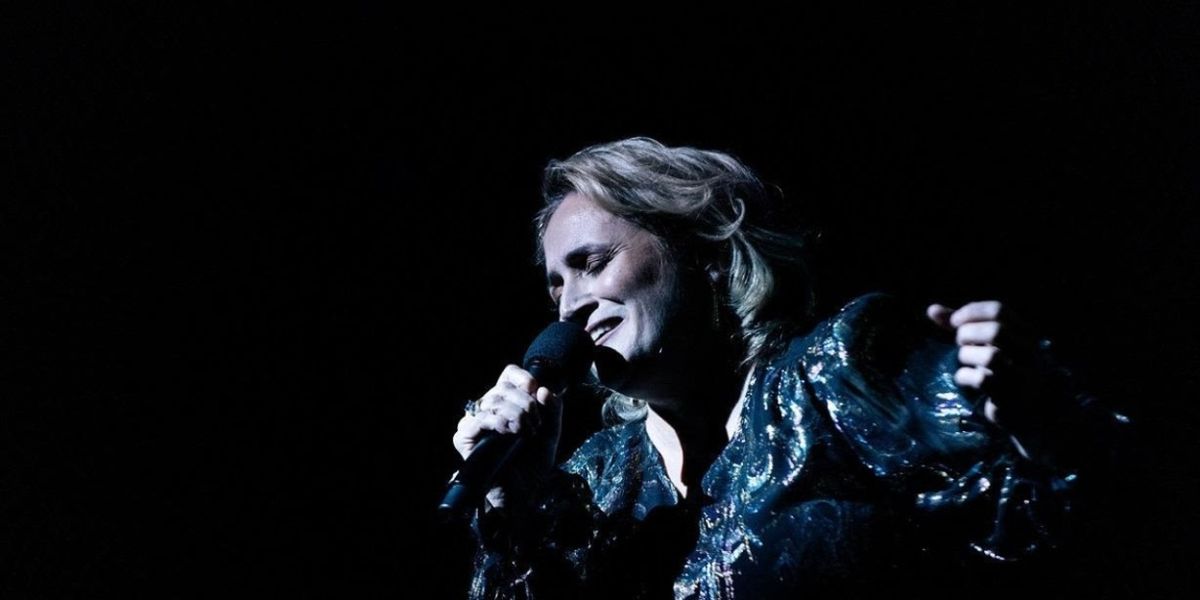
She sang at the Sheldon Concert Hall on October 9.
 Click for Tickets
It’s been a really, really good year in St. Louis for French songs. In April the Blue Strawberry hosted a marvelous evening of Jacques Brel, the superstar chansonnier of the ‘50s and ‘60s. Now, at the Sheldon, we have an evening of that even more dazzling icon, Édith Piaf, who blazed across the world’s musical firmament a generation earlier.
Patricia Racette has sung leading operatic roles around the world for over three decades. Four years ago, with Opera Theatre of St. Louis, she gave us a remarkable tour de force performance in Poulenc’s one-woman opera, La voix humaine. For the past six years she has been Artistic Director for OTSL’s Young Artists Program. She first dipped her toes into directing with OTSL’s La traviata (2018), then directed their Susannah (2023).
But her first love was jazz—and, it seems, cabaret. Ms. Racette is utterly comfortable in this genre. At the Sheldon she was greeted with a packed house cheering for her as for a long lost daughter.
She launches into an evening of twenty or more songs—some indelibly identified with Édith Piaf as well as some which were quite new to me. They cover a vast emotional range—melancholy, frenziedly gay, comic, simple and quiet—but all bear that unmistakable Piaf stamp: a fierce commitment to embrace life and love with all their bliss and misery.
Ms. Racette dives into the very deep end with her first offering, “Miséricorde”, where she becries the endless deaths of soldiers. The piano simply thunders down upon us, then tolls out mournful death knells as the singer weeps for that lost last kiss. “Heaven have mercy” indeed.
A much lighter vein is touched in “The Tale of Poor Jean”, who has everything—riches, mansions, gourmet food, wines—but not love. Here accompanist Craig Terry gives a very honky-tonk sort of piano.
Most of the songs are sung in French, a tongue of which Ms. Racette has an impeccable mastery. She gently, authentically trills her “R”s. Piaf’s “R”s sounded like that snare-drum roll preceding the fall of the guillotine (“Je ne r!!!egr!!!ette r!!!ien!”). But Patricia Racette is not impersonating Piaf; she wisely sings mostly in French, but she makes each song her own.
On the high rear wall of the Sheldon stage quite striking black-and-white photos of Édith Piaf are projected. For each song the first few lines of lyric are projected there also—but not the entire lyric. Ms. Racette has said that she “doesn’t want the audience reading her performance”. (A very wise decision. I’ve found that even with very familiar operas it takes great discipline not to read the supertitles.)
We’re treated to “Je sais comment” (“I know how to escape the dungeons of life: Sleep”) and “Je m'en fous pas mal” (“I couldn’t care less—for anything but the simple beauties of life and the handsome men at the dance hall”).
Then we have one of Piaf’s most beloved hits—“L'accordéoniste”. This hints at her earliest life as a singer—a waif of fourteen singing to an accordion in the streets of Paris.
“Fais com si (“Act as if we loved each other”) rises to intense passion and recedes to a soft melancholy. Pianist Craig Terry shows a quite stunning sensitivity to the lyrics and to the emotions throughout the evening. Here he rises to a thundering passion, then fades to a gentle softness.
“Mon manège a moi” (“You are my own carousel”) is a jaunty little change of pace. And then there’s another great favorite, “Sou le ciel de Paris” (“Under Paris Skies”)
“La foule” places the singer in a swirling crowd. It swirls her into a stranger’s arms, keeps them together just long enough for love to flare, then wrenches them apart forever. This is the sort of frenetic accelerando that reminds one of Ravel’s La Valse—reckless gaiety in the face of imminent catastrophe. (Jaques Brel’s “La Valse à mille temps” is another of that genre.)
“‘Cause I love you” (sung in English) is a happy dance-hall waltz rejoicing in the mere fact of love.
In sharp contrast we then have “Reste” (“Stay Here”), where the singer desperately, breathlessly begs her lover not to go away. (There is no sheet music available for this song; Ms. Racette had it transcribed from Piaf’s performance.)
“Rien de rien” (“Nothing at All”). A charming piece where she regrets that “nothing ever happens to me”.
“Les amants d’un jour” (“Lovers for a Day”) tells a sad, gentle little tale: a worker in a cheap bar shows a young couple glowing with love into the room-for-rent above the bar. The next morning they are found dead—hand in hand.
“Non, je ne regrette rien” (“No, I regret nothing!”) is one of Piaf’s most recognizable songs. It is a powerful statement of her philosophy of life. It climbs ineluctably into fierce passion, and expresses her total embrace of life, its joys and pains. If you watch Piaf sing this you will be astonished. How can such a towering voice come from that tiny frame? (She stood four-foot-eight.) That dissonance, in part, is what made Piaf the icon she became. The taller, healthier Patricia Racette wisely chose not to impersonate Piaf. And she does the song beautifully.
“Autumn Leaves” made Yves Montand famous to Americans, and Piaf (and Ms. Racette) do romantic beauties with it.
“Milord”, another major favorite, is a brassy tale about a prostitute infatuated with an elegant English gentleman.
“Padam” tells about a song that obsesses the singer, reminding her of a lost love.
Piaf’s signature song is, of course, “La vie en rose”. For this number only Patricia Racette sings without a microphone. Good choice! Amplification transforms a voice. Here, finally, we get a glimpse of the deep (and operatic) beauties of her instrument.
Next we had “Hymne à l’amour” (“If You Love Me, Really Love Me”). Piaf wrote the lyrics in 1949 to celebrate the love of her life, France’s champion boxer. A month later, as he was flying to meet her in New York, he died in a plane crash in the Azores. The nation mourned.
The closing song is the melancholy “Mon Dieu” in which she begs god to let her have six months, three months, just one month to build memories of love. In this prayer Racette makes “mon Dieu” almost a moan. Here accompanist Craig Terry shows such utter sensitivity to the lyric—in the final bars he plays a gentle, ascending phrase—and places that last, delicate, light snow-flake of a note at the very top—at the precisely correct moment.
The lovely projections were by that genius Greg Emetaz.
It was a lovely evening at the Sheldon, with a long standing ovation for Patricia Racette.
She sang at the Sheldon Concert Hall on October 9.
|
Guys And Dolls Kirkwood Pac (7/24-8/23) |
|
JOB New Jewish Theatre (NJT) (8/06-8/23) |
|
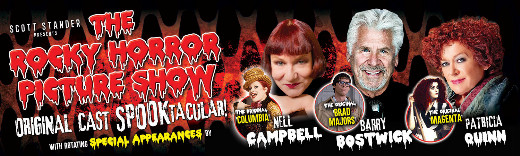
Rocky Horror Picture Show Original Cast Spooktacular Tour with Barry Bostwick, Nell Campbell, and Patricia Quinn The Fabulous Fox Theatre (10/06-10/06) |
|
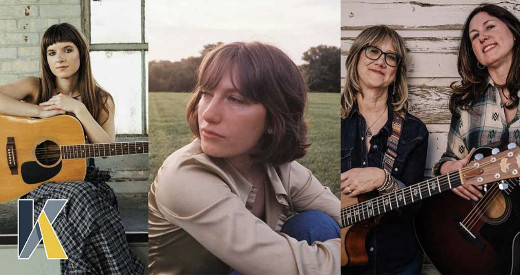
REMI GOODE, ABIGAYLE OAKLEY, AND THE SHANDIE Kirkwood Performing Arts Center (8/14-8/14) |

|
Sean Canan's VooDoo :Stevie Wonder Kirkwood Performing Arts Center (8/21-8/21) |
|
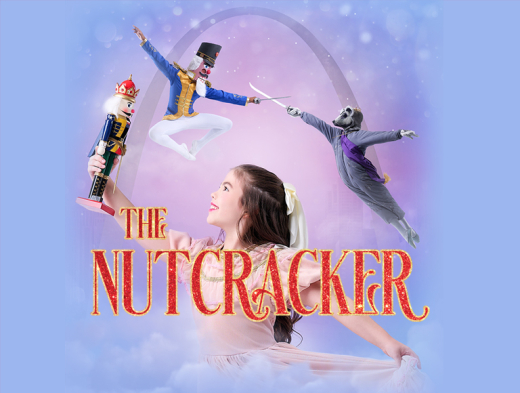
The Nutcracker COCA - Catherine B. Berges Theatre (12/11-12/13) |
|
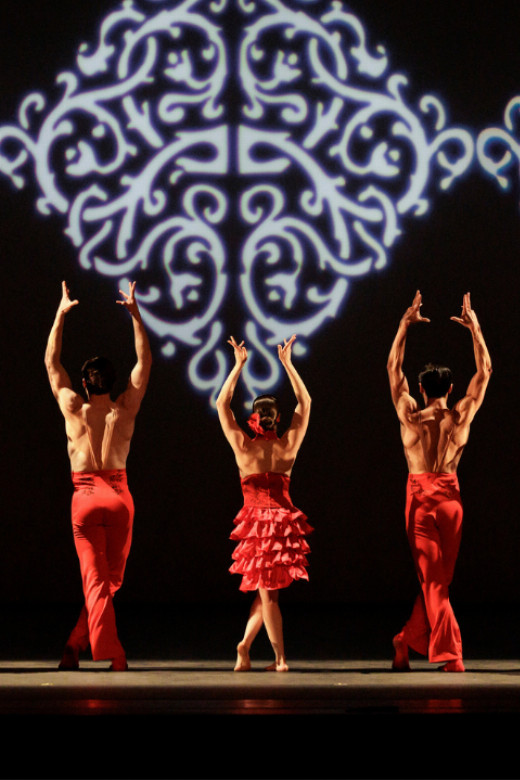
Ballet Hispánico New York Touhill Performing Arts Center (11/14-11/14) |
|
The Book of Mormon (Non-Equity) Fox Theatre (2/02-2/07) |

|
Gateway Dirt Nationals – 3 Day Pass The Dome at America's Center (12/03-12/05) |

|
The Great American Trailer Park Musical Rehab Bar & Grill (8/19-8/26) |
Reader Reviews
To post a comment, you must register and login.