


Review: LOVE AND INFORMATION: TFTV Takes on Churchill's Collage at School of Theatre, Film & TV
A young ensemble explores the fragile threads of connection in a fragmented age.
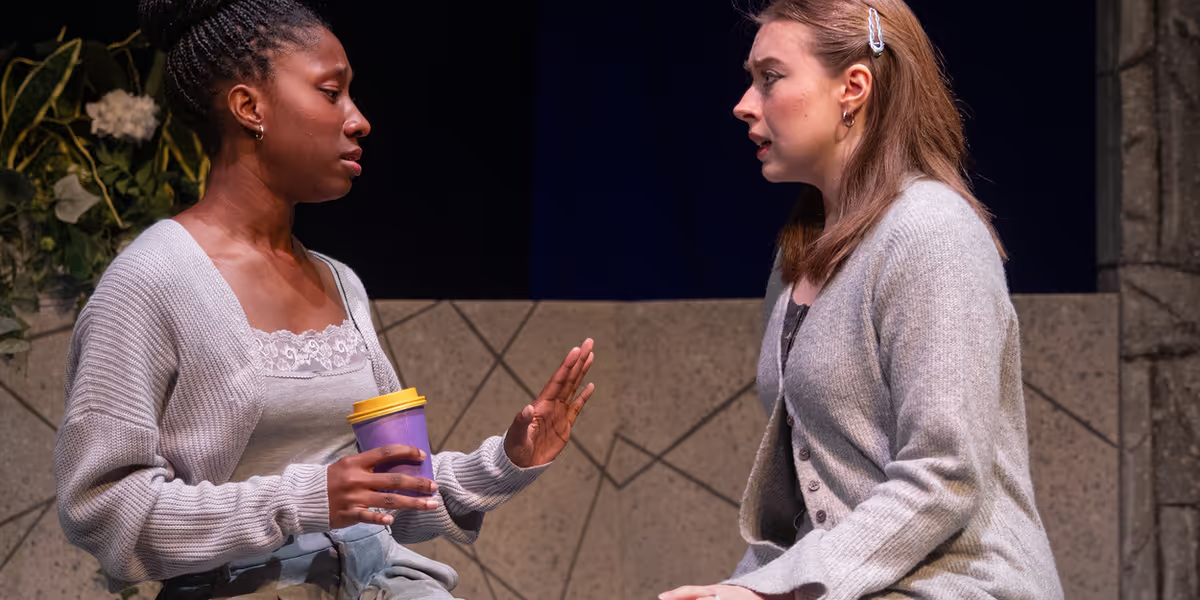
To step into LOVE AND INFORMATION is to witness a world of splinters: flashes of humor, puzzles of intimacy, uneasy truths that flare and vanish.
Caryl Churchill's intriguing mosaic offers no through-line to latch onto, only fragments that demand your attention in sudden bursts, the way modern life interrupts itself before meaning has time to settle.
The play feels acutely apropos to a community still carrying the weight of recent loss, and the School of Theatre, Film & Television dedicates this production to three students—Josiah Santos, Sophia Troetel, and Katya Castillo Mendoza—whose absence is felt even in the show's smallest silences.
In a piece defined by moments that dissolve as quickly as they form, the dedication lends the evening a quiet gravity, where the act of gathering in the Tornabene becomes its own gesture of remembrance.
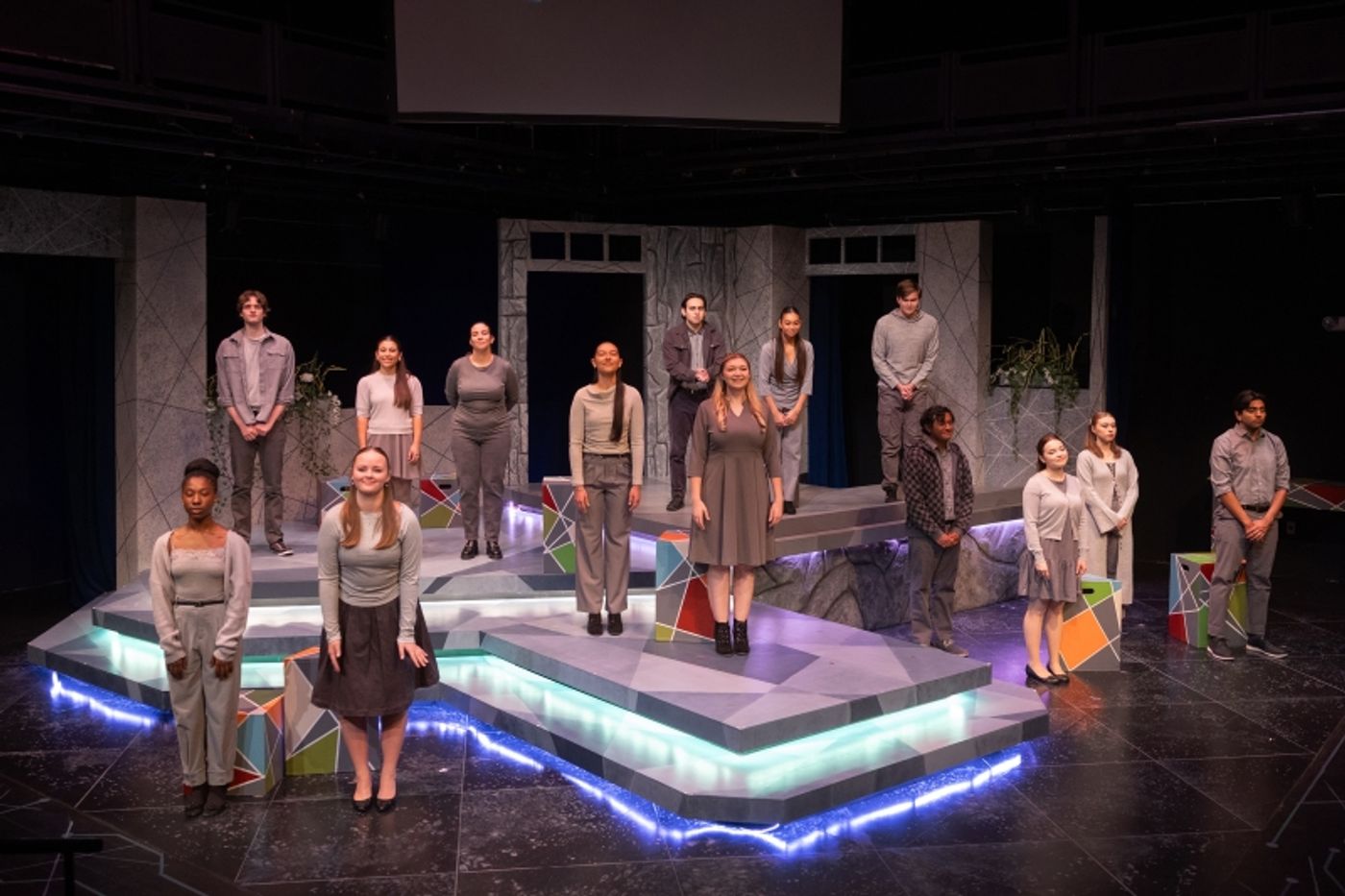
In many ways, the Tornabene itself becomes a collaborator. The theatre's quirky yet flexible geometry resists the predictability of a conventional stage picture, requiring actors to carve presence from angles, tiers, and distances that can shift the emotional logic of a moment.
When the entire ensemble occupies the space, the effect is unexpectedly powerful: bodies layered across the multi-level set create a visual hum. This quiet energy holds the fragments together; the composition, albeit arranged, feels organic. It reminds us that a large ensemble, united by purpose, can form a dramatic topography all its own.
But not every scene benefits from this environment. In the smaller two-handers, where a single turn or breath can alter an entire exchange, the Tornabene's challenges become more pronounced. Levels and body positions sometimes failed to meet the needs of the room, with lines delivered at angles that obscured intention or softened the charge between partners.
These are the kinds of moments where actor instinct and spatial awareness carry as much weight as direction; a simple pivot could sharpen the dynamic instantaneously. Still, they reveal a program in its early stages, with students learning to bridge cinematic training with the particular demands of an experimental theatre space.
Director Greg Pierotti's program note frames the production as a living argument for TFTV's new Live and Screened Performance degree, a philosophy of collaboration in which theatre and film share a fluid vocabulary. His articulation is lucid and academically candid: Churchill's text, he suggests, is not merely a play but a model for twenty-first-century performance—restless, interdisciplinary, and unconcerned with traditional boundaries. The production echoes this ambition through the film sequences projected above the stage.
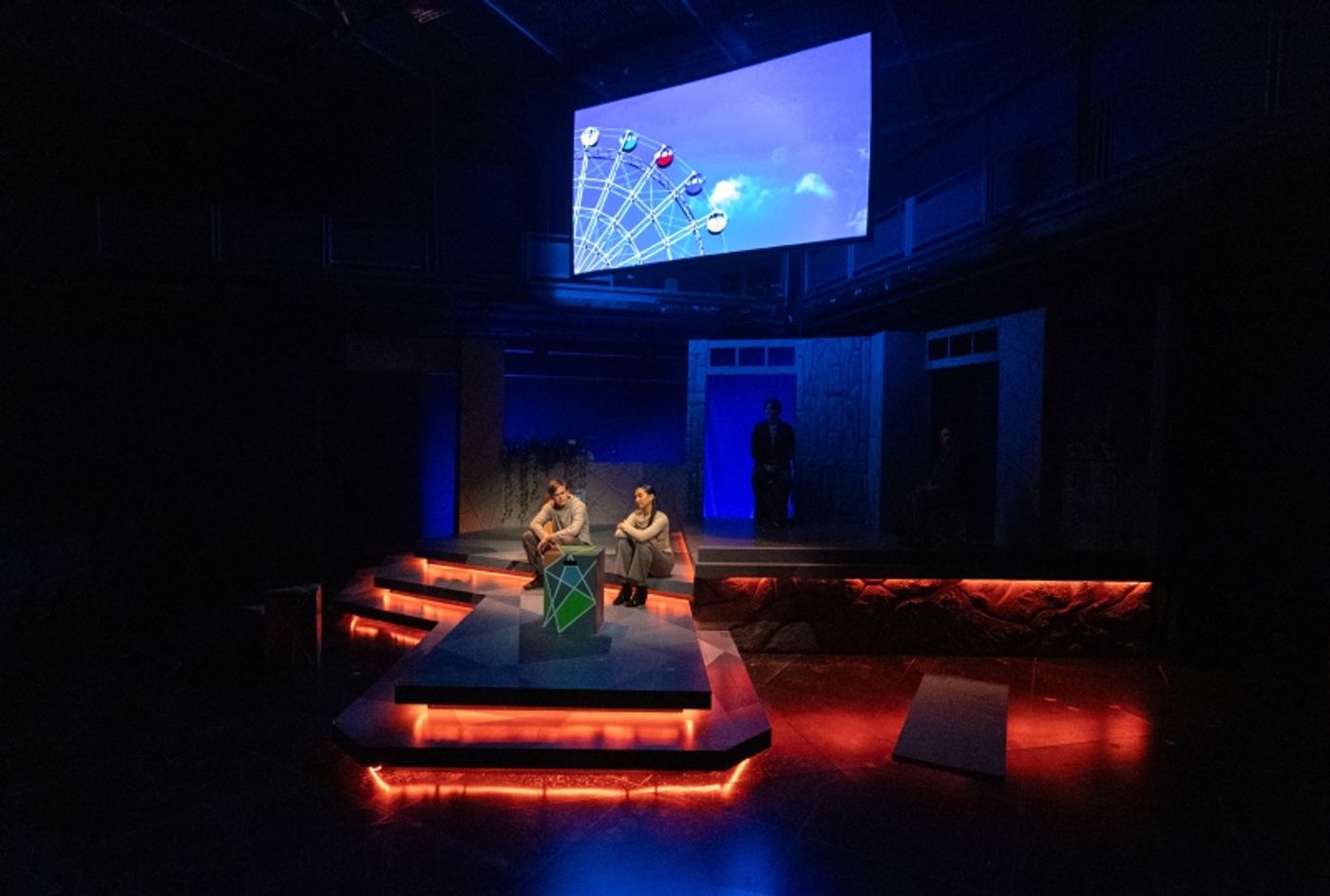
These transitions, which I initially worried might overwhelm the play's delicacy, turn out to be some of the evening's most effective connective tissue. They neither distract nor dominate; instead, they create small chambers of breath between scenes, allowing the audience to reorient before the next shard arrives.
The execution is not without its green edges. Some filmed moments bear the unmistakable stamp of early experimentation (backgrounds that don't quite marry the action, overdubbed dialogue that belies actor impulses).
These uneven patches speak to the realities of training in a hybrid model. To wit, stage acting and screen acting are not interchangeable crafts; they demand different calibrations of focus, energy, and truth. What reads as honest in close-up may evaporate in a room the size of the Tornabene, and what fills a stage can overwhelm a lens.
The students are learning this negotiation in real time. While the tension is occasionally apparent, it is also precisely the kind of challenge the new program promises to tackle head-on.
Pierotti couldn't have chosen a more apt material for the school's experiment.
Churchill's title points toward the tension the play uncovers. Love—that fragile, intimate human impulse—and information—the relentless noise that competes for our attention—sit side by side in every fragment, locked in an uneasy coexistence.
The playwright leaves her characters unnamed, defying the familiar arc of development. Why bother? The play isn't interested in biography or backstory; it's concerned with archetypes and encounters, with the distilled moments where recognition flickers before it disappears. Anonymity allows each fragment to assert its own meaning.
This production, with its youthful ensemble and earnest experimentation, illuminates that tension not through polish but through presence. The students' inexperience is sometimes visible, but so is their sincerity. And sincerity is its own kind of focus.
The evening gathers its strength in those flashes: ensemble compositions that fill the room, a stray line that lands with unplanned force, a filmed image that deepens rather than interrupts. And as the fragments accumulate, something like meaning begins to hover over them, not in the shape of a story but in the shape of recognition.
We begin to understand that the play is not asking us to follow a plot but to inhabit a state of mind: a world where connection is a series of near-misses and sudden alignments, where information arrives faster than care can contain it.
In this sense, the production becomes an emblem of its own learning process. It reaches, adapts, occasionally stumbles, and keeps returning to the question at the heart of Churchill's collage: How do we remain human in the static of modern life?
TFTV's students answer not with mastery but with openness. They are willing to risk, to experiment, and to meet the fractured world with attention. And on a night dedicated to three absent students, that willingness feels like an offering in itself.


|
Fiddler on the Roof Chandler Center for the Arts (3/12-3/14) |

|
Sabaton, Pop Evil & Wings of Steel Arizona Financial Theatre (11/11-11/11) |

|
The 3 International Tenors Hale Centre Theatre (9/01-9/05) |

|
Tucker Wetmore Mesa Amphitheatre (10/23-10/23) |

|
Staged Reading of Las Nuevas Tamaleras By Alicia Mena Live Theatre Workshop (9/05-9/06) |
|
Murder For Two The Phoenix Theatre Company (8/26-9/20) |
|
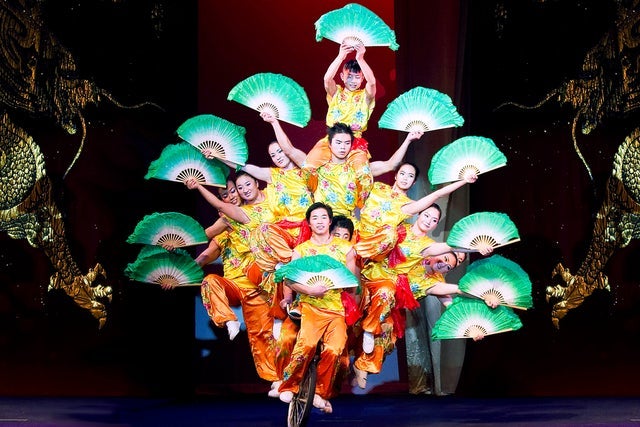
Peking Acrobats Chandler Center for the Arts (1/24-1/24) |
|
The Comedy of Errors By William Shakespeare Adapted by Stephen Frankenfield Live Theatre Workshop (9/18-10/11) |

|
Stop Kiss Tornabene Theatre (10/15-12/06) |

|
The Velocity of Autumn by Eric Coble Live Theatre Workshop (8/07-8/30) |
Reader Reviews
To post a comment, you must register and login.