


Review: SISTER ACT at Dr. Phillips Center For The Performing Arts
At its heart, Sister Act: The Musical is a celebration of sisterhood and the unexpected bonds formed in the most unlikely places.
When Sister Act premiered in the summer of 1992, the film quickly became a beloved comedy classic. Star Whoopi Goldberg was one of the highest-paid actors in the world, with an Academy Award (Ghost) and two Golden Globes (The Color Purple, Ghost) already under her belt. Her approach to the lounge singer-turned-nun in hiding charmed audiences worldwide, as did the film’s winning blend of heart, humor, and gospel-infused musical moments. However, while the film featured memorable musical numbers, it wasn't a traditional musical in structure. Songs were mostly diegetic performances used for comic or emotional effect, but secondary to the main plot of a woman who accidentally witnessed a murder. As a result, when it was announced that Sister Act would be adapted for the stage, many were skeptical. How would a non-musical comedy about nuns be transformed into a fully-fledged Broadway musical?
Against the odds, Sister Act: The Musical debuted to great success, first in London’s West End in 2009 and then on Broadway in 2011. At the helm was Pete Schneider, best known for heading the Walt Disney Feature Animation studios during the famed “Disney Renaissance” of the 1990s. He had left The Walt Disney Company to form his own theatre company, with Sister Act as his first major production. Schneider brought in veteran sitcom screenwriters Cheri and Bill Steinkellner to revamp the 1992 screenplay into a stage musical, with music and lyrics provided by Disney mainstay Alan Menken and his new professional partner Glenn Slater. This new approach to the material by all involved reinvented the world of the film while preserving its vibrant core. Now set in 1970s Philadelphia rather than 1990s San Francisco, the musical leans into disco and soul influences to reflect the era, using original songs to amplify character arcs and emotional beats. Importantly, it doesn’t try to mimic the film’s every move. Instead, it reimagines key moments and relationships to better fit the stage format while still offering audiences the same joy, humor, and warmth that made the film a staple of pop culture.
In that way, the musical becomes more than just a nostalgia-fueled adaptation. Rather than feeling like a cash-grab remake riding on the coattails of its predecessor, Sister Act: The Musical stands on its own two feet. Its energy is infectious, its characters full of life, and its message of transformation and belonging feels as fresh on stage as it did on screen. The show honors the spirit of the original without being confined by it, offering a parallel experience: not a soulless replication of what came before, but a soulful celebration of why we love the predecessor. What might have seemed like an unlikely candidate for Broadway has proven to be an inspired fit. It’s a joyfully theatrical experience, gloriously fun to watch unfold on stage, but at its core an emotionally resonant story about finding one’s identity in the unlikeliest of places.
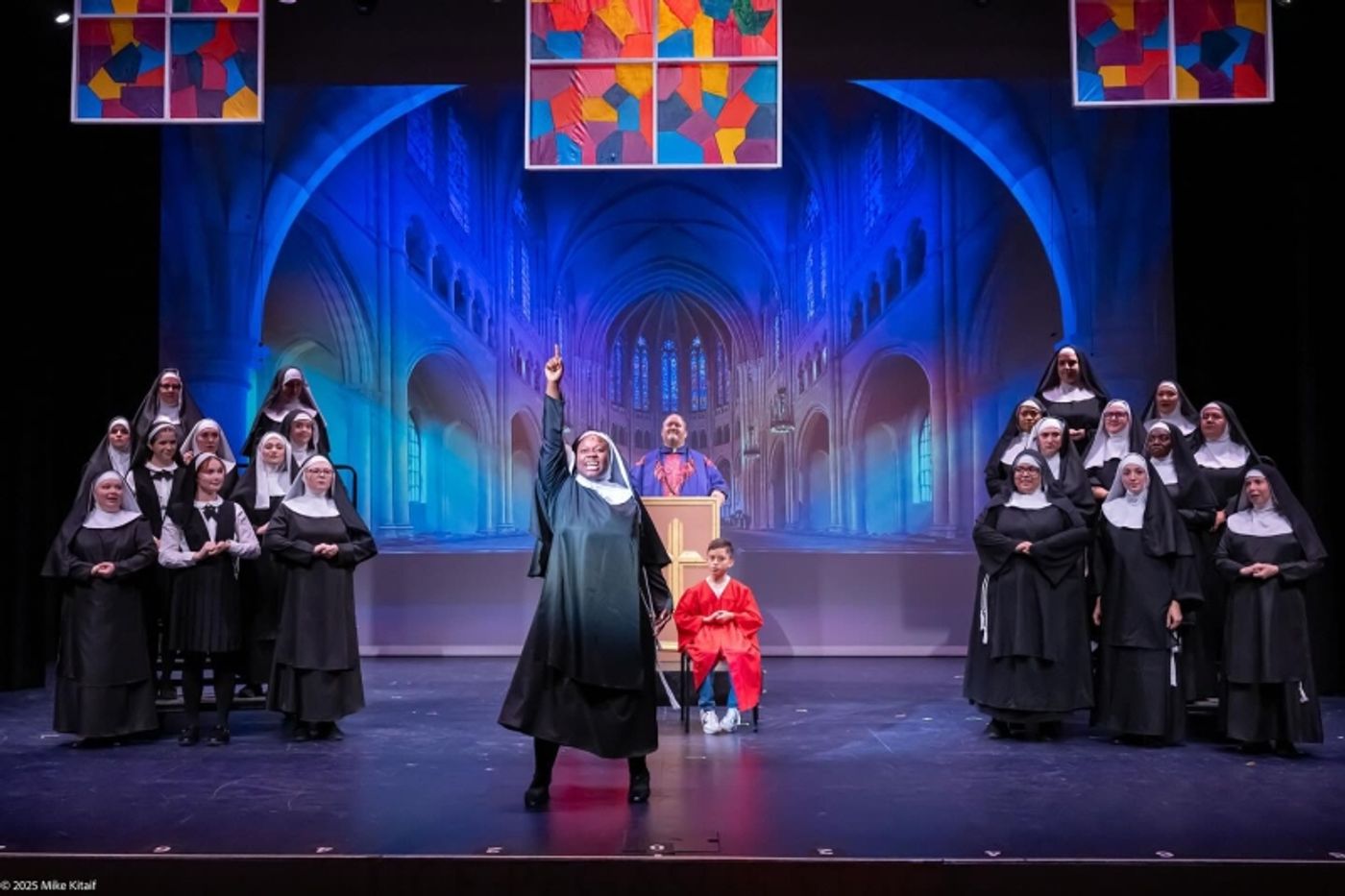
Little Radical Theatrics selected Sister Act as its flagship summer musical for the 2025 season, bringing its signature blend of heart, humor, and inclusivity to the Orlando stage. This production follows a successful spring revival of Carousel by Rodgers & Hammerstein and precedes this fall’s high-energy staging of Footloose. Now in its 16th overall season (and its fourth in Florida since relocating from New York in 2021), Little Radical Theatrics continues to make bold, diverse theatrical choices that reflect its mission to make the arts accessible to all. Sister Act also marks the company’s second season performing at the beautiful Alexis and Jim Pugh Theater at the Dr. Phillips Center for the Performing Arts, a venue that has become a home for their growing community. As a non-profit organization, Little Radical Theatrics is powered entirely by volunteers: directors, designers, cast, and crew alike pour their time, energy, and passion into each show. In doing so, they give something invaluable back to the community: a shared celebration of storytelling, identity, and love for the stage.
Sister Act: The Musical opens in 1970s Philadelphia with aspiring disco diva Deloris Van Cartier (Jaada Hyatt) performs with her backup singers at her gangster boyfriend Curtis Jackson’s (Mark V. Harriott) nightclub on Christmas Eve, hoping to impress him enough to land a record deal (“Take Me to Heaven”). Instead, Curtis coldly dismisses her dreams and gives her his wife’s fur coat as a gift, which enrages Deloris (“Fabulous, Baby!”). Her night takes a darker turn when she accidentally witnesses Curtis murder one of his men, who had been talking to the cops. Fleeing in terror, she runs to the police and is reunited with Eddie Souther (Jonathan Barreto), a kind but awkward cop who still remembers her from high school. Though he once had a crush on her, Eddie is determined to keep her safe and hides her in a convent while she waits to testify. Left alone, Eddie fantasizes about becoming the kind of confident, heroic man who could finally win her over (“I Could Be That Guy”).
Deloris, now forced to pose as “Sister Mary Clarence,” arrives at Queen of Angels Church and immediately clashes with Mother Superior (Jennifer Rae Paxton), who is unimpressed by her brash attitude and worldly ways (“Here Within These Walls”). Adjusting poorly to convent life, Deloris bonds with quirky sisters like Sister Mary Patrick (Stephanie Viegas) and shy novice Sister Mary Robert (Emma Licata), but finds her true opportunity when she's placed in the struggling church choir (“It’s Good to Be a Nun”). Shocked by their off-key singing as conducted by Sister Mary Lazarus (Sydney Rafferty), Deloris steps in to overhaul their sound, bringing in rhythm, harmony, and soul. As she trains them, she begins transforming Mass into a toe-tapping musical spectacle. With Deloris at the helm, what was once a solemn service becomes an exuberant celebration, attracting a growing audience from the neighborhood (“Raise Your Voice”).
With the choir’s newfound success, the church begins to thrive for the first time in years, though not everyone is thrilled. Mother Superior fears that spectacle is replacing spirituality (“Here Within These Walls (Reprise)”), and as Deloris continues blending sacred songs with showbiz flair, Sunday services start to resemble full-blown concerts (“Sunday Morning Fever”). Meanwhile, word spreads about the choir’s rising fame, and Curtis, realizing that Deloris is still alive, dispatches his dimwitted henchmen Joey (Tyler Moylan), TJ (Chase Williams), and Pablo (Samuel Pagan) to track her down (“When I Find My Baby”). As the sisters prepare for a high-profile performance from the visiting Pope, they are unaware that Curtis is closing in. Likewise, Deloris, caught between stardom and sanctuary, is beginning to feel truly seen for the first time.
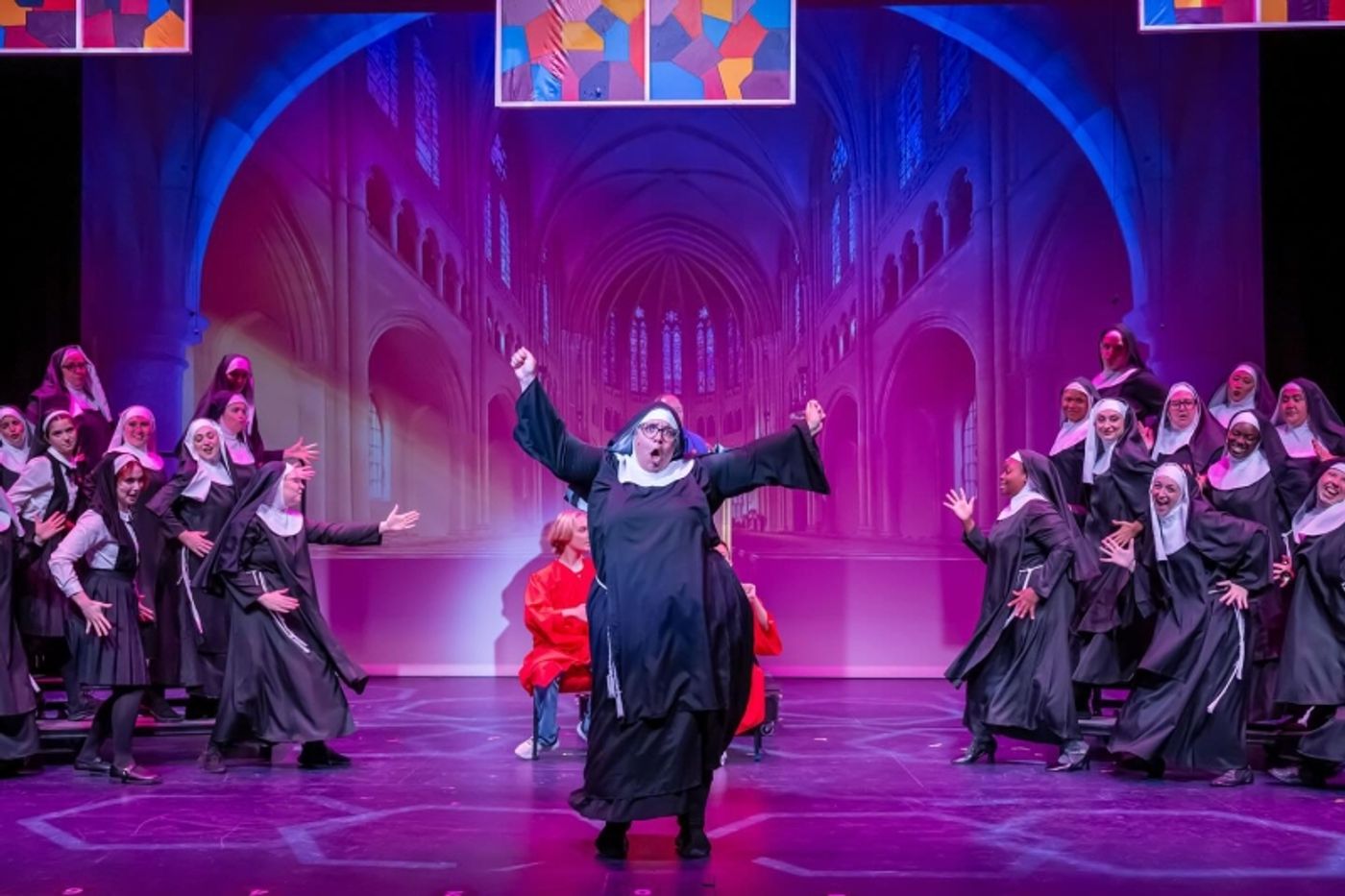
At its heart, Sister Act: The Musical is a celebration of sisterhood and the unexpected bonds formed in the most unlikely places. While Deloris Van Cartier begins her journey chasing fame, her time with the nuns reveals a deeper calling: not spiritual in the traditional sense, but rooted in connection, community, and self-worth. It’s through her role in the choir that she discovers the truest version of herself. She finds value not as the solo star, but as a guide and collaborator. She brings harmony to the choir not just in song, but in their own trust within each other as well. The transformation isn’t one-sided either; the sisters, especially the shy and reserved Sister Mary Robert, are empowered by Deloris's confidence and joy. Together, they show how chosen family, rather than personal ambition alone, can lead to lasting fulfillment.
The story is also rich with intergenerational tension, most clearly embodied in the conflict between Deloris and Mother Superior. What plays more as a clash of personalities in the 1992 film becomes deeper here in the musical. Their relationship symbolizes a broader divide between tradition and progress, reverence and reinvention. Mother Superior, steeped in quiet discipline and sacred ritual, views Deloris's flashy, secular approach to music as disruptive and sacrilegious. Deloris, meanwhile, finds the rigid structure of convent life stifling. Yet as the musical progresses, both women come to see value in the other's perspective. The blend of gospel, soul, and classic hymns mirrors the narrative’s resolution: that the old and new can harmonize, both literally and figuratively, when both sides are willing to listen.
Stylistically, the musical’s libretto leans heavily into quick-witted one-liners and broad comedic beats designed to energize a live audience. Its dialogue feels tailor-made for reaction from a live audience. The film was always funny in the cinematic sense: scripted and edited to allow for the assumption of laughter in the screening room, but subtle enough to still flow well even if a joke doesn’t land. The stage version, on the other hand, embraces heightened punchlines and overt setups that guarantees audience laughter. The humor thus hinges on broader approaches to comedy: exaggerated emphasis on certain lines, occasional physical comedy, and well-timed reactions, which work especially well in a theatre setting where audience feedback fuels momentum. Not every joke lands with narrative grace; I could tell some lines are clearly there for the laugh rather than character development. Still, the overall effect and enjoyment of the material keeps the production buoyant and infectious. The script knows it’s here for a good time, and thus invites the audience to have one, too.
However, even though it sells itself as a comedy, Sister Act: The Musical does take the audience on a heavier, almost profound emotional journey. The question of identity lies at the very core of the story. Deloris Van Cartier is not the name the protagonist was born with: it’s a persona carefully constructed by Doris Carter, a woman trying to carve out space in a world that dismisses her. In creating "Deloris," she built an identity of glamour, fearlessness, and ambition. All of it serves as armor to protect her in an industry that offers little grace. But when she's forced to hide in a convent as Sister Mary Clarence, she steps into yet another role. It begins, as we expect, mainly as a farce. The culture shock of going from glamour shots to pensive prayer has the expected funniness to it. But if we strip this down deeper, we see how Deloris’ journey into a third identity ultimately becomes the most revealing of her true self. It’s through pretending to be someone she’s definitely not that Deloris finally confronts who she is. The simplicity, stillness, and sincerity of life at the convent strips away the performances until only the real woman remains. And it’s not some famous star she thought she needed to be, but rather, the person worthy of love and purpose from others, regardless of stage lights.
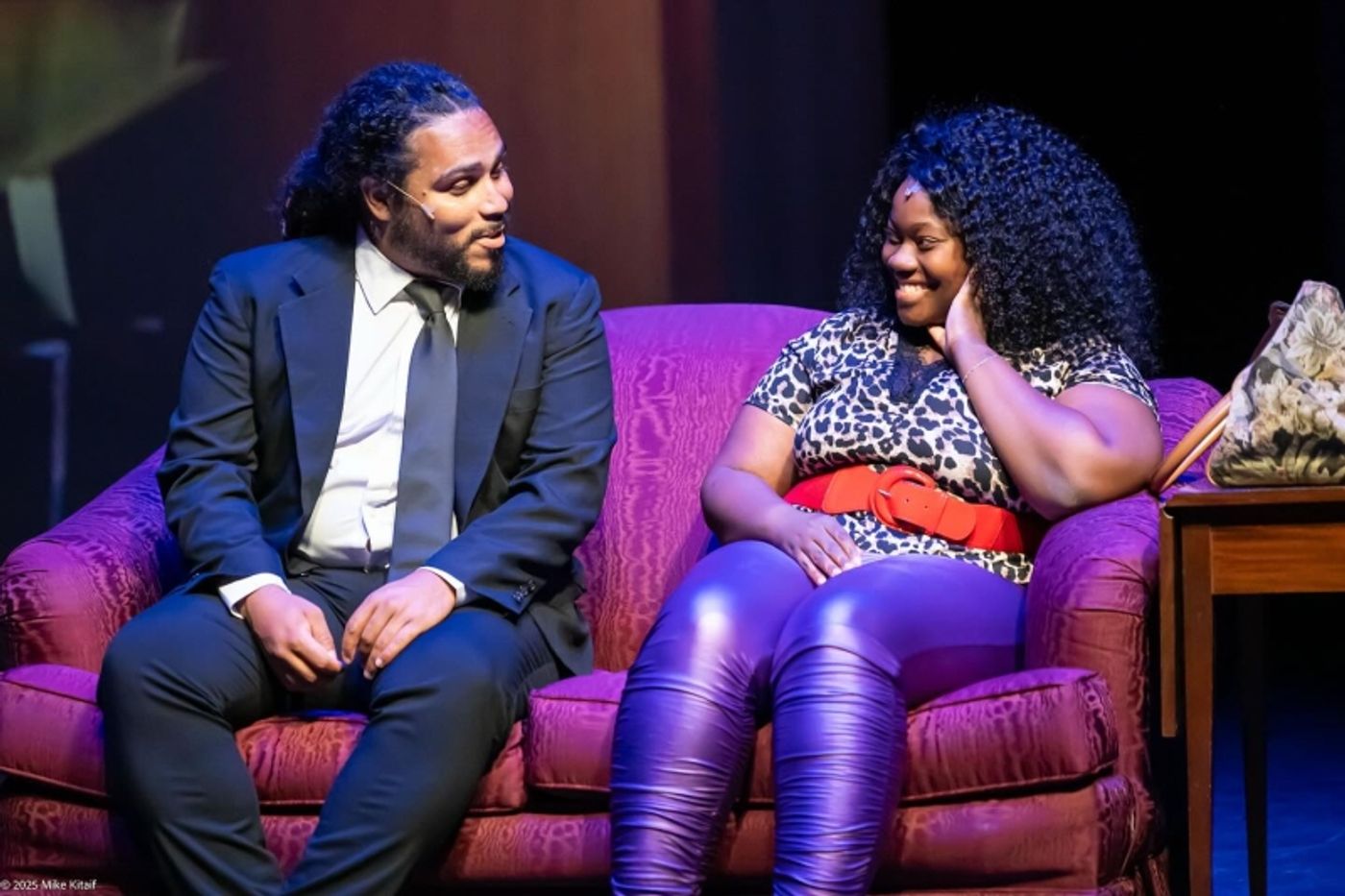
This journey from Doris to Deloris to Mary Clarence is more than just a clever narrative twist: it’s a metaphor for how we all navigate the roles imposed on us versus the ones we choose. The show invites us to question whether identity is something we wear or something we live. As a result, the juxtaposition of sequined dresses and nun’s habits isn’t just about costume changes. It now represents how our own external labels can distract from our internal truths. Deloris doesn’t find herself by rejecting her Doris past or fully adopting Sister Mary Clarence convent life. There’s a new compromise to be found, one in which she finds herself by choosing who to be, not who to seem. It’s the relationships she forges, the sacrifices she makes, and the sisterhood she embraces that ultimately give her life meaning. In that way, the musical isn’t just about becoming someone new; instead, it’s about becoming someone true.
Little Radical Theatrics’ production of Sister Act: The Musical doesn’t just tell a story about discovering one’s identity, it also lives that truth through its casting philosophy and artistic mission. Eschewing traditional norms that often prioritize specific body types, age ranges, or conventional looks for well-known characters, the troupe opens its doors to anyone with a passion for performance. In doing so, the company amplifies the very message at the heart of Sister Act: The Musical. Our identity is not defined by expectations or appearances, but by spirit, determination, and heart. This inclusive ethos allows each performer to bring their own lived experience to the stage, enriching the characters with authenticity. The result is a cast that shines. Not because they fit a mold, but because they break it, thus making the story more accessible, more human, and more powerful for every audience member.
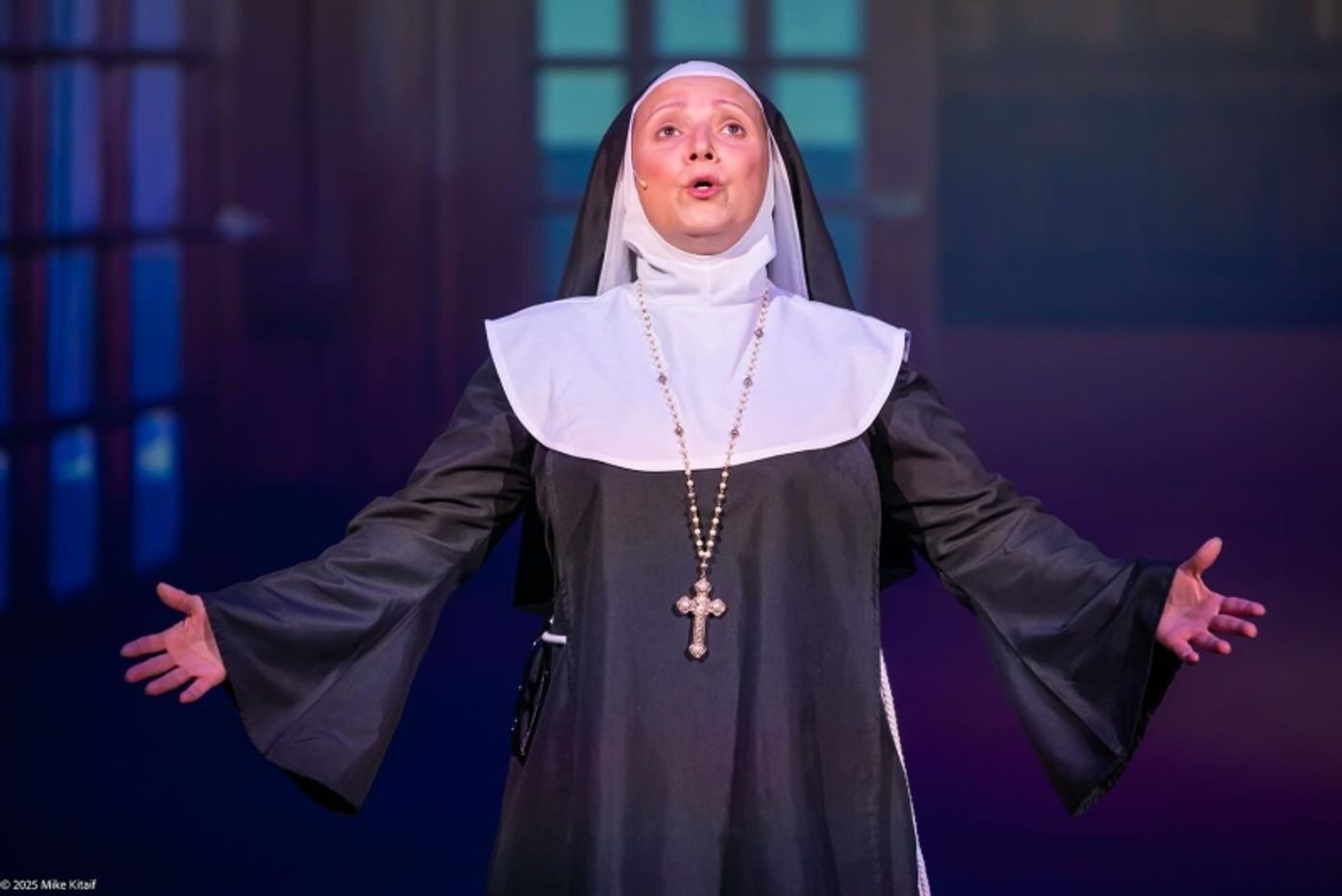
Jaada Hyatt brings a powerhouse presence to the role of Deloris Van Cartier, commanding the stage with a radiant confidence that captures both the glamor and grit of this iconic character. From her opening number, Hyatt leans fully into the diva energy that defines Deloris: a woman who is bold, brash, and unafraid to take up space. However, it was the more subtler moments of Act II where her performance truly deepens. She allows Deloris’s fear, loneliness, and longing for connection to seep through the sequins, delivering a heartfelt transformation that feels earned. Her comedic timing is sharp, but never overwrought; she knows exactly when to play a line big for laughs and when to pull back for something more grounded. Hyatt’s chemistry with Jennifer Rae Paxton’s Mother Superior is especially compelling, striking a careful balance between oil-and-water friction and genuine growth. Their early scenes sparkle with bite and tension, but by the end, Hyatt shows us a Deloris who’s grown into her role not just on stage, but in life.
As Mother Superior, Jennifer Rae Paxton provides the perfect foil to Hyatt’s Deloris: cool, measured, and steeped in a reverent authority that never becomes one-dimensional. Paxton’s performance avoids the easy trap of playing Mother Superior as simply stern or out-of-touch. Instead, she brings nuance and warmth beneath the surface, giving the character a quiet dignity even in her most exasperated moments. Her deadpan delivery is a masterclass in restraint (the line “There are no words” carries so much subtext that she delivers expertly), allowing the comedy to land with a dry wit that contrasts brilliantly with Deloris’s louder flamboyance. But it’s in her gradual softening that Paxton’s work shines most. She charts a believable arc from guarded disciplinarian to openhearted mentor, letting the audience feel every step of her reluctant admiration turning into genuine respect. Together, Paxton and Hyatt don’t just play opposites who find common ground. They take the foundation of these characters, and the audience’s familiarity with them from the film, and craft a relationship that evolves with honesty, humor, and emotional payoff, anchoring the show’s heart in their shared growth.
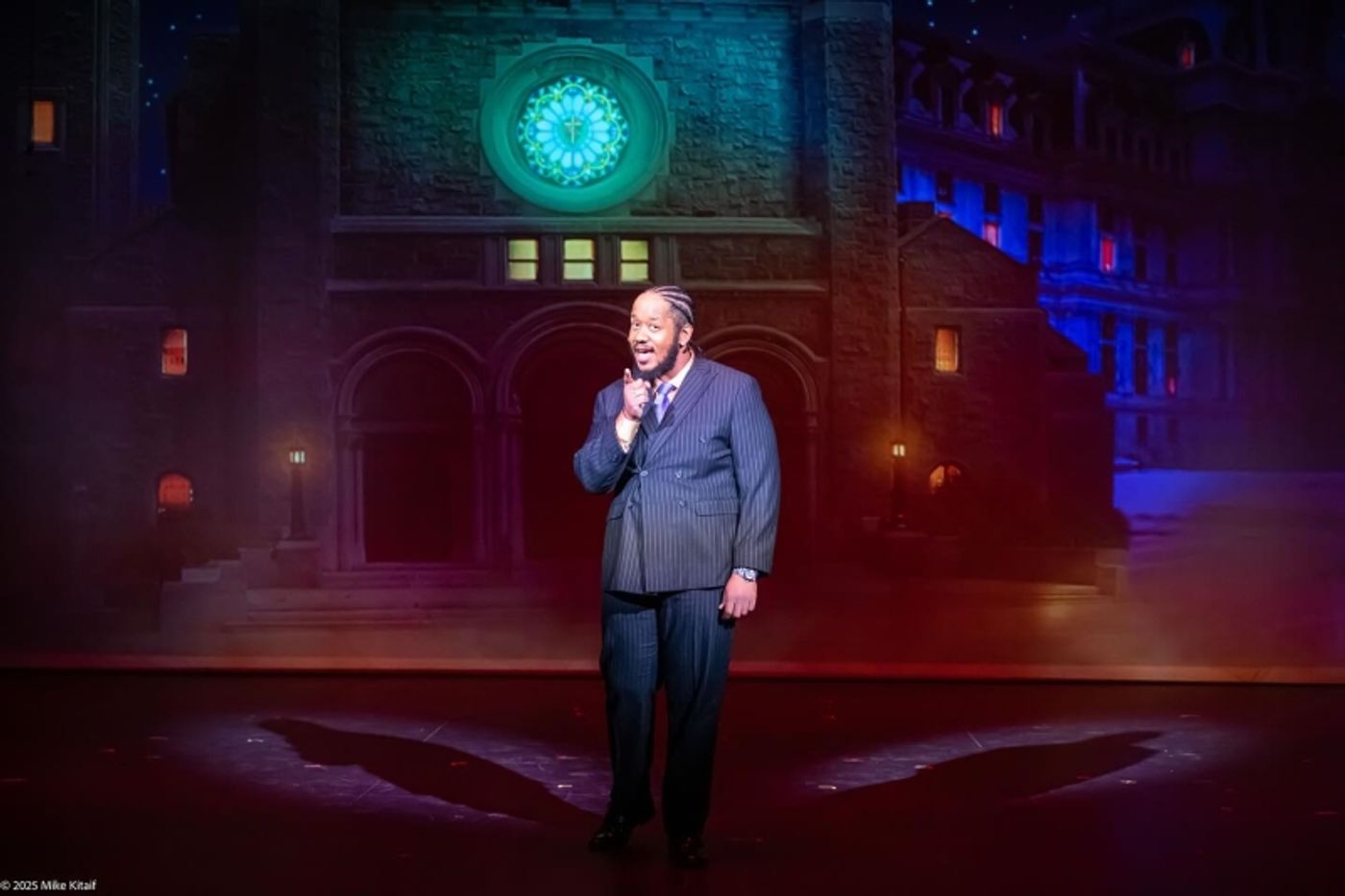
Mark V. Harriott sinks his teeth into the role of Curtis, embodying the smooth-talking villain with a gleeful edge that’s as magnetic as it is menacing. His standout number, “When I Find My Baby,” is a darkly hilarious showpiece; quite possibly, it could be considered one of musical theatre’s most twisted love songs, as it’s all about Curtis’ ways of loving Deloris, while also listing the ways he wants to kill her. Harriott plays it with self-aware bravado, letting the audience in on the joke without ever fully letting Curtis off the hook. It’s a tricky balance: making a would-be murderer entertaining without losing the tension, but Harriott pulls it off with charisma and menace in equal measure. His Curtis is not cartoonishly evil, but chillingly believable. Curtis believes himself righteous even in his worst acts. That makes him all the more dangerous, and all the more compelling to watch. The fact that the audience can laugh with him, even momentarily, speaks volumes about Harriott’s control and charm on stage.
As the gentle-hearted Eddie, Jonathan Barreto delivers one of the show’s most emotionally resonant performances. His solo number, “I Could Be That Guy,” becomes more than just a ballad of unrequited love. It serves its own narrative purpose within its thrifty four minutes: it’s a quietly triumphant arc of self-discovery. Barreto makes the bold and effective choice not to go big right away; instead, he starts the song soft and tentative as a way to mirror Eddie’s hesitant nature and internalized doubt. As the song progresses, Barreto’s voice blooms, each note a step closer to the version of himself Eddie longs to become. By the final chorus, he finally lets loose in a full, soul-stirring belt that the audience erupts not just for the vocal prowess, but because they’ve now seen the transformation in real-time. That catharsis, earned through Barreto’s careful restraint and sincerity, turns a quiet supporting role into a poignant highlight of the production.
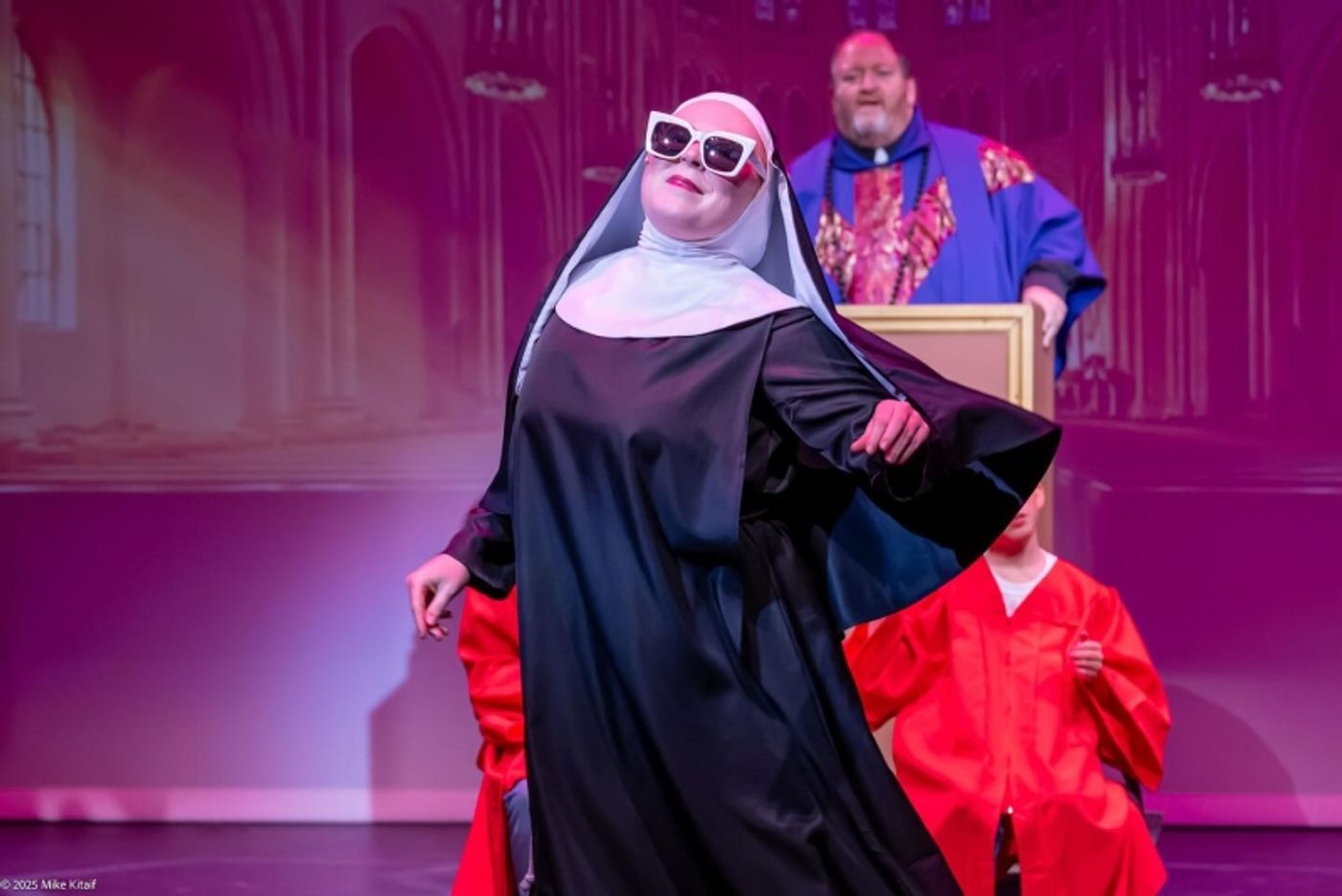
The heart of the convent’s comedic and emotional core beats strongest through its trio of supporting nuns: Stephanie Viegas as Sister Mary Patrick, Sydney Rafferty as Sister Mary Lazarus, and Emma Licata as Sister Mary Robert. Viegas channels the exuberant spirit of Kathy Najimy’s original Sister Mary Patrick with uncanny accuracy, not as an imitation but as a full-bodied embrace of the character’s joy, warmth, and unfiltered enthusiasm. She doesn’t just chase the spotlight, it instinctively finds her, thanks to her magnetic timing and infectious energy. In contrast, Licata offers a more introspective and grounded take on postulant Sister Mary Robert, bringing a gentle vulnerability that makes her eventual breakout moment all the more powerful. Like Barreto’s Eddie, Licata’s arc is one of quiet courage, and her soulful performance becomes a soft crescendo of personal growth (complete with silver-sequined boots) that earns its applause. Rafferty, meanwhile, takes the sarcastic, sharp-tongued elder nun Sister Mary Lazarus and cranks the volume (and wit) all the way up. Far from simply reprising Mary Wickes’ dry and curmudgeonly delivery, Rafferty reimagines the role for the stage, making Sister Mary Lazarus a scene-stealing powerhouse whose exaggerated quirks and deadpan zingers elicit some of the most consistent laughs of the night. Together, these three performers form the backbone of the ensemble, balancing slapstick humor with emotional resonance in a way that elevates every scene they’re in.
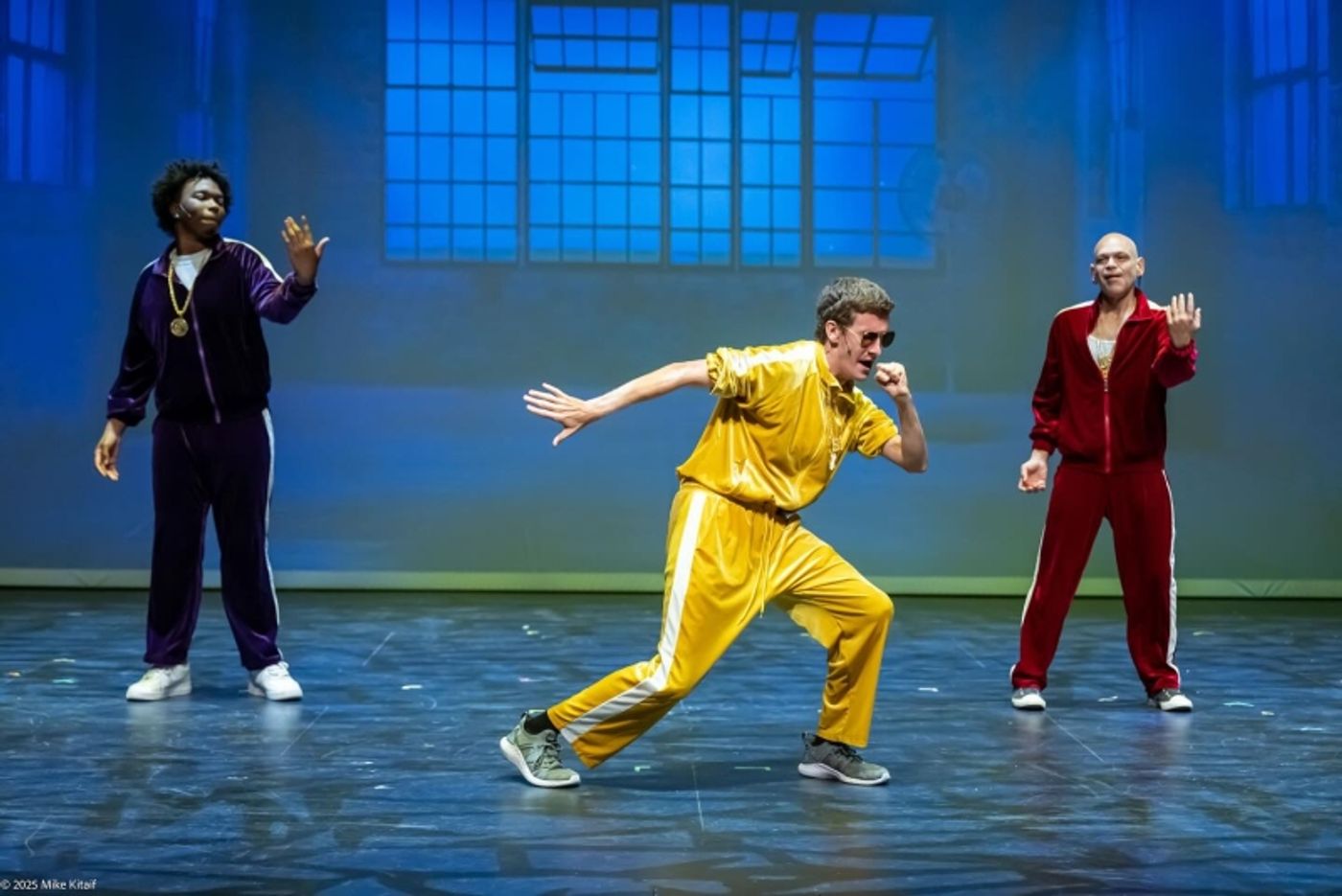
Likewise, Curtis’s goons TJ, Joey, and Pablo bring an equally delightful energy to the production, transforming what could easily be forgettable henchmen roles into comedic highlights. Portrayed by Chase Williams, Tyler Moylan, and Samuel Pagan, the trio exudes an infectious charm that immediately endears them to the audience. It was clear from the cheering and laughter that many in the crowd were already fans of these actors, and their familiarity with the performers only added to the excitement. In the 1992 film, these characters are minor figures—bumbling sidekicks with little to no dimensionality. But in the musical adaptation, they’re given a much more prominent presence, particularly in the hilarious number “Lady in the Long Black Dress.” This song, which hilariously outlines their strategy to seduce nuns, is an over-the-top sequence that plays up every absurd and inappropriate impulse these characters could possibly have, all while staying within the light-hearted tone of the show. Williams, Moylan, and Pagan throw themselves into the performance with exaggerated bravado, slick moves, and pitch-perfect timing. Their dynamic as a trio is spot-on, with each actor leaning into the distinct personality quirks of their respective character. They commit fully to the comedic beats, whether they're mugging to the audience, swaggering across the stage, or engaging in synchronized physical comedy that toes the line between threatening and ridiculous.
The ensemble of Sister Act: The Musical is the heartbeat of the production, and at Little Radical Theatrics, they don’t just support the story: they inhabit it, often quite literally. From the moment the curtain rises, the cast spills beyond the stage and into the aisles of the Alexis and Jim Pugh Theater, creating a fully immersive experience. Smaller featured roles shine, including Monsignor O’Hara (E. Scott Arnold), whose exuberant delight plays well against Mother Superior’s frustrated doubt, and Ernie (Paxton Von Ostendorf), a hapless henchman whose brief moment of treachery becomes his undoing. (I feel, though perhaps I’m overreaching, that there must be some subtextual intent with casting Von Ostendorf as the young man who is killed, but then having him also take on the role as a very-much-alive Altar Boy later on. He is Risen, perhaps?) Nuns like Sister Mary Martin-of-Tours (Taz Scheiber), perpetually dazed, and the feisty Sister Mary Theresa (Marcia Bauer) bring quirky texture to the convent scenes, while backup singers Michelle (Lorena Ervin) and Tina (Khaila Trent) serve up a blast of disco dynamite in their brief but electric appearances.
But it's the broader ensemble that transforms Sister Act: The Musical from just a musical comedy to a celebration of community spirit. Whether portraying bartenders, waitresses, cab drivers, thugs, prostitutes, or even “fantasy dancers” in characters’ imagination, these actors tackle dozens of roles with crisp energy and chameleon-like shifts in costume and attitude. Their work as the chorus of nuns is equally impressive, filling the choir loft with raucous joy and tight harmonies that pulse with vitality. Their ability to move between gritty urban nightlife and cloistered convent innocence gives the show its dynamic pacing and flow. Perhaps most importantly, the ensemble breaks the fourth wall not for gimmick, but connection. Dancers burst into aisles, lean against theater walls, and even sit among the audience. It helps to remind us that Sister Act: The Musical is a story meant to be shared up close. It's a testament to Little Radical Theatrics’ mission: local artists creating memorable, community-rooted theater that bridges performer and audience. Judging by the laughter, cheers, and toe-tapping throughout the show, that mission was gloriously accomplished.
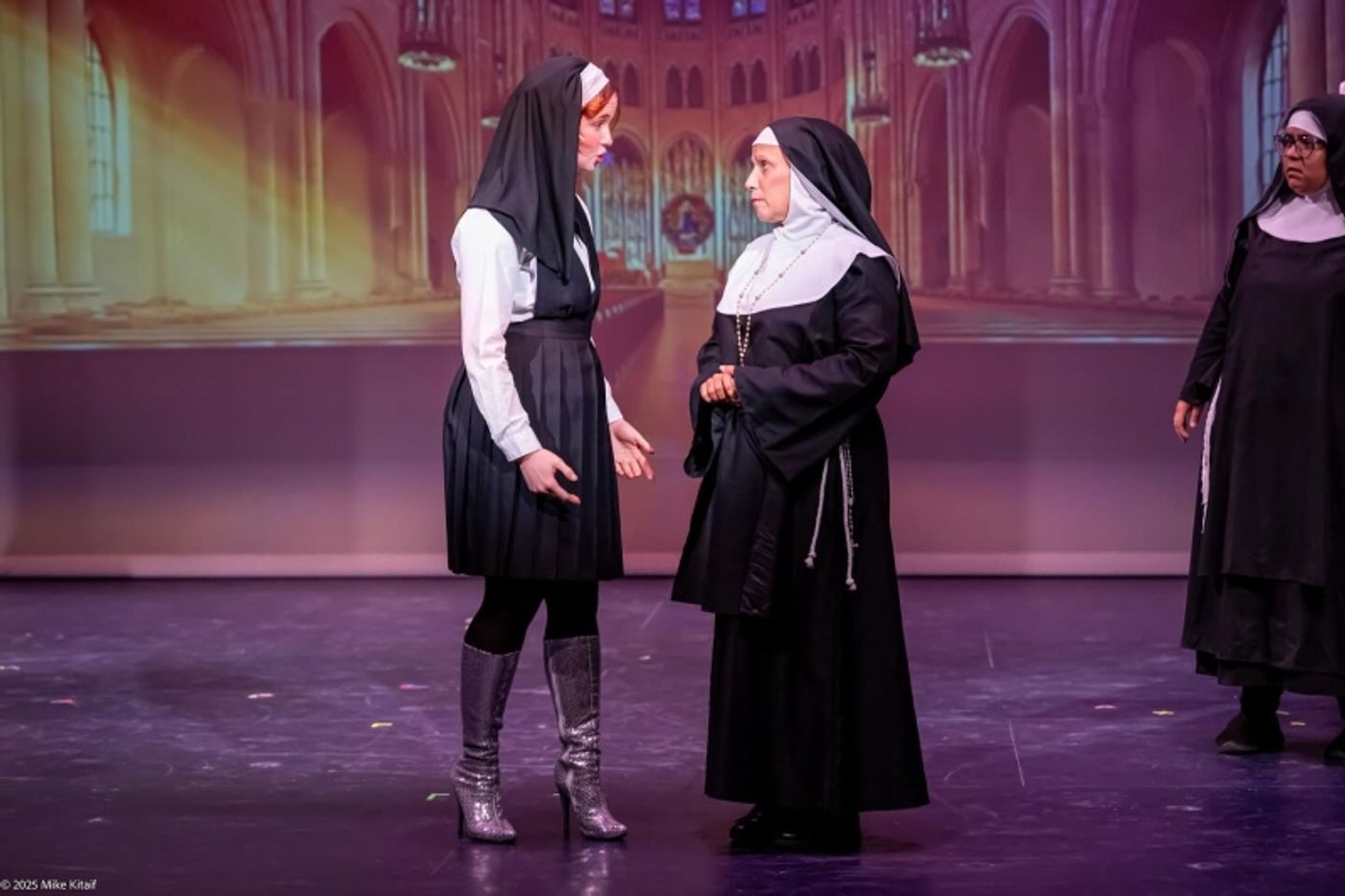
This performer-forward philosophy is reflected not just in casting but in the show’s visual language. The production design leans into intentional simplicity: a desk and a chair stand in for an entire office, while backlit projections imply a stained glass church or city street without fully recreating them. Rather than overwhelm the stage with spectacle, Little Radical Theatrics focuses on suggestion over replication, trusting the audience’s imagination, as well as the actors’ abilities, to carry the scene. This minimalist approach sharpens the spotlight on the performers themselves, allowing emotional beats, comedic timing, and character arcs to land with clarity and weight. It’s a reminder that theatrical magic isn’t always found in elaborate sets or high-budget effects, but in honest storytelling and passionate performance. In this way, the stage becomes not just a place of transformation for Deloris, but for every artist who steps into the light.
That said, no production is without its imperfections, and Sister Act: The Musical at the Alexis and Jim Pugh Theater has a few that bear noting. The use of a prerecorded instrumental track is a completely understandable choice given the venue’s limitations and the community-driven, volunteer nature of Little Radical Theatrics. However, it does sometimes rob the show of the electric spontaneity that live music can offer, especially in such a musically-driven piece. Scene changes, too, could benefit from tighter pacing. On more than one occasion, there was an awkward beat of silence or hesitation before the action picked up again. And while the audio mix on the pre-recorded music was consistently balanced, the same couldn’t always be said for the performer microphones, which at times felt just a notch too low or slightly out of sync. These are ultimately minor quibbles in a production that brings enormous joy and heart to the stage, but they’re details that, if refined, could elevate the experience from great to unforgettable.
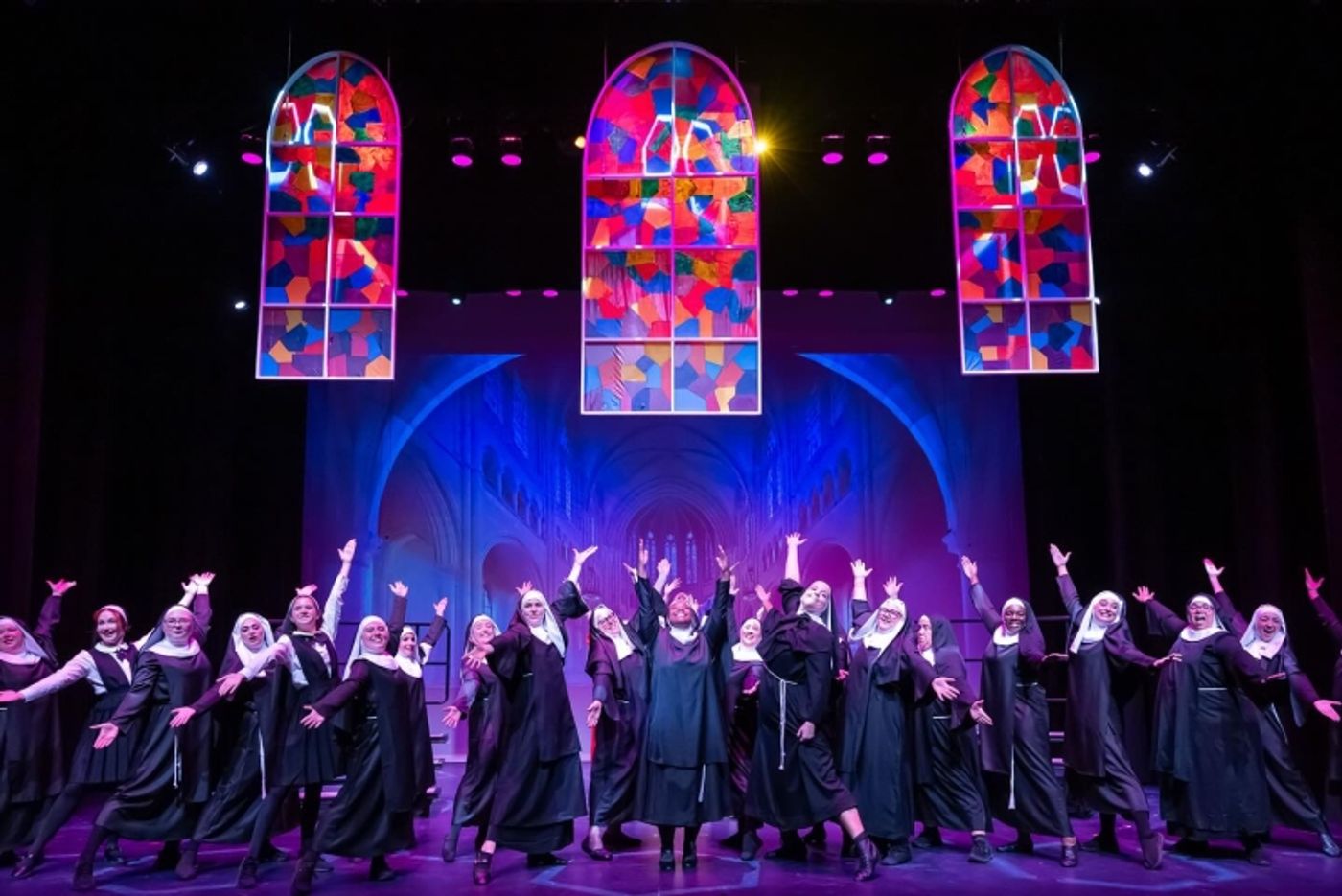
In the end, Sister Act: The Musical is a shining example of why community theatre remains the heartbeat of the performing arts. It’s not about perfection—it’s about passion, purpose, and people coming together to tell stories that matter. Little Radical Theatrics has chosen a show that not only entertains with glittering musical numbers and heartfelt humor, but also uplifts with messages of redemption, unity, and finding your voice. Their production showcases the very spirit of community theatre: a dedicated ensemble mastering their craft through sheer love of the stage, offering joy and meaning to their audience in equal measure. Despite some technical hiccups, Sister Act is an exuberant and thoughtful production that reflects Little Radical Theatrics’ ongoing mission to create art that delights, challenges, and connects. For anyone in Central Florida looking for a night of music, laughter, and soul, this is a performance worth singing about.
SISTER ACT plays exclusively this weekend, August 15 through 17, at Dr. Phillips Center’s Alexis and Jim Pugh Theater. Tickets can be acquired online or at the box office, pending availability. Photography provided by Mike Kitaif Photography. Used with permission.





|
Havana Hop Orlando Family Stage (9/19-9/19) PHOTOS VIDEOS |
|
Deer Tick Revolution Live (11/11-11/11) |

|
Zayn at Kia Center Kia Center (11/09-11/09) |

|
Gothic Attitude Gothic Attitude (4/16-1/16) |

|
Ted Swindley’s Honky Tonk Angels Athens Theatre (2/26-3/21) |

|
Death Trap Little Theatre New Smyrna Beach (8/27-9/06) |
|
Evil Dead: The Musical Dr. Phillips Center for the Performing Arts (10/02-10/04) |

|
The Shark Is Broken Athenaeum Theatre One (10/15-11/08) |
|
Wicked Dr. Phillips Center for the Performing Arts (1/06-1/31) |

|
The Wizard of Oz Athens Theatre (4/16-5/09) |
Reader Reviews
To post a comment, you must register and login.