


Review: Ease on Down the Road to see THE WIZ at Dr. Phillips Center For The Performing Arts
The Wiz honors its history while giving it fresh urgency: a vibrant new interpretation that proves this version of the Yellow Brick Road is as relevant and inviting now as it was fifty years ago.
The impermanence of stage productions brings about a certain joy in witnessing live performance in the moment. Free of the trapping of celluloid and unfettered to the expectation that a show will live “forever,” live theatre allows the audience and the company of players to create forever in a new way. We become adherent to the memory of a show rather than the show itself, we remember how we felt when watching or performing, rather than study every minutiae of a filmed recording with intense precision and criticism. While preservation on celluloid or digital video has its benefits – and, no doubt, plenty of timeless performances from before my time can now only ever be experienced through such means – it also has turned the idea of “remake” and “reboot” into a dirty word in the business. Those words now become a critical shorthand for the assumption that Hollywood is lazily exploiting a past success with a new interpretation. It is, to be frank, a lazy excuse for folks who simply don’t want to see their favorite story remade again, as if they expect future generations to only be satisfied with their version of a story.
And yet, some ideas are still worth remaking, even if the “original” by certain definitions might have been considered perfect as-is. After all, the very first stage production of Frank L. Baum’s The Wonderful Wizard of Oz occurred in 1902, two years after the novel’s publication. It became so popular that the musical’s success led to Baum’s writing of thirteen additional Oz novels. Since 1902, countless other retellings have occurred on stage, screen, and radio. If audiences ascribed to the “no remake” mentality during the original novel’s publication, we wouldn’t see one of the most enduring classic films of all time ever get made. 1939’s MGM Technicolor film adaptation, The Wizard of Oz, is an iconic rite-of-passage for any childhood of the last eighty-six years. But, by the broadest definition, the film can be considered a remake as it was the fifth screen adaptation of Baum’s 1900 novel.
Personally speaking, I’ll gladly welcome a fifth cinematic version of The Wonderful Wizard of Oz than let it remain in the vacuum of its first filmed production from 1908 (a two-hour silent film now lost to time). Likewise, I’ll also gladly welcome future adaptations of the novel, new approaches to the material, and different interpretations of the beloved characters that have set children’s imaginations wild for one hundred and twenty-five years. One such adaptation came about thirty-five years after MGM’s The Wizard of Oz hit the screens, giving us an all-black retelling on the stage titled The Wiz. That retelling now celebrates fifty years of its own legacy with a revised libretto and vibrant new approach to its own design to take it out of the 1970s and make it as timeless and as relevant as its own 1939 and 1900 inspirations.
This touring production of The Wiz originated in 2023, before having a four-month residency on Broadway last year, and continues to tour nationwide to this day. With it comes a new approach to an audience favorite, which invites theatregoers who think they already know the material to now envision this fantasy in a new lens. Thus, not even remakes themselves live in a vacuum. The benefit of a stage production means it will always be malleable to change, always willing to look at how a story written in the past can still be relevant in the present, and remain timeless for the future. What follows in this new production of The Wiz is a recontextualization of our favorite characters. While the structure of the story is faithful to the Baum novel and MGM film, it comes with small, but noticeable details that reframe this familiar story not just as a fantastical quest, but as a bildungsroman and revenge tale at the same time.
%202023.jpg?format=auto&width=1400)
Dorothy (Dana Cimone), is an orphan who moves to Kansas to live with her Aunt Em (Kyla Jade). Dorothy doesn’t quite feel like she belongs, despite Aunt Em’s assurance that she will (“The Feeling We Once Had”). However, this brief exchange is cut short when a twister is spotted on the horizon. Rather than go with her aunt and uncle into the storm cellar, Dorothy remains in the house, which gets upended and sent twirling away before landing in Munchkinland, an area of the greater, mythical land of Oz. In Munchkinland, Addaperle (Amitria Fanae’), the Good Witch of the North, explains that Dorothy’s house landed on Evamean, the Wicked Witch of the East who controlled the weather. While the munchkins celebrate, all Dorothy wants to do is go home. She is then visited by Glinda (Sheherazade), the Good Witch of the South), who suggests Dorothy see The Wiz (“He’s the Wiz”) as he can help her. Before Dorothy goes on her quest, Glinda gives her Evamean’s silver slippers, which contain great power.
En route to the Emerald City, Dorothy encounters the Scarecrow (Elijah Ahmad Lewis), the Tin Man (D. Jerome), and the Cowardly Lion (Cal Mitchell), all of whom had been cursed by Evillene (Kyla Jade, pulling double duty), the Wicked Witch of the West and Evamean’s sister. Scarecrow has lost his brain (“You Can’t Win”), while Tin Man was cursed to no longer have a heart (“Slide Some Oil to Me”), and Cowardly Lion – a spoiled cub of affluence – had his family kidnapped (“Mean Ole Lion”). With every encounter of these new friends, Dorothy assures them that if The Wiz can help her, he can surely help them, too. Thus, the four eventually “Ease on Down the Road” to reach the famed Emerald City where The Wiz resides.
There, they encounter a party-hearty city that exudes good humor and bonhomie (“The Emerald City”), though the city does try to keep out any riff-raff who may throw off their groove. However, upon seeing Dorothy wearing the silver slippers – thus implying that she killed Evamean to get them – they welcome her and her comrades in, although it still is awhile before they do meet The Wiz (Alan Mingo Jr.), a charismatic man in charge of the city who tasks with a mission: kill Evillene and he’ll give them all what they want – Dorothy’s return home, Scarecrow’s brain, Tin Man’s heart, and Cowardly Lion’s courage. The foursome venture to Winkie Country, where Evillene rules over them all and forces them to work in her factory against their will (“Don’t Nobody Bring Me No Bad News”). She glowers upon encountering the four, putting her previous enemies under a spell and imprisoning Dorothy (“Wonder, Wonder Why”). However, a well-timed toss of a bucket of water immediately vanquishes Evillene and frees the Winkies from her control (“Everybody Rejoice / Brand New Day”).
Successful in their mission, Dorothy and the others return to the Emerald City, only to find that The Wiz is packing up shop to leave. He’s not great and powerful at all, merely a talented showman who everyone believed truly was. And with the Wicked Witch now taken care of, he has no need to stay in Emerald City, or Oz at all (“Y’all Got It”). The Wiz reneges on his promise to help them, leaving them all confused and angry. However, Glinda of the South arrives, reassuring them all that the gifts they wanted were within them all along. And, in particular, Dorothy held the power to go home through those silver shoes. She simply needed the experience and the lessons to learn how to use them (“Believe In Yourself”). Dorothy then bids adieu to her friends, as she believes in herself and transports “Home.”
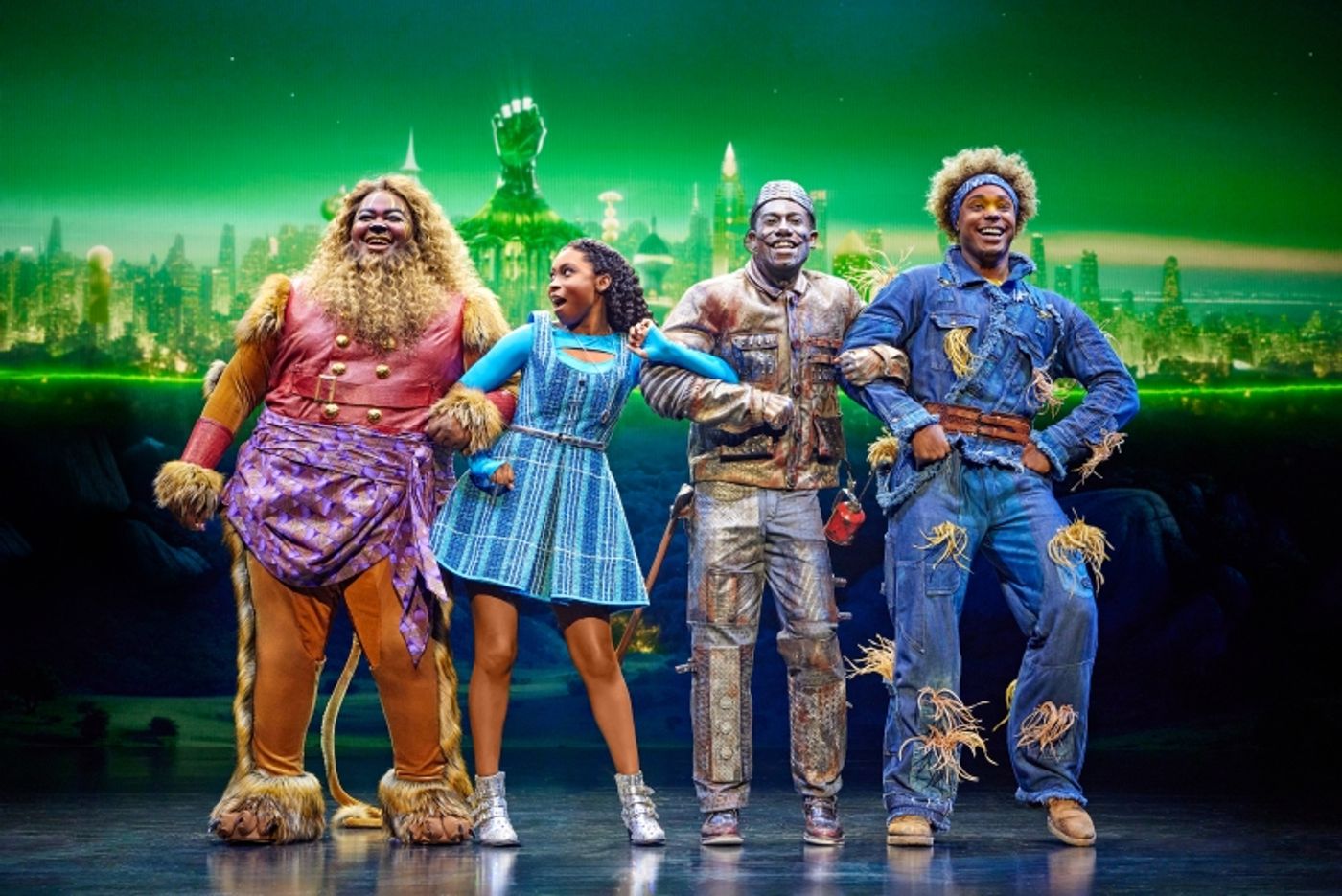
The newly revised 50th anniversary libretto of The Wiz, with fresh material contributed by Amber Ruffin (Some Like It Hot, “Late Night with Seth Meyers”), offers a sharp reimagining of the show’s dialogue and characterizations. Where the original script leaned on broad humor and now-dated slang, Ruffin’s updates refine the language with a contemporary bite, making the banter feel both modern and resonant for today’s audiences. Two of the most notable shifts come in the portrayals of Scarecrow and Lion, who now carry stage-directed mannerisms and lines that lend themselves to distinctly queer-coded readings. Scarecrow’s awkward, self-deprecating charm and Lion’s flamboyant bravado are amplified with wit and camp sensibility, reframing them not just as comic sidekicks but as figures who embody resilience in the face of marginalization. Meanwhile, the Wiz himself has been recast in more cynical terms: no longer a bumbling but ultimately sympathetic conman, he now reads as a slick, almost demagogic figure. He now functions as a charismatic manipulator who capitalizes on the people of Oz’s faith, corrals others into doing his work, and evades real accountability even after his deception is revealed. The effect is to place a sharper, more socially aware critique at the heart of the story, interrogating who holds power and why.
Perhaps the most transformative shift in the libretto comes in how the story’s narrative stakes are redistributed. Ruffin establishes that Scarecrow, Tin Man, and Lion’s afflictions were the work of Evillene, granting them a deeper personal investment in the quest. Their journey becomes not merely about tagging along with Dorothy but about reclaiming their own dignity and confronting the source of their curses, shifting the arc into something closer to a revenge narrative for the deuteragonists. Dorothy’s journey, however, retains its central emotional weight, though reframed with new poignancy. Unlike the 1939 MGM film, this Dorothy is already conscious of her dislocation in Kansas, feeling like an outsider long before the tornado carries her away. By the story’s end, she comes to recognize that belonging is not tied to geography but to community: home is defined by who you walk with, not the land you stand on. This lends her arc a classic bildungsroman quality, but with layered commentary on inclusivity and chosen family, themes that resonate profoundly in both Black cultural history and contemporary queer discourse. Within the context of an all-Black cast, this message doubles as a meditation on the post-slavery African American experience, where “home” had to be reconstructed in a country that was often hostile, forcing resilience, reinvention, and solidarity.
Taken together, these revisions don’t discard what made The Wiz a landmark musical in 1975; instead, they make the work more accessible and alive for a twenty-first-century audience. As beloved as the original Broadway staging remains, it is also very much of its time, steeped in the slang, humor, and musical styles of the 1970s. It also didn’t help, I must admit, that the 1978 film adaptation buried much of the show’s vibrancy under a dreary, urbanized retelling, even if that version has its own cult admirers. Ruffin’s contributions, by contrast, allow the story’s core themes of hope, belonging, and the reclamation of self to shine in a way that speaks to contemporary audiences without alienating long-time fans. The familiar framework of Baum’s tale, the MGM film, and the original stage musical all remain intact, but now filtered through sharper comedy, richer character motivations, and broader cultural commentary. The result is a revitalized The Wiz that honors its history while giving it fresh urgency: a vibrant new interpretation that proves this version of the Yellow Brick Road is as relevant and inviting now as it was fifty years ago.
%202023.jpg?format=auto&width=1400)
Making her touring debut, Dana Cimone carries the role of Dorothy with a natural innocence and sincerity that immediately wins over the audience. Her voice, crystalline and bright in the lighter numbers, reveals surprising depth as the story progresses. It all culminates, of course, in her bravura rendition of “Home.” What’s striking is how Cimone turns what could have been a static staging (a lone figure wandering across a near-empty stage with only a spotlight) into something fully alive. She moves with purpose, embodying Dorothy’s emotional growth so vividly that the audience doesn’t just hear the lyrics; they feel them through her. Cimone reminds us why Dorothy’s yearning for belonging remains timeless, grounding the fantasy of Oz in genuine human vulnerability.
Kyla Jade takes on the dual roles of Aunt Em and Evillene, a doubling that feels as symbolic as it does theatrical. This doubling immediately evokes the Peter Pan-like mirroring of Mr. Darling and Captain Hook. On one hand, she’s the maternal figure whose tender “The Feeling We Once Had” frames Dorothy’s longing for Kansas; on the other, she’s the tyrannical witch snarling through “No Bad News.” Jade makes the most of this duality, using it to showcase her remarkable range both vocally and dramatically. Her Em is warm, grounding Dorothy’s motivation to return home, while her Evillene is all delicious wickedness. Evillene chews scenery through song with a gleeful delight. The contrast not only highlights Jade’s versatility but also deepens the show’s symbolic underpinnings: Dorothy’s idea of home (Auntie Em) is tied to the very forces she must resist in Oz (Evillene).
Though Addaperle’s stage time is relatively brief, Amitria Fanae’ makes the most of every moment. As the comic, bumbling witch of the North, she injects the Munchkinland sequence with a burst of levity that helps ease the audience into the more stylized elements of the show. Her comic timing is impeccable, her delivery sharp, and her presence lingers long after she exits. Even without a signature solo like her fellow witches, Fanae’s Addaperle proves indispensable: she bridges the audience’s world and Oz’s eccentricity, making Ruffin’s updated libretto all the more approachable through humor.
If Cimone gives the heart of the show and Jade delivers its fire, then Sheherazade provides its sheer vocal transcendence. As Glinda, she reclaims “Believe in Yourself” as an eleven o’clock powerhouse, transforming the song into a vehicle for soaring virtuosity. Her shimmering vibrato, paired with an audacious option-up that stops the show cold, all but dares the audience not to leap to their feet. And in Tuesday night’s performance, they did. Several audience members applauded mid-song and even offered standing ovations before the curtain call. Yet it’s not just vocal fireworks; Sheherazade imbues Glinda with a regal calm and benevolent wisdom, ensuring that when she finally helps Dorothy learn her way home, it lands not as a perfunctory plot device but as a cathartic, earned moment of grace.

As mentioned earlier, Elijah Ahmad Lewis’s Scarecrow is the first clear marker that Ruffin’s revised libretto intends to expand the inclusivity of The Wiz. Traditionally played as a whimsical mimic of Ray Bolger’s physical comedy, the character has often lacked an identity beyond “Black Scarecrow.” Here, however, Lewis leans into a reading that feels distinctly queer, but not in any reductive sense of that labeling. Instead, Scarecrow’s fluidity, both physically and emotionally, becomes a metaphor for spectrum identity. His bendable, straw-stuffed body underlines a personality that can flex and flow without limits, embracing playfulness and vulnerability in equal measure. Lewis makes this Scarecrow not just comic relief, but a character whose very adaptability becomes an admirable strength.
By contrast, D. Jerome’s Tin Man grounds the trio with an earthy sincerity. He is the straight man of the group – both figuratively and literally – but that doesn’t mean he’s devoid of depth, either. His arc, tied to the loss of his heart and thus the fading memory of his wife and children, carries a particularly poignant weight. While his coding leans heteronormative, his journey reinforces a broader truth: vulnerability is universal. Jerome’s plaintive yearning to remember his family lends Tin Man a touching humanity that resonates deeply, especially when framed against Evillene’s cruelty. She hasn’t merely cursed him, she’s robbed him of the very thing that defined his masculinity and identity. His quiet dignity makes the revenge quest all the more compelling.
Cal Mitchell, meanwhile, goes gloriously big with Cowardly Lion, embracing the updated text to craft a flamboyant, queer-coded performance that practically steals every scene he’s in. His Lion is a spoiled dandy, equal parts hilarious and sympathetic. Lion is a figure who once relied on privilege and pomp but is now forced to discover bravery without the trappings of wealth or power. Mitchell plays him with unabashed camp, but also layers him with a lesson that resonates: fear does not equal weakness, and vulnerability is not the same as cowardice. In his hands, Lion becomes a showcase for queer resilience, a character who redefines strength not as the absence of fear but as the courage to live authentically in spite of it.
And then there’s Alan Mingo Jr.’s Wiz, who is perhaps the most radically reimagined character in this staging. Gone is the bumbling charlatan with a sympathetic streak. We now get a razor-sharp parody of the unqualified populist leader: slick, manipulative, and shamelessly self-serving. Mingo plays him with a sly wink, signaling to the audience that yes, this man is a slimeball, but one you can’t help but be entertained by. His promises are empty, his accomplishments nonexistent, and yet he revels in his ability to charm others into doing his work for him. The performance lands as a scathing political satire, one that feels uncomfortably familiar in today’s climate. But crucially, the libretto ensures that The Wiz’s ultimate irrelevance is exposed: Dorothy’s triumph comes not from his guidance but from her own self-realization, proving that his hollow reign was never the true source of power in Oz.
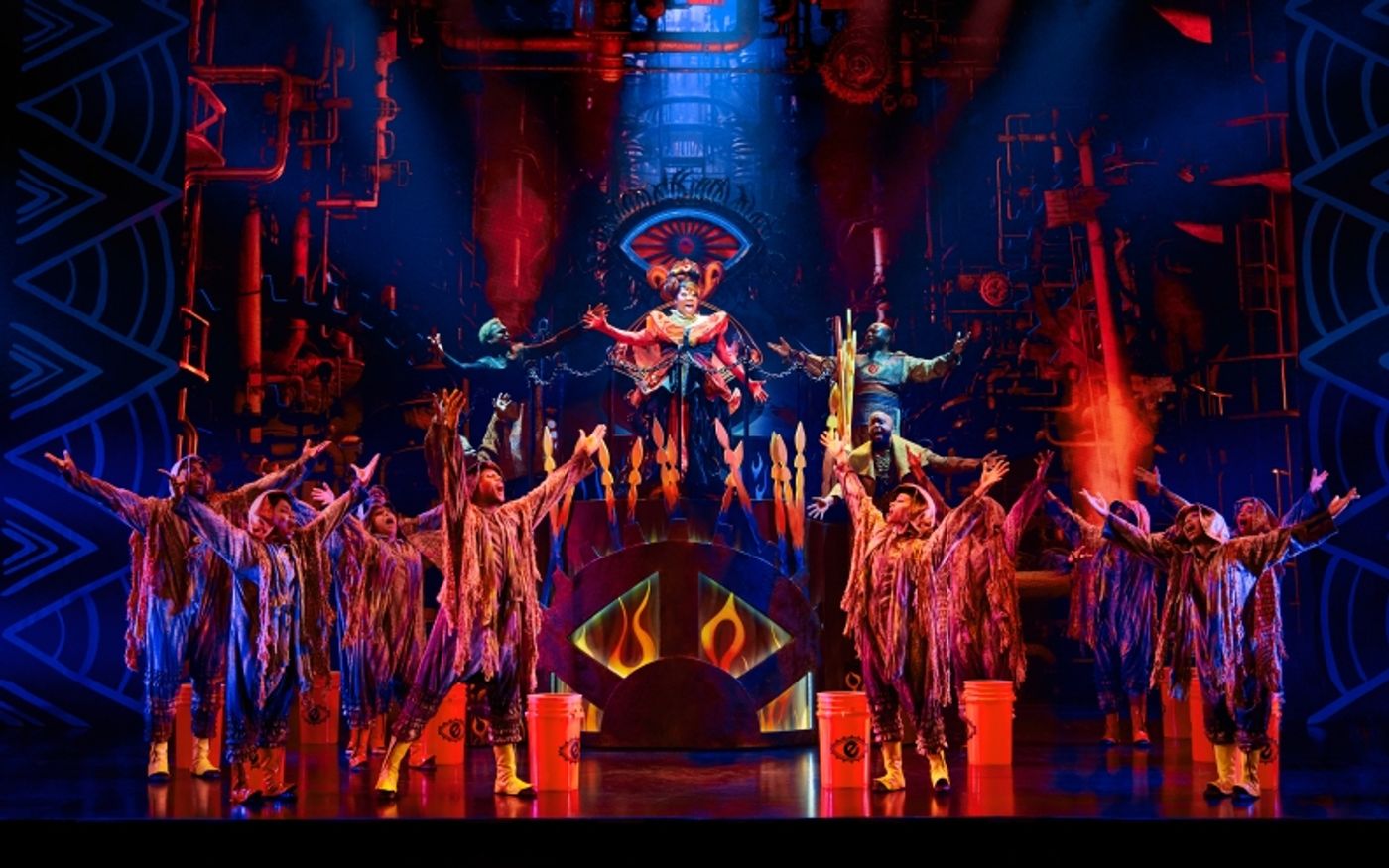
No analysis of this production would be complete without applauding the twenty-strong ensemble (Maati Kheprimeni Angaza, Sai Anthony, Joseph Armon Boyd, Robert Crenshaw, Lawrence Dandridge, Cyniah Elise, Amitria Fanae’, Kaiyla Gross, Gregory Hamilton, Maya Imani, Micah Jeremiah Mims, Moriah Perry, Leon Ray, Ephraim Takyi, Lynn Webber, Kameren Whigham, Mikayla White, Chanse Williams), led by two tireless dance captains (Aliyah Caldwell and Jesse Jones). This is an extraordinarily physical show, and the ensemble carries the burden with dazzling precision. Over the course of the evening, they embody tornadoes, Munchkins, Winkie guards, Emerald City clubgoers, Poppy girls, and even the marching Yellow Brick Road itself. They represent a full kaleidoscope of characters that require constant shifts in energy, movement, and personality. What’s remarkable is their ability to shine brightly in each number while never overwhelming the principals, embodying that bittersweet notion of being “twenty feet from stardom.” With JaQuel Knight’s high-octane choreography (Knight most memorably choreographed Beyoncé’s “Single Ladies” and Lemonade) setting the bar sky-high, the ensemble has no choice but to slay every time they step onstage. And they do: the sheer stamina, crisp execution, and infectious joy in their dancing make it all look effortless, even though anyone in the audience knows that three steps of Knight’s choreography would probably leave most of us gasping. It’s the most dance-heavy musical staging I’ve seen in recent memory, and the ensemble makes it soar.
Technically, this touring production leans heavily on projection to build its world, a thrifty but increasingly standard practice in contemporary stagecraft. Gone are the sprawling, hand-built set pieces of Broadway’s golden age; in their place, screens and projection mapping provide an adaptable canvas. What makes The Wiz stand out, however, is that the projections aren’t static backdrops. They serve as reactive, living environments in sync and in implied dialogue with the performers onstage. Combined with carefully chosen physical props and set pieces, the result is a hybrid aesthetic: half tangible, half ethereal, perfectly suited to Oz’s otherworldly vibe. It may not be reality as we know it, but it feels like reality as Oz would imagine it, which is perhaps even better.
The costumes, meanwhile, maintain the bold theatricality that has defined The Wiz since 1975, but with an added fluidity that makes them practical for this intensely choreographed staging. Every garment looks designed to move as much as to dazzle, ensuring both leads and ensemble can dance with freedom and flair. The vibrant colors and kaleidoscopic patterns practically put classic Technicolor to shame. Nowhere is this clearer than in “Brand New Day,” when Evillene’s oppressed factory workers transform into liberated dancers. The moment, aided enormously by costume shifts from heavy, industrial silhouettes into flowing, Caribbean-inspired ensembles, feels almost cinematic – the Disney Adult in me would liken it to the finale of “Captain EO” reimagined for the stage. Costume design here doesn’t just clothe the cast; it visually embodies liberation, joy, and renewal.
Of course, no technical feat or costume flourish means much without the audience’s reaction and this show had it in spades. One of the great joys of live theatre is the invisible, social contract between the stage and the spectators. It’s through the audience’s laughter, applause, and gasps that a communal rhythm is formed, feeding off the performers’ energy, who likewise get a feel for what the audience is responding to. In this performance, I measured that rhythm through what I came to call the “Yeah Lady Approval Meter.” A woman a few rows behind me punctuated the evening with gleeful “Yeah!”s at particularly thrilling moments, her voice becoming my personal barometer for audience delight. Soon, I found myself anticipating her outbursts, wondering which song or punchline would earn that seal of approval. By curtain call, it was clear: the Yeah Lady, along with the rest of us, had a wonderful night.
%202023.jpg?format=auto&width=1400)
What makes this 50th anniversary Wiz so special is how it threads the needle between reverence and reinvention. Everything about the production feels familiar: the Yellow Brick Road, the beloved score, the journey toward home. Yet, with the passage of time and the advent of modern technology and the shifting changes in societal values, we have a version of The Wiz now reflected with modern lenses of queerness, inclusivity, and social critique. Ruffin’s libretto updates keep the show crackling with immediacy, the cast imbues their roles with fresh nuance, and the technical and design elements ensure Oz sparkles in ways both retro and futuristic. Fifty years after its original staging, The Wiz still finds ways to matter, to delight, and to surprise. And if the Yeah Lady is to be believed, the show remains an undeniable crowd-pleaser. So do yourself a favor: ease on down the road to the box office and grab a ticket.
THE WIZ plays September 30 through October 5, at Dr. Phillips Center for the Performing Arts. Tickets can be acquired online or at the box office, pending availability. Photography provided by Jeremy Daniel. Used with permission.
%202023.jpg?format=auto&width=1400)

|
DELORIS SCRUD MOVIN' ON UP Starlite Room @ SAVOY Orlando (9/10-9/12) |
|
Wicked Dr. Phillips Center for the Performing Arts (1/06-1/31) |
|
Disney Finding Nemo, Jr. Athens Theatre (1/22-2/07) |
|
Ted Swindley’s Honky Tonk Angels Athens Theatre (2/26-3/21) |
|
THE PROM Theatre at St. Luke's (8/06-8/16) |
|
Deer Tick Revolution Live (11/11-11/11) |
|
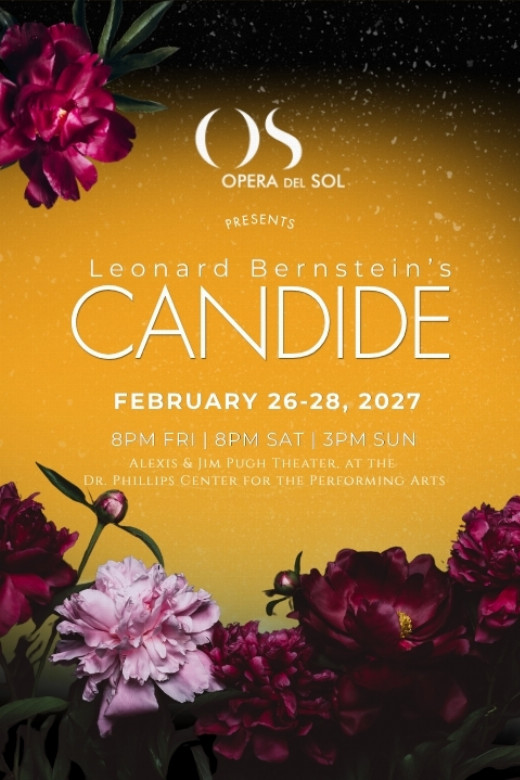
Candide Dr. Phillips Center for the Performing Arts (2/26-2/28) |
|
Ride The Cyclone Theatre South Playhouse (4/17-8/30) |
|
Gothic Attitude Gothic Attitude (4/16-1/16) |

|
Ted Swindley’s Honky Tonk Angels Athens Theatre (2/26-3/21) |
Reader Reviews
To post a comment, you must register and login.