


Interview: Playwrights Lisa Pearl Rosenbaum & Ronda Spinak of THE VIOLIN MAKER
at International City Theatre April 25 to May 11
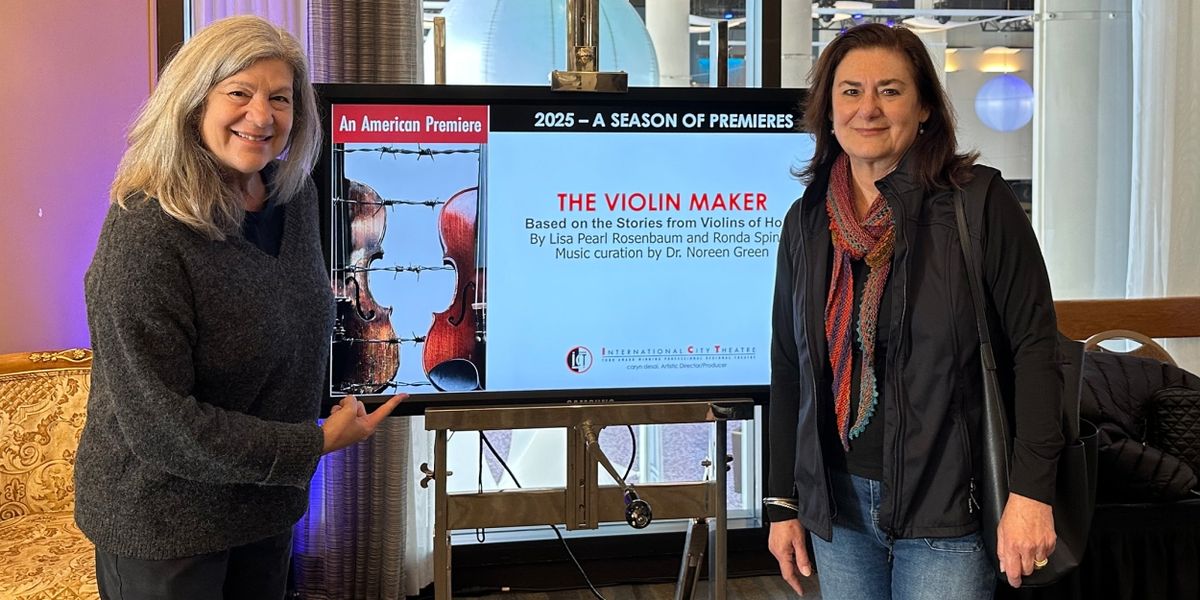
In January 2021, The Braid, the Los Angeles Jewish Symphony Chamber Players (LAJSCP), and Temple Isaiah honored International Holocaust Remembrance Day with the world premiere of Stories From the Violins of Hope broadcast on Zoom. Along with extraordinary performances by five musicians, I learned the story of the famed collection of stringed instruments that survived the Holocaust and were brought back to life - and to the world - by an Israeli family of violin makers led by Amnon Weinstein, who founded the traveling Violins of Hope project with his son. Playwright Lisa Pearl Rosenbaum (pictured at right with The Violin Maker co-playwright Ronda Spinak on left) shared her mission for creating the program was “to find a way to let these violins speak to tell the world they were once played by people who had dreams, and so much talent that has been lost. Every piece of music played on them says, ‘Never Again.’”
When theaters were able to open again, the Violins of Hope traveled the world, filling venues with their glorious sound as a tribute to those lost who had taken their prized violins with them into the camps and no doubt provided comfort to others locked away from the world. I attended several of those concerts and was moved to tears by overwhelming emotions, as were most audience members who, no doubt, like me, lost family members in the camps where the violins had been played.
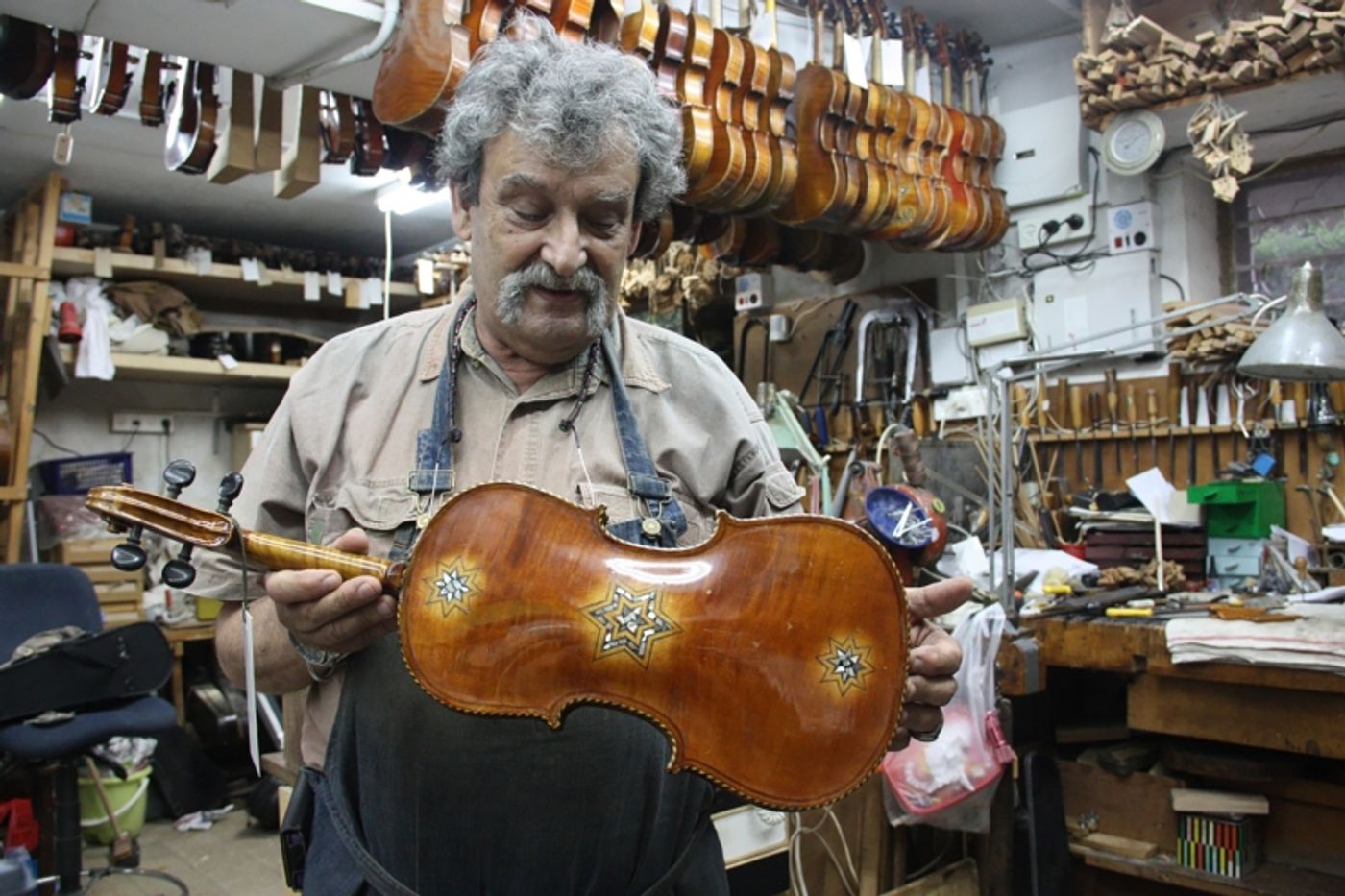
And now, inspired by conversations Rosenbaum had with Israeli violin maker Amnon Weinstein (pictured), the International City Theatre in Long Beach is presenting the American premiere of The Violin Maker, a new play based on the true story of how he gathered and restored ruined violins that survived the Holocaust to create the remarkable collection known throughout the world as the “Violins of Hope.” I decided to speak with playwrights Lisa Pearl Rosenbaum and Ronda Spinak (artistic director of The Braid) about the play’s creation and history, especially why it is so important to tell the Violins of Hope maker’s story.
Thank you, Lisa and Ronda, for speaking with me today. I know the Violins of Hope story has been a part of your lives for several years. Tell me how the two of you first decided to bring attention to them and their maker(s).
Lisa: The project was first conceived in 2019 when the Violins of Hope collection was about to make its debut tour of Southern California. No one had ever dramatized the story of the renowned Israeli violin maker who had stopped building new violins and devoted his life to bringing these “stringed survivors” and their extraordinary stories to the world. Ronda Spinak, The Braid’s founder and artistic director, which is a global nonprofit theatre dedicated to amplifying American Jewish voices, approached me with the idea. I’d never heard of the Violins of Hope but when I read the short descriptions of what some of these violins had survived, I wanted to know more about them, about their restorer, and about human beings who managed to stay alive through music, despite the horrific circumstances of the Holocaust.
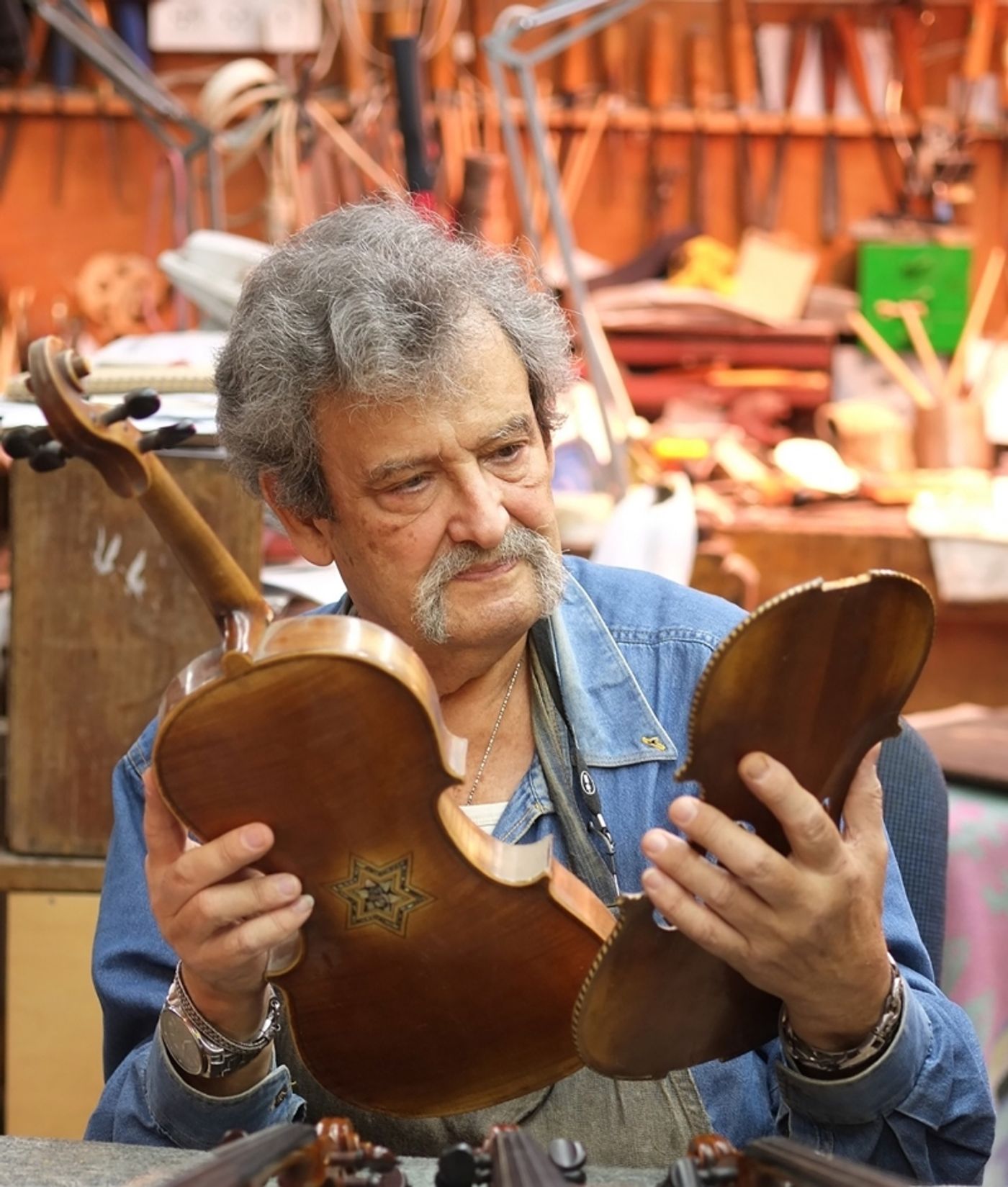 Once the play was able to be performed with actual Violins of Hope, did you travel around the country with the show to experience how audiences responded to hearing them?
(pictured: Violin maker Amnon Weinstein restoring one of the Violins of Hope.)
Ronda: Lisa and I have not traveled with the Violins of Hope collection, but were included in the Los Angeles tour offerings of events. Susanne Reyto, the Chair of the LA tour, welcomed the theatrical presentation, Stories from the Violins of Hope, which Lisa penned, and which featured live actors and musicians. It included one of the actual Violins of Hope, on permanent loan to violinist Niv Ashkenazi, and members of the Los Angeles Jewish Symphony, and their Artistic Director, Dr. Noreen Green. Unfortunately, the live performance was scheduled for April 2020, and we all know by then we were on lockdown.
The Braid, which was producing, pivoted and went live on Zoom during Covid but given the difficulties of combining music with the text, we filmed the performance with the musicians recorded separately and the actors each recorded from their homes. Watched on Zoom by a global audience, it was later translated into Spanish and Portuguese and shown in 15 Latin American countries.
In 2021, the United Nation’s Global Outreach Programme on Holocaust Remembrance presented it in commemoration of Kristallnacht, with Amnon and his wife Assi Weinstein appearing in person on their platform. The film has been featured nationwide at museums, synagogues and other venues, many in conjunction with the touring Violins of Hope collection. At these showings, we’ve had the chance to hear how strongly people, especially young people, connect with it.
There’s been just one live performance, at Mount St. Mary’s University in Los Angeles. President of Mount St. Mary’s University, Ann McElaney-Johnson said, “As a Catholic University, it’s really incumbent upon us to engage in dialogues across faiths. I was incredibly moved. And I did not know we’d be hearing personal stories and how impactful. It changed something deep in me in terms of what is it to stand with those who have had a very different lived experience. I want all of our students to see this. I think it is that important.”
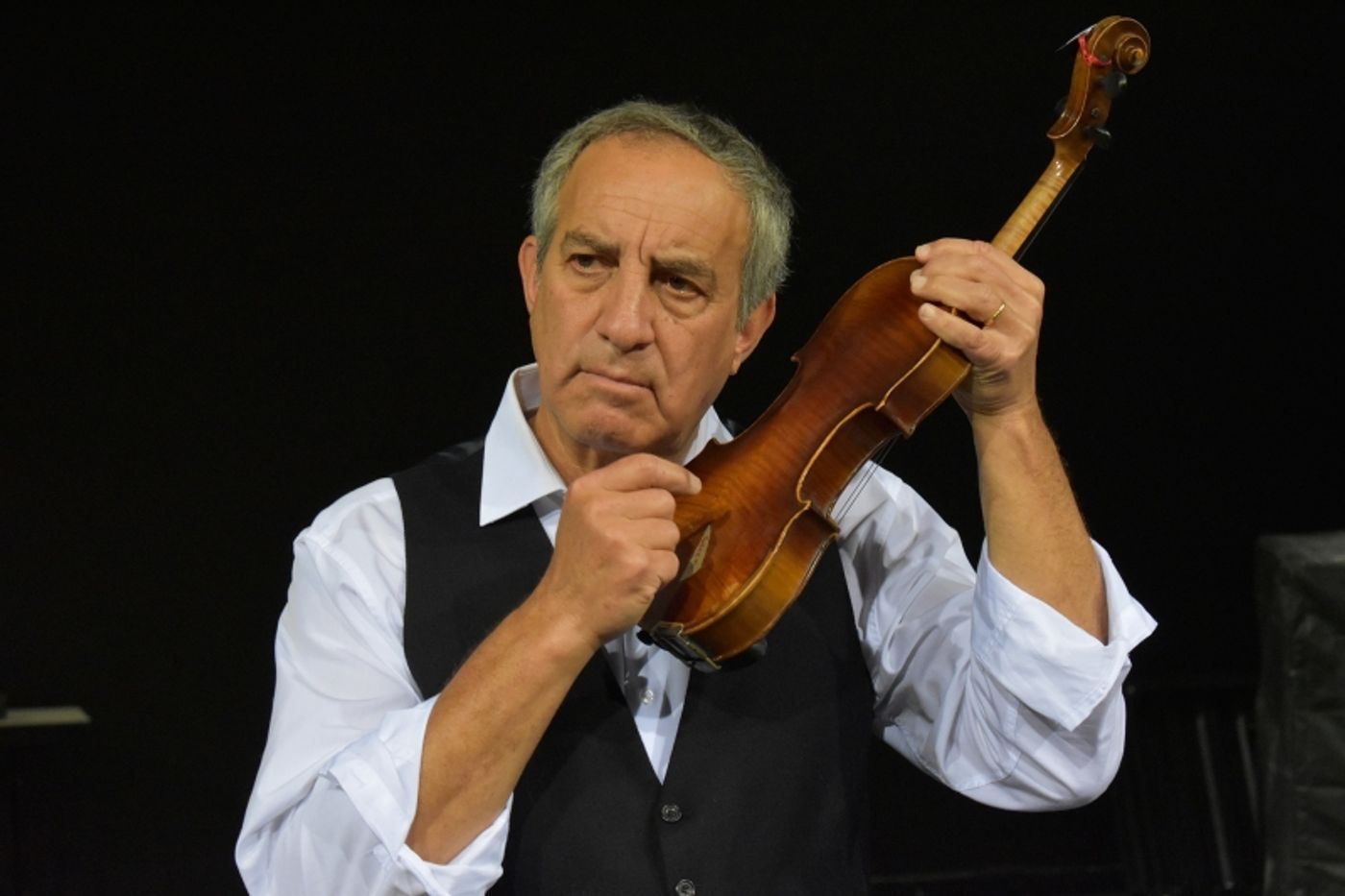
Bruce Nozick as Amnon Weinstein in The Violin Maker
Photo by Jordan Gohara
Lisa, I know you did years of research, even spoke with Amnon Weinstein, about the violins’ creation. But what first inspired you to begin to gather that information to write a play?
I know the power of true stories from my work as writer, and as a dramaturg for The Braid theater company, which produces contemporary Jewish stories in its signature style, at the intersection of theatre and storytelling. The prospect of writing a play about this collection of stringed instruments interested me from the beginning. My husband’s family are Holocaust survivors and I had researched Jewish life in Eastern Europe to write my novel, A Day of Small Beginnings, about three generations of American Jews who discover their lost history buried in a small Polish town. A klezmer tune happens to thread throughout the story, so I was familiar with the rich musical life that existed in the world of Amnon’s father in Lithuania.
I began the process of writing the theatrical presentation, Stories from the Violins of Hope, by reading about individual violins in the Weinstein collection and watching interviews about the Violins of Hope project. The short descriptions of where they or their owners had been, were so evocative and dramatic I felt they deserved more than a note in a concert program, or even a lecture.
Was there something you discovered about their history that let you know their story needed to be told?
Lisa: The Violins of Hope celebrate the best of humanity and the beauty we are capable of creating, even when humanity seems to have fallen to the depths. The violins once belonged to people from different countries, of different classes, with different experiences of the war. These included the musicians of the famed violinist/conductor Bronislaw Huberman’s Orchestra of Exiles in Palestine who came with German violins, violinists who played concerts in ghettos, or were forced to perform in concentration camp orchestras. The more I read, the more I felt these stories represented something about the human spirit, about our ability to become resilient through the power of music.
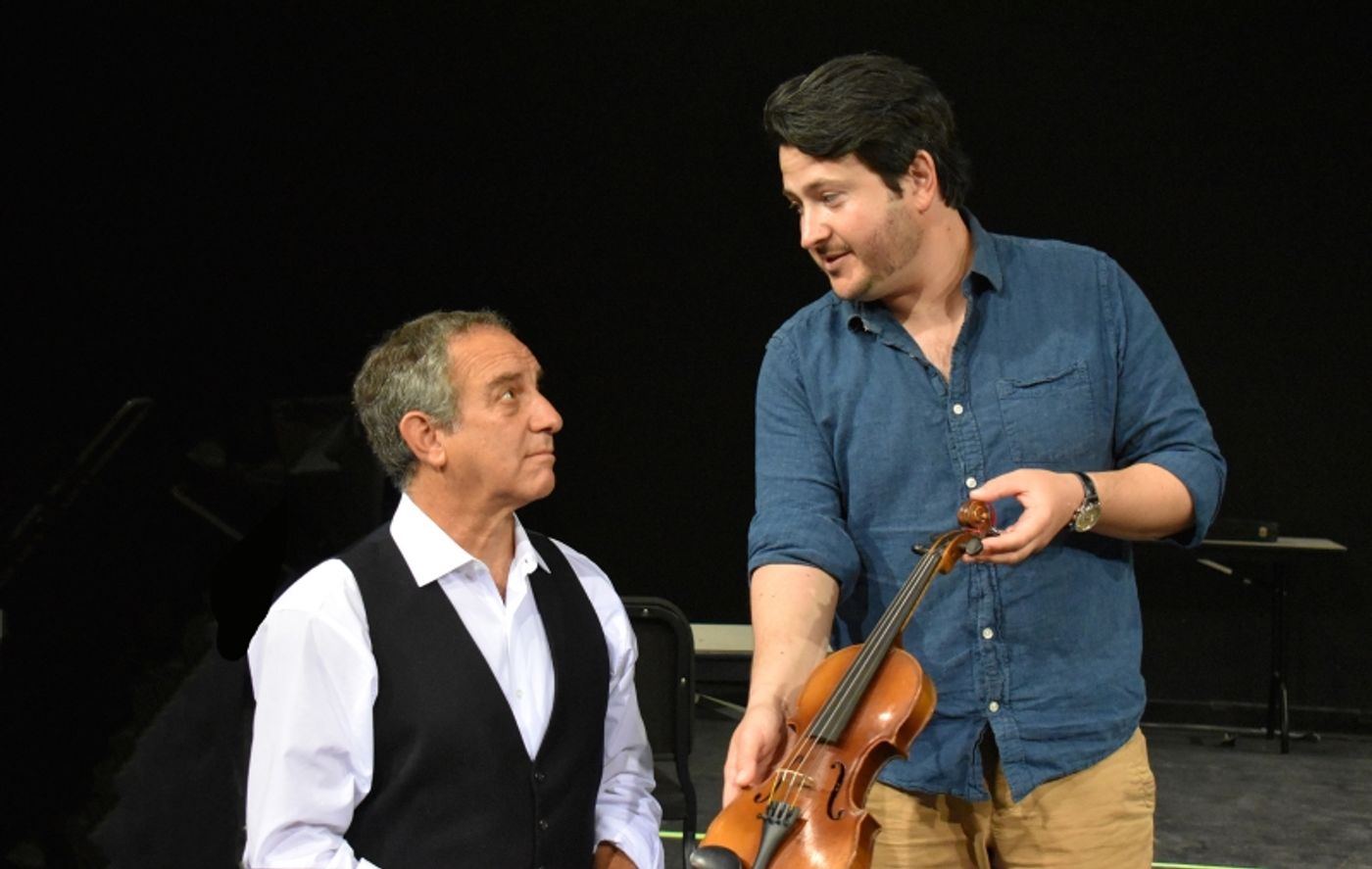
Bruce Nozick and Matthew Bohrer in The Violin Maker
Photo by Jordan Gohara
When did the two of you decide to write the play The Violin Maker?
Lisa: We decided to write the play The Violin Maker after caryn desai, of International City Theatre, reached out to us about an American Premiere. It’s a fuller exploration of the Stories from the Violins of Hope, the questions it raised, and the complex story of a father and son who share a devotion to string instruments but struggle to understand each other. We asked ourselves, how did this strong, proud Israeli who wanted only to look forward and have nothing to do with the perceived weakness of his family who died in the Holocaust, become the founder of the Violins of Hope? How did he find hope, and even redemption for himself and his family, in taking these violins down from the rafters and from the crates he’d left them in, to restore them?
Why did you decide to have its World Premiere in Australia?
Ronda: Stories from the Violins of Hope had been commissioned as a stage play by the Australian producer and director, Moira Blumenthal. That’s when Lisa invited me to join her to rework her masterful piece. The stage play had its world premiere at the Bondi Pavillion Theater in Sydney in 2023. We were glad for the opportunity to tell this story in a country where the Violins of Hope had not performed, which has many survivors and descendants of survivors, but where the subject of the Holocaust was less familiar to the general public.
Was writing the play a way for you to allow Weinstein to tell his own story, just as he had told you?
Lisa: Writing the play allowed me to share some of the stories Amnon told me, but in a dramatic way. Most of the violin stories are available from other sources but it was his personal insights about them that touched me especially. I thought the story of his initial refusal to play violin for a school Holocaust Memorial Day program and why he thought his father loved to take him to see American Western movies were full of clues about the man and his development. He heard that still, small voice that asked what was he being asked to do with his life and he followed it somewhere he never imagined he’d want to be.
How did ICT go about casting Bruce Nozick to portray Weinstein? Have the two of you worked with him before?
Ronda: Bruce Nozick auditioned for the play with director caryn desai and her casting director, Michael Donovan. We had not worked with him before, but Lisa and I were present for his performance at the call back audition and agreed he would make a splendid Amnon Weinstein.
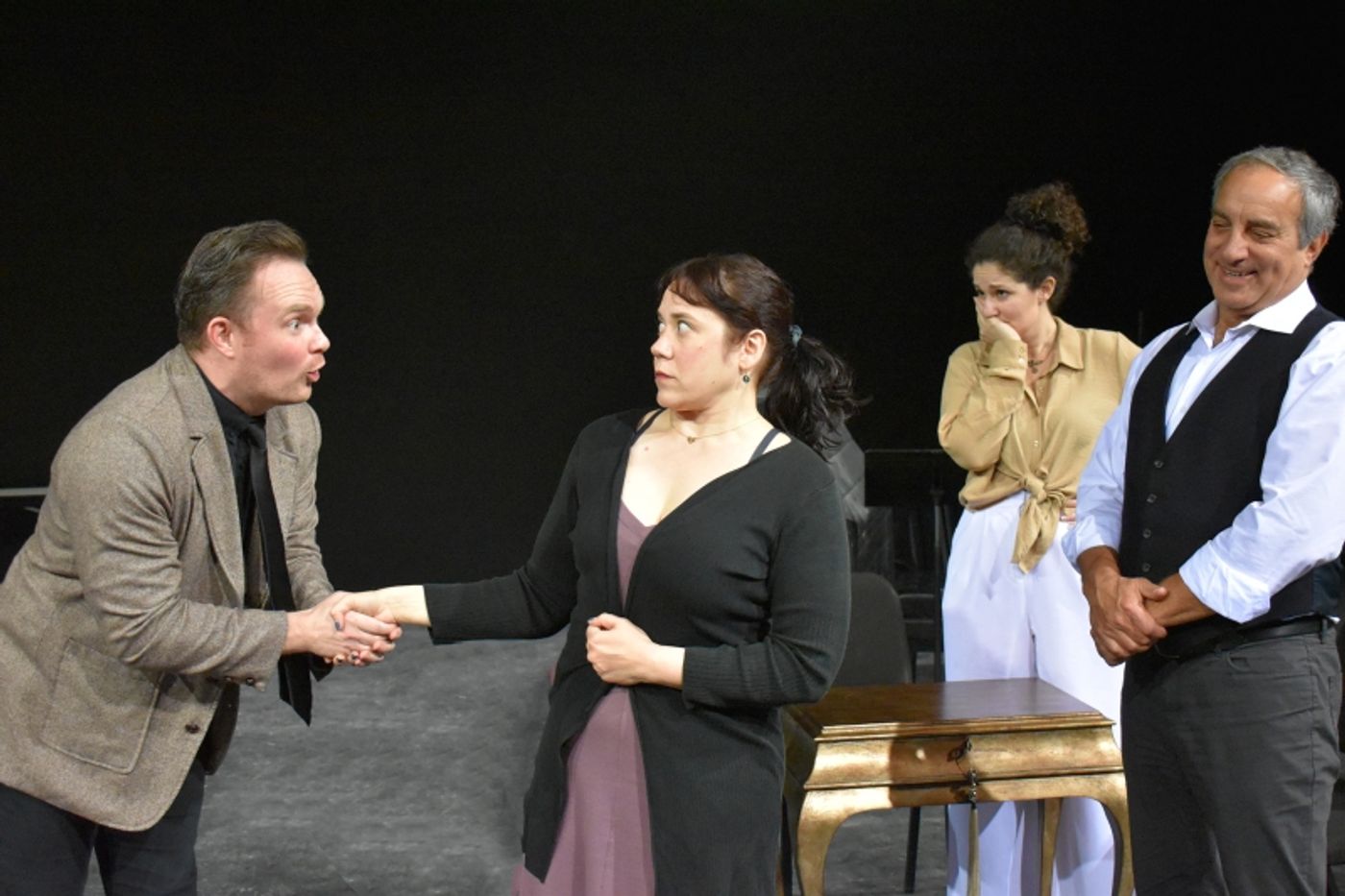
Morgan Lauff, Sheer Aviram, Aviva Pressman and Bruce Nozick
Photo by Jordan Gohara
In addition to Nozick, the cast includes Sheer Aviram, Matthew Bohrer, Matthew Henerson, Lielle Kaidar, Morgan Dean Lauff and Aviva Pressman, each of whom plays multiple characters in Israel and the U.S. as well as, in memory, in Lithuania and Germany before and during World War II. How did ICT go about casting them?
Ronda: ICT’s Artistic Director, caryn desai, held auditions with her casting director, Michael Donovan. From the wealth of talented actors who responded, the final cast they chose seemed to embody the various roles each would be called upon to play, and to interact most naturally with each other. We have been thrilled by the actors’ deep commitment to their roles in rehearsal, and to the play. Many have shared their personal connections to the stories. Lielle Kaidar told us about her grandfather hiding in the forest and breathing underwater through a reed - evoking a seminal story in the play of a twelve year-old violin-playing partisan fighter who avenged his family. Sheer Aviram comes from a musical family in Israel who, coincidentally, were quite familiar with the Weinsteins as luthiers.
Have either of you worked with any of the actors previously?
Ronda: We have not worked with any of the actors previously.
Tell me about a few instances during which their interactions with Weinstein deeply affect the emotional impact of the play.
Lisa: This is a memory play, so we are privy to Amnon Weinstein’s thinking as he wrestles with the conflicts the Holocaust violins pose for him over his lifetime. The appearance of a young German apprentice at the Weinstein home, and the tension this creates in the family, is an instance that has deep dramatic impact. Amnon has to contend with a mother who doesn’t want a German in her house and an East German who grew up under Soviet rule and knows nothing about what happened to the Jews in his country during the Holocaust. Morgan Dean Lauff plays Amnon’s young apprentice with beautiful nuance and sensitivity. His growing awareness leads him to hound the unwilling Amnon to visit Germany and speak to other violin makers about the history of these instruments. The event sets in motion a series of moments that push Amnon closer to confronting his family’s past.
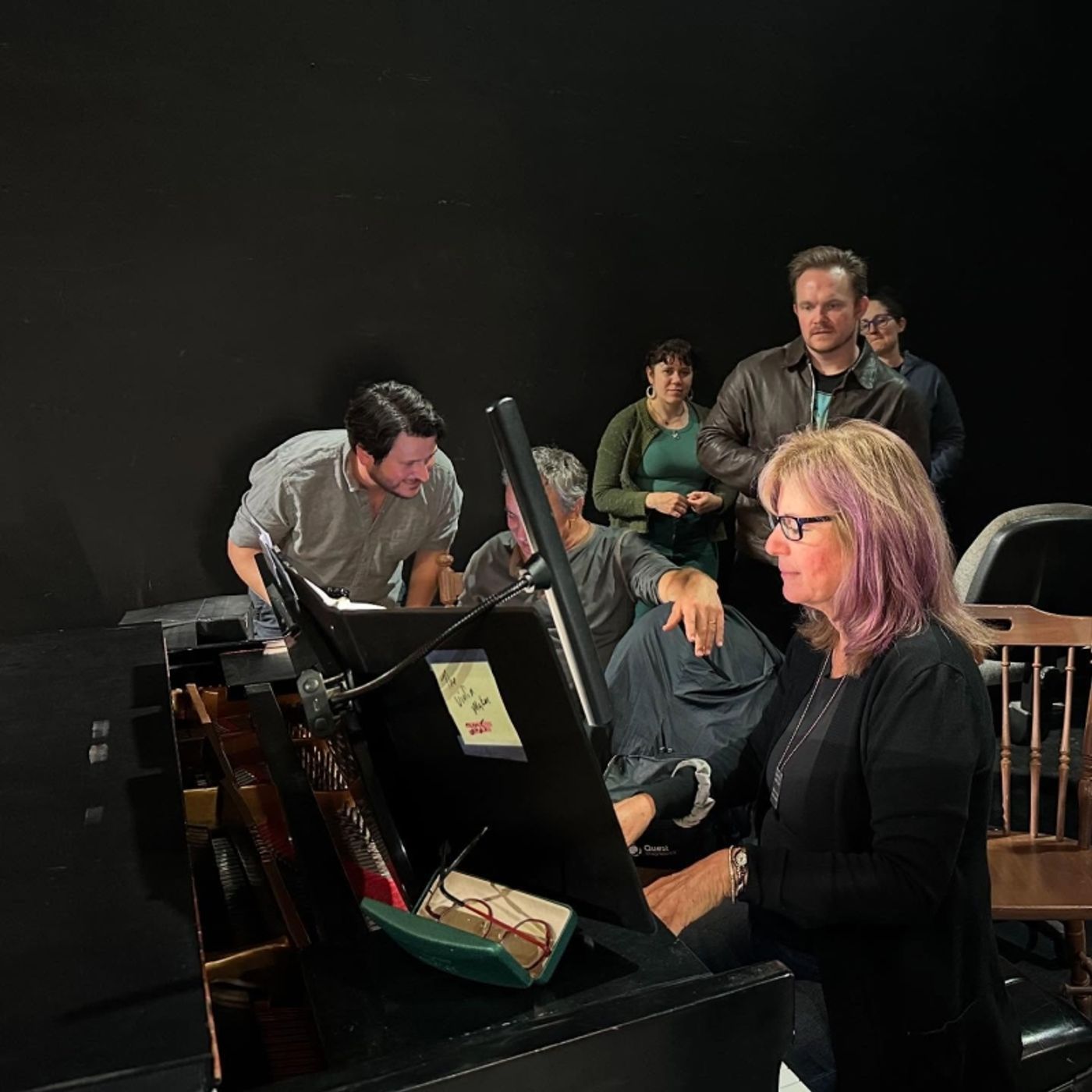
With music curation by Dr. Noreen Green (founding artistic director and conductor of the Los Angeles Jewish Symphony - pictured during rehearsal) who performs live on stage on piano, are any of the Violins of Hope played live during The Violin Maker?
Ronda: An actual Violin of Hope, recently loaned to us by the Weinstein family, will appear on stage. It’s a beautiful klezmer violin, with three distinctive Stars of David on its back. The audience will see it during the performance. But the actual instrument that will be played throughout the play by musician Jonathan Rubin will be the violin that belonged to the composer/violinist Shony Alex Braun. One of the stories he tells of his experience as a violinist in the Nazi death camps is dramatized in the play.
The Violin Maker is directed by ICT artistic director caryn desai [sic] who I spoke with about ICT’s season of premieres. Between the three of you, who reached out to the others first to bring the play there?
Ronda: caryn desai reached out to Lisa and me about bringing the play to ICT.
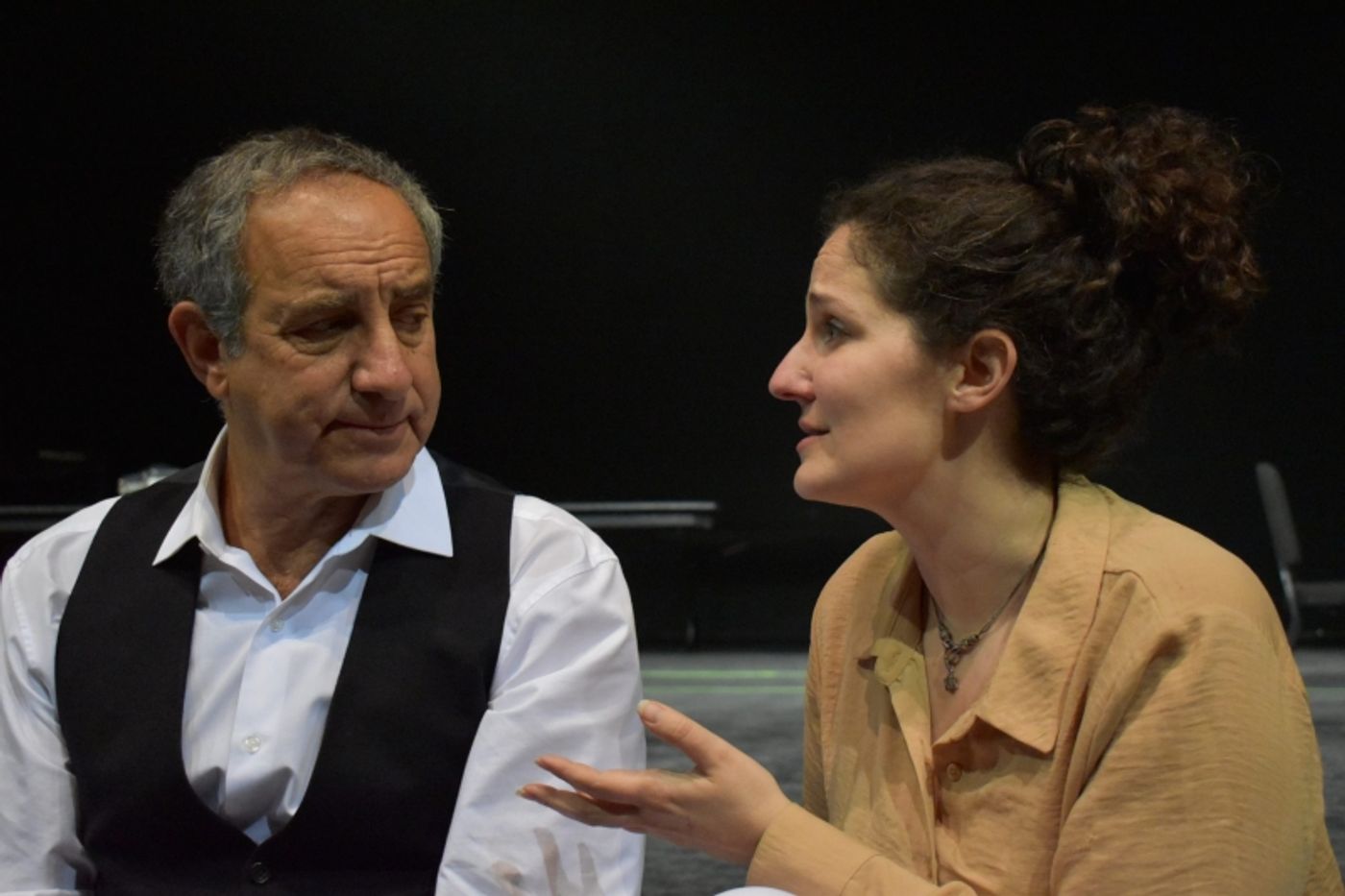
Bruce Nozick and Aviva Pressman in The Violin Maker
Photo by Jordan Gohara
What do you think will surprise audience members most about the life of Weinstein?
Lisa: I think the audience will be most surprised by how a proud but humble man from Tel Aviv, who aspired to nothing more than to be as good a luthier as he could be and who wanted nothing to do with his family’s past, would ultimately devote his life to creating something that would educate people all over the world for generations to come about the Holocaust. He was able to use his special talent for listening to the voices of surviving violins.
Why is it so important to keep telling stories about the Violins of Hope?
Lisa: The survivors of the Holocaust are almost gone. But these violins will speak for centuries to come, reminding the world where they’ve been, the staggering amount of talent that was lost, and to honor the dignity of their owners. Despite violence and inhumanity we see everywhere today, and continuing antisemitism and racism that seems to leave people and beloved things irreparably broken, these violins tell us there is always a possibility for restoration. What greater legacy can the Violins of Hope leave for us all?
Ronda: And we are hopeful that the play The Violin Maker adds to the conversation and leaves people with a new understanding and hope.
Is there anything else either of you would like to share about the production?
Lisa: We are very excited about this American premiere. caryn desai is a talented, generous director who cares very much about the writers’ opinions at every stage of the production’s development.
Ronda: She and the actors have a soulful understanding of these characters - their humor as well as their pathos. The live music played by Dr. Noreen Green and violinist Jonathan Rubin, some of which has been added for this production, is weaving seamlessly into the play.
Thank you both so much!
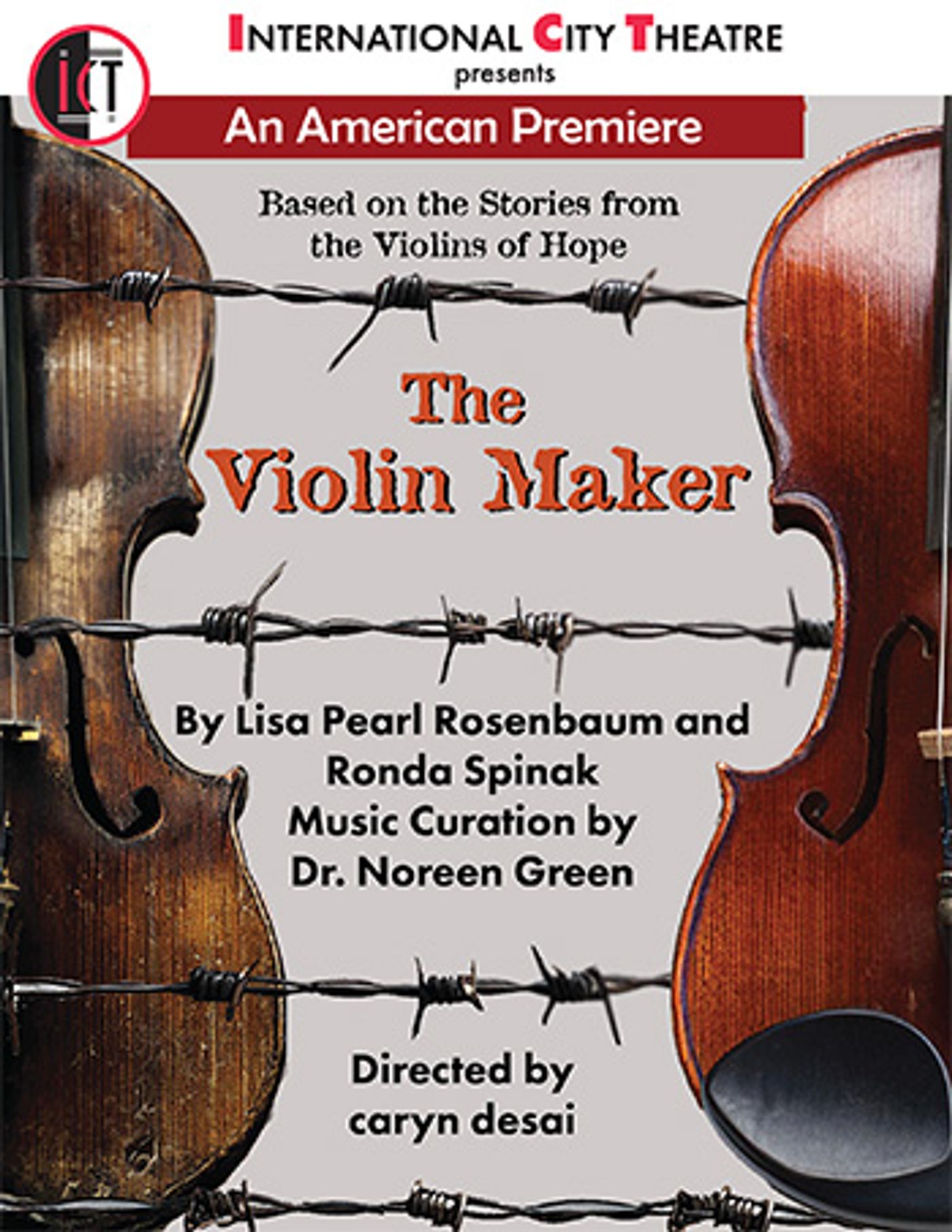
The Violin Maker runs April 25 through May 11 on Thursdays, Fridays, and Saturdays at 7:30 p.m. and Sundays at 2 p.m. Two preview performances take place on Wednesday, April 23 and Thursday, April 24 both at 7:30 p.m. Tickets are $56 on Thursdays, Fridays, and Saturdays, except opening night (Friday, April 25) and all Sundays which are $59. Low-priced tickets to previews are $44.
International City Theatre is located at Long Beach Convention & Entertainment Center’s Beverly O’Neill Theater at 330 East Seaside Way, Long Beach, CA 90802. There is a for-pay parking lot on site. For more information and to purchase tickets, call (562) 436-4610 or go to InternationalCityTheatre.org.
More about the playwrights
Lisa Pearl Rosenbaum is a writer and dramaturg at The Braid, the Los Angeles based theater and arts company, where she also develops and moderates programs that give voice to diverse and compelling Jewish voices. Her award-winning novel, A Day of Small Beginnings (Little, Brown & Co, 2006), a multi-generational story set in Poland, was inspired by her family history, and that of her in-laws, Polish Holocaust survivors. Stories from the Violins of Hope, her play about the remarkable Israeli violin maker who restored instruments that survived the Holocaust, drew from her lengthy interviews with Amnon Weinstein himself. A video of The Braid’s production was created during the pandemic in 2021, with actors performing from scripts, without sets or costumes, accompanied by musicians from the Los Angeles Jewish Symphony. It was shown globally, and at the United Nations. A full stage production of the play, written with Ronda Spinak, was performed in 2023 at the Bondi Beach Pavillion Theatre in Sydney, Australia. Lisa is delighted The Violin Maker, based on Stories from The Violins of Hope, is having its American premiere. She is a proud member of The Dramatists Guild.
Ronda Spinak is the Artistic Director and Founder of The Braid, a global nonprofit theatre company, dedicated to amplifying contemporary Jewish stories. She creates and produces the Salon Theatre Series, curating more than 80 original Jewish-themed programs and adapting many of the pieces performed. Salons have toured in 50 states and nearly 50 countries. She also has been instrumental in creating The Braid’s “StoryNosh” storytelling series, by and for emerging artists. Spinak has developed 6 one-person shows, including Not That Jewish, that played 16 months in Los Angeles, then went to Off Broadway for nearly a year. Her plays include Stories from the Fringe, about women rabbis – with its accompanying historic art exhibit, Holy Sparks – and festival-winner Oscar Wilde’s Wife, a favorite at the Ashland New Play Festival. She has written for the Emmy Award-winning children’s show Rugrats. She is on the board of the Alliance for Jewish Theatres and is a member of the Dramatists Guild.



|
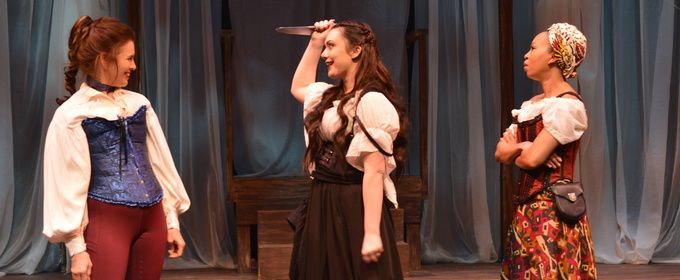
Much Ado About Nothing McCadden Place Theatre (8/07-8/16) |

|
6 Out of 10 Theatre 68 (8/20-8/20) |

|
After the Blast The Broadwater Second Stage (8/05-8/13) |

|
Catch Me If You Can Colony Theatre (9/17-10/18) |
|
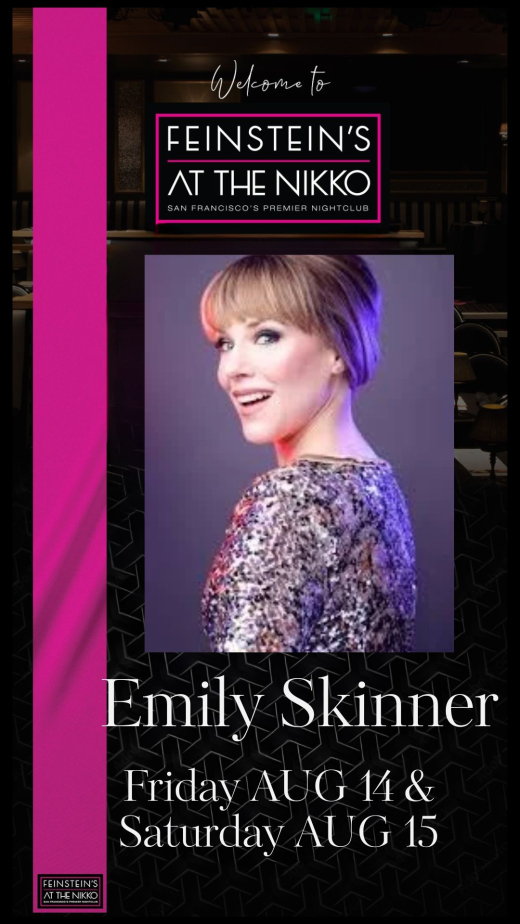
Emily Skinner: In Concert Feinstein's at the Nikko (8/14-8/15) |

|
Gershwin and the Golden Age Younes and Soraya Nazarian Center for the Performing Arts (The Soraya) (10/11-10/11) |
|
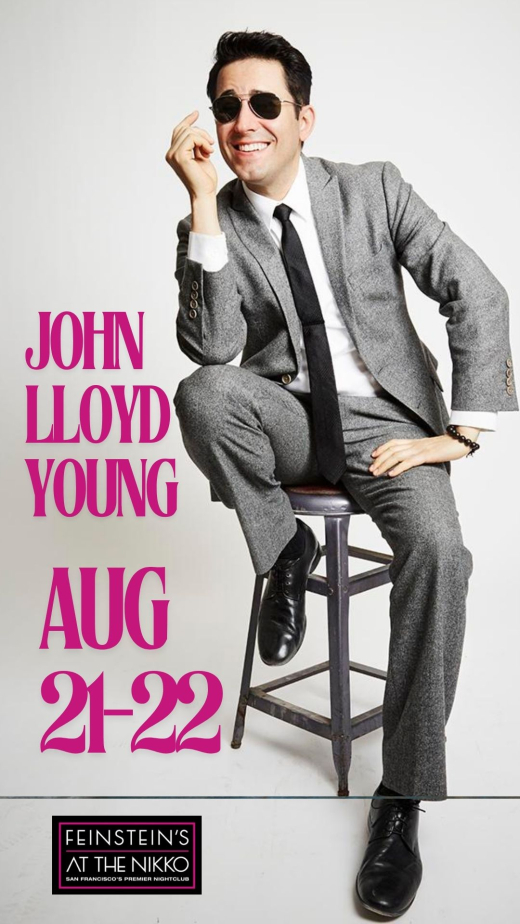
John Lloyd Young Feinstein's at the Nikko (8/21-8/22) |

|
Love, Loss and What I Wore Sawyer's Playhouse (8/08-8/30) |
|
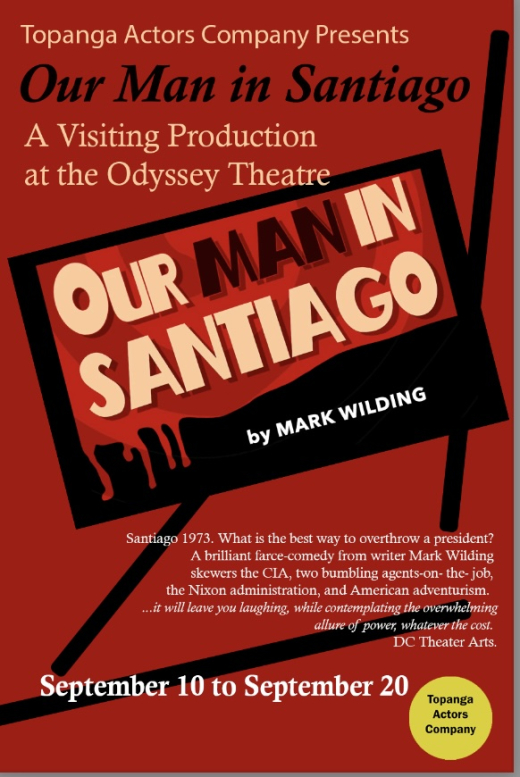
Our Man in Santiago by Mark Wilding Odyssey Theatre Ensemble (9/10-9/20) |

|
Closing Costs Gil Cates Theater (3/31-5/02) |