


Review: BOOSIE at First Financial Music Hall
First Financial Music Hall celebrates Juneteenth
Written by Guest Writer Owen Dodd of Ouachita Baptist University
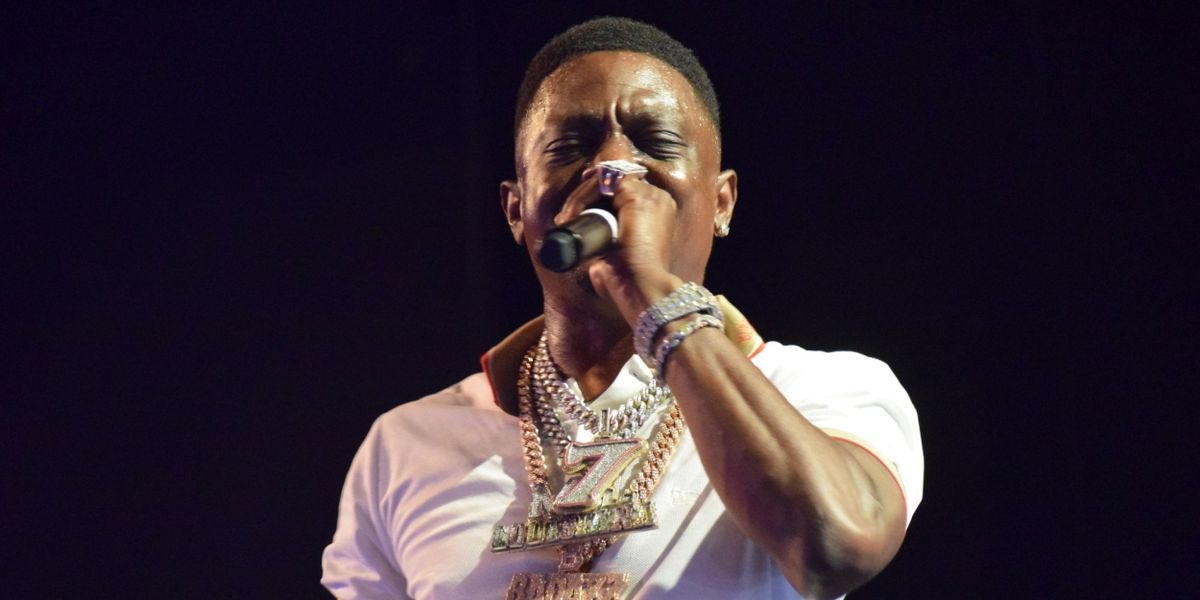
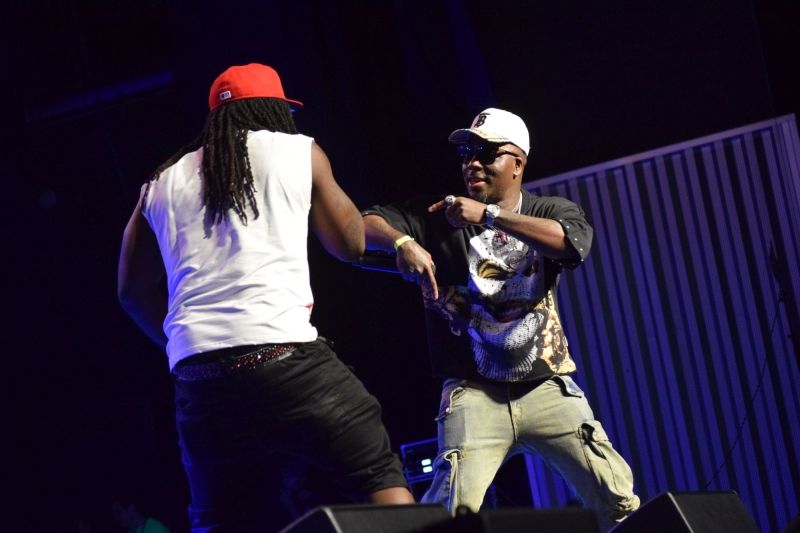
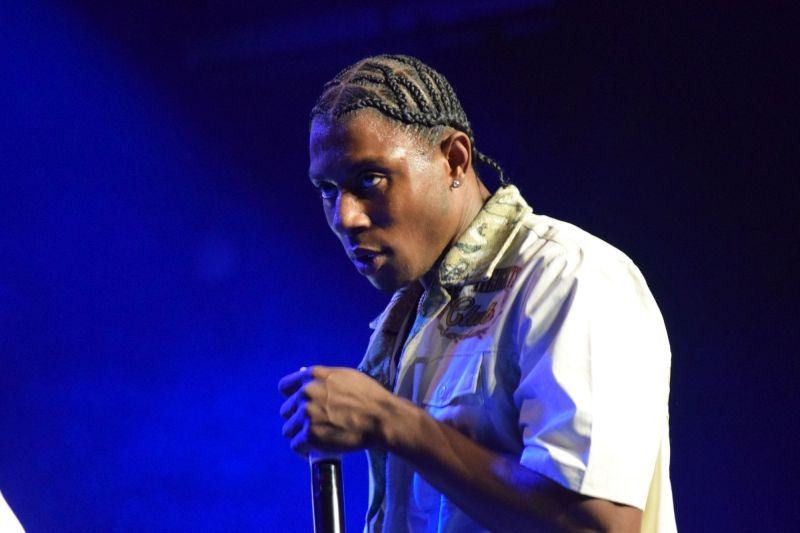
It was the night of June 20th, 2025, and I had not anticipated what I was walking into. At the First Financial Music Hall of El Dorado, I experienced my first ever Juneteenth celebration with BOOSIE, and I assure you: I will be back for more. The crowd was loud, the drinks were flowing, and the night was over before I knew it. I was new to the Louisiana rapper, and I couldn’t believe that I’d never heard of him. The bangers were to die for, and he conducted electricity with the crowd like a pro. But on top of all of that, I also found myself deep in thought, and I need to share what I’ve found.
I hope I am not found frivolous in saying that rap has been one of the fastest growing social phenomena to ever exist. In the great melting pot of cultures, there were bound to be some unexpected yet priceless developments. Giving more attention to hip hop—although I’m rather late to the party—has been one of the best choices I have ever made. Truly, rap has changed the world in ways we are still trying to understand. However, not all these ways are necessarily good. Although it may seem boring, some aspects of rap can romanticize self-destructive behavior and stunt visionary maturity. Let’s talk about the habits of the music industry, the present and future states of rap, and how consumers can empower Boosie to tell great stories through their music. But first, a little bit of a history lesson.
We all know that rap—like all African American culture for that matter—has had a resounding significance in the progress of our aesthetic discourse. Even so, things get more interesting when considering the digital age, and more particularly, the expressive autonomy it gives us. We find that, in addition to rap encouraging the youth to think boldly and question everything, we have developed software which empowers and encourages such imaginative thinking. With the new accessibility of musical software and production, we find that we are less inclined to have such a thick distinction between the titles of “musician” and “consumer.” For example, such occurrences largely led to the Music Modernization Act of 2018 (MMA), which completely overhauls the process of paying royalties to both songwriters and publishers. With more accessible production and musical software, more people were finding that they could upload songs easier, even if they weren’t necessarily full-time recording artists or songwriters. With the new increase in accessibility of musical equipment, software, and know-how, we saw streaming services realize a dramatic increase in the amount of song covers uploaded online—covers which had never been licensed before, meaning tons of legal trouble and unpaid royalties. Bottom line: the music industry has not only seen some more nuanced discourse in the past few decades, but also the means to move that discourse forward in a way no one could have predicted. The fruits of such growth have been interesting to say the least; let’s look at them.

Indeed, we have come a long way since the start of this great expedition. Music has expanded in every direction, and fast. But such hasty progress can be dangerous. When we have such means to produce and share, we should be very careful to monitor the music we interact with, especially when the industry is so incentivized by profit rather than imagination. With the rise of streaming, the industry shifted away from creating thorough experiences towards producing more content that can be consumed quickly and thoughtlessly. Now, it’s less about loving better music, and more about loving more music, regardless of quality.
This is where I think Boosie Bad Azz starts to become important. Although I was not familiar with Boosie’s image or discography when starting to research for his performance in El Dorado, I was instantly aware of the effect that this industry trend had on him. Listening to his older stuff, I felt as if he had motion, vitality, and vocality. I was thrown off when I noticed that this direction within Boosie’s demeanor was nowhere to be seen on later projects such as Super Bad: The Return of Boosie Bad Azz. Could this be Boosie running out of ideas? No—I think this phenomenon is far greater than any one artist. Ironically enough, this tendency to lose momentum is becoming an industry standard. Not only do I think artists aren’t to blame, I think they are the victims.
“Well, if they’re victims, who is the abuser?” You may be asking yourself. And I’m glad you asked, because that is a much more complicated question than most people realize. As I said before, the music industry—like nearly every other industry worldwide—has become highly incentivized by profit. However, I think this incentive has become even more prominent than the public understands. With the rise of interactive streaming services like Spotify and Apple Music, artists’ streaming revenues have tanked tremendously. This is reflected by the fact that artists are prioritizing ticket sales, merch sales, and other revenues other than that of streaming. In other words, interactive streaming, the most popular way of sharing and consuming music, serves as more of an advertisement platform for artists and their labels.
Furthermore, labels also realize how unprofitable streaming is; it is becoming more and more common for a label to require an artist to enter into a 360 agreement, which means that the “artist grants the record label rights to either passively receive a portion of revenue from or actively manage at least one slice of the pie in addition to audio and video recordings” (Baskerville 208). This means that the record label can claim a certain percentage of revenues such as merch and ticket sales in addition to video and audio sales. All these industry practices indicate that the industry has become far less mindful of the future. Artists are forced to focus on quick cash grabs in the form of hot singles to gain just a sliver of what they used to be able to earn. As I said before, popular music has largely become more concerned with quantity than quality.
Although this tendency to value frequent penny-pinching over big wins is bad for the whole music industry, those styles of music which tend to be more defiant and radical—those which are rebellious, critical of authority, and counter-cultural—tend to be weakened by the current focus of the industry. In other words, when you see yourself as a force for cultural change, you must be more thorough in your commentary than those who are complacent with society, because the movement is far more likely to be misunderstood by the audience when the message is unfamiliar. I believe this thorough exploration is of great importance to hip hop because it has proven to be one of the fastest growing countercultural movements of all time. Although I’m sure we’re all aware of the ways in which hip hop is counter-cultural, it may still be helpful to delineate those ways in which rap is considered to be radical. Throughout the genre, themes of sexual promiscuity, violence, gang activity, and drugs. But don’t get me wrong; I’m not saying that these themes are inherently harmful. I mean only to say that they carry great weight and responsibility, especially when rap is so popular with the youth.
Unfortunately, the hip hop industry has largely been seduced by the quantity over quality ideology, like many other areas of the music industry. However, this forbodes harmful consequences for hip hop in particular because of its radical nature. Shallow pop songs about love inspire boredom. Shallow hip hop bangers about violence and drug abuse inspire fentanyl overdoses.
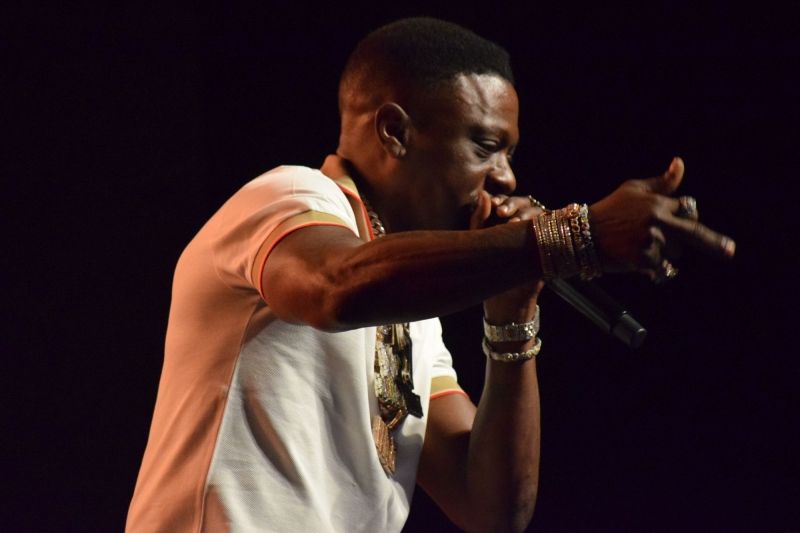
To be as transparent as possible, I am new to Boosie, and he has a lot of music. He has so much that I couldn’t possibly hope to listen to even half of his discography before going to see him live. However, I think my lack of familiarity may serve as credibility to the freshness of my perception. After listening to various parts of his catalog, I tend to see Boosie as an accurate representation of the progress of hip hop in general. In his earlier work, such as For My Thugz and Gangsta Musik, he seems to have more fire. Even on some of the cuts from SuperBad I found that he was hungry for something. But as we go through his discography, I find that he has gotten tired. I think that the cause of such fatigue is indicative of the industry habit of pushing artists to make for more, more, and more.
All this being said, there is a solution. Hip hop has great potential to positively influence the youth if rappers aim to tell a story. Such stories, albeit, can be difficult to render, but they do exist. Take for instance, Kendrick Lamar’s Mr. Morale & The Big Steppers. Kendrick addresses a multitude of difficult questions, ranging from sexuality, hustle culture, parenthood, poverty, and his self-liberation from a long-standing savior complex. And he tells the entire story with grace, momentum, and musicianship. There are many of these stories to tell, and people are finding amazing voices to tell them. A list follows:
Injury Reserve: By The Time I Get To Phoenix
Travis Scott: Rodeo
Young Fathers: Heavy Heavy
Death Grips: The Money Store
Aesop Rock & Tobacco: Malibu Ken
Sampha: Process
JID.: The Forever Story
Little Simz: Sometimes I Might Be Introvert
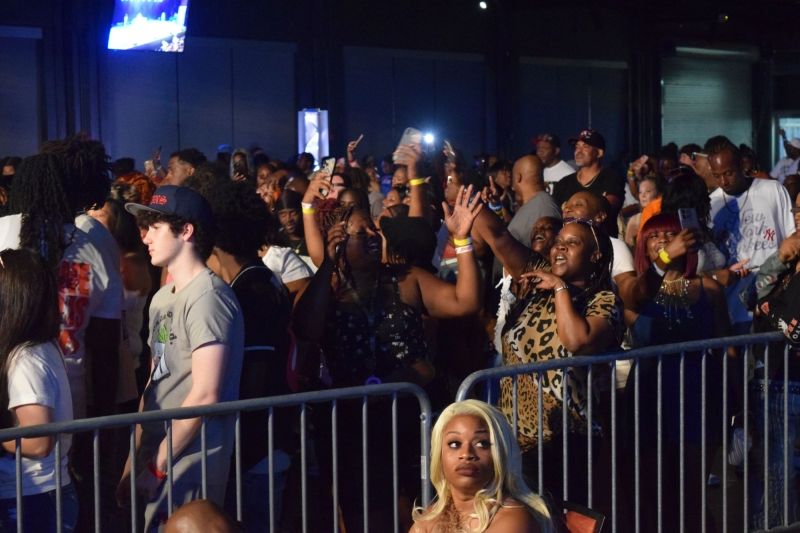
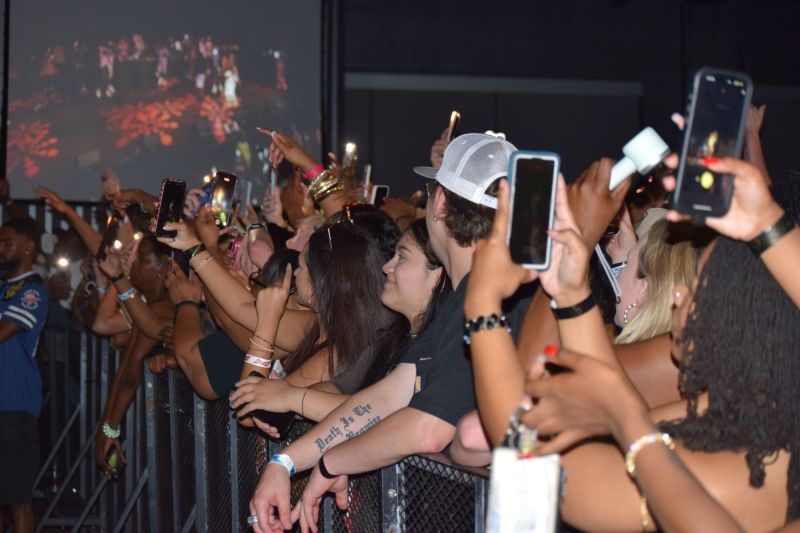
My favorite part about Boosie’s performance was the crowd. I could absolutely see the community and culture. Although I am relatively new to hip hop—I admit, I only started listening to hip hop right out of high school—it has become a huge part of my experience with music, and experiences like the one I had with Boosie make me even more excited to explore what it has to offer. And, although I love to see artists make an effort to fight against the fiscal focus of the industry, those with the power to truly change the way of things may be the last you’d expect it’s us! The consumers. We have the power to shift the focus. We can give artists like Boosie their voices back by choosing carefully what we give our attention, and directly supporting our favorite artists and songwriters as opposed to streaming. The First Financial Music Hall of El Dorado has many events coming up that you don’t want to miss, such as Josh Meloy on June 27th, Jason D. Williams on July 12th, The Avett Brothers on August 23rd, and Train on August 27th. Be sure to check out the Murphy Arts District Calendar for more information!
Reference List
Baskerville, David, et al. Music Business Handbook and Career Guide. Sage. 2023.
|
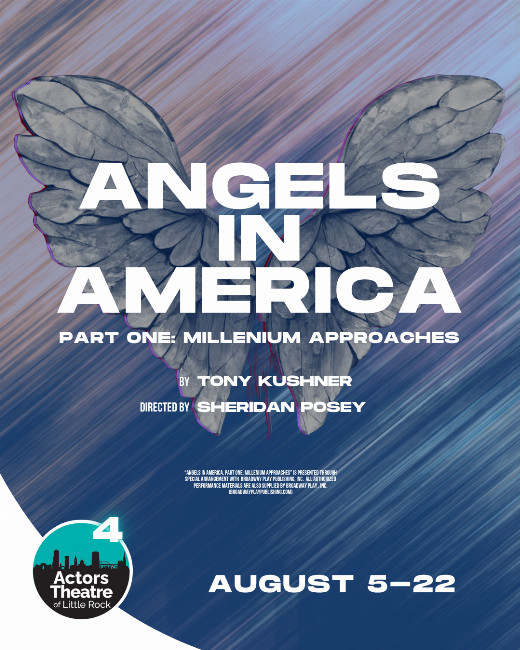
Angels in America Part One: Millennium Approaches Actors Theatre of Little Rock (8/05-8/22) |
|
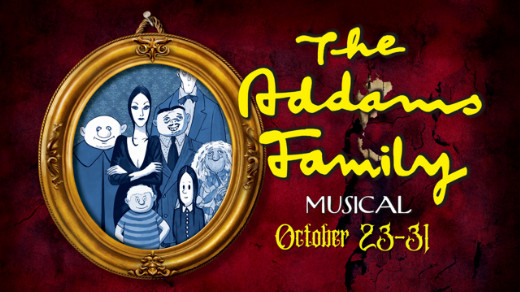
The Addams Family Musical Wildwood Park For The Arts (10/23-10/31) |
|
Hamilton (Angelica Company) Robinson Center Music Hall (8/25-9/01) |
|
The Rocky Horror Picture Show Spooktacular Tour with Nell Campbell Robinson Center (10/20-10/20) |
|
Wait Until Dark Pocket Community Theatre (10/02-10/11) |
|
Three Days Grace, I Prevail & The Funeral Portrait Walmart AMP (10/28-10/28) |
|
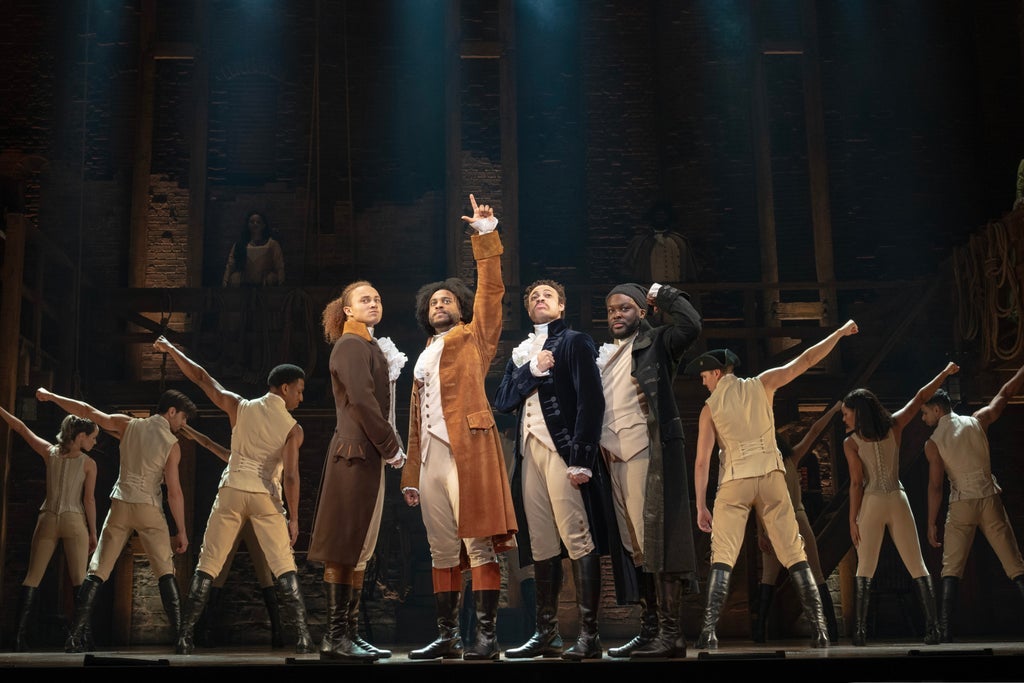
Hamilton Robinson Center (8/25-8/30) |
|
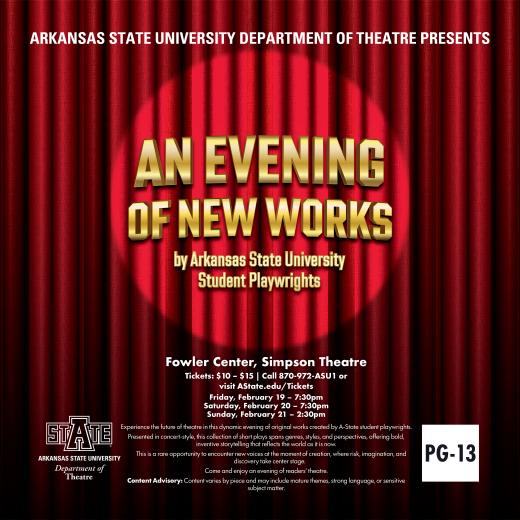
“An Evening of New Works” by Arkansas State University Student Playwrights Arkansas State University Theatre Department (2/19-2/21) |
|
Scrooge! The Musical Pocket Community Theatre (12/04-12/13) |
![The Complete Works of William Shakespeare [Revised] (Abridged) [Revised Again] By Adam Long, Daniel Singer, and Jess Winfield in Arkansas](https://cloudimages.broadwayworld.com/regionalshows/ndphoto_6a7a3b5db81ed3.31128678.jpg)
|
The Complete Works of William Shakespeare [Revised] (Abridged) [Revised Again] By Adam Long, Daniel Singer, and Jess Winfield Arkansas State University Theatre Department (10/09-10/18) |
Reader Reviews
To post a comment, you must register and login.