


Interview: Vaneh Assadourian of ENGLISH at ALLEY THEATRE
A conversation with the Iranian actress playing Goli!
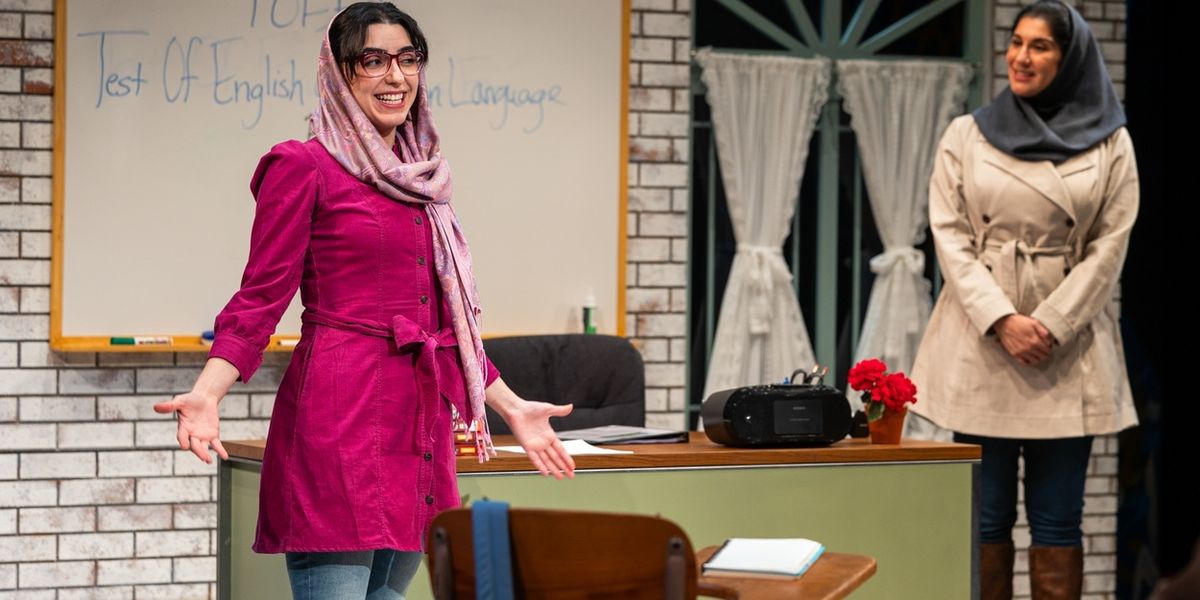
Winner of the 2023 Pulitzer Prize! ENGLISH is a play by Sanaz Toossi, an American writer of Iranian descent. It is a heartfelt, humorous play that follows five strangers in an Iranian Test of English as a Foreign Language class. Each participant brings a personal reason for learning English, discovering along the way what is lost—and found—in translation. No matter how difficult the course gets, the human spirit shines through. The show runs at The Alley Theatre on the Neuhaus stage through March 8. BROADWAY WORLD writer Brett Cullum spoke with Vaneh Assadourian, who is playing the character Goli.
Brett Cullum: Tell me a little bit about the show and the character that you're playing.
Vaneh Assadourian: The play takes place in Karaj, Iran, during 2008. And it's inside this classroom, and follows the story of these wildly different characters that if circumstances didn't warrant them being in the same space, I don't think that they would ever meet in real life, but that they're put in this pressure cooker of a six-week course that they're preparing for the TOEFL, which is an English test. We get to see their dreams and hopes and failures and goals and fears, and their relationship to this language that, for some, is a necessity to learn and, for others, a choice. We get to see the different relationships these people have with this language. It'll make you cry in one scene and make you laugh in another. It's a very universal experience: wanting to be understood. On top of that, add a layer of learning a new language, existing in that new language, and figuring out whether or not you can be understood in a new language. It touches on questions of identity, belonging, and a sense of self. Whether or not you can be yourself in another language, or if that self changes.
I play the character of Goli. She's the youngest character in the play; she's 18. For Goli specifically, her relationship to English is really sweet. She's described as this young, sweet spirit in the classroom. She's just carefree and has fun. Her need to learn English is not as dire as everybody else's. It is a want and a choice, so her experience in the classroom feels much more fluid and fun, whereas others have many internal battles. Why they're there, and why they're learning this language, and that relationship. It's really nice, you know, playing opposite a lot of the characters that have dire needs of being in that room, because it feels more of a choice for her. We get to see her grow up in this classroom, surrounded by questions she may have never really pondered. We've got a trajectory of a wide range of characters and different ages, and why they're there. Some for school, some for family reasons, and some for immigration reasons. For Goli, it's sort of like, I'm here because I love English, and I love existing in that language, and so I think it's a perspective of why you learn a language that is represented in the play.
Brett Cullum: When I study languages, it is a question of how I am coming across in another language. I'm sure I must sound goofy, and culturally, I don't know all the things you would say, so sometimes I probably come off as stilted. It's a fascinating idea, and I'm really excited to see ENGLISH. What do you hope people walk away with when they leave?
Vaneh Assadourian: Given the context of the time that we live in right now, and what's going on in Iran. This play is not political, but this play came out of the Muslim ban, out of a need. The Muslim ban inspired this story, so it came out of a very political space, and Iran is very politically charged. Specifically in the context of the US, and any story that comes out of the Middle East sort of has this energy of “What are we about to walk into?” I really hope that people walk into this play and walk out of it understanding that Iranians are humans, just like everybody else. This is a beautiful, touching, funny story about normal people existing in their lives, and what separates us, maybe, is our language and our culture, but at our core, we're all the same. The people of Iran are among the most beautiful, hospitable, and funny people in the world. We are at a time in our lives where there's this brutal crackdown happening from the Islamic regime, and people are still trying to make their voices heard. It's a privilege to be able to tell a story that is Iranian, but also very universal at the same time. The news is not kind to the Middle East when it comes to representing us as people, as humans. What I love about this play is that it is about 5 people in a classroom. We just get to see them exist, and it's not overtly political. We don't try to teach you anything; we don't try to preach anything. I hope that people can come in and see a piece of themselves in it. Laugh with us, maybe cry with us, who knows. I just hope that we get to see each other as humans after we walk away.
Brett Cullum: It's interesting because this is coming right on the heels of REAL WOMEN HAVE CURVES. I believe that play was very much a slice of life, where we got to see Hispanic women working in a sweatshop and the realities of immigration, the fears, the hopes, and everything else, and we get to see the real people behind the issues. That is what you're encapsulating here. You're showing the real people behind the issues. It's nice just to sit with these folks and see them.
Vaneh Assadourian: I do think the perspective of having it be in Iran is sort of the beginning of the journey for these people, right? They haven't actually immigrated. Maybe they might never actually be able to, because we don't get there, but it's seeing the amount of work, and what it actually physically, the psychological work, but also the preparation of learning a language, and passing this very, very challenging test, and everything that has to go through in your body, in your mind, to even get to immigrate to a place. All of that is what we get to experience in this classroom, in these little slices of life. It's unique in that way. We get to experience the immigrant experience even before it has begun.
Brett Cullum: Do you know a lot about the TOEFL?
Vaneh Assadourian: It's a test that is, universal, so you have to, you have to take it anywhere that speaks English, certainly in the United States. It’s very difficult. We actually do practice tests we've taken. I'm from Iran and moved here. But I moved here prior to taking the TOEFL, so I didn't have to. I moved in high school, so I didn't actually ever have to take the test, but we have a lot of people, a lot of our designers in the room who've taken the test. I'm fluent in English right now, but there are parts where I'm confused and don't understand. It's just very confusing, and it's very, very tough. You need it for university admissions, and certainly if you're applying for student visas. Certain test scores mean certain outcomes in your life, whether it's financial, scholarships, actually getting a visa, or being accepted into the university of choice. Passing the test and then scoring at a certain level has consequences beyond the test itself. It means what can happen to you in your life, and what your future holds. There are real risks and needs.
Brett Cullum: You came here from Iran when you were in high school, correct? Tell me a little bit about that.
Vaneh Assadourian: It takes place in 2008. I left in November of 2007. It’s like my experience of Iran in a capsule is preserved, and so going back into this play right at that time feels very bizarre, because my body feels like I never left, and I'm getting to continue my experience there. I had to go through the experience of all of these characters learning a new language. I didn't speak English when I moved here, and so I had to learn the language. I never actually learned it in Iran, so I had to learn it in a classroom with other people. I went through the same struggles. I used to think of myself as the class clown, and a really funny person, and I witnessed myself become small, confused, and censored, and I was like, “Am I funny? Will I ever be funny?” The things that defined me. I had to sort of redefine myself in this new language, and having to do that as someone in high school going through puberty and having to figure everything out, it was just a really confusing time. I don't actually know if I can… I can say… if I'm the same person in English. English feels like home now. This is something they talk about in the play, the idea of belonging and identity in a new language. Do you ever invent a new version of yourself, or are you the same person, and now you exist in a different language?
Brett Cullum: Tell me a little bit about you. How did you get into acting? I mean, you grew up, obviously, in Iran, and you came here, and then… how did this happen?
Vaneh Assadourian: Yeah, so I grew up in Iran. I'm Armenian, so I grew up bilingually and biculturally from birth. I was Armenian, lived in Iran, so I spoke Armenian and Farsi, and I grew up on the stage. I was part of an Armenian theater company in Iran. I had an older sister and a twin sister, so we were all actors in the company, and it was sort of a family affair. My mom would help with costumes, and my dad would help with the set pieces. He's an architect, so he designed for us. Age three was the first time I went on stage.
From the moment I was born, I knew we might move to the U.S. My family had applied for a green card, and it took us 14 years to get approved. I grew up with the U.S. as sort of a looming thing in my life, so I always knew I might eventually be in the U.S. Hollywood, America, and acting was always this thing. I want to do this one day. I remember being like, if I can just get to the U.S, then I'm done, then it's great, then I can be an actor. I learned English by doing theater, by doing improv, and by doing Molière and Shakespeare. Then I applied, got into UCLA for acting, studied, graduated, and started doing this for a living.
Brett Cullum: And now here you are at the Alley.
Vaneh Assadourian: And here I am at the Alley, yeah.
Brett Cullum: Well, I am so excited to see you and the rest of your cast. ENGLISH plays through March 8th, so it sounds super exciting, and I can't wait to see it because it promises to continue the discussion that the other show they just finished brought up. You are the prequel for REAL WOMEN HAVE CURVES! The immigrants before they immigrate!
Prefer BroadwayWorld in Google Search?
Add us as a preferred source so our stories show up more often in Top Stories and Google’s AI answers — for you.


Sign up for all the news on the Fall season, discounts & more...
|
Rhinoceros The Catastrophic Theatre (9/18-10/10) |

|
Serial Killers: The Crucifixion of the Black Man in America Nikki El Films & Theatre (10/17-10/17) |
|
Emerging Choreographers Showcase Lyndall Finley Wortham Theater (12/04-12/05) |

|
Don't Say Murder by Carl Williams Theatre Suburbia (2/26-3/27) |
|
Hänsel & Gretel Moores Opera House (2/04-2/07) |
|
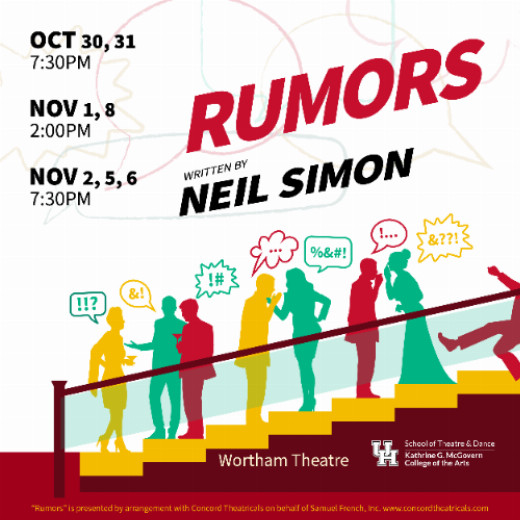
Rumors Lyndall Finley Wortham Theater (10/30-11/08) |
|
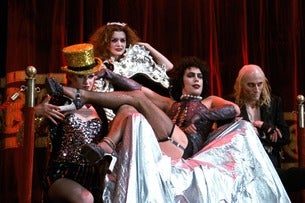
Rocky Horror Picture Show House of Blues Houston (10/23-10/23) |

|
Marjorie Prime Alley Theatre (5/07-5/30) |

|
Summer Show: To Be Announced Theatre Suburbia (7/23-8/21) |
|
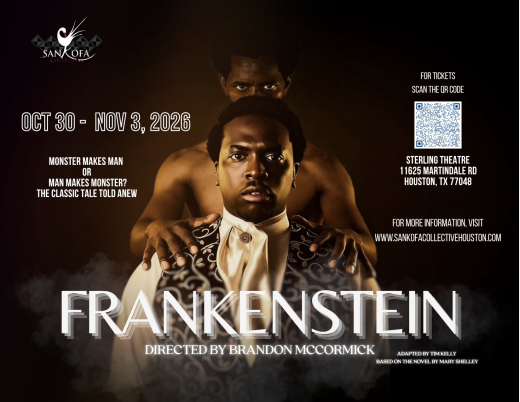
Frankenstein Sterling Theatre (10/30-11/02) |
