


Review: PRAYER FOR THE FRENCH REPUBLIC Co-Produced by Northlight Theatre and Theater Wit
The Chicago-area premiere of Joshua Harmon’s 2024 Tony-nominated play runs through May 25 at Northlight Theatre
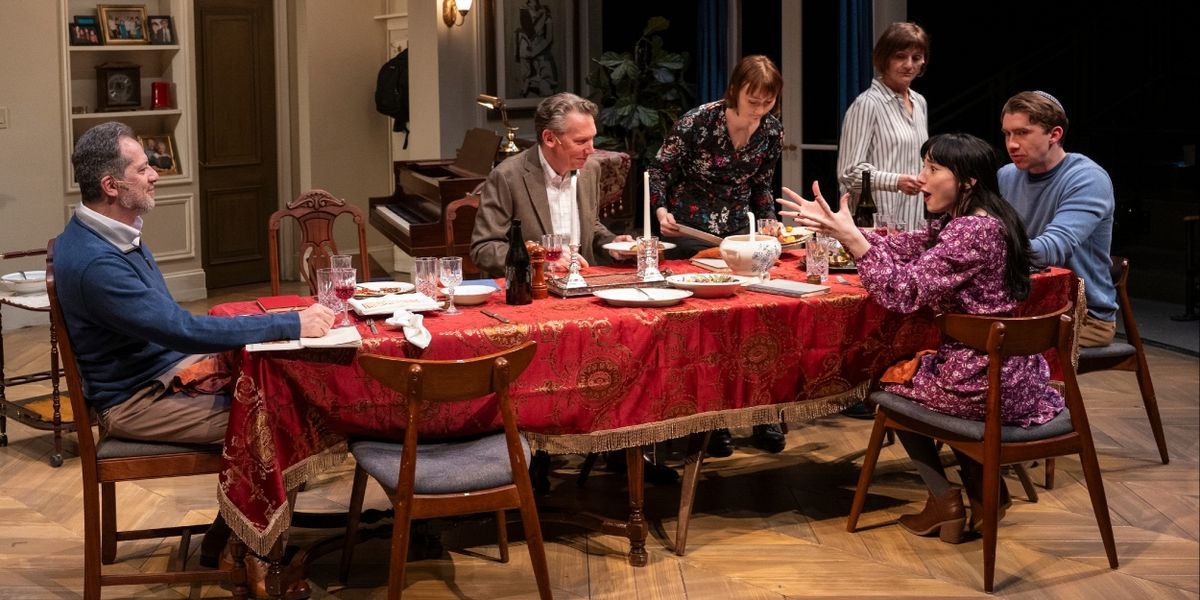
Joshua Harmon’s sprawling and ambitious PRAYER FOR THE FRENCH REPUBLIC is a searing and inquisitive look at contemporary Judaism and anti-Semitism. Harmon’s play spans multiple generations of the Salomon family, French Jews grappling with questions of safety and Jewish identity. The action alternates between the mid-2010s and the 1940s.
The play centers on modern-day (well, 2016-2017) matriarch Marcelle Salomon (Janet Ulrich Brooks, who’s the real beating heart of Northlight and Theater Wit’s production). Marcelle feels dedicated to educating her children Elodie (Rae Gray) and Daniel (Max Stewart) about their Judaism and her family’s history — namely, the family’s beloved piano business now owned and operated by Marcelle’s elderly father Pierre (Henson Keys, played in flashback by Nathan Becker). But when Daniel comes home from work one day with a bloody nose and black eye after a stranger beats him for wearing a yarmulke in public, she (naturally) balks and encourages him to wear a baseball cap instead. This incident also propels Marcelle’s husband Charles Benhamou (Rom Barkhordar) to consider if their family is still safe in Paris. Marcelle’s distant American cousin Molly (Maya Lou Hlava), who’s studying abroad and has come to visit, also provides a neat dramaturgical device to explain much of this family context.
While Marcelle is the play’s center, her brother Patrick (Lawrence Grimm) serves as its narrator. Grimm is an affable performer — and Patrick’s point-of-view provides an important contrast to Marcelle’s — I didn’t think the narrative device worked. Marcelle and her immediate family are the central characters, so Patrick’s relative outsider status made him a clunky narrator. Instead, his character was more effectively used for lively and layered debates with his sister.
Harmon is a gifted contemporary playwright, and he’s explored themes of modern Judaism and anti-Semitism across his previous works (namely, BAD JEWS and SIGNIFICANT OTHER) — which paved the way for what he does here. While the Salomon/Benhamou family are French, he gives them a distinctly American English vernacular. He’s a master of spirited and fiery family debates and fast-talking monologues. That style serves the contemporary scenes extraordinarily well, and allows Harmon to pose layered questions to the audience on various harrowingly timely topics like anti-Semitism, the nation of Israel, Holocaust remembrance, and more.
I think Harmon’s play loses steam in the 1940s scenes, in part because his playwriting style naturally lends itself more to the modern moments. The flashback scenes show Marcelle’s great grandparents Irma and Adolphe (Kathy Scambiatterra and Torrey Hanson) in their Paris apartment, waiting for news from their family...only for their son Lucien Salomon (Alex Weisman) and grandson Pierre) to return, who have clearly encountered unspeakable horrors in a concentration camp. These scenes are remarkably sad, but obviously the gray areas from the modern scenes don’t carry over here — it’s clear the Salomon family has experienced unspeakable tragedy. These scenes generally lacked the color and immediacy of the contemporary ones; they felt shoehorned into the action, reinforcing points that the contemporary drama already demonstrates. Some moments are also too maudlin, particularly an extended monologue for Irma.
The more effective and resonant contemporary scenes speak for themselves. Through his characters, Harmon brilliantly conveys multiple POVs and questions. He gives the audience so much to chew on: Where do we feel safe? How do you balance expressing your Judaism with safety? What’s the significance of Israel? (Keep in mind Harmon wrote this play ahead of October 7, 2023...but that makes this play even more timely).
By having Marcelle recount and grapple with her own family history, Harmon has given us plenty without the flashback scenes. Brooks is such a graceful and heartfelt performer, too. She’s a psychiatrist, but she still doesn’t have a lot of answers about how to keep her family safe or manage her manic depressive daughter. And let me tell you, too, Harmon nails the dynamic between Jewish mothers and daughters in Marcelle and Elodie’s spats — and Brooks and Gray deliver that dialogue exactly right.
While Molly might seem an obvious or obnoxious foil to the Salomon family, Hlava’s perky and precocious delivery saves the character from being purely annoying. Instead, Hlava nails the character’s desire to both learn and inform. It's particularly fun to watch Hlava and Gray in an act two scene at a bar. Gray delivers a lengthy monologue charting almost the entire history of anti-Semitism at breakneck speed in Elodie’s effort to educate Molly, while Molly observes in exasperation and tries to get a word in edgewise (Hlava has excellent face play here).
Ultimately, it’s the contemporary family moments — coming together for Shabbat dinner or a Passover Seder — that provide the best fodder for the questions Harmon poses in this play. They also provide the most fertile ground for those actors to add emotional richness to them. The 2016 and 2017 Salomon family scenes are a gorgeous portrait of the contemporary Jewish experience, or really, just the experience of a family dinner. Harmon infuses his signature humor and fast-talking dialogue into those moments, without minimizing the gravity of the themes. By alternating between present and past, perhaps Harmon has bitten off a little more than he could chew with this play. But those contemporary moments always land, and I left the theater both intellectually and emotionally engaged. PRAYER FOR THE FRENCH REPUBLIC is truly a play for the moment, and a new, resonant chapter in Harmon’s exploration of modern Judaism.
Northlight Theatre and Theater Wit’s Chicago-area premiere of PRAYER FOR THE FRENCH REPUBLIC runs through May 25, 2025 at Northlight Theatre, 9501 Skokie Boulevard. Tickets are $49-$91.
Photo Credit: Michael Brosilow
|
Fleetwood Max Raue Center For The Arts (10/03-10/03) |

|
Love Story: A Tribute to Taylor Swift Raue Center For The Arts (11/07-11/07) |

|
Rotary Rocks The Raue: James Garner's Tribute to Johnny Cash Raue Center For The Arts (10/24-10/24) |

|
The Dave Matthews Tribute Band Raue Center For The Arts (9/25-9/25) |
|
Memphis The Musical Studebaker Theater at the Fine Arts Building (10/24-10/25) |
|
for colored girls who considered suicide when the rainbow is enuf eta Creative Arts Foundation (8/01-8/30) |

|
Jagged Little Pill: A Tribute to Alanis Morissette Raue Center For The Arts (10/16-10/16) |

|
Mozart's Summit North Shore Center for the Performing Arts in Skokie (9/27-9/27) |
|
The Book of Mormon Cadillac Palace Theatre (10/23-11/01) |
|
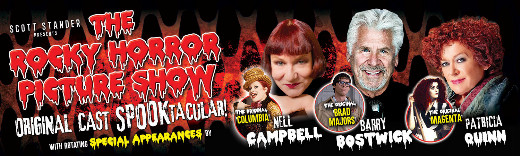
Rocky Horror Picture Show Original Cast Spooktacular Tour with Barry Bostwick, Nell Campbell, and Patricia Quinn Chicago Theatre (10/31-10/31) |
Reader Reviews
To post a comment, you must register and login.