


Chicago's Bach In The City Reveals 2025–2026 Debut Season
The season opens October 3 with "Music in Heaven's Castle."
Chicago's Bach in the City, led by music director Richard Webster, has announced its 2025-2026 debut concert season, comprising three Baroque music programs featuring period instruments, a focus that will continue into the future.
"We are fully committed to period instruments," Webster says, calling it "a 180-degree turn" from the mainly modern-instrument approach of the organization's predecessor, the Chicago area's Bach Week Festival, which he led for many years. "We decided to make a fresh start and leap into the vanguard of Baroque performance. This is not Bach Week 2.0."
The season opens October 3 with "Music in Heaven's Castle," a reference to Germany's Himmelsburg castle church, where J.S. Bach premiered an innovative sacred cantata. In addition to music by Bach, the program includes works by Georg Philipp Telemann and Georg Muffat.
A January 11 chamber concert, "Bach's Musical World," brings two of Telemann's "Paris Quartets" for flute and strings, plus trios by Bach, Dieterich Buxtehude, and George Frideric Handel.
The finale and showpiece of Bach in the City's first full season will be the March 20 Chicago premiere of the critically acclaimed, recently reconstructed version of J. S. Bach's lost St. Mark Passion, BWV 247, by British musicologist Malcolm Bruno, with Webster composing the speech-like recitatives and crowd ("turba") chorus parts.
"To the best of our knowledge, this will be the first time any version of the St. Mark Passion has been presented in Chicago," Webster says.
Bach in the City also announced that Jason J. Moy has been appointed to the new post of associate music director, working in partnership with founding music director Webster.
A harpsichordist and early music specialist, Moy is professor at DePaul University's School of Music and leader of several early music ensembles.
"It's very generous of Richard [Webster] and the board," Moy said. "It's a very exciting, wonderful opportunity."
Moy served as the former Bach Week Festival's principal keyboardist (harpsichord and organ) under Webster's direction. He also curated and performed in the festival's popular period-instrument chamber concerts of recent years.
"Bach in the City's 2025-2026 season bears the unmistakable stamp of Jason's inexhaustible creativity, impeccable musicianship, and collaborative spirit," Webster says.
That stamp, Webster says, includes the organization's commitment to period instruments and to offering opportunities for exceptionally talented, rising young artists to be seen and heard.
One such artist is Honduran-born, Florida-raised countertenor Marco Rivera Rosa, who has completed his junior year at DePaul University's School of Music and has sung at a professional level since ninth grade.
Rivera Rosa will be the soloist in a J. S. Bach cantata at the October concert.
Webster says Bach in the City's programming takes advantage of "the spaciousness, resonant acoustics, and visual aesthetics of St. Vincent De Paul Church," the organization's home venue. He notes that the historic, Romanesque Revival-style church's layout, almost as wide as it is long, brings audience members, even those seated in the back, closer to the performers for a more intimate experience.
Bach in the City opens its season with a concert evoking 'Music in Heaven's Castle" at 7:30 p.m. Friday, October 3, at St. Vincent De Paul Church, 1010 W. Webster Avenue, Chicago.
The concert's title refers to the Himmelsburg (Heaven's Castle), the stunning castle church at Weimar, where Bach served as chamber musician to the reigning Duke.
Moy says, "One of the first works Bach presented there was his Cantata No. 54, 'Widerstehe doch der Sünde' (Do resist sin), with which he intended to make a splash through the dissonant chords (representing sin) that open the piece."
This relatively unfamiliar work, scored for alto soloist, will be sung by countertenor Rivera Rosa.
Its shocking dissonances and chromatic harmonies expressing the temptations of sin would have astonished its original audience, Moy says.
Telemann's Overture Suite in D Major, TWV 55:D7, for trumpet, strings, and harpsichord will open the concert in a bright, festive, and celebratory spirit. Its contrasting dance movements and character pieces hold audience interest.
The inclusion of J.S. Bach's crowd-pleasing Concerto in C Major for 3 Harpsichords, BWV 1064, with its intricate interplay among the keyboard soloists, pays homage to Bach in the City's predecessor, the Bach Week Festival. The festival's inaugural program in 1974 included Bach's concerto for four harpsichords. The logistical difficulties and expense of moving and tuning multiple harpsichords make these concertos a rare treat, Moy says. Harpsichord soloists will be Moy, Webster, and Jacob Reed.
A cornerstone of the violin repertoire, Bach's Violin Concerto in A Minor, BWV 1041, weds the virtuosic flair of an Italian concerto with complex German Baroque counterpoint. It boasts a fiery opening movement, a contemplative inner movement, and an exuberant finale. Violin soloist will be Emily Nebel.
Muffat's Sonata No. 5 from "Armonico Tributo" blends French elegance, Italian showmanship, and German counterpoint. It employs a lush-sounding, five-part string orchestra, an instrumental configuration favored by his contemporary, French Baroque composer Jean Baptiste Lully, whom Muffat greatly admired.
Listeners will hear J. S. Bach's music in the context of works by some of his most illustrious contemporaries and one of his greatest influences at "Bach's Musical World," a chamber concert 3 p.m. Sunday, January 11, at Allen Recital Hall in DePaul University's Holtschneider Performance Center, 2330 N. Halsted Street, Chicago.
The program opens and closes with one of Telemann's "Paris Quartets," written for and performed by his Parisian musician friends. The Concerto No. 1 in G Major, TWV 43:G1, and Quatuor No. 6 in E Minor, TWV 43:e4, are scored for the unusual combination of flute, violin, cello, and viola da gamba, with harpsichord.
One of Bach's greatest influences was the esteemed Danish-German organist and composer Dieterich Buxtehude. His Trio Sonata in C Minor, Op. 2, No. 4, BuxWV 262 offers a rich and varied experience as the work moves from intricate counterpoint to rhythmic, dance-inspired passages, with lively interplay between instruments.
Each movement of Handel's Trio Sonata in B Minor, Op. 2, No. 1, HWV 386b, offers its own mood and character. Of special note are the witty, vibrant "conversations" between the flute and violin.
Bach's deeply expressive Violin Sonata No. 1 in B Minor, BWV 1014, was revolutionary in its day for making the harpsichord an equal partner with the violin. The harpsichord's expanded role and the violinist's double stops create the impression of hearing four or five musical voices.
Concert artists are Taya König-Tarasevich, baroque flute; Amelia Sie, baroque violin; Anna Steinhoff, viola da gamba; Ana Kim, baroque cello; and harpsichordist Moy.
For the finale of its inaugural season, Bach in the City will present what it believes will be the first Chicago performance of any version of J. S. Bach's St. Mark Passion. The concert will take place at 7:30 p.m. Friday, March 20, at St. Vincent De Paul Church.
Listeners will be treated to what is without question the local premiere of Malcolm Bruno's acclaimed new reconstruction of Bach's lost masterpiece from 1731, of which the libretto survives but not Bach's original score. Bruno's reconstruction comprises music that Bach likely recycled for use in his St. Mark Passion, especially his aristocratic Funeral Ode, BWV 198.
Bruno's reconstruction received its New York premiere in April 2025, with Bach in the City's Webster in attendance.
"It was electrifying, a fantastic performance," Webster says.
Webster, a prolific church-Music Composer, is scoring 11 sections of the Passion - the speech-like recitatives and "turba" choruses (crowd scenes) - that Bruno did not set to music. "I will do my absolute best to honor the style of Bach," he says.
The St. Mark Passion will be sung by soprano, countertenor, tenor, and bass soloists and the 40-plus member Bach in the City Chorus. The work is scored for two flutes, two oboes d'amore, two violas da gamba, two lutes, strings, harpsichord, and chamber organ.
Soprano is Hannah De Priest, countertenor is Ryan Belongie, tenor is Oliver Camacho, and bass is David McFerrin.
Tickets and information
Single tickets for Bach in the City's 2025-2026 concerts are $45 for VIP admission, which includes reserved seating; $30 adult general admission; $25 seniors 65 and older; and $10 students (with valid ID). Discounted multi-concert ticket bundles also are available.
Tickets go on sale July 15.
|
Fleetwood Max Raue Center For The Arts (10/03-10/03) |
|
Love Story: A Tribute to Taylor Swift Raue Center For The Arts (11/07-11/07) |
|
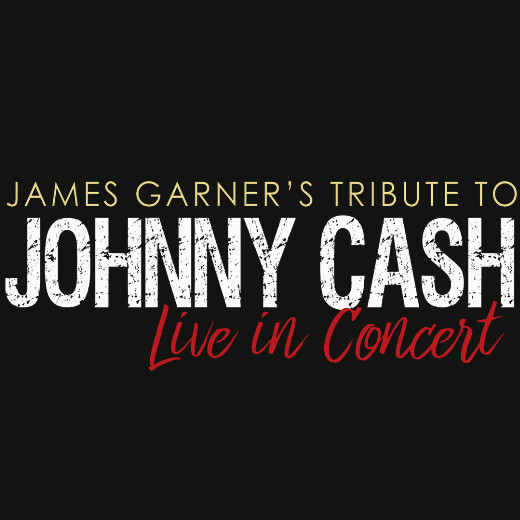
Rotary Rocks The Raue: James Garner's Tribute to Johnny Cash Raue Center For The Arts (10/24-10/24) |
|
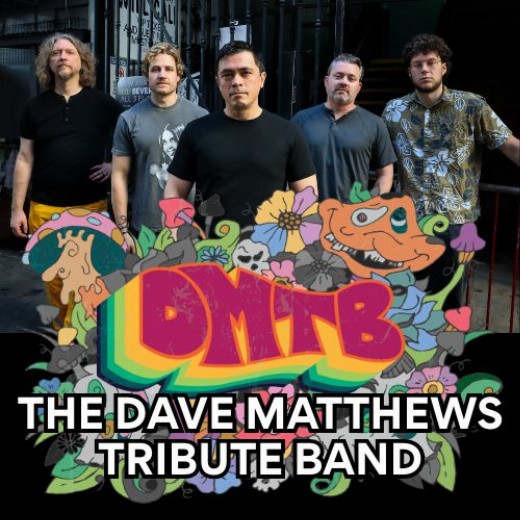
The Dave Matthews Tribute Band Raue Center For The Arts (9/25-9/25) |
|
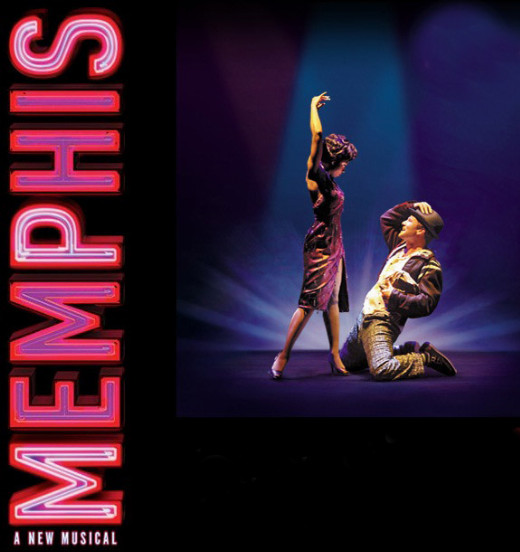
Memphis The Musical Studebaker Theater at the Fine Arts Building (10/24-10/25) |
|
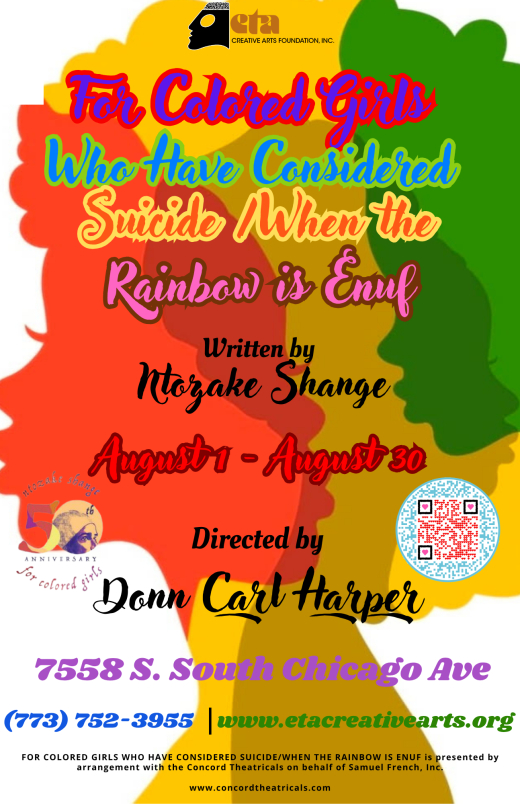
for colored girls who considered suicide when the rainbow is enuf eta Creative Arts Foundation (8/01-8/30) |
|
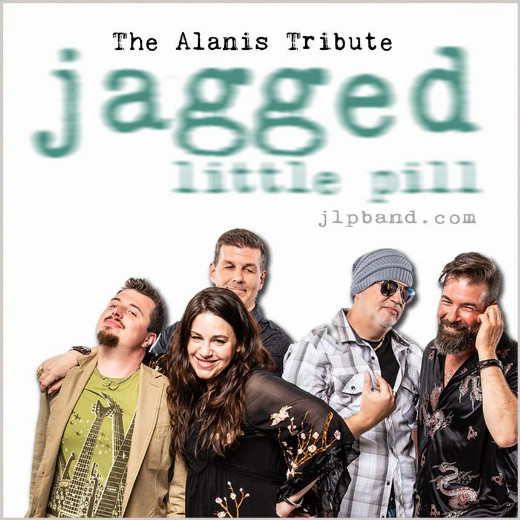
Jagged Little Pill: A Tribute to Alanis Morissette Raue Center For The Arts (10/16-10/16) |
|
Mozart's Summit North Shore Center for the Performing Arts in Skokie (9/27-9/27) |
|
The Book of Mormon Cadillac Palace Theatre (10/23-11/01) |
|
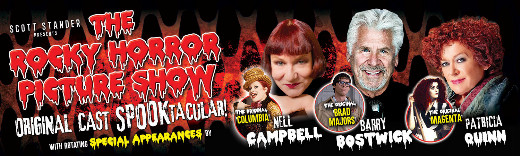
Rocky Horror Picture Show Original Cast Spooktacular Tour with Barry Bostwick, Nell Campbell, and Patricia Quinn Chicago Theatre (10/31-10/31) |