


What to Know About Lyric's Spanish-Language Opera EL ULTIMO SUENO DE FRIDAY Y DIEGO
Mezzo-soprano Daniela Mack stars as Frida in her return to Lyric, joined by baritone Alfredo Daza in his Lyric debut as Diego.
By: Chloe Rabinowitz Feb. 05, 2026
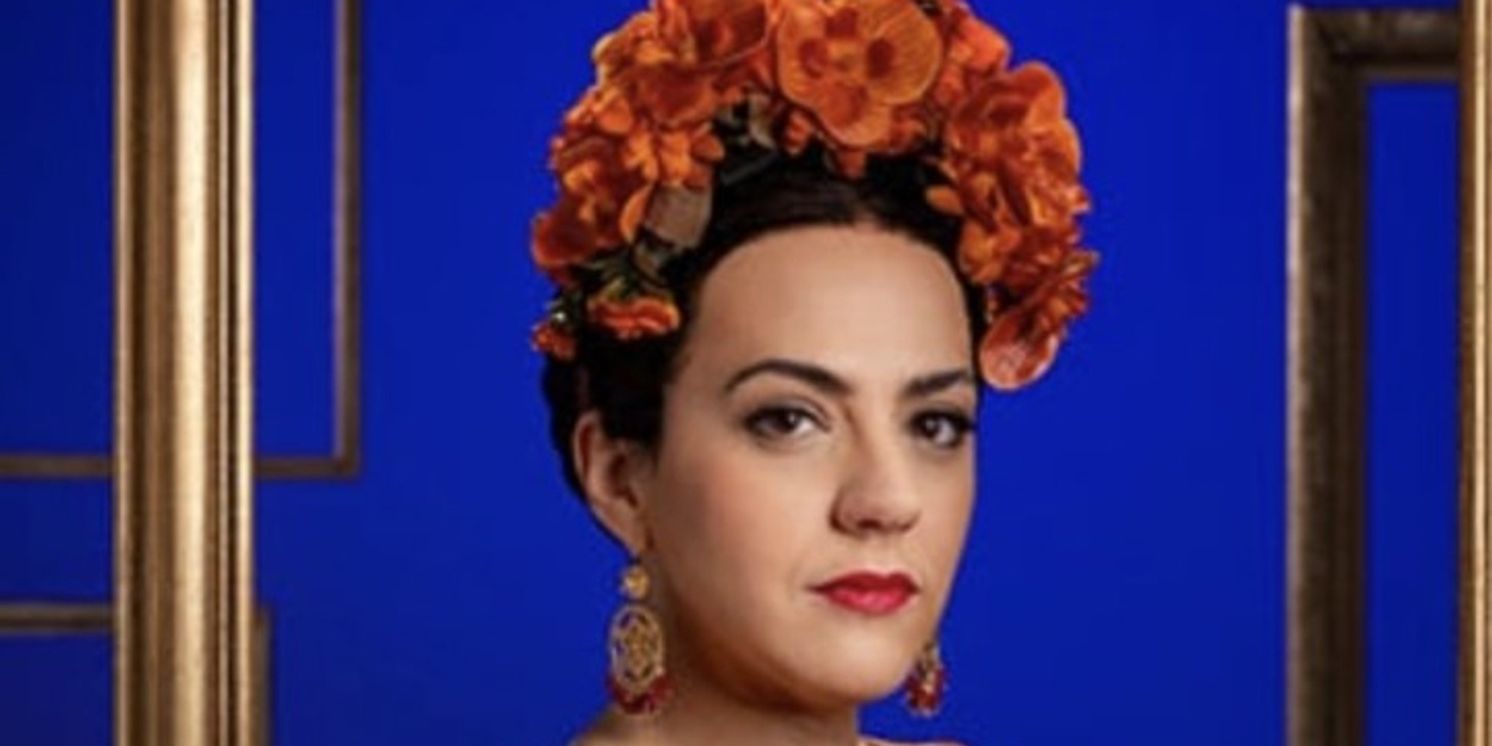

Lyric Opera of Chicago will Gabriela Lena Frank and Nilo Cruz’s El último sueño de Frida y Diego (The Last Dream of Frida and Diego), on stage March 21 – April 4, 2026. This new opera poses an impossible question: How would you spend a single day reunited with lost love? On the Day of the Dead, three years after her death, Mexican artist Frida Kahlo crosses over from the underworld for 24 fleeting hours with husband and artist Diego Rivera. What unfolds is a dreamlike journey through memory, passion, and everything they created together — both on canvas and in life.
Following its critically praised 2022 world premiere in San Diego, this opera, steeped in magical realism, arrives as the second full-length Spanish-language opera presented by Lyric, following Daniel Catán and Marcela Fuentes-Berain’s Florencia en el Amazonas in the 2021/22 Season. With vivid colors, music inspired by Mexican folk traditions, and staging that transforms the Lyric Opera House into a portal between worlds, this production brings Frida Kahlo’s artistic vision to theatrical life. Mezzo-soprano Daniela Mack stars as Frida in her return to Lyric, joined by baritone Alfredo Daza in his Lyric debut as Diego, soprano Ana María Martínez as Catrina, and countertenor Key’mon W. Murrah in his Lyric debut as Leonardo. Director Lorena Maza and conductor Roberto Kalb, both in their Lyric debuts, lead a creative team that honors the Mexican culture and artistry at the opera’s heart.
A love story that transcends death. El último sueño de Frida y Diego unfolds in 1957, three years after Frida Kahlo’s death. Diego Rivera, aging and consumed by grief, longs for one final moment with Frida. In Mictlán, the Aztec underworld, Frida has found peace, free from the physical pain and heartbreak that defined her earthly life. But Catrina, Keeper of the Dead, insists she must accompany Diego as he nears the end of his life, while Leonardo, the spirit of a young actor, urges her to return — not just for Diego, but for herself and her art.
Frida agrees to return for 24 hours with one unbreakable rule: she cannot touch the living. Her reunion with Diego unfolds in magical realism as the two artists wander through Alameda Park and Casa Azul, rediscovering joy and trying to heal old wounds, both physical and emotional. When Frida breaks the rule and touches Diego, the memories of pain and trauma come flooding back. Yet even in suffering, she finds clarity: Art is the only way to outlive death.
Authors who capture the soul of the story. The creative partnership between composer Gabriela Lena Frank and librettist Nilo Cruz brings extraordinary credentials and deep cultural understanding to El último sueño de Frida y Diego. Their opera functions as both an intimate character study and a vibrant celebration of Mexican artistic heritage while speaking to universal themes of love, loss, and artistic legacy.
Grammy Award-winning composer Gabriela Lena Frank, recently named Musical America’s 2026 Composer of the Year, is one of America’s most celebrated living composers, known for music that explores her multicultural heritage — Peruvian, Chinese, Lithuanian, and Jewish — with particular focus on Latin American musical traditions. Born with high-moderate/near-profound hearing loss, Frank has become a powerful voice for disability representation in classical music, demonstrating that composers can create extraordinary work through different ways of experiencing sound. Frank has received numerous honors including the Latin Grammy Award for Best Contemporary Classical Composition; the 2020 Heinz Award recognizing her for breaking gender, disability, and cultural barriers in classical music; a Guggenheim Fellowship; and commissions from major orchestras and opera companies worldwide. Her music weaves together orchestral colors with rhythms and melodies inspired by Mexican folk music, capturing the surrealist beauty of Frida’s visual art while honoring the emotional depth of her lived experience.
Pulitzer Prize-winning playwright Nilo Cruz created the libretto, bringing his gift for poetic, emotionally resonant language to Frida and Diego’s story. His Spanish text moves fluidly between the real and the imagined, the painful and the joyful, giving voice to Frida’s fierce independence, her artistic vision, and her complex relationship with Diego — a love marked by both deep devotion and profound betrayal. In 2003, Cruz became the first Latino to win the Pulitzer Prize for Drama for his play Anna in the Tropics. His work is known for its lyrical beauty, its exploration of Latin American and Cuban-American experience, and its ability to find magic in everyday moments. Cruz previously collaborated with Lyric and composer Jimmy López in the 2015/16 Season for the world premiere of Bel Canto, based on the Ann Patchett novel.
A singing actress who embodies Frida’s fire and fragility. Mezzo-soprano Daniela Mack returns to Lyric to star as Frida Kahlo, bringing to the role her acclaimed artistry and commanding stage presence. Mack recently appeared at Lyric as Angela in Missy Mazzoli and Royce Vavrek’s The Listeners in the 2024/25 Season, earning praise for her dramatic intensity and vocal beauty. Her international career includes performances at the Metropolitan Opera, San Francisco Opera, Houston Grand Opera, and major European houses. Known for her ability to inhabit complex, unconventional characters, Mack possesses both the rich, warm timbre ideal for Frank’s melodic writing and the dramatic fire needed to capture Frida’s indomitable spirit. Stephanie Sanchez sings the role of Frida on Wednesday, April 1.
A cast that brings passion and artistry to every role. Colombian baritone Alfredo Daza makes his Lyric debut as Diego Rivera, the legendary muralist whose tumultuous marriage to Frida forms the opera’s emotional core. Daza has performed at major opera houses throughout Latin America, Europe, and the United States, earning particular acclaim for his portrayals of complex, larger-than-life characters. His rich baritone and powerful stage presence make him ideal for Diego, whose outsized personality and artistic genius were matched only by his capacity for passionate and perilous living.
Puerto Rican soprano Ana María Martínez, on stage at Lyric this winter as Despina in Mozart’s Così fan tutte, sings the role of Catrina, the skeletal Keeper of the Dead who bridges the worlds of the living and the departed. Martínez last appeared at Lyric in the title role of Florencia en el Amazonas in the 2021/22 Season. Her luminous soprano and elegant stage presence have made her one of the leading interpreters of Latin American opera, with performances at the Metropolitan Opera, LA Opera, and internationally. As Catrina, Martínez brings both authority and compassion to this figure drawn from Mexican Day of the Dead traditions.
Rising-star countertenor Key’mon W. Murrah makes his Lyric debut as Leonardo, the spirit who encourages Frida to return to the living world. Winner of Washington National Opera’s Marian Anderson Award in 2024, Murrah’s burgeoning career includes performances at major American opera companies, where his distinctive countertenor voice and natural charisma have earned critical praise. His portrayal of Leonardo provides a crucial voice urging Frida toward life and art, even as she resists.
The production also features Ensemble members from Lyric’s acclaimed artist-development program, The Patrick G. and Shirley W. Ryan Opera Center, including tenor Finn Sagal as 1st Villager, tenor Daniel Luis Espinal as 2nd Villager & A Young Man, bass-baritone Benjamin R. Sokol as 3rd Villager, soprano Adia Evans as 1st Frida Image, mezzo-soprano Alexis Peart as 2nd Frida Image, and mezzo-soprano Camille Robles as 3rd Frida Image. Mezzo-soprano Corinne Wallace-Crane sings the role of Guadalupe Ponti.
A conductor who honors the music’s cultural roots. Mexican-born conductor Roberto Kalb makes his Lyric debut leading El último sueño de Frida y Diego, bringing a deep understanding of both Latin American musical traditions and contemporary opera. He conducted the opera's world premiere at San Diego Opera and subsequent performances at San Francisco Opera. Music Director of Detroit Opera since 2022, Kalb has built an international career conducting orchestras and opera companies throughout the Americas and Europe. He has particular expertise in contemporary repertoire and works that incorporate folk music traditions into classical forms. His leadership ensures that Frank’s score receives performances that honor both its Mexican folk inspirations and its sophisticated orchestral writing. Under Kalb’s baton, the Lyric Opera Orchestra becomes an essential character in the storytelling, painting Frida’s emotional journey through sound. Chorus Director Michael Black leads the 44 members of the Lyric Opera Chorus.
A director who brings Frida’s visual world to life. Director Lorena Maza makes her Lyric debut with El último sueño de Frida y Diego, bringing her distinctive theatrical vision to this production. A native of Mexico, Maza brings cultural authenticity and deep understanding of the artistic traditions that shaped both Frida and Diego’s work. Her direction emphasizes the opera’s magical realism, creating a production where the boundaries between life and death, memory and reality, past and present, all dissolve into dreamlike theatrical poetry. Maza’s staging honors the surrealist touches that made Frida’s paintings so distinctive while ensuring the emotional truth of the story remains central.
A production that dazzles the eye. The creative team includes set designer Jorge Ballina in his Lyric debut, whose designs evoke both the vivid colors of Frida’s paintings and the liminal space between worlds; Costume Designer Eloise Kazan in her Lyric debut, whose creations honor Mexican traditional dress and incorporate surrealist elements; lighting designer Victor Zapatero in his Lyric debut; and choreographer August Tye, a longtime Lyric collaborator who has participated in more than three dozen productions. Together, they create a visual experience as rapturous as Frida’s own canvases — a production where endlessly blooming marigolds, skeletal Catrinas, and the jewel-toned walls of Casa Azul transport audiences into Frida’s artistic vision.
When art becomes the bridge between worlds. Beyond its story of love and loss, El último sueño de Frida y Diego is a celebration of Mexican culture and the Day of the Dead traditions that honor the continuing connection between the living and those who have passed. Like the candlelit ofrendas offered on Día de Muertos, this opera doesn’t simply portray two artists’ fantastical reunion but honors the rituals of remembrance that keep memory and love alive. Frank’s sweeping music and Cruz’s poetic libretto create an operatic experience as emotionally rich as the lives that inspired it — a work that affirms art’s power to transcend death and keep our most important connections alive forever.
Performance Dates: Six chances to see El último sueño de Frida y Diego:
Saturday, March 21, 2026 at 7:30 p.m.
Tuesday, March 24, 2026 at 7 p.m.
Thursday, March 26, 2026 at 7 p.m.
Sunday, March 29, 2026 at 2 p.m.
Wednesday, April 1, 2026 at 2 p.m.
Saturday, April 4, 2026 at 2 p.m.
Language: Sung in Spanish, with easy-to-follow projected English titles above the stage.
Running time: Approximately 2 hours and 15 minutes, including one intermission.
Pre-performance talks: Ticketholders are invited to a free pre-opera talk on El último sueño de Frida y Diego's composition history and cultural context; the talks begin one hour before each performance in the theater’s Steiner Parquet (the main floor).
Accessibility: Audio description, a guided touch tour of the set, and SoundShirts are available at the Sunday, March 29 matinee performance. Braille and large-print programs, high-powered opera glasses, assistive listening devices, and booster seats are available from the theater’s Steiner Parquet coat checks at all performances.
Videos