Student Blog: The Art of Storytelling
How storytelling affects my life on stage, on the page, and in between.

Lately, I've been thinking about stories. Not just the ones with scripts, stage lights, and blocked scenes, but also the quiet ones. The ones that were written at 1:00 am. The ones that were formed in classrooms and put away never to be seen again. The ones shared in passing conversation and carried between people like something fragile and sacred.
Storytelling has woven itself into every part of my life this year. It shows up in rehearsals. In essays. In late-night Microsoft Word documents. In articles that are drafted several times and then redrafted a couple more. In the moments where I have no idea what I'm doing and in the moments when I feel completely sure.
As a theatre artist, I've always understood storytelling as something physical. It's the way a line lands in the air and hangs there just for a second before an audience exhales. An exhale of laughter or an exhale of tears. It's the sound of a laugh rippling through a house. It's the silence that feels thick enough to hold.
Onstage, a story moves through the body first. It exists in posture, in stillness, in the rise and fall of a voice. It lives in eye contact. In trembling hands. In the choice to pause.
When I step into a rehearsal room, I am stepping into someone else's narrative. I borrow their fears, their joy, their contradicitions. I study their motivations like a puzzle. I ask myself why they love the way they do, why they hurt the way they do. And for a moment, sometimes for two hours under bright lights, I let them live through me.
There is something humbling about that. Something terrifying. Something so holy.
But recently, storytelling has taken a different shape in my life.
Writing for The Honors Beacon here at Minnesota State University, Mankato has reminded me that stories don't always come with applause. Sometimes it is just you typing away at an essay. No immediate reaction. No laughter to reassure and guide you. Just the slow process of shaping something honest. Writing forces me to sit longer with my thoughts. To clarify them. To ask, "What the hell am I trying to say!?"
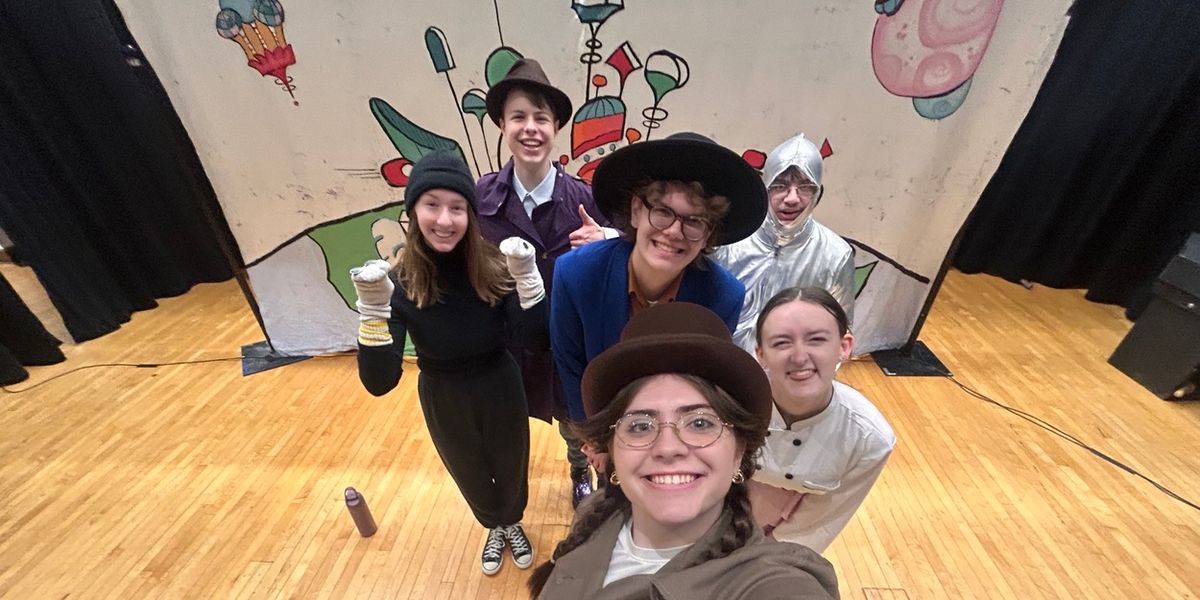
And then there's something else that's shifted how I see storytelling entirely: our traveling children's tour.
There is nothing quite like performing for kids.
When we travel to schools, the energy is completely different from a traditional audience. Kid's don't pretend. If they're bored, you will know. If they're excited, you REALLY know. They react. They laugh loudly. They talk back to the characters. They lean in when something feels important.
And that really changes you as a performer.
Suddenly, storytelling isn't about impressing anyone. It's about clarity and connection. You want to make sure the kids in the third row understand what's happening and feel invited and transported to this world.
What I didn't expect was how much it would make me think about the future.
When we perform for elementary students, we aren't just entertaining them for forty-five minutes. We are modeling what storytelling looks like. We're showing them that stories can be alive. That books can step off the page. That characters can be embodied. That creativity is something anyone can pursue.
That is what gets me.
We are doing more than telling a story. We are sharing storytelling itself with the next generation of storytellers. That feels different from performing for any other audience. It feels like planting something.
Between rehearsals for mainstage productions, writing articles, and studying all kinds of communication theories, the children's tour has grounded me. It reminds me why stories matter in the first place. Not for prestige or a resume line. But because stories help kids make sense of the world. They teach empathy, they show conflict and resolution. They say, "You can imagine something bigger."
In my communication classes, we talk about how identity is shaped through narrative. Watching kids respond to a story in real time makes that theory feel real. You can see them building meaning. You see them deciding in real time who they relate to, what feels fair, and what feels brave.
And I think about the kind of teacher I want to be someday, an English teacher who directs theatre, who believes stories aren't separate from education but central to it. The children's tour feels like a glimpse of that future. Standing in front of young students. Guiding them through a narrative. Showing them that stories belong to them too.
There's something really humbling about that responsibility.
Because storytelling isn't just about performing well or writing well. It's about modeling curiosity. Modeling empathy. Modeling courage.
Whether I'm under stage lights, drafting an article, or performing in a school gym for a room full of kids sitting cross-legged on the floor, the heart of it is the same: connection.
We are always telling stories.
With our voices.
With our writing.
With the characters we choose to embody.
With the way we pass stories forward.
And maybe what I'm realizing this year is that storytelling isn't just something I do.
It's something I get to share.
And sharing it, especially with the next generation, feels like the most important part.

.jpg?format=auto&width=365)