


Review: Censtacom’s Rodger and Hammerstein’s Cinderella: A Mundane Fairytale
From 15–18 January 2026, Center Stage Community (Censtacom) presented its latest production, Rodgers & Hammerstein’s Cinderella, at Graha Bhakti Budaya, Jakarta
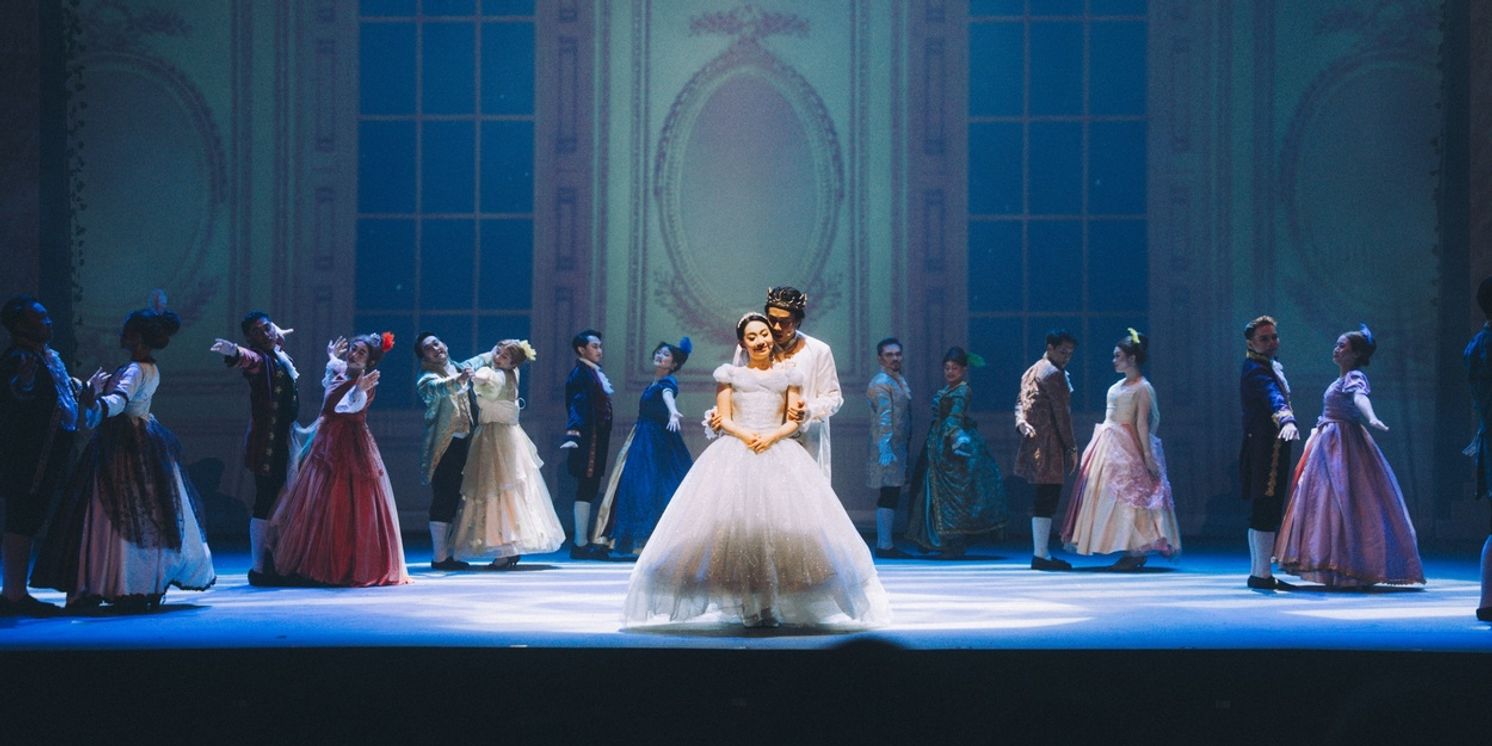
Review by Zahira, editing by Rakaputra Paputungan.
From 15–18 January 2026, Center Stage Community (Censtacom) presented its latest production, Rodgers & Hammerstein’s Cinderella, at Graha Bhakti Budaya, Jakarta. Adapted from the 1957 television film, with music by Richard Rodgers and a book and lyrics by Oscar Hammerstein II, this marks Censtacom’s fourth licensed musical, the latest being Sister Act in 2025. This review reflects impressions by the BroadwayWorld Indonesia team based on the first day of performance, featuring the Main Cast (the show also had an Alt Cast).
Censtacom founder Josephine Angelica returns as show director, collaborating with Moneva as vocal director, Robertus Darren and Ivanna Cornelia as choreographers, Sandrina Aurelia as set designer, and Tesa Tsaniya and Majeed Amrullah as head of wardrobe. Musical accompaniment is provided live by the Wishnu Dewanta Orchestra, under the direction of Wishnu Dewanta.
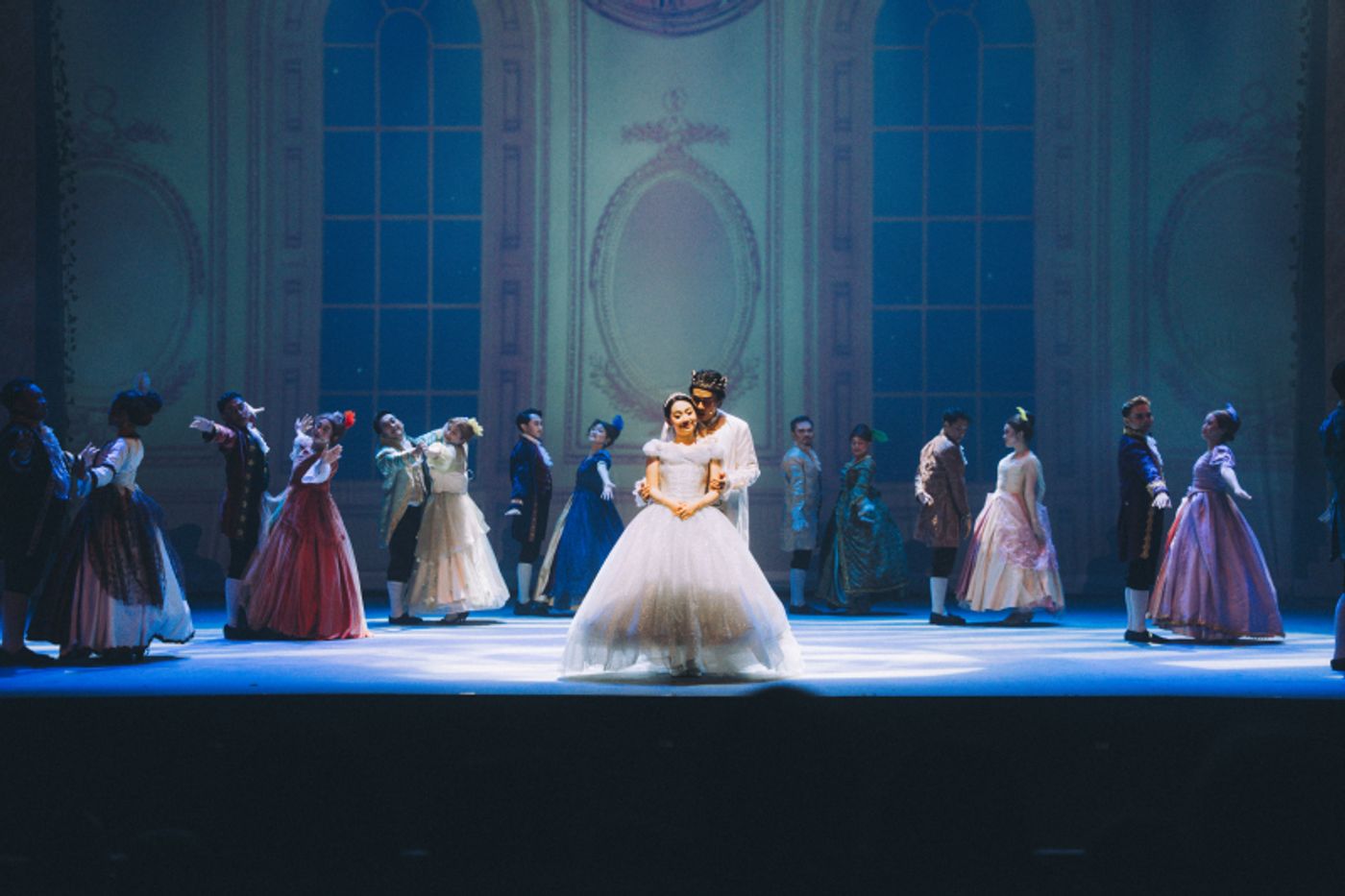
The musical opens with a kind young woman named Ella (Jane Callista) who lives under the control of her cruel stepmother, Madame (Wenny Kumalasari), and her self-absorbed stepsisters, Gabrielle (Chloe Leman) and Charlotte (Daniella Sarayar). Despite her harsh life, Ella remains compassionate and hopeful, inspired by her belief that the world can be kinder and more beautiful than it seems. Her goodness is evident when she shows kindness to a seemingly crazy homeless woman named Marie (Ria Mandik).
Meanwhile, Lord Pinkleton (Bagus Kresna) announces that Prince Topher (Afkar Malik) is hosting a royal ball in hopes of finding a suitable bride. Excitement builds across the kingdom, everyone is preparing their best dress for the ball. As the Stepsisters get ready for the ball, the Prince’s advisor Sebastian (Fadlan Abubakar) visits Madame’s house and discusses plans for Gabrielle and Prince Topher to marry.
Ella too was preparing herself for the ball—until her dress is later shredded by Madame, forbidding her from attending the ball. Madame and the stepsisters leave for the ball, the homeless woman earlier, ‘Crazy Marie,’ reveals herself to be Ella’s Fairy Godmother and magically helps her attend the event. Transformed and unrecognizable, Ella arrives at the ball and surprises the court with her radical kindness, even toward Madame. Prince Topher falls deeply in love with her, but Ella flees at midnight, leaving behind a glass slipper.
Determined to find her, Prince Topher searches the kingdom. Along the way, the characters confront their own desires and dreams of love and belonging. Ella and Gabrielle share their secrets, including Ella’s true identity and Gabrielle’s love for revolutionary Jean-Michel (Amadeus Rayhan). Political unrest continues to grow, and Ella encourages Prince Topher to truly listen to his people.
At a final banquet, Ella again meets the prince and inspires him to change the kingdom by allowing the people a voice in governance. Though she must flee once more at midnight, her impact remains. When the glass slipper search finally leads Prince Topher back to Ella, this time in her ordinary clothes, he recognizes her true self. The slipper fits. And they live happily ever after.
While the production is technically competent, it struggles to create a fully immersive fairy-tale world. The stage often feels empty, lacking physical prop and visual depth. Rather than being transported into a majestic village or palace, the audience is repeatedly reminded that they are watching a bare stage. The one exception is in the Madame’s house, where the set feels lived in because of the strong interactions between Madame, the stepsisters, and Ella taking place throughout their abode. It is here that the staging briefly gains texture and dramatic clarity.
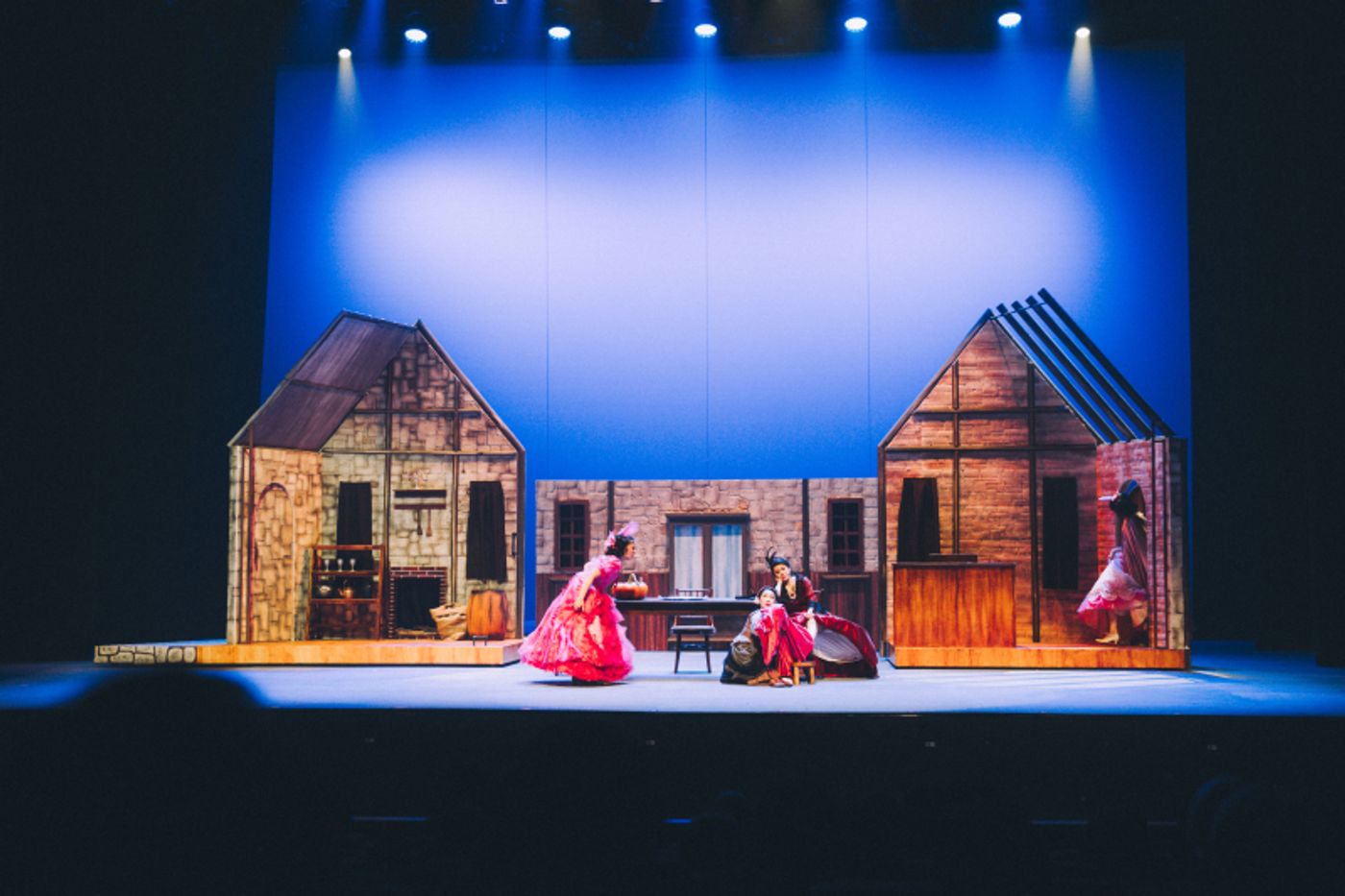
Lighting, unfortunately, does little to enhance the storytelling. It functions adequately but rarely heightens mood, magic, or emotional stakes—an essential component for a musical rooted in fantasy and transformation.
Narratively, the story unfolds in a surprisingly flat manner. Ella is written as kind, yet her kindness is more often spoken than shown. Although her compassion toward Crazy Marie hints at emotional depth, it is not enough to fully shape her as an outstandingly kind character. There were moments that felt like Ella’s kindness are mostly shown through words, and could’ve been supported more through her actions.
This emotional restraint becomes most apparent in the show’s pivotal moments. The reveal of Crazy Marie as the Fairy Godmother happens almost casually, without theatrical buildup or emotional payoff. Ella’s forgiveness of Madame is delivered just as easily. Even when Madame is ripping Ella's dress—arguably the most heartbreaking moment in the story—it’s staged with surprising indifference. Instead of devastation, the moment feels ordinary and matter-of-fact. Watching this, the audience are observing Ella’s mistreatment, but the tone is so restrained that it rarely evokes sympathy beyond acknowledgment.
There are, however, notable strengths. The ensemble’s work is incredibly clean and cohesive. Madame stands out as the most compelling character on stage and is consistently engaging to watch. Jane Callista’s vocal performance is another highlight: her voice sweet, her accent natural, and her portrayal of Ella very sincere.
What makes this particularly frustrating is that the performers themselves do their jobs well. The acting is solid, the ensemble is neat and disciplined, the props are there, the lighting cues work. Yet the production never goes beyond. There are few true “wow” moments, no risks taken, no sense that the audience’s emotional investment is being rewarded. The show appears to assume that viewers already know the story, and therefore does not push to make them feel it anew.
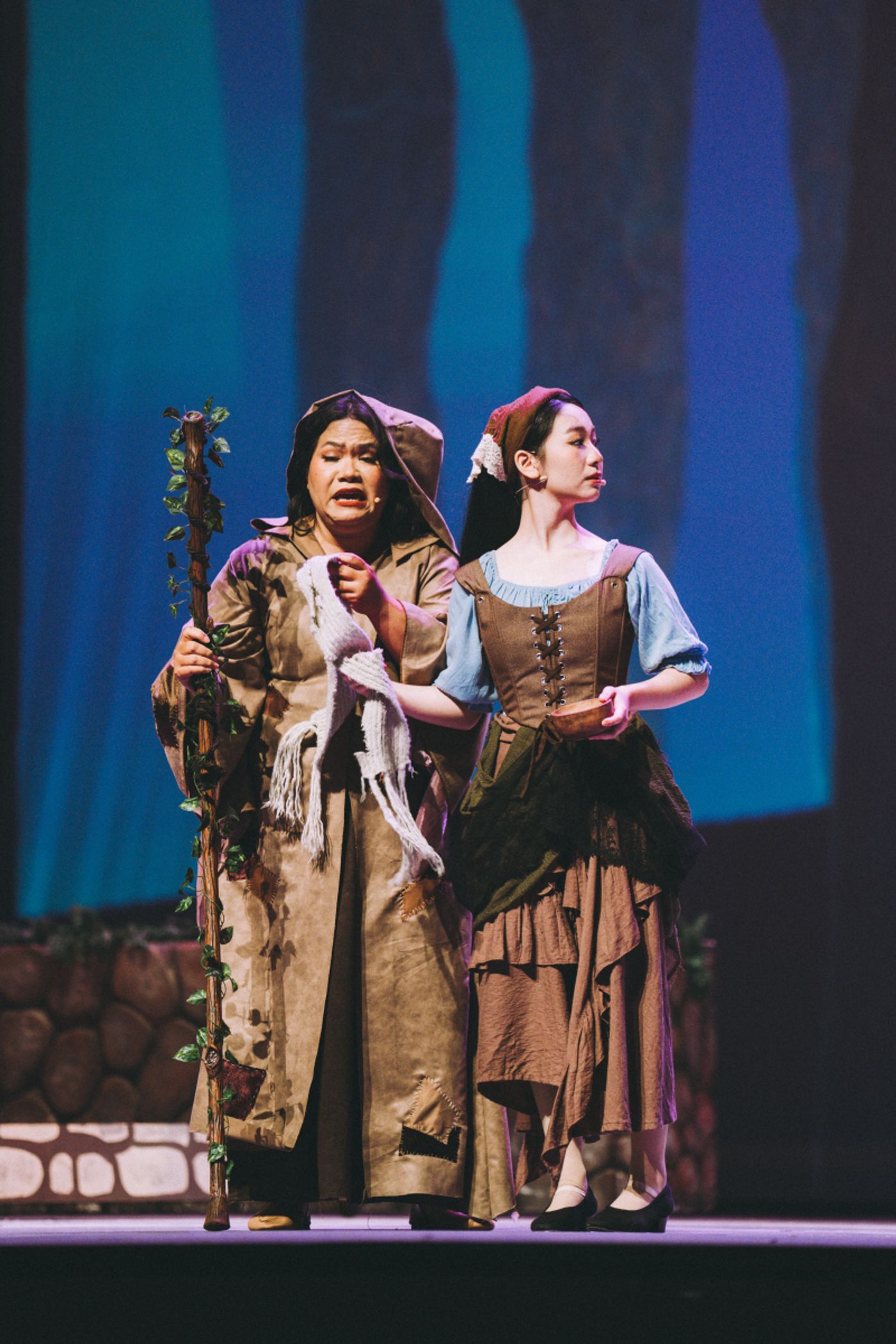
Hair and costume design are also visually pleasing and align well with the whimsical branding suggested by the show’s promotional materials and venue choice. Kudos to Tesa Tsaniya Khairunnisa and Majeed Amrullah for succeeding in making the characters set in a convincingly different world. With the venue and production branding setting high expectations, it is unfortunate that the performance does not leave the audience with a lasting emotional impression.
Being a licensed production, there are certainly limitations that the creative team at Censtacom has to contend with. With the considerable talent and technical execution displayed, perhaps the material itself – or the limited interpretation thereof – was the one holding them back.
In the end, Cinderella feels like a production where everyone fulfills their responsibilities—but stops just short of full emotional payoff. The passion is present, and the intentions are sincere, yet the execution never reaches the level required to truly move its audience. Considering the ticket price, the production does not always deliver an emotional experience of comparable weight.
The timeless story of Cinderella had all the opportunities to enchant the viewers and put them inside the imaginative fairytale world. This production, peculiarly, still leaves the audience craving for more.
Broadwayworld Indonesia was a media partner of this production. Rakaputra was involved as a crew member.
Reader Reviews

Videos