


Review: CLOUD 9: The Inheritance of Empire at The Rogue Theatre
Churchill's farce reveals how the past keeps performing through the present.
By: Robert Encila-Celdran Nov. 11, 2025
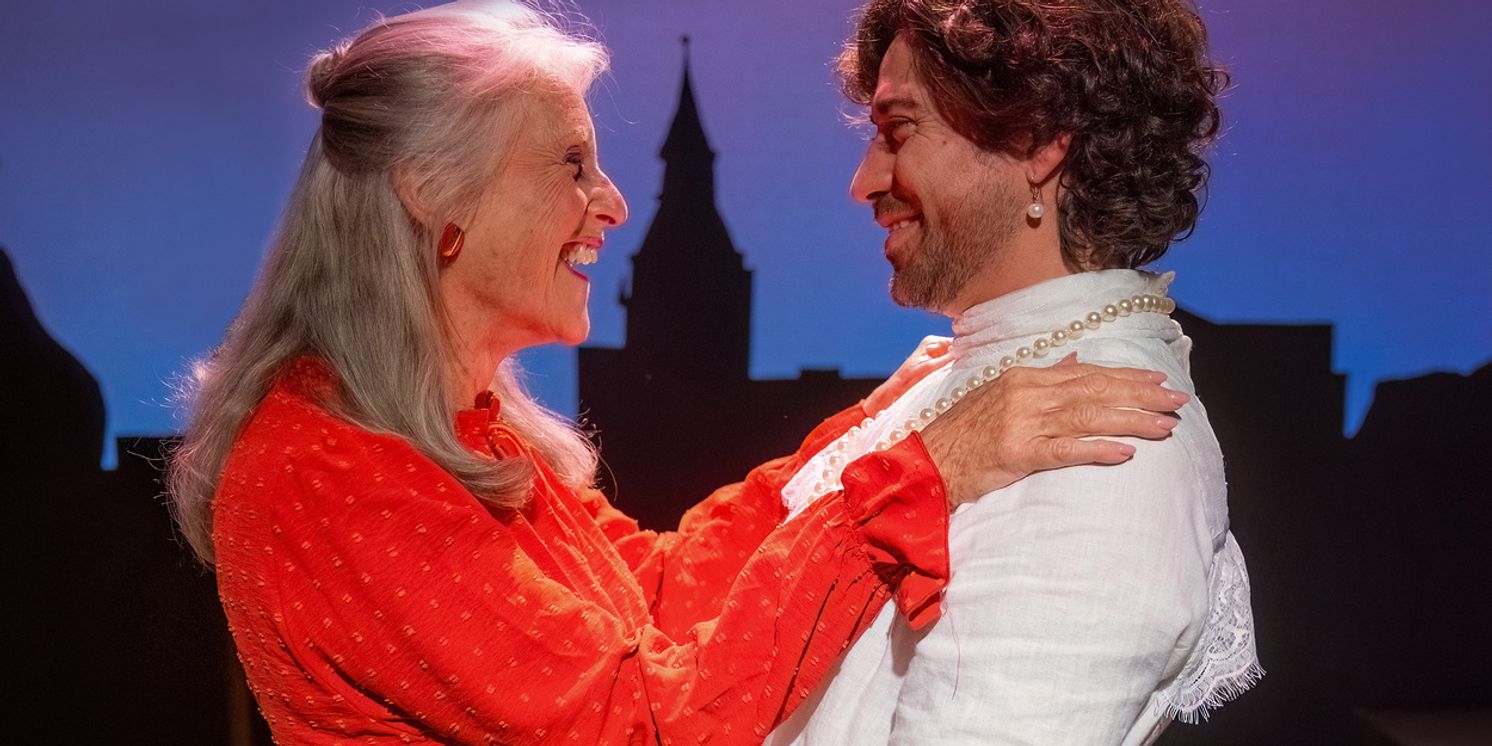
Some play revivals emerge as though summoned by the times. No doubt attuned to the debates swirling around identity and representation, The Rogue Theatre stages Cloud 9 as a trenchant parody for our age of extremes. With its latest offering, the company once again lives up to its name, producing work that feels genuinely and refreshingly rogue.
Some art offends not out of malice, but out of necessity. It erodes our defenses and upsets the hierarchies we've internalized for generations. Cloud 9 thrives in that awkward space where laughter and shock trade places. Caryl Churchill's comedy, though seemingly gratuitous, diagnoses our assumptions about who truly holds power.
Christopher Johnson's direction is sharp and fearless. The staging reflects Churchill's volatile text, embracing a minimalist design (a smart, economical concept by Joseph McGrath) and allowing scenes to bleed into one another with almost cinematic ease. The absence of walls mirrors the play's collapsing boundaries of identity and time. The Victorian acting in the first act flirts with excess, as it should: broad gestures, heightened diction, and physical hyperbole convey not realism but revelation. It's a world where transitions glide, but emotions erupt without warning.
Churchill sets Act I in colonial Africa. Clive (Matt Walley), a pompous British patriarch, rules his family with the same self-importance he brings to the empire he serves. His wife, Betty (played by Hunter Hnat—yes, a man!), embodies Churchill's boldest stroke: cross-gender and cross-race casting that exposes identity as performative rather than innate. Betty's femininity is a role written by patriarchy, while her son Edward (Sophie Gibson-Rush) clutches a doll—a small act of resistance against his father's idea of manhood. Their African servant Joshua, portrayed by a white actor (Christopher Pankratz), reflects the colonized body forced to ape its master. These reversals frame a piercing satire in which duty conceals longing and obedience betrays dissent.
Act II leaps a century forward to 1970s London, though only twenty-five years have passed for the characters. The recasting of roles signals both renewal and reckoning: Betty, now played by a woman, is no longer 'ventriloquized' by patriarchy; Edward, now played by a man (and by the actor who portrayed Joshua), is openly gay and seeks the tenderness once shamed into secrecy; and Victoria (now played by the actress who portrayed Edward) wrestles with the promise of liberation that still feels conditional.
If this sounds confusing, Churchill makes her point unmistakable: identity is performance, and freedom a role still in rehearsal.
The "colonial" first act closes with an image that distills Churchill's design. As Clive delivers his smug defense of empire and order, Joshua silently raises a gun and aims. The composition is chilling—the subjugated figure positioned upstage, weapon trained on the master he's been taught to obey. The shot never fires; it doesn't need to. The gesture itself exposes the violence that power depends on while pretending to disown it. Metaphorically speaking, the colonized gaze stares back, unblinking.
Hunter Hnat is gloriously amusing as Betty (one suspects the actor is relishing the role a bit too much). Sophie Gibson-Rush continues to reveal an impressive range as a resident ensemble member; her dramatic shift from Edward to Victoria underscores that growth. Cynthia Jeffery lends Mrs. Saunders a flinty authority that both charms and unsettles, then returns in Act II as a Betty Who finally reconciles her fluid self.
As Maud and Lin, Teri Lee Thomas reveals two extremes of restraint and rebellion with remarkable precision. Joseph McGrath navigates Harry's contradictions — the model of masculine virtue with fluid desires — with ease, and in Act II, his Martin adapts uneasily to the evolving ideals of equality.
Finally, there's Clive, the quintessential colonial father: commanding, self-assured, and averse to disorder. Matt Walley captures that paradox with remarkable discipline; his Clive speaks the language of morality and civilization while betraying a brittle core. In Act II, Walley becomes five-year-old Cathy, as Churchill turns the architecture of power on its head.
By turns shocking and playful, Cloud 9 pushes against the limits of theatrical decorum. Churchill rewrites the rules of engagement, dismantling the polite language of power and sexuality and daring the audience to confront its own boundaries.
If Cloud 9 proves anything, it's that provocation still has purpose. The Rogue has taken a bold swing—one that unsettles as much as it enlightens—and that's precisely the point. Theatre this fearless doesn't ask for comfort; it invites conversation. And in a moment when culture so often mistakes outrage for dialogue, it's heartening to see a company brave enough to turn discomfort into understanding.
Reader Reviews

Phoenix Awards - Live Stats
Best Musical - Top 3
1.
TOOTSIE (Arizona Broadway Theatre)
23.3% of votes
2.
ANASTASIA: THE MUSICAL (Don Bluth Front Row Theatre)
8.8% of votes
3.
WE ARE THE TIGERS (Velvet Curtain Productions)
7.1% of votes
Videos