George Coleman Will Receive 15th Annual SATCHMO Award From The Louis Armstrong Educational Foundation
The award will be presented at Dizzy's Club, Wednesday, January 7, 2026, 7:00 pm.
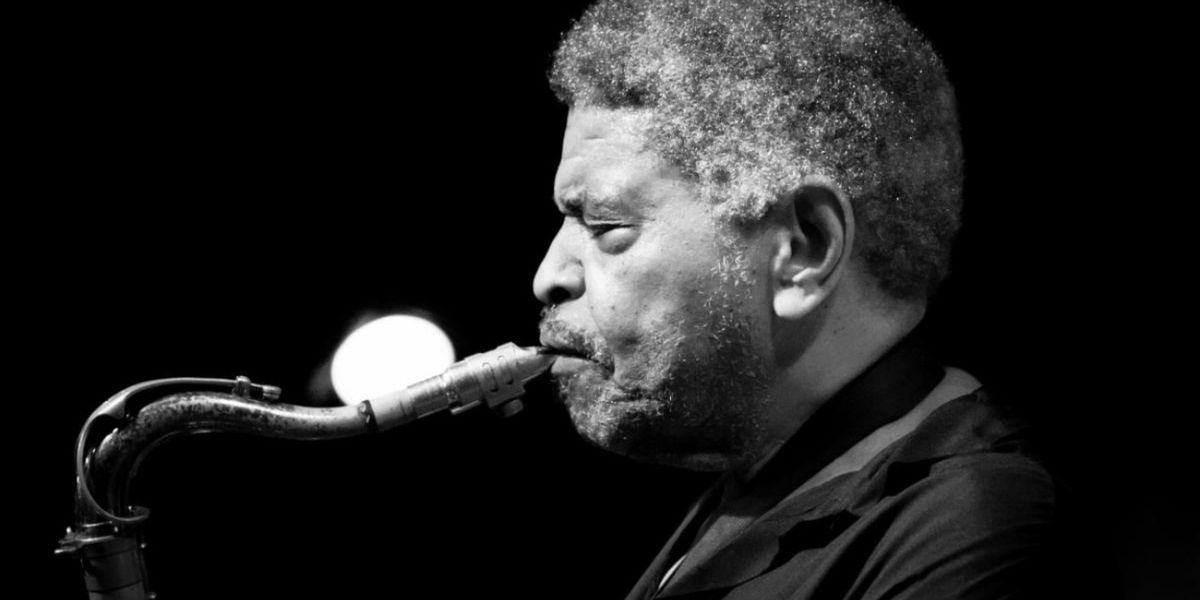
The Louis Armstrong Educational Foundation (LAEF) will present the world-renowned tenor saxophonist, bandleader and educator George Coleman with the 15th annual Satchmo Award for his spectacular seven decades of jazz musicianship and education at Dizzy's Club, Wednesday, January 7, 2026, 7:00 pm.
The Satchmo Award is a testament to Louis Armstrong's enduring legacy, celebrating artists who, like him, have dedicated their lives to jazz. Coleman joins a list of renowned past award winners, including Ron Carter, Jimmy Heath, Herb Alpert, Sheila Jordan and Reggie Workman.
The event, held during the yearly Jazz Congress, a two-day series of workshops, panels and networking opportunities organized by Jazz at Lincoln Center, will feature the George Coleman Quintet with guitarist Peter Bernstein, drummer George Coleman, Jr., pianist Steve Myerson and bassist John Webber, Throughout the concert will be special guest performances by saxophonists Eric Alexander, Adam Brenner, Sarah Hanahan, Alexander McCabe, Gideon Tazelaar and Camille Thurman.
About George Coleman
Born in Memphis on March 8, 1935, he grew up in one of the most musical cities in the world, with its vibrant blues, gospel, country, R&B and jazz scenes. His first instrument was the alto saxophone, and his first inspiration was Charlie Parker. He was proficient in all of styles of Black music, but it was in the jazz idiom where he would devote his talents for the rest of his life.
Coleman established lifelong friendships with fellow jazz inspired classmates at Memphis' Manassas High School, including trumpeter Booker Little and saxophonists Hank Crawford and Charles Lloyd. Coleman also played with several hometown musicians including bassist Jamil Nasser and pianist Phineas Newborn. At the age of 17, his first major gig was with Ray Charles, and he later worked with B.B. King. By that time Coleman switched to the tenor saxophone, and he later moved to Chicago, with Little in 1956, and worked with Max Roach, trumpeter Kenny Dorham and a host of other Chicago musicians.
Coleman moved to New York City in 1958 and established himself as one of the premier musicians on his instrument. He replaced John Coltrane and preceded Wayne Shorter in Miles Davis' band, and recorded on Davis'1963 and 1964 LP's, Seven Steps to Heaven, Miles Davis in Europe, My Funny Valentine and Four & More, and on Herbie Hancock's 1965 album Maiden Voyage. Those recordings solidified his reputation as a major saxophonist in the sixties.
Coleman's recordings as a sideman feature his work with Ahmad Jamal, Charles Mingus, Lee Morgan and Nicholas Payton. He recorded nearly 20 albums as a leader, including Amsterdam After Dark, Manhattan Panorama, A Master Speaks and Big George. He was named an NEA Jazz Master in 2015. He also served as a consultant and teacher at the New School University, Long Island University, New York University, Mannes School of Music.