

Does Broadway Have a Real Estate Problem?
Broadway’s real estate market is getting tighter. Are producers looking elsewhere?
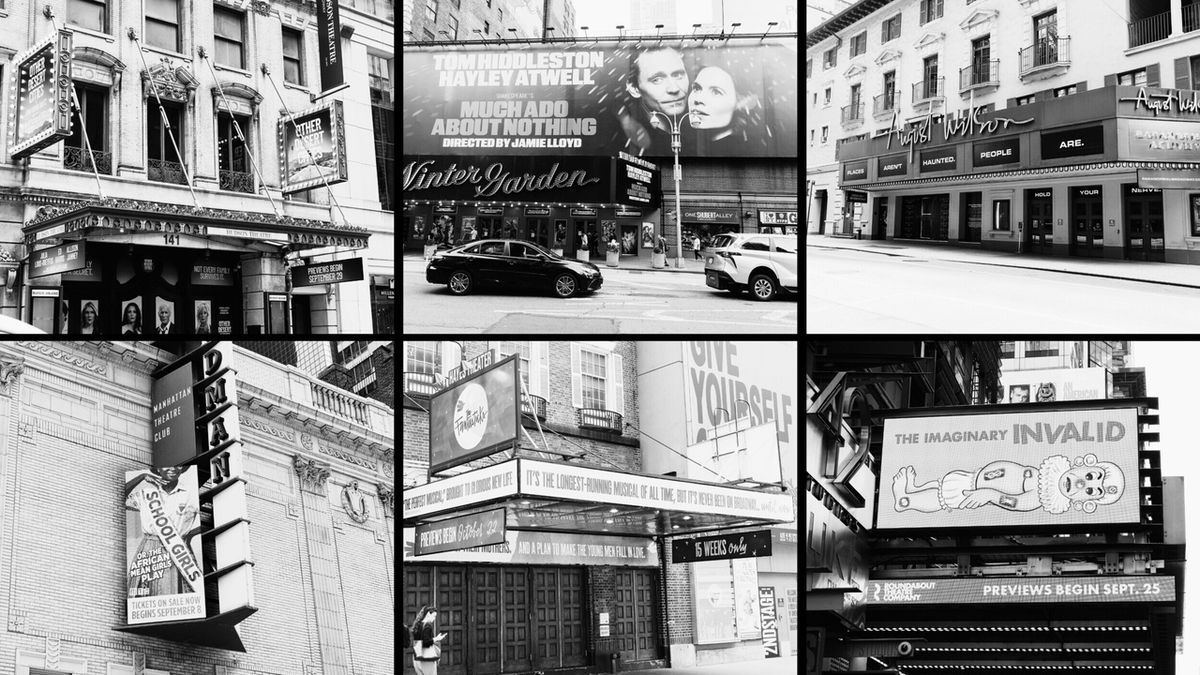
It’s always been hard for Broadway shows to make a profit, but it’s getting even more difficult thanks to an increasingly tight market for space Inside Broadway’s 41 theatres. In recent years, mergers and acquisitions have created a market where theatre ownership is increasingly corporate and consolidated, putting more power in the hands of theatre owners instead of productions. At the same time, new customers are showing interest in renting out Broadway space, from filmed events to multi-billion-dollar fintech companies.
The Broadway real estate market is changing, with supply and demand favoring the theatre owners over prospective Broadway productions. But is the market in crisis, or could this actually be an opportunity for producers to get creative and explore a wider variety of commercial theatre venues in New York City?
Why Broadway theatre owners have strong negotiating power
When we enjoy a night out on Broadway, it’s easy to forget that the theatre and the production are often two separate business entities. It’s hard to imagine the Gershwin Theatre without Wicked. The Minskoff Theatre feels synonymous with The Lion King, but The Nederlander Organization owns its theatre, not Disney.
With the exception of a handful of Broadway houses that usually host their own co-productions (like Lincoln Center Theater, which has the Vivian Beaumont Theater), it’s often more accurate to think about the relationship between productions and theatres like renters and landlords. Just like New York City real estate on the residential side, Broadway has lots of possible tenants competing for very limited space.
Broadway’s real estate market gets even tighter thanks to its consolidated ownership structure. Out of all 41 Broadway theatres, 33 of them are owned by just three major players: The Shubert Organization (17 theatres), The Nederlander Organization (9 theatres), and ATG (7 theatres). Six of the remaining eight theatres are owned by nonprofits.
For a producer trying to bring a new show to Broadway, finding the right theatre is already tricky. The size of the theatre needs to make sense for both a show’s production design and its anticipated nightly audience. Plus, lots of theatres are already occupied with decades-long runs unlikely to leave any time soon (like Chicago). Producers are left with few theatres to choose from. Low supply and high demand, plus consolidated ownership, means Broadway shows have less leverage when negotiating for theatre space.
When the real estate market tips in favor of theatre owners, they have an advantage negotiating contract terms with productions. While these contracts are usually invisible to fans, on occasion, we see their power in action: Back in 2019, the Winter Garden used its stop clause rights to evict a successful run of Beetlejuice and make room for The Music Man.
By 2022, Beetlejuice was able to find itself a new post-pandemic house at the Marquis Theatre. Still, its initial eviction shows that theatre owners’ control goes beyond just setting rents. When contract terms are right, owners can decide which shows get to stay in their Broadway theatres.
Broadway’s landlord landscape: from family companies to private equity
Theatre owners are clearly powerful and valuable members of the Broadway business community, but who exactly owns these companies? For decades, the three biggest theatre owners were all organizations associated with family ownership. The Nederlander Organization is still a family-owned business. The Shubert Organization’s sole shareholder is the Shubert Foundation, created in 1945 by Lee and J.J. Shubert and named in honor of their late brother.
Until 2023, Broadway’s third major theatre owner was Jujamcyn, which boasted similar family roots. (Its name was a portmanteau of the founder’s kids’ names: Judith, James, and Cynthia.) But three years ago, private equity became a big Broadway player when Jujamcyn merged with ATG, a UK-based theatre company then owned by Providence Equity Partners L.L.C. With the merger, ATG went from owning two Broadway houses (less than the nonprofit Roundabout) to seven. Suddenly, private equity could be a market-moving force in the Broadway real estate game.
In August 2026, an even more visible private equity-backed company spotted ATG’s potential and decided to get in the Broadway game. MARI Group, led by talent agent and business magnate Ari Emanuel, bought ATG this summer for a reported $6 billion. (Note that this valuation includes more than just Broadway; ATG owns over 70 theatres worldwide and also produces.) With its new acquisition, MARI now owns a big slice of the theatre pie: 17% of all Broadway theatres.
While Ari Emanuel is new to Broadway, he already has a track record of big entertainment industry mergers. Emanuel led the merger that combined WWE wrestling and UFC fighting into martial arts powerhouse TKO, and he also led the merger creating the talent management behemoth WME (formerly William Morris Agency and Endeavor Talent Agency). Now, Emanuel helms the group controlling seven Broadway houses. For better or worse, the Broadway real estate market is now entangled with an all-new level of large corporate ownership and private equity backing.
New competition for Broadway theatres? Fintech and national tours
So far, theatre ownership and Broadway space constraints have only touched on one side of the basic rule of supply-and-demand. But what about the amount of competition for Broadway spaces? Could lower competition or lower demand give shows more leverage? In fact, it looks like things are going in the opposite direction, with tenants searching for theatres besides just the usual Broadway-hopeful new productions and West End transfers.
One notable recent Broadway tenant was actually an AI-powered fintech company, Ramp, which paid for the one-night-only Bill Pay The Musical as a promotional event. The live show tipped its hat to industrial musicals from the golden age in the mid-twentieth century (largely forgotten by everyone except fans of the 2018 documentary Bathtubs Over Broadway). For Ramp, the expense of launching a musical in a Broadway theatre was simply a drop in the bucket: the company saw its valuation soar to $44 billion this summer, according to Forbes, as the company’s financial fortunes rose along with the AI boom.
Last year’s one-night taping of Hazbin Hotel: Live on Broadway for Prime Video is another example of a Broadway event associated not with a traditional theatrical production but with an Amazon-affiliated entertainment brand. The taping wasn’t about selling tickets (fans could get free admission through a request process). Instead, Prime Video saw the real value in using the Broadway brand to legitimize their show’s live taping. For Amazon-affiliated execs looking for a taping venue, it’s hard to imagine “Live Off-Broadway” would have had the same ring to it.
If mega-wealthy corporate entities or individuals began to see Broadway theatres as private event spaces (like how Madison Square Garden recently became event space for a certain celebrity wedding), competition for the limited number of free Broadway theatres could become even more fierce. On the flip side, who can blame theatres for wanting to fill their empty seats between Broadway productions? At best, splashy events like Bill Pay or Prime Video tapings could even subsidize the rent for less profitable theatre productions.
What about tours making Broadway stops?
Another competitor for Broadway real estate is becoming more common, but much harder to spot at first glance: national tours making an NYC stop at a Broadway theatre. Last season, Beetlejuice came to Broadway as the final stop on its tour, and Mamma Mia! brought its 25th-anniversary touring production to Broadway. In 2027, the Dirty Dancing tour will make the same business move and stop by Broadway for a limited run. These shows may look like regular Broadway productions, but they utilize a different business model.
Compared to new productions designed specifically for Broadway, these tours have a competitive advantage: they don’t have to raise as much capital to mount a Broadway run as a new musical or even a traditionally produced revival. The sets are already built, the cast is already (more or less) in place, and the tour automatically comes to Broadway pre-rehearsed. Regardless of whether we think of these stops as back door revivals or just an NYC residency for a long tour, if the tour-to-Broadway trend ramps up, new productions and traditional revivals will also be fighting for theatre space with tours looking for Broadway real estate as an extended tour stop in America’s most theatrical city.
Is the real estate market pushing shows beyond Broadway?
It’s already a difficult time to be putting on a Broadway show, with rising costs affecting everyone involved. So, what’s a producer to do? For some classic Broadway shows, the answer to the real estate conundrum actually lies in not searching for a Broadway theatre at all.
One of Broadway’s longest-running productions, Phantom of the Opera, closed in 2023, only to reappear in new form two years later a bit further uptown: Masquerade. Immersive theatre is emerging as a real alternative to Broadway, capable of commanding big ticket prices. From a business perspective, the beauty of moving the Phantom’s lair to a nondescript location on 57th street is that it opens up the possible real estate options far beyond the limited Broadway space.
Masquerade is able to play real estate’s supply and demand rules to its advantage; instead of competing for existing theatre space, it turned available real estate into a theatre. And once Masquerade’s shows are over for the evening, the same space can host a rotating list of other theatre productions and even an open-to-the-public bar in the same location.
Another classic 1980s musical came to New York this summer and similarly avoided Broadway as its venue: Les Miserables played as an arena show at Radio City Music Hall. Producer Cameron Mackintosh has suggested an entirely different version of the show is aiming for New York in 2028. As BroadwayWorld reported, fans speculated his remarks meant Les Mis might be planning a Masquerade-style immersive production. If so, the business calculation behind the move is likely that an immersive Les Mis would be more profitable than a Broadway revival.
Smaller producers may simply be pushed towards an Off-Broadway run instead. Off-Broadway isn’t subject to the same consolidated theatre ownership, and a significant portion of theatres are nonprofit-run. So, the real estate market is much friendlier than the cutthroat search for a Broadway house. Heathers and Spelling Bee both enjoyed popular off-Broadway runs this year, and Off-Broadway is finding new fan fervor, offering producers a welcome reprieve from the tough Broadway real estate market.
Where is Broadway’s real estate market going?
How should fans and artists think about the changing Broadway real estate market? One takeaway is that Broadway isn’t immune from the same corporate forces that incentivize mergers and acquisitions in more traditionally commercial creative spaces (like the Paramount/Warner Bros/Skydance merger that recently rocked Hollywood). Owning a Broadway theatre is a valuable holding, and larger private equity players are making note of the investment opportunity.
Could the changing real estate market push Broadway shows in a more corporate direction, making the industry less accepting of the artistically risky productions that historically have moved the art form forward? Perhaps, but we might see an opposite reaction. If shows like Phantom and Les Mis have to reimagine themselves beyond Broadway, the trend could legitimize new theatre spaces in New York City beyond just Broadway houses for all theatrical productions.
Yes, it’s hard for a show to find a home on Broadway these days. But from every challenge comes an opportunity for new solutions, and the theatre industry is nothing if not creative.
Photo Credit: Jennifer Broski
Weekly top stories - unsubscribe anytime.