Big Hits, Small Houses: Why Off-Broadway Is Having a Moment
As Broadway operating costs soar, producers are finding new opportunities in smaller houses.
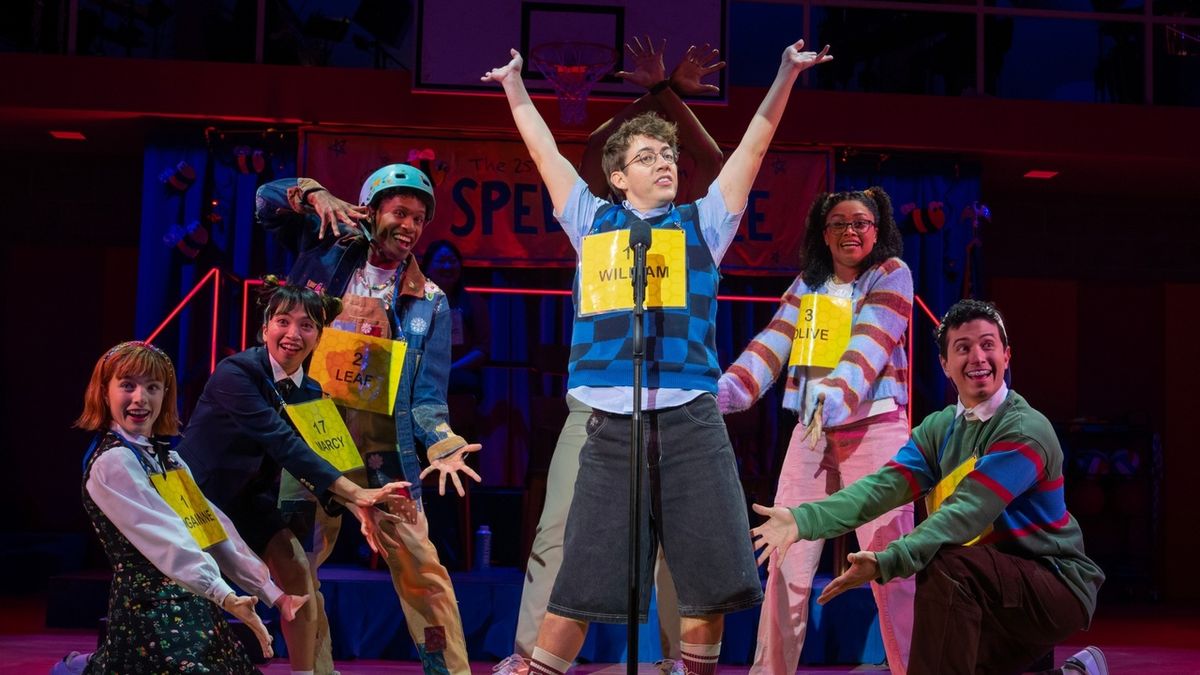
The last few years have seen a resurgence in the commercial off-Broadway space. Last year saw prominent revivals of Heathers and 25th Annual Putnam County Spelling Bee, and this fall alone will see a revival of Spring Awakening and new musicals Midnight and The Conversation. And that’s before getting into the dozens of commercial off-Broadway plays. The number of shows and the prominence Off-Broadway is gaining certainly seem to suggest a much higher degree of optimism in those spaces compared to the relatively struggling Broadway landscape. But what’s behind that optimism?
Much of the optimism lies in the lower operating costs associated with Off-Broadway shows. Union minimums typically scale according to the size of the house; larger theatres come with both higher wages and larger staffs. (There are also off-Broadway shows that don’t hire union performers, which saves a production money, though perhaps at the expense of paying fair and livable wages in the most expensive city in the world.)
There’s also an exclusivity that comes with an off-Broadway production. Especially if there’s a celebrity of some kind attached. It also means that when a show goes viral, it becomes that much easier to capitalize on its success. Sometimes that has meant a show might make it to Broadway, like Job. But Job, in spite of a number of commercially successful off-Broadway productions, failed to turn a profit on Broadway. But more recently that virality has instead meant extended runs of the existing production, rather than upscaling and moving to a larger venue.
Maybe the best recent example is Heated Rivalry: The Unauthorized Parody Musical, who announced a few weeks ago that it had recouped its initial half a million dollar capitalization in 13 weeks. Off-Broadway shows do not disclose their grosses, but if they averaged $100 a ticket in their 174 seat theater across 8 performance weeks, that means their weekly cost was no higher than $100,000 per week. In all likelihood, their true operating cost is even lower than that.
Broadway’s The Outsiders, for comparison, averaged a weekly operating expense of $963,000 in the 52 week period ending March 15, 2026, according to financial statements filed with the New York State Attorney General’s Office, against an average income of $1,073,027. It took nearly two years of selling out on Broadway for them to return their initial investment- a timeframe that is now considered optimistic for many newer shows. Once made headlines in 2012 for recouping in 21 weeks, itself the fastest show to recoup in quite some time. Even Hamilton took over six months to pay its investors back.
The downside to the off-Broadway model in most instances has been the lack of the open ended run potential. And that’s still true to an extent, most commercial off-Broadway shows are limited runs. Similar to a star-driven revival on Broadway, where a show might make its money back in 10 weeks (like this year’s Giant), but close at the end of a 14 or 16 week run, and have limited post-Broadway revenue streams.
Heathers in that way marks a somewhat significant moment. There are precious few shows that go on a national tour that have never played on Broadway in any form, but simply build enough hype from an off-Broadway run to convince touring promoters to book it into their theatres. Even though Heathers undoubtedly was one of the more expensive shows to run at New World Stages recently (based on the size of the cast alone), and will be closing this month without recouping its investment. But, its smaller scale relative to most Broadway shows means it likely has very favorable touring finances. And as we’ve seen with Kimberly Akimbo (a Broadway show of course but a smaller scale one), a successful enough National Tour can be enough to make back not just the money spent on the tour, but the money lost on the New York City production. If national touring can be a viable strategy going forward for commercial off-Broadway shows, it certainly could drive more producers to consider it over Broadway.
But it is Broadway that sets the tone for the rest of the theatre industry. Top tickets that rival some people's monthly rent on Broadway means similarly high prices off-Broadway (the Sam Rockwell led A View From the Bridge opening in December has a top ticket of $500, sound familiar?). So too, mega corporations producing shows on Broadway eventually leads to them producing off-Broadway as well, like the work Audible chooses to produce at the Minetta Lane Theatre, which they own. Or even what may be down the line at the Cherry Lane Theatre, now owned by film studio A24. If these larger corporations believe there’s money to be made in these smaller spaces, they’re probably not wrong. Let’s just hope that doesn’t lead to the same struggles that the larger spaces are currently facing.
Sign up for all the news on the Fall season, discounts & more...