


Did You Know These Broadway Revivals Started As Flops?
This season saw revivals of flops like Chess, The Baker's Wife, Bat Boy and more.
Do you have a burning Broadway question? Dying to know more about an obscure Broadway fact? Broadway historian and self-proclaimed theatre nerd Jennifer Ashley Tepper is here to help with Broadway Deep Dive. BroadwayWorld is accepting questions from theatre fans like you. If you're lucky, your question might be selected as the topic of her next column!
Submit your Broadway question here!
This time, the reader question was: What is the history of flop musicals like Chess being revived on Broadway?
As the art of musical theatre developed and shows began to be seen as classic hits rather than temporary amusements, the revival began to emerge. The Black Crook (1866) is often referred to as the first real musical and it was also one of the first frequently revived shows, brought back often in the decades following the American Civil War. Some of the other frequently revived musicals in the early days of revivals becoming a regular occurrence were the early ballad opera The Beggar’s Opera (1750), the romantic The Bohemian Girl (1844), the extravaganza Ixion (1868), Gilbert and Sullivan musicals H.M.S. Pinafore (1879), The Pirates of Penzance (1879), Iolanthe (1882), and The Mikado (1885), the operatic Boccaccio (1880), the long-running Florodora (1900), and the George M. Cohan brainchild Little Johnny Jones (1904). It made sense to bring back hit shows for another viewing so new audiences and subsequent generations could also experience what had been popular.
It wasn’t until later on in theatre history that revivals began including shows that weren’t initially well received or financially successful in their initial engagements. As musical theatre continued to evolve, and more shows entered the canon, a consensus began to grow about shows being worthy of additional exploration even if they hadn’t been hits the first time around. What about musicals that had been ahead of their time, musicals that had fallen prey to circumstances, early works by writers who became successful later on, and of course, shows that found an audience after closing via their cast recordings?
One of the first examples of a major American musical that wasn’t a smash in its first outing but has become canon is Porgy and Bess. When the moving folk opera with the great Gershwin score set in South Carolina premiered in 1935, it only eked out a three month run. This was a dark and complex work that needed further engagement in order to be fully understood, and luckily, this happened. Sadly, George Gershwin was not around to see his masterwork attain high status because he passed away at the age of 38 before its first Broadway revivals. Porgy and Bess was revived on Broadway three times in the 1940s alone and has received a total of seven Broadway revivals, not to mention countless productions around the world in both theaters and opera houses.
Not all shows that receive a second chance through revivals become as iconic as Porgy and Bess, however. Some remain underappreciated by the masses. Another early Broadway revival of a musical that was not fully appreciated the first time around occurred in the 1950s. Four Saints in Three Acts originally played Broadway for less than two months in 1934. The operatic work with libretto by Gertrude Stein and music by Virgil Thompson is an unconventional show with religious themes and an all-Black cast. The show was brought back for a second chance on Broadway in 1952 after amassing new admirers in the years since, through concert performances and radio appearances. Four Saints was treated poorly by critics in 1952, who still proclaimed that Stein’s work was only for the intelligentsia.
Similarly, the Maxwell Anderson- Kurt Weill musical Lost in the Stars, a tale about apartheid, had a modest run when it opened in 1949. The 281 performances of the final Weill musical did not make it a significant failure at the time, but it was also no mega-hit. In the 1970s, revivals were not the norm and there were far fewer musical revivals on Broadway than there are today, but folks thought Lost in the Stars worthy of a second look. Sadly the 1972 re-exploration closed after only a month.
On the other hand, another great success story of a musical finding its audience on its second go-round, like Porgy and Bess, is that of Candide. The brainy 1956 musical based on Voltaire may have closed quickly, but the 1974 environmental reimagining helmed by Hal Prince put the show on the map as a canonical work. Unlike Porgy and Bess, Candide received major rewrites before changing its reputation from flop to hit during its revival. Thus began a legacy of trying to fix shows that deserved another chance before bringing them back to Broadway.
The 1970s was also the decade when the Tony Awards added a category for Best Revival. Initially both play and musical revivals were considered in the same category. For the first year of this new field, 1977, a revival of Porgy and Bess won over revivals of Guys and Dolls, The Cherry Orchard, and The Threepenny Opera. It wasn’t until 1994 that separate categories were crafted for musical revivals and play revivals.
Of course, significant revivals weren’t only taking place on Broadway. Off-Broadway and regional productions started giving increasing amounts of new life to existing musicals that weren’t just hits from the previous season, during the mid-20th century. As Broadway began warming to bringing back previously underappreciated shows, off-Broadway and regional houses started to do the same as well, even forming companies with this as their focus. In fact, off-Broadway, with its relatively lower stakes, began hosting increasing amounts of existing musicals that deserved another look.
Broadway in the 1980s was struggling and longed for sure things, so previous flop musicals weren’t seen as prime for revival. (One rare exception was a short-lived 1980 revival of Canterbury Tales, which had also had a short run in 1969.) In the 1990s, Broadway emerged from an overall slump and attempted rebranding itself as family friendly. It was thus a decade plentiful with acclaimed revivals, where it became the norm to celebrate the most popular hits and introduce them to new audiences. During the first three years of the decade, the Tony Award for Best Revival went to productions of Gypsy, Fiddler on the Roof, and Guys and Dolls.
It wasn’t until the boom times of the 21st century on Broadway, when mass audiences could be found for a flop show based on its recording, that initially underappreciated musicals became more commonly revived. The trend that had flourished with shows like Porgy and Bess and Candide in the 20th century became a more frequent one over the past 25 years, resulting in hugely successful comebacks for several musicals.
In the 21st century, masterwork musicals that didn’t find commercial success initially on Broadway due to dark subject matter like Caroline, or Change and Parade were given another shot. Caroline, which ran slightly less than four months in 2004 after transferring to Broadway from The Public Theater, received a limited run Roundabout revival in 2021, further cementing the show’s status as a gem. Parade, which initially played Lincoln Center in 1998, ran as a sell-out production for double the length of time in its revival in 2023, and then embarked on a successful tour.
As Stephen Sondheim became widely accepted as the most important musical theatre writer of our time, revivals of his works on Broadway became more frequent. Shows of Sondheim’s with all degrees of success in their initial productions have received multiple Broadway revivals, some adhering closely to the concept of the original production and others reimagining the pieces entirely. The glorious original production Follies in 1971 may have had its mega-fans but it was a succès d’estime, not recouping in its initial run. The treasured show has been twice revived on Broadway in the 21st century. Pacific Overtures had an even quicker initial run than Follies, lasting 193 performances in 1976. But a desire to give new generations the opportunity to see major productions of Sondheim musicals led Roundabout to revive the show in 2004.
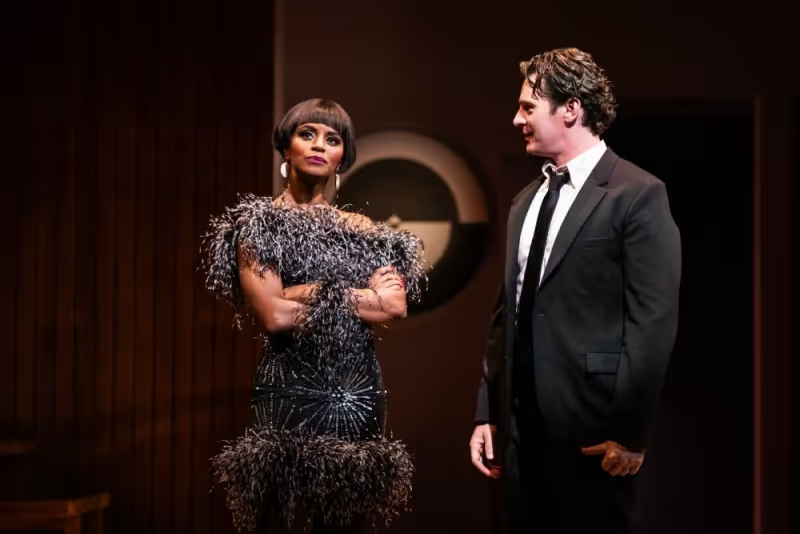
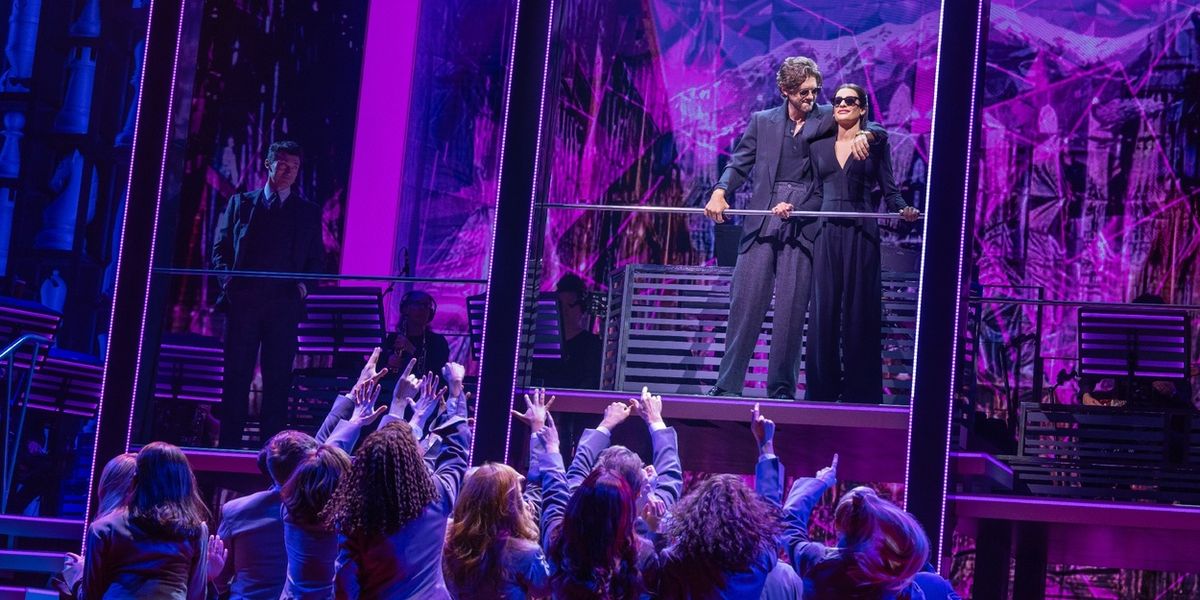
This brings us to the most major Broadway comeback in Sondheim’s oeuvre. Merrily We Roll Along closed after only 16 performances in its original 1981 production, a huge disappointment for Sondheim and his collaborators. While the original version of the show business coming-of-age story may have been misunderstood, Merrily gained new steam and new audiences with its cast recording, rewrites, and subsequent productions until a 2023 Broadway revival changed its Broadway reputation entirely. Like Parade, Merrily was revived with bankable actors. And like Parade, Merrily became a commercial, sell-out success in its Broadway revival, even generating a pro-shot filmed version.
The 21st century has also brought us revivals of worthwhile musicals that, while they may not have been considered flops in their initial outings, were not mega-hits either. The evolution of the way the public thinks about musicals has allowed for major revivals of shows like Falsettos and Ragtime, with the pieces thriving in revival in specific ways they weren’t able to in their initial productions. Falsettos was considered a major work both off-Broadway, as March of the Falsettos (1981) and Falsettoland (1990), and in its Broadway transfer where the second and third “Marvin musicals” were combined into one piece in 1992. But its 2016 revival, pro-shot recording, and tour, found the musical an entirely new generation of fans, and cemented its status as a major work. Ragtime, considered by theatrical pros to be one of the most major works of its time in 1998, was nevertheless a financial failure due to its gigantic production. Subsequent revivals, including the current extremely successful one at Lincoln Center, have, similar to what Falsettos experienced, cemented the musical’s place in the canon. Ragtime has already been revived on Broadway twice since its original production closed in 2000, and signs point to it becoming one of the most oft-revived major musicals of the late 20th century.
This brings us to cult favorites like The Rocky Horror Show and Side Show. The Rocky Horror Show has an odd Broadway history. The stage production was a huge hit in its original runs in London and Los Angeles but initially tanked on Broadway in 1975. 1970s Broadway audiences didn’t embrace the subversive work. By the time the film came out, starring several members of the Broadway cast including Tim Curry, it was too late for the production at the Belasco. Critics put down the show as tacky and had disdain for a British import that was trying to do something new with audience involvement. A terrific 2000 revival of the show was meant to be its Broadway success story but was sadly shuttered in the wake of post-9/11 audience decline. Now, a 2026 Roundabout revival marks Rocky Horror’s third Broadway production and is one of the spring’s most anticipated productions. Side Show, also ripe with characters and plot lines that one might consider incendiary and risk-taking for a Broadway musical, was revived in 2014 following its original 1997 production. Sadly, the beloved musical’s revival lasted a month shorter than its original two-and-a-half month stint on Broadway.
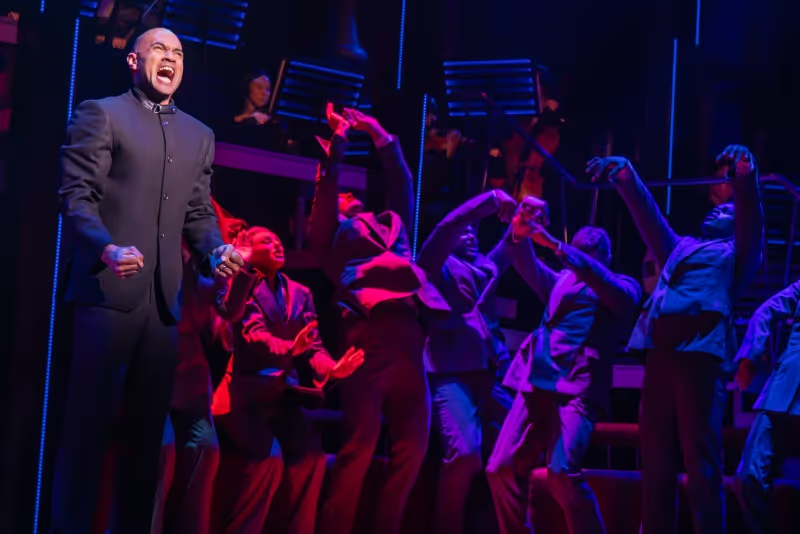
Broadway waited decades for the return of the 1988 musical Chess. The show’s score by Tim Rice (lyrics) and music by Benny Andersson and Björn Ulvaeus of ABBA fame has amassed a tremendous amount of fans in the decades since the show’s initial Broadway checkmate. Closing after only two months, the original production of Chess was highly anticipated and known thereafter as an infamous Broadway bomb. But, like Merrily We Roll Along, Chess has now proven itself in a new Broadway outing. After years of concert performances and recordings, Chess has finally returned in a newly written production starring bankable actors that is selling at a level that the original production could never have dreamed of.
In addition to this season’s Broadway revivals of Ragtime, Chess, and The Rocky Horror Show, giving new reputations to these shows, there are also several notable off-Broadway revivals of underappreciated musicals this season. Classic Stage, which has in recent years given a new chance to musicals including Allegro and A Man of No Importance, this season added The Baker’s Wife to its roster. With a starry cast, the Stephen Schwartz-scored French-infused show received its first major New York production, after stalling on the road to Broadway in 1976. Meanwhile, at New York City Center, where the Encores! series has given new life to dozens of worthwhile musicals since beginning in the 1990s, Bat Boy emerged as one of the must-see productions of the fall. Bat Boy’s original off-Broadway production was cut short in 2001; many downtown shows closed in the wake of 9/11 due to a dearth of ticket buyers. This season’s off-Broadway revival, rife with rewrites just like The Baker’s Wife and Chess, put Bat Boy back on the map.
Prefer BroadwayWorld in Google Search?
Add us as a preferred source so our stories show up more often in Top Stories and Google’s AI answers — for you.
Sign up for all the news on the Fall season, discounts & more...

.png?format=auto&width=365)





Comments
To post a comment, you must register and login.