DIASPORA & the Return of StoryCourse in New York
The immersive theatrical experience concluded in December 2025.
A Return to the Room
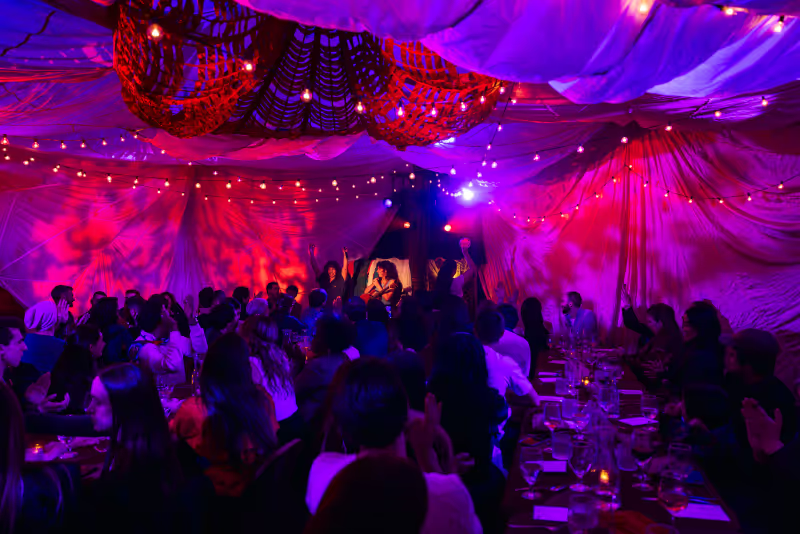
After years of virtual productions shaped by the pandemic, StoryCourse has returned to New York City, fully in person. Walking into the space last weekend for Diaspora, their latest live show, felt less like attending an event and more like stepping into a long-awaited reunion. There were no muted microphones, no glitching screens, no small rectangles of faces. Instead, there was a room full of people gathered for the same reason: to listen.
StoryCourse, a storytelling platform and performance series, has built its work around helping people shape and share personal narratives. During the pandemic, those stories continued—adapted to Zoom, livestreams, and virtual audiences. But being back in NYC, in a shared physical space, marked a significant shift. The return wasn’t just logistical; it changed the energy of the storytelling itself. You could feel it in the quiet moments before the show began, in the collective attention of the audience, and in the understanding that everyone in the room was present together, at the same time.
Experiencing Diaspora Live
That shared presence became especially meaningful given the show’s theme: Diaspora.
The stories told throughout the night explored movement, displacement, memory, and identity—what it means to belong to more than one place, or sometimes to none at all. Creative producer Charly described Diaspora as a response to a moment where complexity is often lost. “In a time where there is so much black and white thinking, and flattening of story and identity, we wanted to tell complex, nuanced stories that reflect the diverse tapestry of Jewish experience,” they explained. “We came in with the goal of elevating voices that are so often left out of the conversation—non-Ashkenazi stories. Some audience members didn’t even know there were Jews from all the countries we featured.”
While each storyteller approached the theme differently, the stories were connected by a sense of searching: for home, for language, for understanding. Hearing these narratives live made them feel immediate and vulnerable. Pauses lingered longer. Laughter felt fuller. Silence carried weight.
As an audience member, it was impossible not to feel implicated in the experience. You were not just consuming stories; you were holding them alongside everyone else in the room. That feeling deepened during a documentary-style segment featuring a family from Ukraine, whose story unfolded on screen before they quietly emerged from behind the curtain and into the space. Their presence shifted the room. Reactions rippled through the audience in a shared intake of breath, followed by a stillness that felt collective, almost reverent. In that moment, the distance between story and reality collapsed. It was a reminder that these narratives were not abstract or symbolic, but lived and ongoing.
The in-person format also allowed the storytellers’ physical presence to become part of the narrative. Small gestures, shifts in posture, the way someone looked up before continuing all added texture to the stories being told. The theme of diaspora, often discussed in abstract or academic terms, became deeply human. These were not concepts, but lived experiences unfolding in real time. For many Jewish audience members, that immediacy carried particular weight, grounded in a present moment where history feels close and identity feels newly visible.
What made Diaspora particularly compelling was not just the stories themselves, but the care with which they were presented. StoryCourse’s role isn’t simply to put people on stage—it’s to guide them through a creative process that shapes raw experience into intentional storytelling. That process, especially with deeply personal material, requires trust.
Behind the Stories: The Creative Process
In speaking with the StoryCourse team, it became clear that returning to in-person shows has reshaped how that trust is built. The collaborative process—workshopping stories, rehearsing delivery, refining structure—takes on a different tone when everyone is physically together. There’s an immediacy and intimacy that can’t be fully replicated online. For a theme like diaspora, which often involves distance, separation, and fragmentation, the act of coming together in one room felt especially resonant.
The team described Diaspora as both a creative challenge and a responsibility. Helping storytellers articulate experiences tied to culture, migration, and identity requires deep sensitivity—especially when those stories intersect with family history or collective trauma. That sensitivity, according to Charly, was rooted in relationship. “Delicacy in storytelling was all rooted in relationship,” they said. “We spent time with each family, listening deeply and building trust. The scripts grew directly out of those conversations—often quite literally in their own words.” Charly also emphasized the responsibility placed on the performers themselves. “Our actors met the responsibility of representing our chefs and their cultures with real care. We made sure they had the grounding they needed, whether that meant pronunciation, historical context, or cultural nuance beyond what was on the page—but they brought their own deep commitment to honoring these stories.”
At one of the intermissions, between courses, BroadwayWorld contributor and StoryCourse alum Rachel Schmaier checked in with StoryCourse co-founder and director Adam Kantor. Watching from across the room, Schmaier noticed Kantor standing quietly, a subtle smile of pride on his face as his eyes moved from one audience member to another. She asked him simply, “What do you feel when you watch the audience watch this story, Adam?”
“A whole lot of nachas,” Kantor replied without hesitation. Fitting for the environment, nachas is a Yiddish word that captures a sense of soulful satisfaction—a proud, grateful pleasure that comes from witnessing something meaningful unfold.
A New Chapter for StoryCourse
By the end of the night, Diaspora felt less like a single event and more like a statement about where StoryCourse is now. Being back in New York, back in person, reaffirmed the power of storytelling as a communal act. In a city shaped by movement and migration, these stories did not just belong on a stage. They belonged in a room full of people willing to listen.
So what’s next for Diaspora? Tickets sold out across performances in just days, signaling a hunger for stories like these and for the kind of communal experience StoryCourse creates. The team is now exploring ways to extend the life of the show, from securing additional space and donor support to potentially bringing Diaspora beyond New York. If the energy in the room was any indication, this is a story still unfolding, one that audiences are eager to continue listening to wherever it may go next.
“While we felt we had something special when we were creating Diaspora, we had no idea how deeply it would resonate with audiences,” said StoryCourse Head of Operations Andy Hartman. “We were working with a very tight budget and didn’t have the resources for traditional marketing, but word of mouth after the first weekend of previews was so strong that we sold out our entire two-month run.
“My favorite part of each performance was staying afterward to talk with audience members as they left—hearing which dishes and stories stayed with them the most. It was incredibly meaningful to see how moved people were, and to hear how audiences, whether Jewish or not, left with a broader understanding of what Judaism can look like and what Jewish cuisine can taste like.”
Diaspora serves as a reminder that stories gain meaning not only from who tells them, but from how and where they are shared. Some stories, it turns out, need to be told face to face, over food made with love and shared across a long table.
Photo Credit: Rebecca J Michelson