

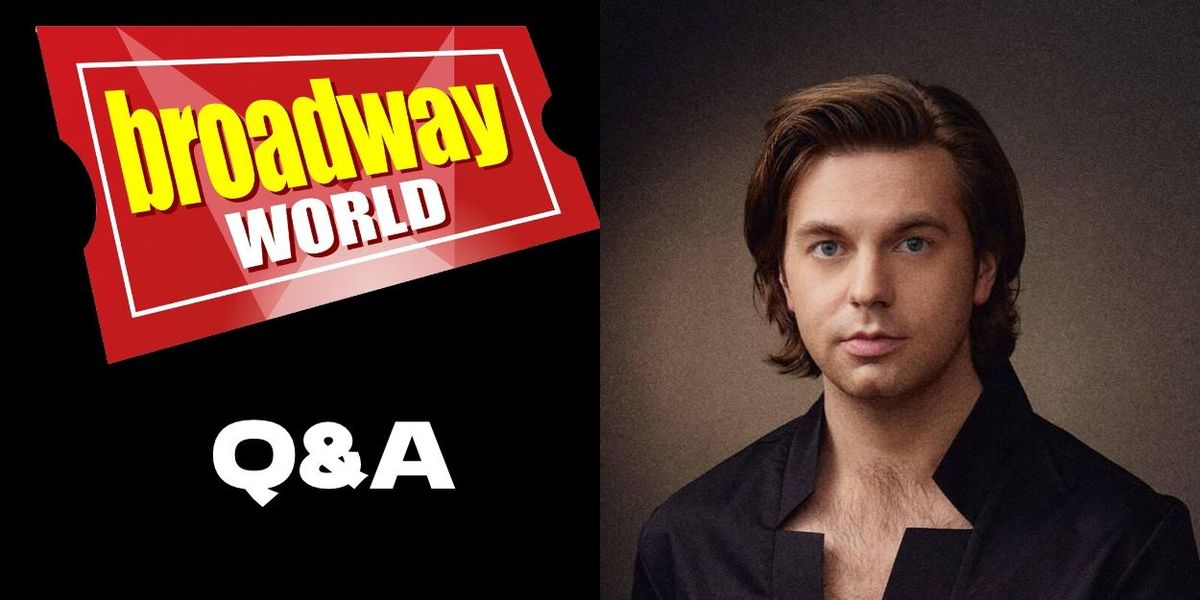
BWW Q&A: Trent Stork of SOUTH PACIFIC at Paramount Theatre
Jeff Award-winning director Trent Stork on reimagining a Rodgers and Hammerstein classic for a new generation at Paramount Theatre.

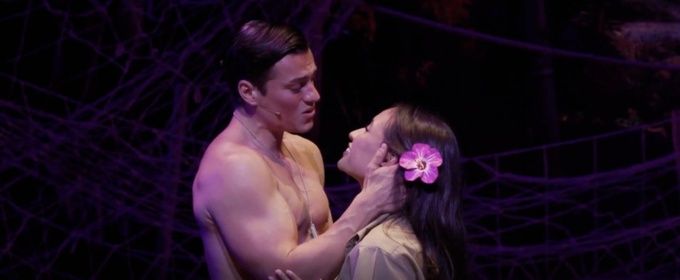
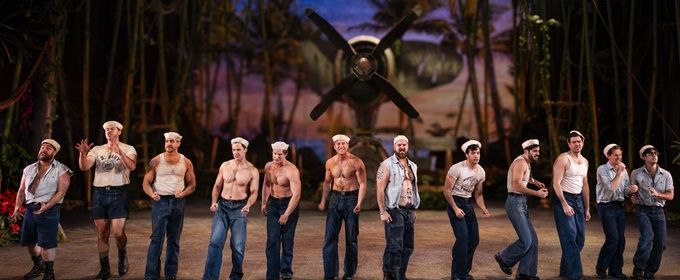
Paramount Theatre is pulling out all the stops for its upcoming production of South Pacific, the beloved Rodgers and Hammerstein classic that sweeps audiences from the warm sea breezes of a tropical paradise to the tense backdrop of World War II. Running April 29 through June 14, 2026 in downtown Aurora, this staging promises to be one of Paramount's most ambitious yet - featuring one of the largest casts and orchestras in the theatre's history, and a jaw-dropping set built from half a mile of bamboo and 10,000 square feet of hand-painted muslin to transport audiences straight to the South Seas.
At the helm is Jeff Award-winning director Trent Stork, for whom South Pacific marks an astonishing 28th production on a Paramount directing team. Stork is no stranger to reimagining beloved titles on the Paramount stage, with a résumé that includes Come from Away, Frozen, Billy Elliot, Legally Blonde, Into the Woods, School of Rock, and Charlie and the Chocolate Factory, as well as his Jeff Award-winning direction of Kinky Boots. Beyond the director's chair, he also serves as Paramount's Artistic Producer and Casting Director, making him a driving creative force behind the theatre's celebrated Broadway Series.
South Pacific is an iconic but famously complex piece of musical theatre — one that grapples with race, prejudice, and the collision of cultures alongside some of Broadway's most unforgettable songs, including "Some Enchanted Evening," "I'm Gonna Wash That Man Right Outa My Hair," and "Bali Ha'i." For this production, Stork's direction and staging aim to empower women and people of color in ways traditional stagings of the show often haven't, bringing fresh perspective to a classic while honoring everything audiences love about it. In this Q&A, Trent talks about the scale of the production, the choices behind his approach, and why this story still matters today.
What drew you to the project of South Pacific at the Paramount Theatre?
When we were picking our season, we knew we wanted to have something that felt very classic to end our 2025-2026 season and South Pacific with its complex storyline and beautiful music is a perfect fit. It's a show where even if you didn't know that all the songs were from South Pacific, you somehow know all the songs.
How have you approached the direction and staging of this classic American theatre piece?
One of our big focuses is always going to be on the music, especially with a Rogers and Hammerstein piece, so making sure that we had capable singers to pull off this score was one of the first priorities. What one might not expect is that the book of South Pacific is equally compelling and the characters are fully realized and incredibly intricate. Not everything in the story is cut and dry so we also wanted to make sure that we found the actors that could really dig into these scenes and really make the book come alive as well. We especially wanted to pay attention and give careful consideration to the AAPI characters in this show and their portrayal. They are often played as caricatures and so we wanted to find ways to give more power to their stories and make them hold equal weight to the other characters we meet on these islands.
Can you talk about how you're aiming to empower women and people of color more than seen in a traditional production of this show?
When you look at a character like Bloody Mary, for example, it’s easy to write her off as comedic relief. When you look at it with fresh eyes, you can see that she's simply the smartest person on the island. She's found a way to sell “shrunken heads” to sailors for $50… $50 in the 1940s! We thought what if she had a whole operation where she is finding an opportunity here to take these sailors for all their worth to provide a life for her daughter Liat. She’s making what the sailors think of as “exotic souvenirs” out of very common things you can find on the island... Then when we get to Liat, often she is portrayed as if Bloody Mary, her mother, is offering up Liat, her daughter, to Lieutenant Cable. We thought- well what if it's the other way around? What if Bloody Mary and Liat have had a conversation and Liat has expressed the desire to get married and start a family. Liat is the island princess of Bali Ha’I so only the best, an absolute pure soul, will do for Liat. Bloody Mary has been on the search for the perfect person for Liat. She sees Cable on the beach and knows instantly he’s the one for her daughter. She brings him to Liat for approval, not the other way around. When it comes to Nellie Forbush, we wanted to make sure that she didn't feel like a serial optimist who doesn't care to know anything about anything. She joined the Navy to get away from her overbearing mother who wanted to shove her in beauty pageants, to settle in Arkansas, and become a wife. That's just not who we think Nellie is. We see her as very courageous woman who decided to join the Navy to help the war effort, yes, but also to have an adventure- to see new places, meet new people. She is invested in this experience. Not just “golly gee, happy go lucky I don't know nothing about nothing.” She’s an extremely positive person who has positioned herself here because she wants to have new experiences that challenge her and help her evolve.
How does this production of South Pacific differ from your previous projects at Paramount Theatre?
It's really amazing to work on a piece that was made with such thought and care- a piece that has been thoroughly thought through and has equal halves great classic music that has stood the test of time all in wrapped in a really compelling story. It's the most romantic musical ever made with one of the greatest scores in history. It's nice to work on a show that takes its time. A lot of the movie musicals are made to slam everything in. Whereas South Pacific is a show that asks you to settle in and spend a little time with these people, to really get to know them. You don't have to rush and in doing so, you get to fall in love with these characters.
How does the iconic, complex nature of South Pacific influence your role as a director?
It's really quite wonderful to work on a piece that asks a little more of you as a director. I knew I needed to do a lot of research and so I researched World War II, the making of South Pacific, the writers Rogers, Hammerstein, and Josh Logan. I read Mary Martin's autobiography, I read 2 of Josh Logan's autobiographies to really feel like I was coming to the show fully loaded. When you do that, you see how much each person put their stamp on the show. You see how history influences each word on the page, the careful consideration that was brought to each part of the piece. You see how Rogers and Hammerstein built the score arm in arm to serve each character’s rich inner life. It’s like being handed a puzzle box and you get to search for clues phrase by phrase. Shakespeare and Sondheim are the only others as thrilling to prepare.
Why must audiences come and see the show?
Audiences need to come see this show because they'll get swept away. They'll get swept away by the romance, they'll get swept away by the music- the show has such a bright spirit that I think it's important for people to have a little dose of that. They’ll also leave feeling a little more human, a little more alive.


|
Catch as Catch Can Steppenwolf Theatre Company (6/04-7/12) |

|
EWP presents Robbie Fulks & Griffin William Sherry Showcase Raue Center For The Arts (8/07-8/07) |

|
Hedwig and the Angry Inch Catalyst Ranch (7/09-7/26) |

|
HITCH*COCKTAILS SUMMER OF SUSPENSE The Annoyance Theater (7/03-7/31) |

|
Lucy's Comedy Raue Center For The Arts (10/09-10/09) |

|
Journeyman Presents 50 years of SLOWHAND Raue Center For The Arts (1/23-1/23) |

|
SIX (Boleyn Tour) Peoria Civic Center (11/17-11/19) |

|
In the Continuum Fleetwood-Jourdain Theatre in the Noyes Cultural Arts Center (7/25-8/09) |

|
Deserted Redtwist Theatre Company (6/14-8/02) |

|
Alison Krauss And Union Station Hunter Pavilion At Ravinia (9/12-9/12) |