


Review Roundup: What Did The Critics Think of GOOD NIGHT, OSCAR?
The show is running at the Barbican Theatre until 21 September
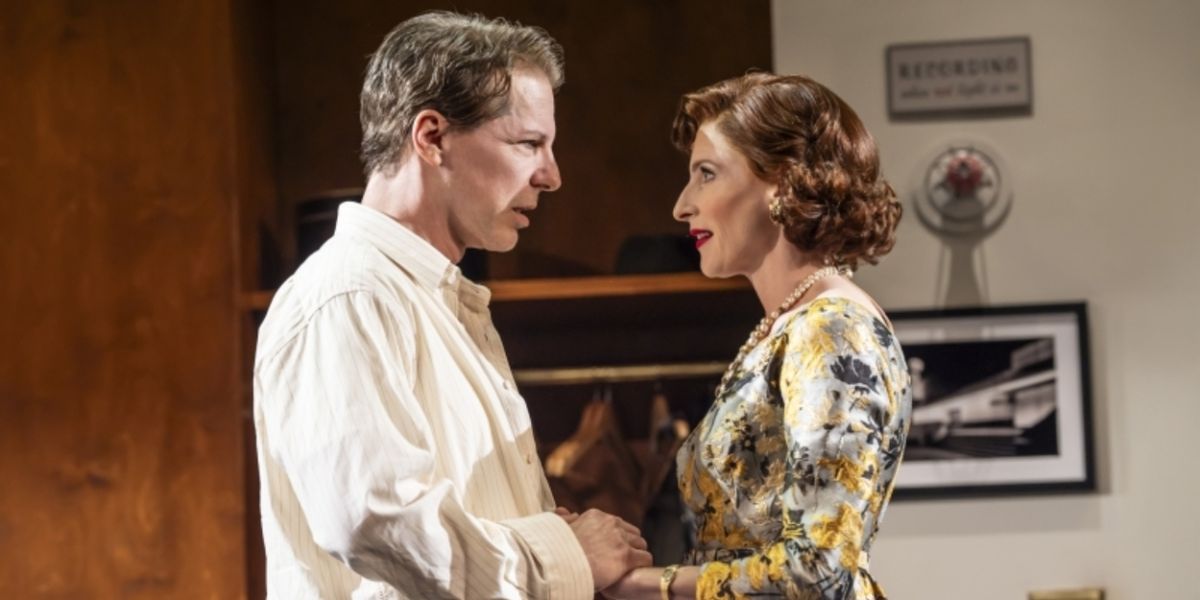
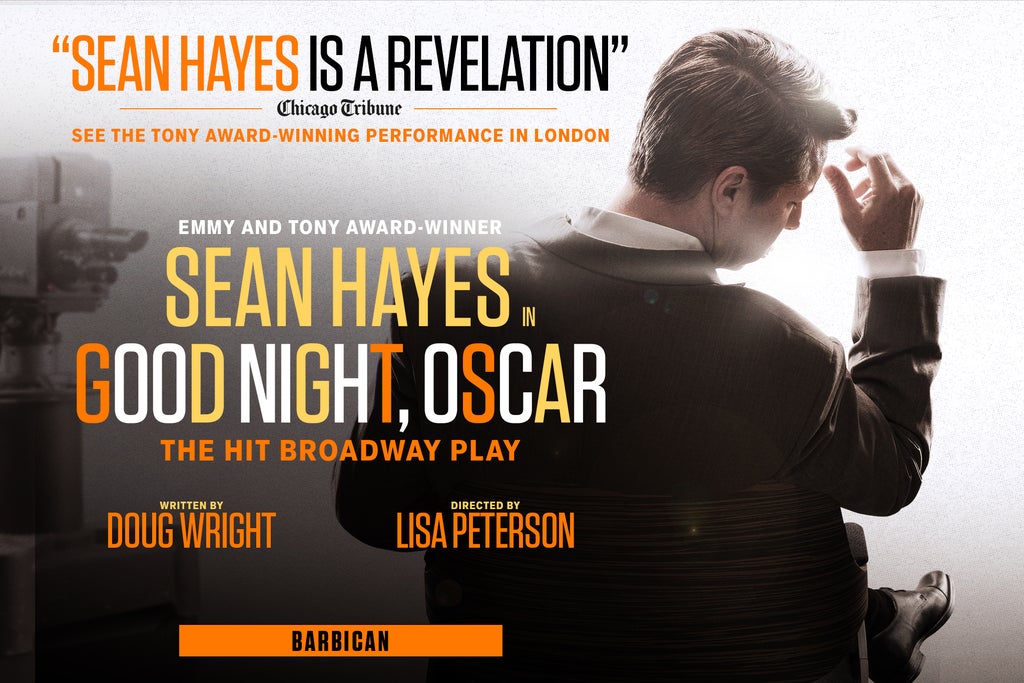
Emmy and Tony Award-winner Sean Hayes (Will & Grace) brings his acclaimed, Tony Award-winning performance to the Barbican this Summer in Good Night, Oscar – direct from a critically acclaimed Broadway season.
It’s 1958, and Jack Paar hosts the hottest late-night talk-show on television. His favourite guest? Character actor, pianist, and wild card Oscar Levant. Famous for his witty one-liners, Oscar has a favourite: “There’s a fine line between genius and insanity; I have erased this line.” Tonight, Oscar will prove just that when he appears live on national TV in an episode that Paar’s audience—and the rest of America—won’t soon forget.
What did the critics think?
Good Night, Oscar runs at Barbican Theatre until 21 September
Photo Credit: Johan Persson
 Gary Naylor, BroadwayWorld: Sean Hayes, Tony Award in stowage, crosses The Atlantic to reprise his role as Levant and it’s hard to overstate just how good he is, a one-man rebuttal for the disappointments many have felt paying top dollar for big Hollywood names in the West End. He simply inhabits the part. There’s the desperate vulnerability of the addict, the ticks that speak of a roiling mind, the ruthless exploitation of the decency of others. But there’s also the speed of the wit, the grudging willingness to do the right thing, the sheer chutzpah of the man. Most of all, and this elevates the performance to the very best of any I’ve seen, there’s the charisma - Levant’s and Hayes’ - that bounces around this large house like a laser show.
Julia Rank, London Theatre: At the centre of the storm is Sean Hayes as Levant himself, reprising his well-deserved Tony-winning role. Described as “Eeyore in a cheap suit”, his lack of charm and disregard for people-pleasing was a breath of fresh air in the sycophantic entertainment business. Hayes is considerably more boyish looking than the real Levant but has the hangdog expression and an abundance of tics and twitches (his voice also calls to mind Paul Lynde, who was barely closeted and heavily coded as bipolar on Bewitched a few years later). To make the casting even more ideal, Hayes trained as a pianist before becoming an actor and plays a rendition of “Rhapsody in Blue” that’s essentially a nervous breakdown on the piano.
Alun Hood, WhatsOnStage: Hayes inhabits his role so completely and with such detail that he’s equal parts mesmerising and painful to watch. He nails flawlessly the fluttering hands and slack-jawed terror of a person living on their very last nerve, the obsessive-compulsive tics that make sense to him but nobody else, the acidic wit as self-deprecating as it is mean (“I’m controversial, they either dislike me…or they hate me”). It’s a stunning performance that reaches its apotheosis in the production’s ultimate coup de theatre: like Levant, Hayes is an accomplished concert pianist and, at the show’s climax, he plays a driven, enthralling version of Gershwin’s “Rhapsody In Blue” that seems to represent Oscar channeling and exorcising all his demons at once.
 Alice Saville, The Independent: As Wright’s play emphasises, Levant’s worldview was ahead of its time – and so were the people who hired him, presaging an era of reality tv where uninhibited, unself-aware participants are wheeled on to scandalise viewers, with little thought given to the toll it takes on them. Still, this drama doesn’t feel quite as forward-looking in its perspective on mental illness. Levant’s madness here is romanticised, stylised: his hallucinations are used as a convenient way to flesh out his backstory. There’s something of a debt to Peter Shaffer’s Amadeus here, with its tale of an ageing composer haunted by his more successful rival Mozart. Levant sees visions of a sleekly suited George Gershwin, who taunts his loyal discipl, and imprisons him in an identity as a favoured interpreter of “Rhapsody in Blue”, nothing more.
Tom Wicker, TimeOut: Director Lisa Peterson’s production is sturdily reliably in the early expositional scenes, but really takes flight when the dividing line between reality and Levant’s worsening mental state begins to dissolve. There’s a grippingly feverish quality to how Rachel Huack’s dressing room and studio sets end up sharing stage space. Privacy no longer exists with cameras turned on couches. It's fragmentary and frantic – culminating in a truly virtuosic piano performance by a spotlit Hayes, who looks agonisingly at his own hands as if they belong to a stranger. It’s hauntingly powerful and the apex of this funny and devastating play.
Olivia Garrett, Radio Times: Much like the orchestra Levant imagines, this show is layered and comes out in full force. Its themes run one after the other, from misogyny to TV censorship to mental illness, building up to a crescendo that encompasses everything from the exploitation of public figures to the uncredited influence of Black culture in music. Yet, while so many shows find themselves muddled by the noise of competing topics and in-your-face messaging, Good Night Oscar's string together in one note-perfect symphony.
Average Rating: 86.7%
- To read more reviews, click here!
- Discuss the show on the BroadwayWorld Forum

|
Powered by

|





Reader Reviews
To post a comment, you must register and login.