


Review: THE HITCHHIKER'S GUIDE TO THE GALAXY, Riverside Studios
Oh no, not again: another big-budget immersive production fails to live up to its promise.
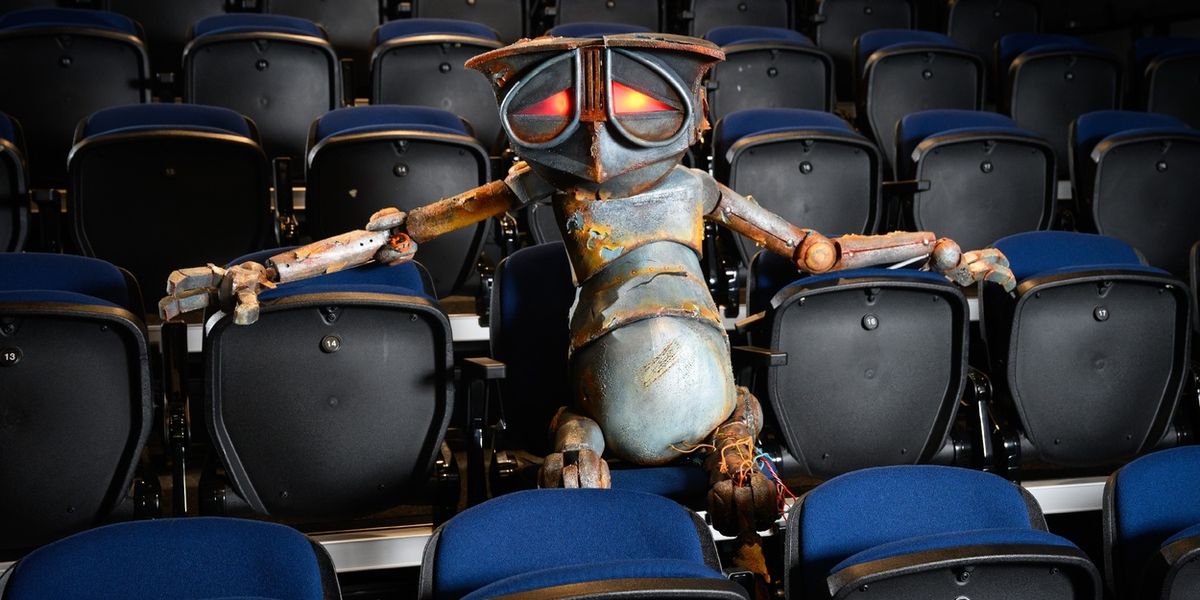
 Arvind Ethan David’s new spin on The Hitchhiker’s Guide to the Galaxy by Douglas Adams has finally beamed itself aboard Riverside Studios, trailing a marketing comet tail long enough to blot out a falling whale. With Steven Spielberg aboard as producer, a wallet-wilting set sprawling across the entire venue and the marquee wattage of Tamsin Greig and Sanjeev Bhaskar, this should have been the immersive theatre equivalent of a Pan Galactic Gargle Blaster. Instead, you find yourself wondering why Marvin the Paranoid Android isn’t the only one losing the will to live.
Adams’s universe has always thrived on a very British absurdity. Think Monty Python with a towel. Think Terry Pratchett on a particularly caffeinated day. The magic isn’t just in what his kooky characters said or the increasingly bizarre calamaties that befell them but in the wickedly sharp and timeless observations made along the way. And Hitchhiker’s' fandom didn’t spring up because of the spaceships or the aliens or even the depressed robot but because of how Adams’s words fizz, pop and linger long after the page is turned. Even now, his influence pops up in odd places, from Elon Musk’s inspiration for his Grok AI to the title of a 2024 song from K-pop girlband ATMS.
All that makes adapting his work notoriously tricky. Hollywood gave it a punt back in 2005 with Martin Freeman perfectly pitched as Arthur Dent, the quintessential everyman reluctantly dragged across the galaxy in dressing gown, slippers and confusion. Yasiin Bey (known then as Mos Def) made a cooler-than-cool Ford Prefect who was not actually from Guildford but a small planet near Betelgeuse. The whole thing was charming enough but never quite found Adams’s rhythm. Fans have long kept that grudge warm.
Still, the prospect of a live, immersive Hitchhiker’s has tempted many back. And David certainly has pedigree. His high school staging of Dirk Gently's Holistic Detective Agency caught Adams’s attention and grew into a mentor-protégé relationship. He later co-produced the TV series which nodded at Adams’s characters while wandering blithely away from the source. That habit continues here. Names remain the same. Locations look right. Yet everything else feels like a parallel universe that branched off after someone took the wrong leg of the Northern Line.
This version shadows the first book only in outline. Some beloved characters are remodelled while others appear momentarily — Trillian (Lenora Crichlow) is seen only onscreen as a TV reporter, for example. Others from the film or the later novels are hauled front and centre for reasons known only to the deepest reaches of the Guide. The whole thing feels like a tasting menu called “Hitchhiker’s, deconstructed” in a restaurant where the chef is very pleased with himself.
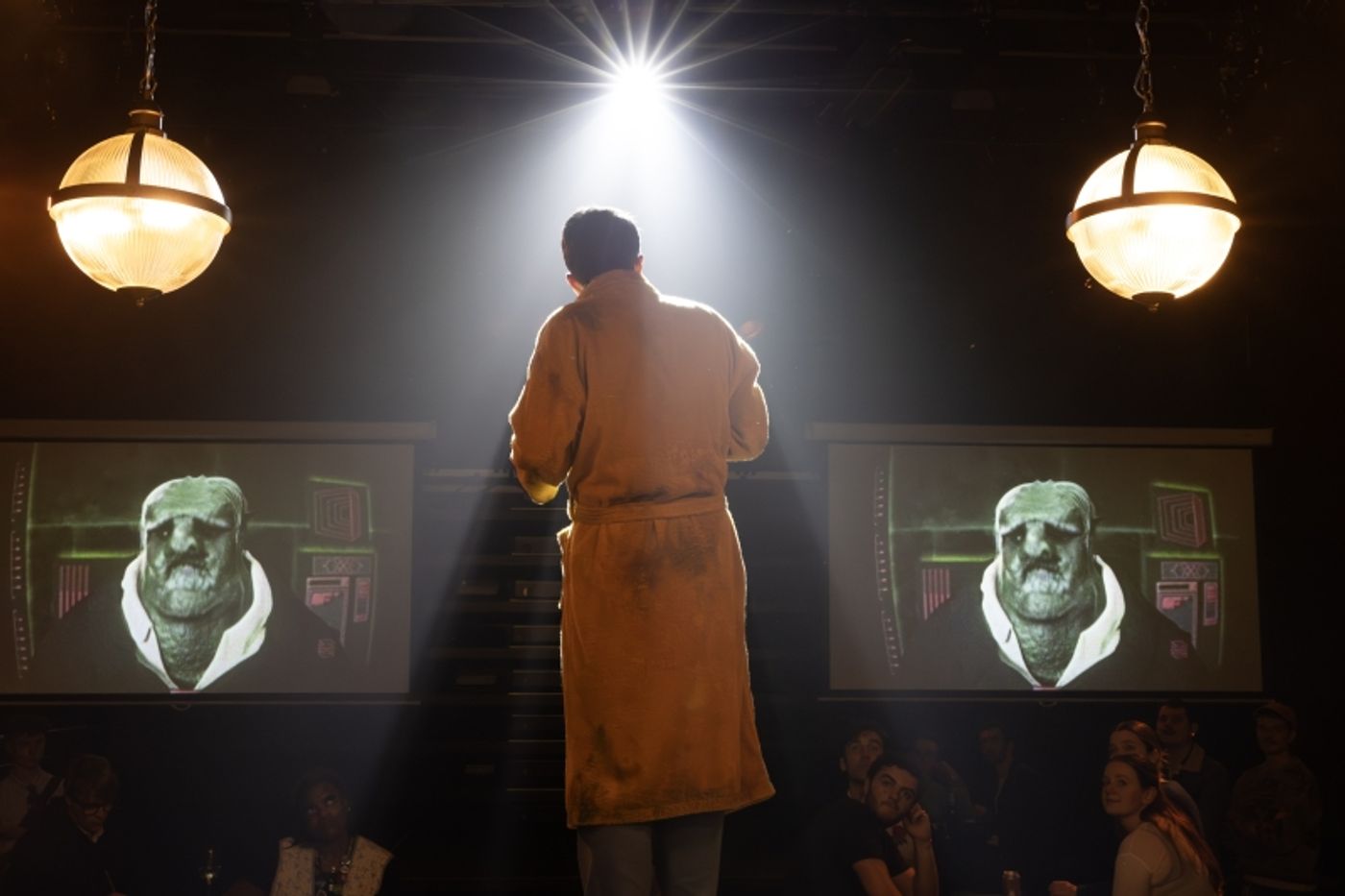
There are Easter eggs everywhere for the faithful: blue-hued Pangalactic Gargle Blasters can be ordered in the bar while missing dolphins, sentient mattresses and a planet of biros are referenced with a wink. But the central failures lie in character choices and a plot that has all the appeal of Vogon poetry.
Ford and Arthur are cases in point. Ford, once the effortlessly laidback researcher who always knows where his towel is, now bursts into the Horse and Groom like a messianic party host, dancing on the pub’s bar and serenading the crowd in his American accent. A posh-sounding Arthur becomes a wide-eyed romantic whose entire arc is reduced to pining after Fenchurch, a love interest dispatched early and resurrected only as plot motivation. It’s all strangely sentimental for material famously unsentimental.
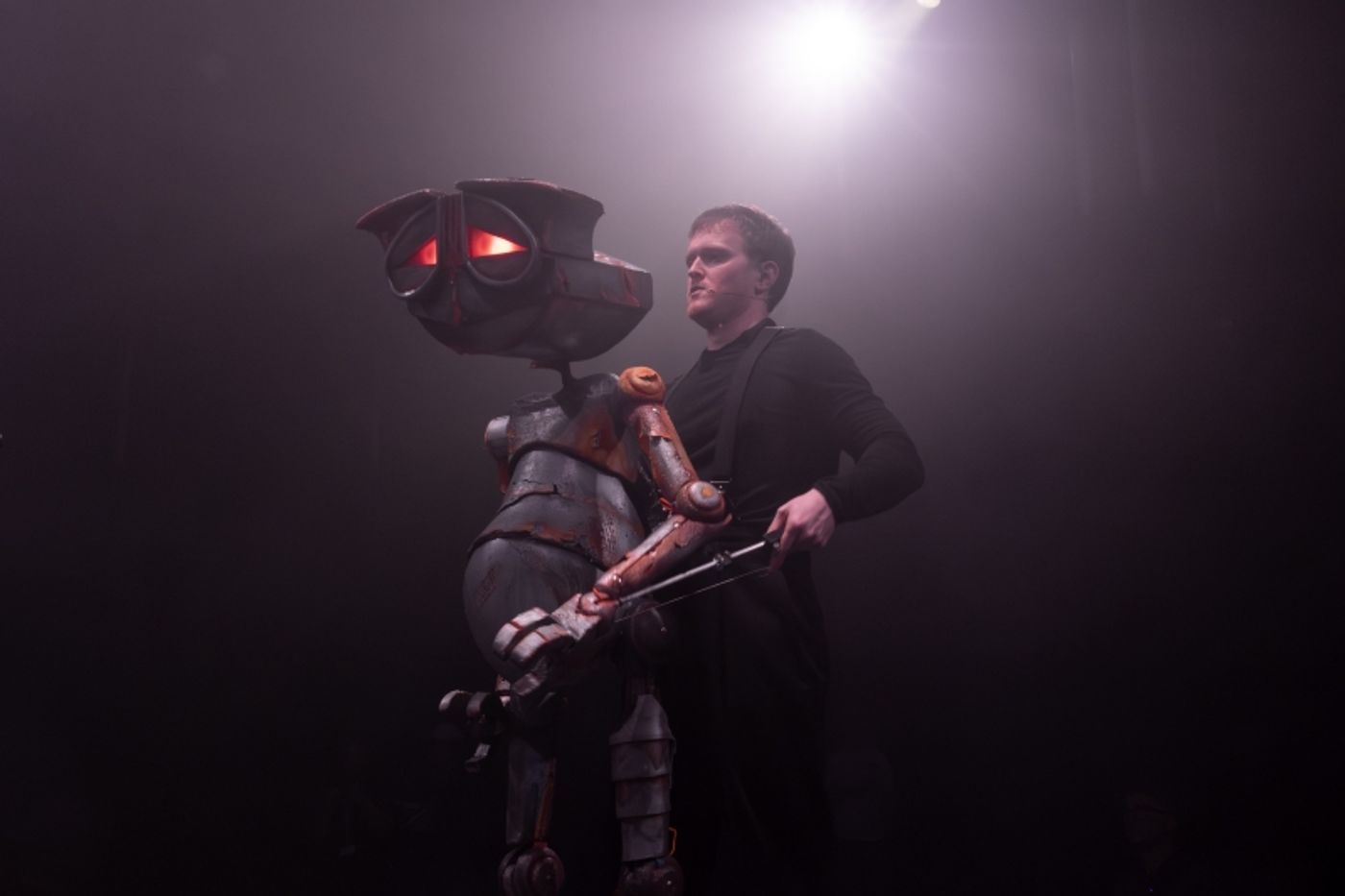
Greig is a delight as the voice of the Guide, slipping sharp shards of sardonic wit between the synthesised edges of her delivery. Bhaskar’s bureaucratic Vogon commander is suitably odious. Zaphod feels mostly right even with his second head hooded like a sleeping parrot in its cage, the depressive Marvin comes to life as an impressive puppet with a puzzling fondness for Queen, and Slartibartfast pops up late to inject some much-needed spark. But the characters culled from the fringes of Hitchhikers lore, from Humma Kavula to Wowbagger to the inexplicable snot merchants, only clutter a plot already tripping over itself.
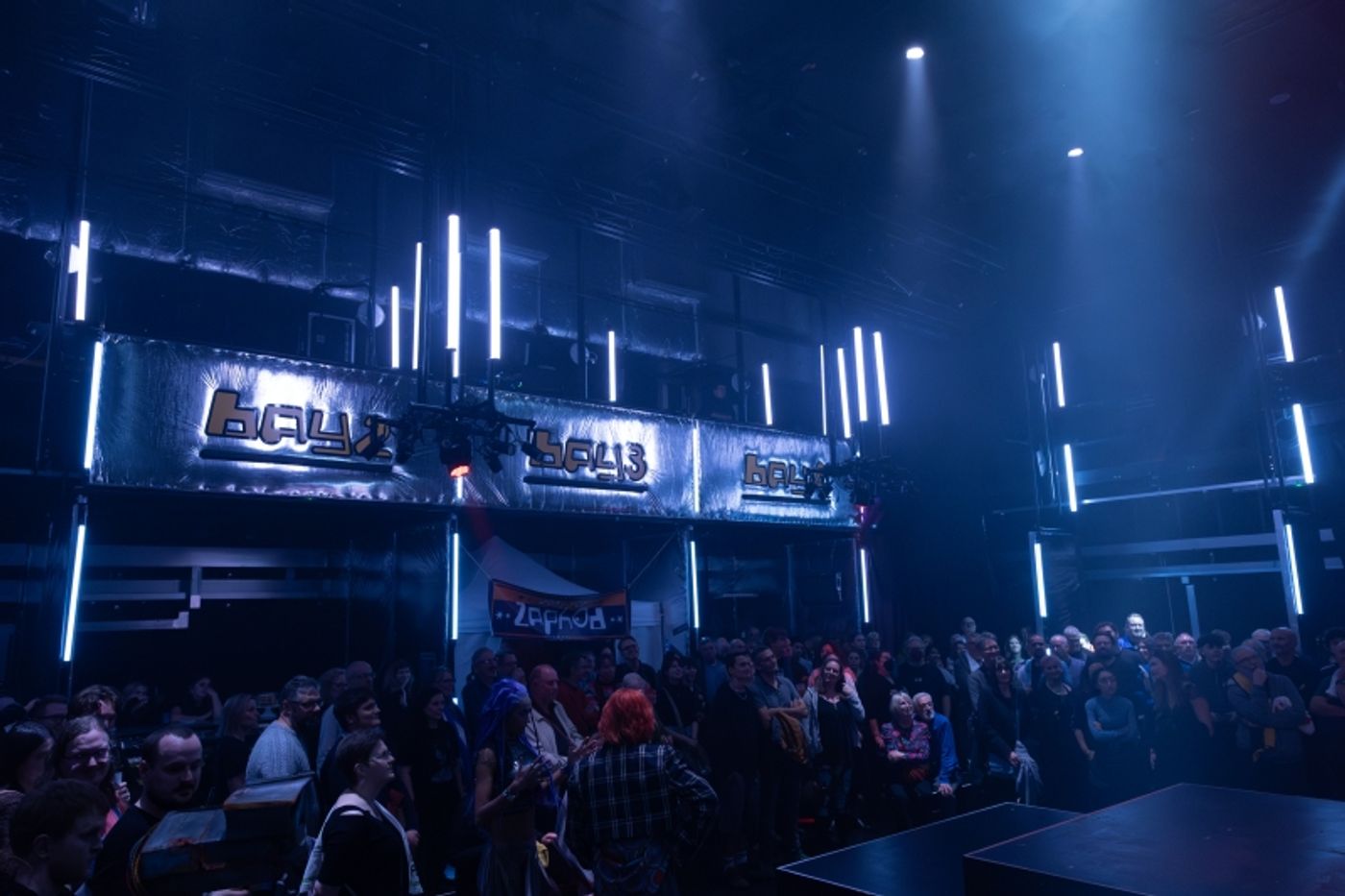
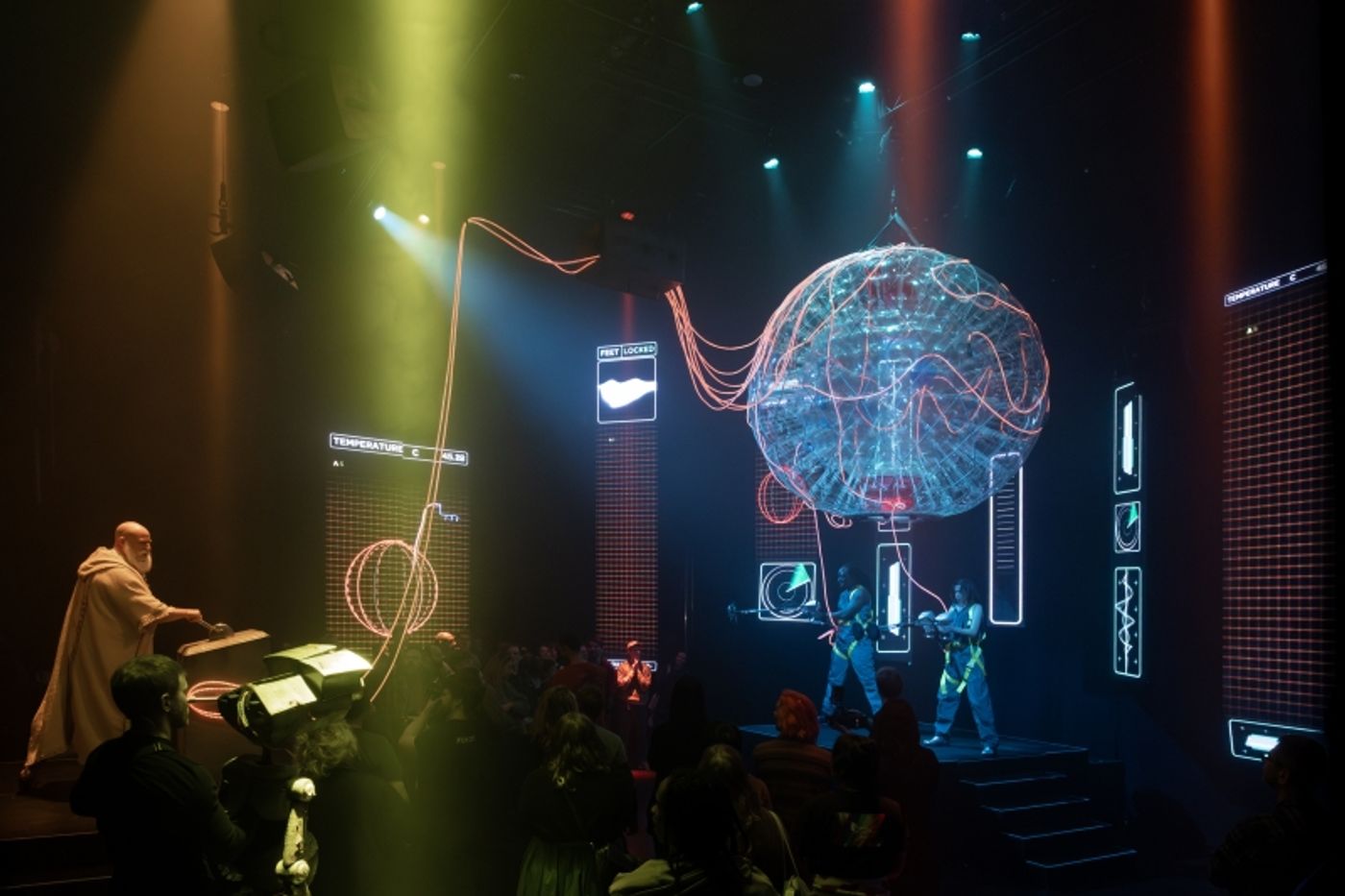
The design is the true star. As we shuffle from scene to scene or around some detailed environments, there's plenty to admire in co-creator Jason Ardizzone-West’s worldbuilding. The Horse and Groom is cosy, the Heart of Gold a calming escape room of sorts, the Vogon cargo bay a carnival of chaos featuring real and fictional market stalls and Magrathea a gorgeous jewel that finally clicks into Adams’s wavelength.
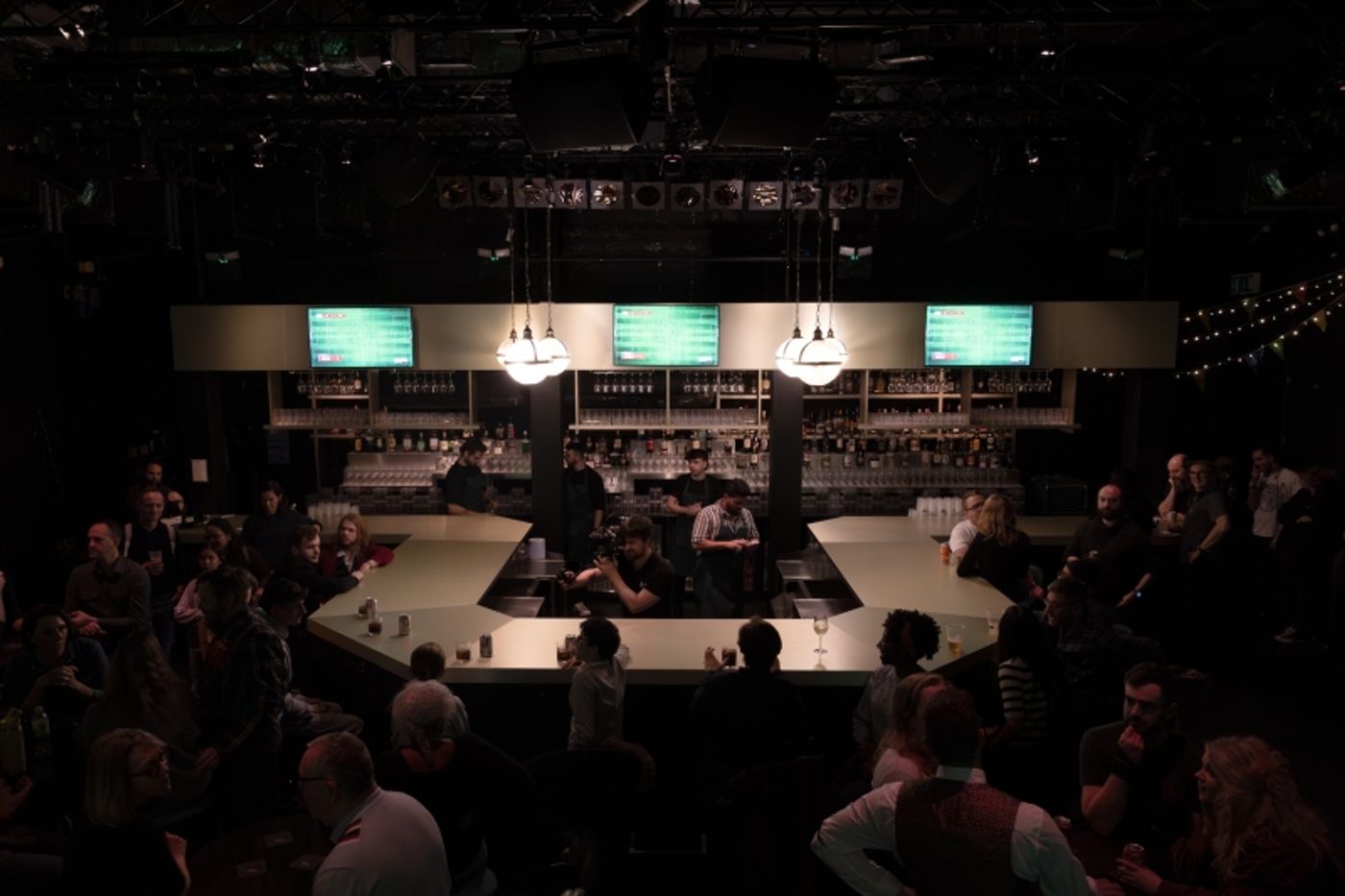
But for all its spectacle, the show never answers the ultimate question of what makes immersive theatre actually work (and it's not 42 clones of Punchdrunk). Instead, it offers plenty to fuel those cynical about the art form. Those who suffered through the abysmal Storehouse — which also came with acres of publicity, a heavyweight backer, an impressive voice cast and a stellar set design — will be forgiven for thinking (like the whale plummeting toward Magrathea) “oh no, not again”.
David’s biggest crime isn’t the unnecessary deep cuts, the scrambled storyline, the syrupy romance or even the entirely cheesy musical finale which could lead one to question the point of life, the universe and everything. It’s how unfunny and forgettable this whole wasted opportunity is given the eternally cosmic brilliance of the material he started with.
Final verdict: mostly pointless.
The Hitchhiker's Guide To The Galaxy continues at Riverside Studios until 15 February 2026.
Photo credit: The Hitchhiker's Guide To The Galaxy



Reader Reviews
To post a comment, you must register and login.