


Review Roundup: SUMMERFOLK at the National Theatre
The show runs in the Olivier Theatre until 29 April
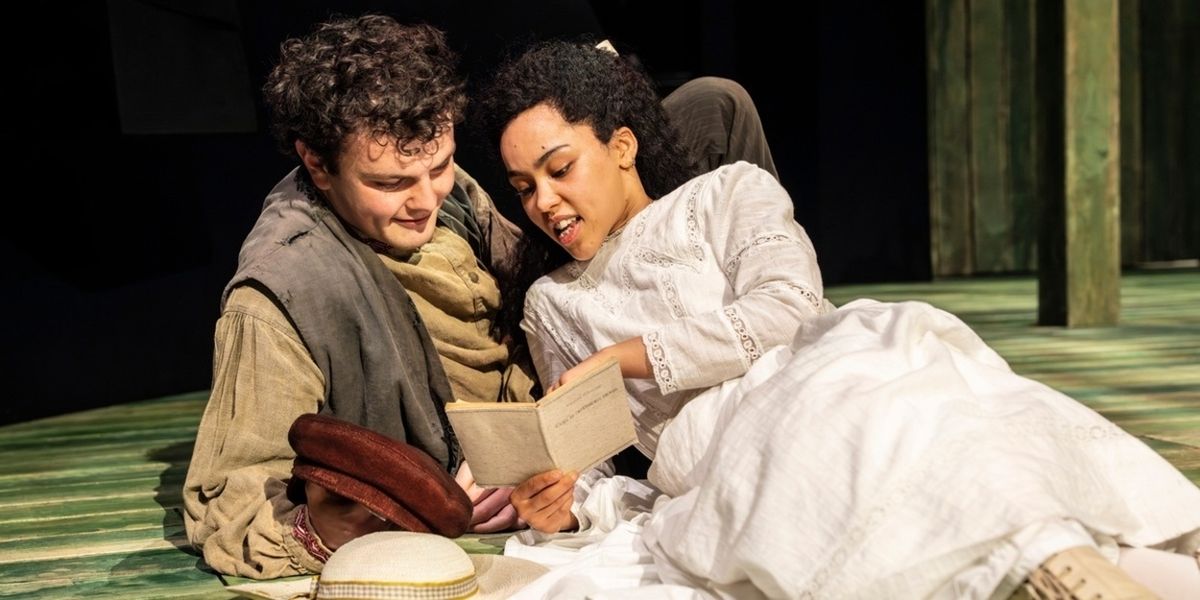
It’s a hot, beautiful summer in 1905, and Russia’s elite retreat to the countryside to swim, sip champagne and start affairs. When they’re having this much fun, why care about anything else? But Varvara just can’t shake the feeling that their holiday idyll is built on borrowed time. As the party continues, how long can they ignore the storm on the horizon?
This new version of Summerfolk by Maxim Gorky is now open at the National Theatre; a razor-sharp portrait of class, privilege and denial.
What did the critics think?
Summerfolk is at the National Theatre until 29 April
Photo Credit: Johan Persson
 Gary Naylor, BroadwayWorld: It’s hard to like any of this menagerie of misanthropes, but it’s easy to be amused by them, Nina and Moses Raine’s adaptation sparkling with the language clever people use to talk to other clever people and (as was the case for Nick Dear’s 1999 script on this stage) unafraid to use contemporary expressions. That’s a useful jolt to start up the post-show pondering on the Tube home.
 Dave Fargnoli, The Stage: This new version, reworked by siblings Nina and Moses Raine, deploys pleasingly rough-around-the-edges modern language to convey information about the characters’ various class backgrounds and differing degrees of emotional disaffection. Every glib comment is countered by a grandiloquent philosophical pronouncement, every elegant turn of phrase undercut by a crude, sweary comment.
Andrzej Lukowski, TimeOut: nd of course Chekhov is the melancholically amusing elephant in the bittersweet room here. His plays about the same sort of people set in the same sort of time are so deathlessly popular – not to mention, good – that it’s hard not to compare and contrast. Summerfolk is a fine play but it’s the moments where this production feels less like Chekhov – when it’s broader or angrier – that it really distinguishes itself. Still, history suggests we’re looking at something like a 25-year gap until it gets staged again. So this is a generational production, really, and whatever its flaws are, they shouldn’t put you off seeing the sort of luxury revival that the NT was made for.
Anya Ryan, London Theatre: The production is frozen in time, with gorgeous, era-inspired costumes by Peter McKintosh; its contemporary relevance is already plain to see. But the Raine team update the language into modern speech, creating a strange dissonance. Under Robert Hastie’s direction, cast members drift in and out as if on a circuit, in scenes of small talk and grander theorising. There are so many of them that, at times, it becomes difficult to keep track. Still, the ensemble is impeccably cast.
Nick Curtis, The Standard: Gorky’s script has been given an idiosyncratic and often ribald updating by siblings Nina Raine and Moses Raine that will be divisive but which I found hugely entertaining. A play about inaction brings its own problems, however: as domestic spats and doomed flirtations play out, you wait in vain for something significant to happen. Perhaps it’s best to approach Summerfolk as a mood.
Sarah Crompton, WhatsOnStage: Gorky’s point is political. These lawyers, doctors and engineers are the children of the poor. They have clawed their way up to wealth and respectability, yet now they have achieved superiority they pay no heed to those still struggling. The doctor Maria Lvovna (Mitchell), is the sole voice of the liberal conscience, constantly needling the others about doing good. Her friend, Varvara (Sophie Rundle, wonderfully passive yet seething) sees the fatal ennui and waste but finds herself trapped within the misogynistic and limited world represented by her husband Bassov (Ready, charming, alarming and very funny).
Clive Davis, The Times: Modern phrases such as “number crunching” are scattered here and there. As with the translation that Nick Dear provided for Nunn a quarter of a century ago, there’s a fair amount of swearing but it’s never gratuitous. Gorky directed his ire at what he saw as the fecklessness of the middle classes, yet given what we now know about the brutal system that was about to sweep them away, it’s hard to pass judgment on them. And the moments when they talk about the sense of rootlessness that haunts them even after they have risen in the world are almost unbearably poignant. This is a play that blends laughter with tears.
Clive Davis, The Times: Modern phrases such as “number crunching” are scattered here and there. As with the translation that Nick Dear provided for Nunn a quarter of a century ago, there’s a fair amount of swearing but it’s never gratuitous. Gorky directed his ire at what he saw as the fecklessness of the middle classes, yet given what we now know about the brutal system that was about to sweep them away, it’s hard to pass judgment on them. And the moments when they talk about the sense of rootlessness that haunts them even after they have risen in the world are almost unbearably poignant. This is a play that blends laughter with tears.
Average Rating: 77.5%
- To read more reviews, click here!
- Discuss the show on the BroadwayWorld Forum

Sign up for all the news on the Summer season, discounts & more...
|
Powered by

|







Reader Reviews
To post a comment, you must register and login.