


Review: FALSTAFF Shows that We Can Count on Juilliard for the Next Generation of Singers
Verdi’s last opera given by the school’s opera and orchestra, directed by Shields, conducted by Colaneri
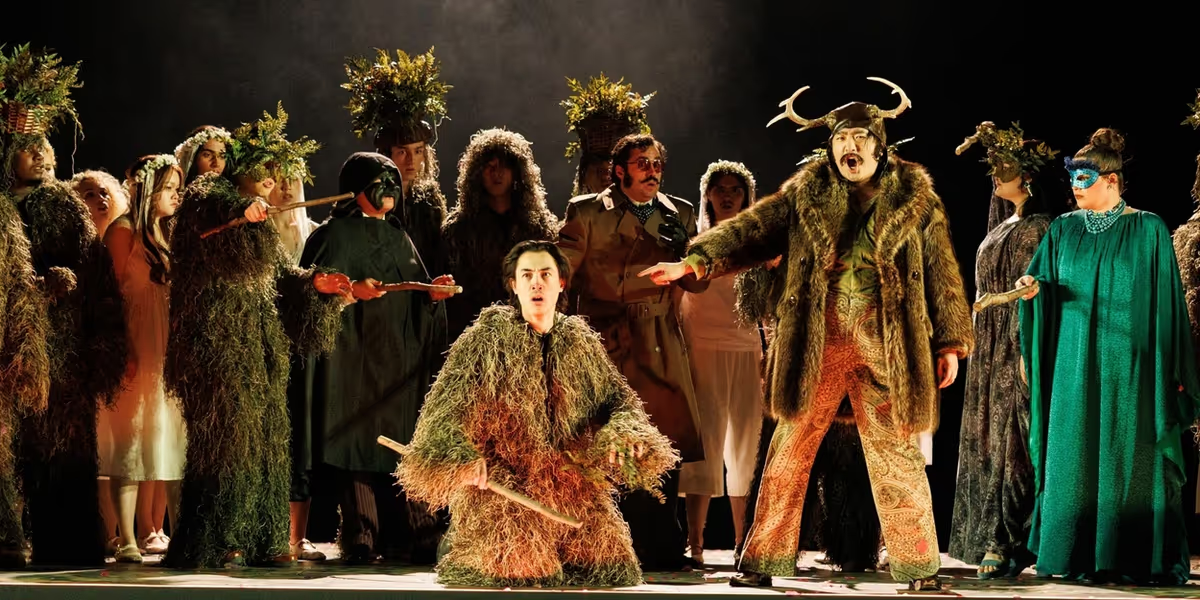
In case we had to be reminded—after the Met’s recent Laffont Competition lineup, where three Juilliard singers were among the 10 finalists—the Juilliard School is among the top sources of the next generation of opera singers (among many other categories, of course). Two of those singers were in the cast of last weekend’s fully stages performances of Verdi’s FALSTAFF, where the singing was impressive from the very first scene. (I saw the Saturday matinee.)
Soprano Shiyu Zhuo was Nannetta (Anne Ford to Shakespeare lovers) and mezzo Sophia Baete was Meg Page, both standouts at the Met’s competition, also did themselves and their alma mater proud in the cast of Verdi’s final opera. But Zhuo, by the nature of her music, was of particular note, in a cast filled with delightful performers, whether as part of the “merry wives” ensemble or in duet with the sweet-voiced Fenton of tenor Adam Catangui. She is definitely someone to watch.
FALSTAFF was Verdi’s final opera, a comedy no less, with a libretto by Arrigo Boito, who did similar work on Verdi’s OTELLO, considered one of his supreme creations. (FALSTAFF is a different animal, however, not filled with gorgeous arias like OTELLO, but more like an ensemble that brought out a series of finely wrought character studies).
When Verdi mentioned the idea of making an opera out of Shakespeare’s “Merry Wives of Windsor,” Boito took to the idea rather quickly, making Falstaff the central character and adding elements from two other plays (“Henry IV, Pts 1-2") to fill out the character.
Conductor Joseph Colaneri and the Juilliard Orchestra turned in a bracing account of the score. The cast was filled with noteworthy performances, starting with the band of “merry wives.” This included the delightful Alicia Ford of soprano Page Michels, the audacious Meg Page of mezzo Sophia Beale and mezzo Lauren Randolph’s hearty Mistress Quickly (who got much mileage out of her five-note theme, reaching to the depth of her voice), in addition to non-wife Nannetta.
“Big Belly” (as Verdi and Boito referred to Falstaff) was in the hands of baritone Minki Hong. Portraying Sir John Falstaff, he wasn’t the rotund geezer running after younger women as the character is often portrayed—an object of ridicule--but a more appealing character, singing beautifully and amusingly acting out the comedy as the opera progressed. Yet, he doesn’t appear the “life force” the director speaks about in his notes.
I’m not sure that this conceit, this shift in focus, did the opera any favors. I assume these changes were chosen by director Marcus Shields, who appeared to have some odd (and somewhat illogical) ideas about the opera that were expressed in his program essay. For example, I found that the less comical portrayal of the central character, moving the spotlight from Falstaff and, in a way, beefing up the presence of the jealous Ford (father of Nannetta/Anne and husband of Alice)—we're left with a much less appealing character in the piece as the fulcrum, though he was sung gamely and well by baritone Titus Muzi.
Shields seems to have tilted the balance of the work that only recovered in the final Windsor Park scene. He says in his program notes that “I don’t primarily connect to the piece through the plot,” and that appears to be a self-fulfilling prophesy, in an opera where the story is so vital to its success. Many of the more supporting characters, like Bardolfo (Nathan Romportl) and Pistoia (Lin Fan) and Dr. Caius (Chester SeungYup Han), despite their substantial vocal chops, don’t seem to have been given their due dramatically by the director.
The production’s scenic and lighting design was by Frank Oliva, with costumes by Avery Reed. Miguel Alejandro Castillo was assistant director and choreographer and Mark Olsen was the movement consultant.
Caption: Windsor Park scene, with Minki Hong as Falstaff (center, with antlers), Nathan Romportl as Bardolfo
Credit: Maria Baranova
Sign up for all the news on the Fall season, discounts & more...

Reader Reviews
To post a comment, you must register and login.