


Review: RADIANT BOY, Southwark Playhouse
Exquisite performances lift up Nancy Netherwood’s debut play, an affecting and effective piece of supernatural horror.

 Back in 2023, the Royal Shakespeare Company celebrated the 400th anniversary of the publication of the First Folio with a national playwriting competition. From over 2000 entries, 37, spanning all genres, were picked and Nancy Netherwood’s Radiant Boy has now landed at Southwark Playhouse directed by Júlia Levai. The writer’s professional debut takes us back to the 80s in North-East of England, where it is believed that a young man is possessed. Back home from studying at King’s College Choir in London, Russell and his mother keep their friction at bay while they wait for Father Miller to arrive. Can Russell’s spirit be redeemed? And what is it that’s haunting him exactly?
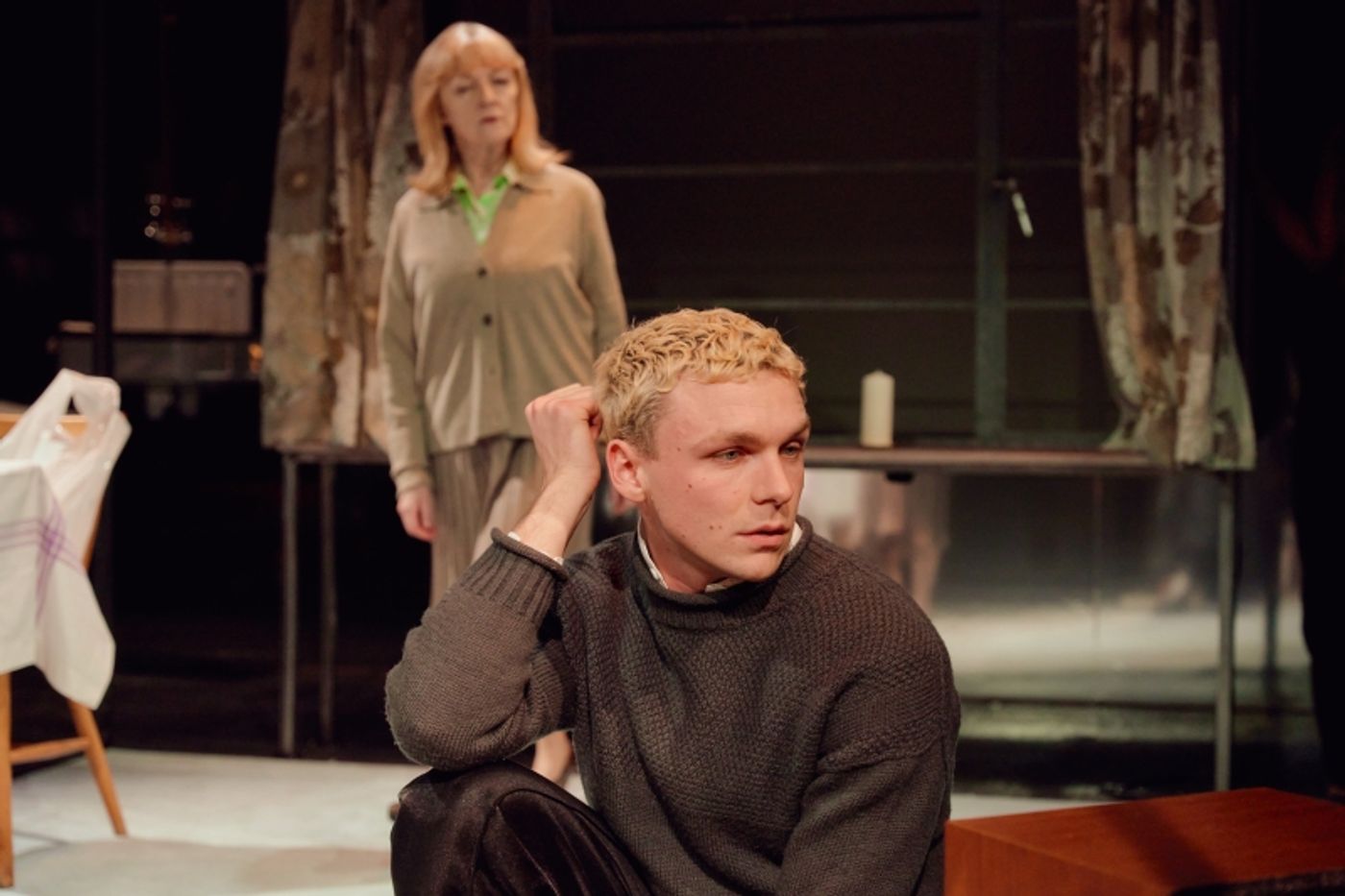
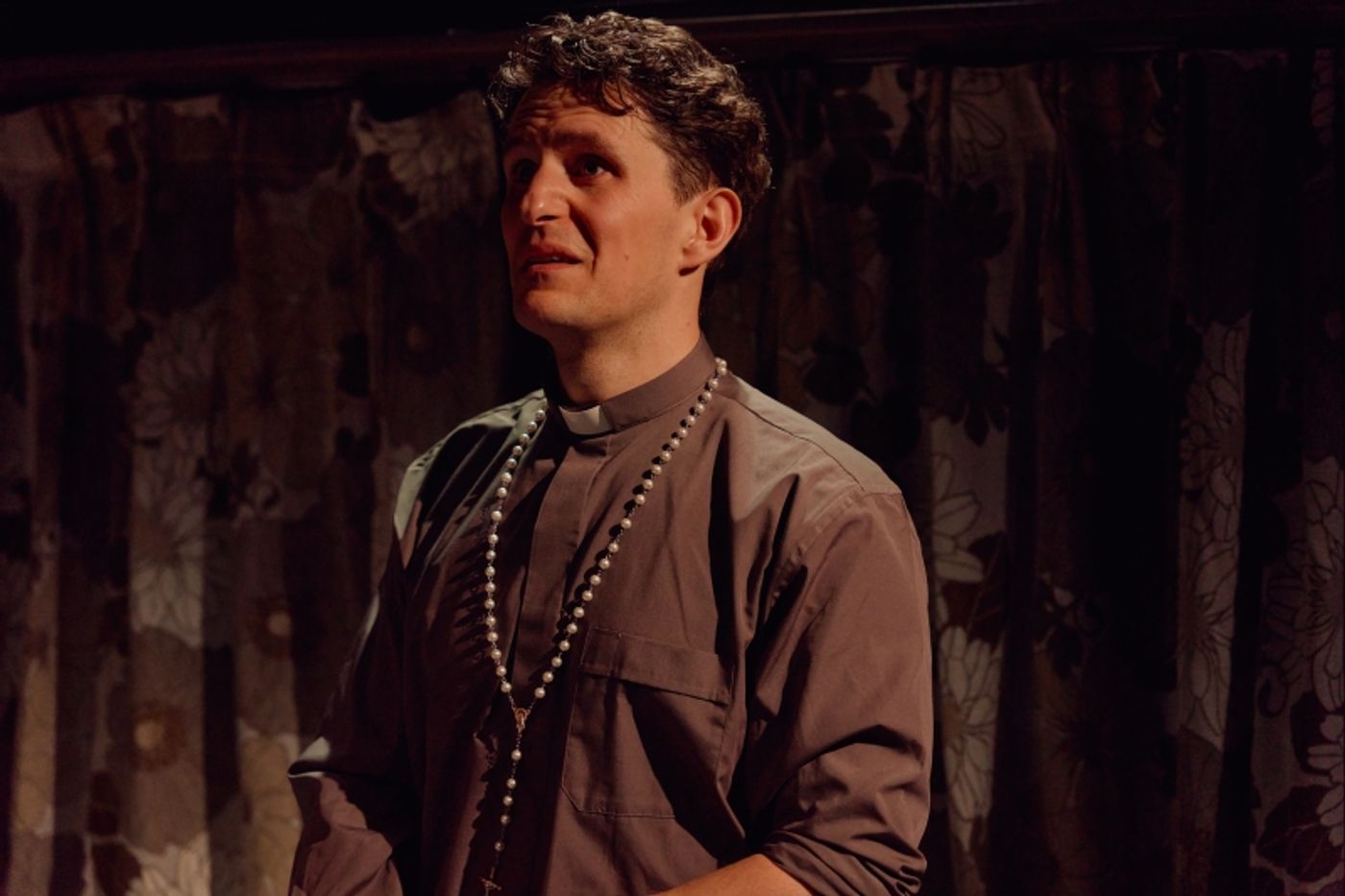
An aura of mystery permeates the piece. Tomás Palmer’s set initially screens the action away with thin translucent, spectral mesh, distancing the stage before a cryptic figure removes it. The symbolism begins; Netherwood’s list of themes is varied. From gender to class, faith to youth, she keeps hinting, never addressing them by their name. Time loops tie in with moments of sheer intensity brought on by Stuart Thompson’s sublime central performance and followed by a nuanced cast. As Russell unravels, we pluck the threads of the riddle, piecing together the reason why his mother Maud (Wendy Nottingham) contacted Father Miller (Ben Allen), the star of the exorcism world, in the first place.
Levai alternates sections of quiet informational exchange with more vigorous sequences that build into suspenseful peaks with Lucía Sánchez Roldan’s lights and Patch Middleton’s sound design. It’s a pity that the energy levels drop production drop with the addition of a fruitless interval at the 45-minute mark. It breaks the first big climax, rushing through it without letting the audience savour the horror. This is the main problem we encounter in Radiant Boy: the rhythm is uneven. Perfectly paced scenes are negated by the hastiness of others that should linger and breathe instead. It remains impressive in both delivery and impact, but it could do so much more if it leaned into the power of the story’s movements rather than blazing through them at speed.
An intimate and atmospheric supernatural horror with music running through its veins, Radiant Boy holds a collection of exquisite portrayals. Nottingham is Russell’s stern, no-nonsense mother who might be intimidating and resentful, but cares deeply. She suggests her son doesn’t belong in a conservatory made up of “posh boys with too much time on their hands”, but she’s still proud. Her beliefs and guilt are the catalysts of the whole ordeal. Where she is brusque, Thompson is sensitive and outspoken. He’s unafraid to quip and trust his identity, but he’s haunted. Netherwood’s definition of possession is muddy and up for interpretation: it's symbolic and very real at once, speaking of folklore and suspicion whilst offering an alarming truth.
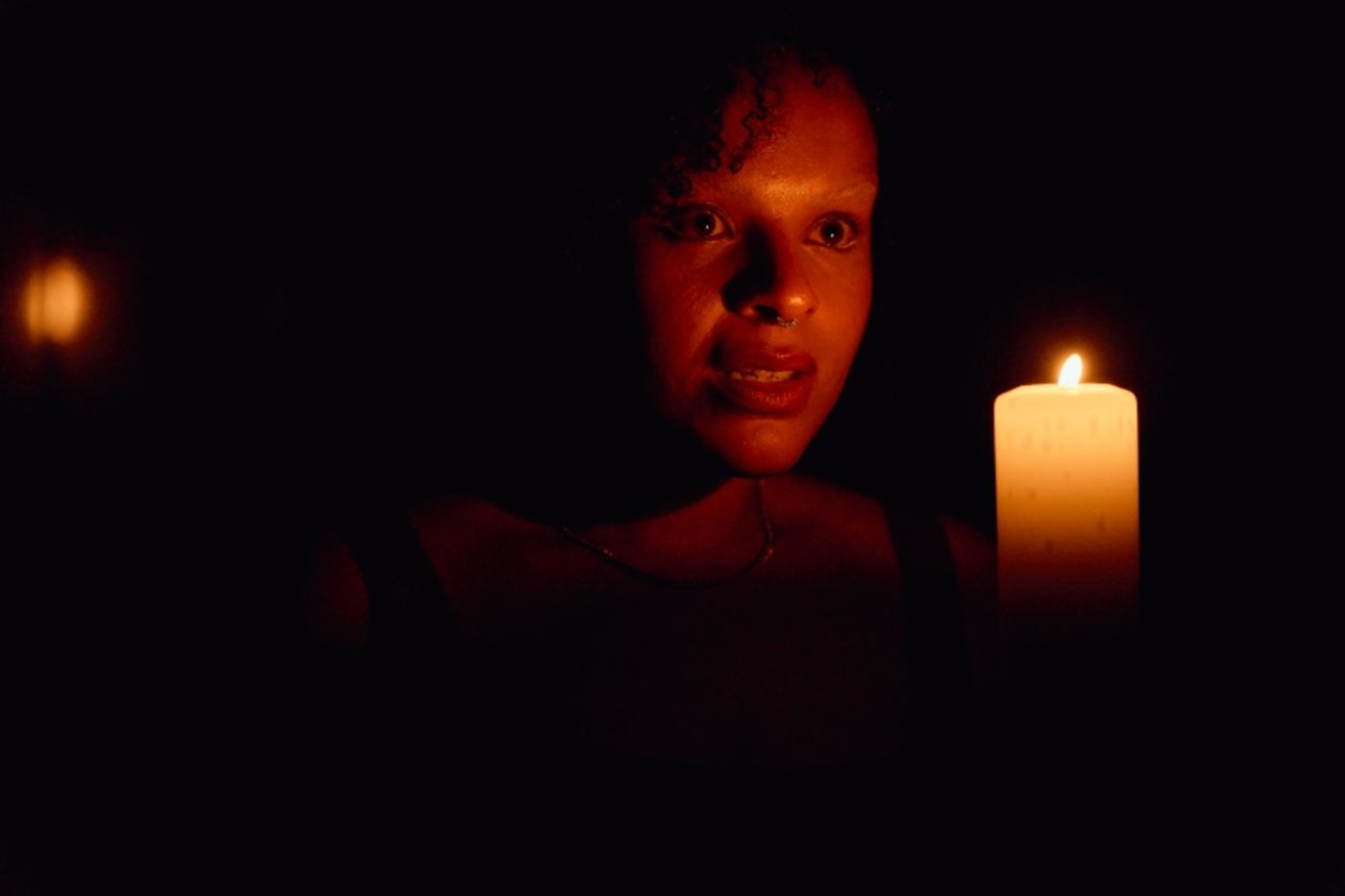
With queerness being portrayed as demonic and a fairly open ending, one ponders about the potential misinterpretations. As the mother discusses “the disruption”, boyish cruelty and ecclesiastical hatred come into the picture. Shunned by their church and their community, Russell struggled while the stoic and independent Maud watched on. Ben Allen prods and questions the instance with a curious mind, calling upon The Voice to show herself, almost scientifically fascinated by this manifestation of Russell’s possession. Renée Lamb paces the perimeter of the space since the very start, inscrutable and mystical with her ghostly acapella harmonies, invisible to everyone but Thompson. His gaze often drifts, distracted like a magnet, flying to Lamb’s apparition before looking away in shame.
The mise-en-scène toys with the ambience, plunging Southwark Playhouse’s smallest room into highly gripping fits where you can see every emotion and smell every candle. The script has a few issues, but the vision is undeniably remarkable. Perhaps a small tidy-up of the thematic arrangement and a stronger establishment of the cognitive links might help the end result. The characters are notable and thoroughly interesting - with Maud especially being a well-crafted and multi-faceted role - while the story overflows with intrigue and compassion. It's all there and it's thrilling. After all, haven’t we all wondered what the monster inside of us looks like? What feeds it and how do we learn to coexist with it?
Radiant Boy runs at Southwark Playhouse until 14 June.
Photography by Olivia Spencer






Reader Reviews
To post a comment, you must register and login.