


Review: GRACE PERVADES, Starring Ralph Fiennes
Fiennes is captivating as Victorian star Henry Irving in David Hare's new play
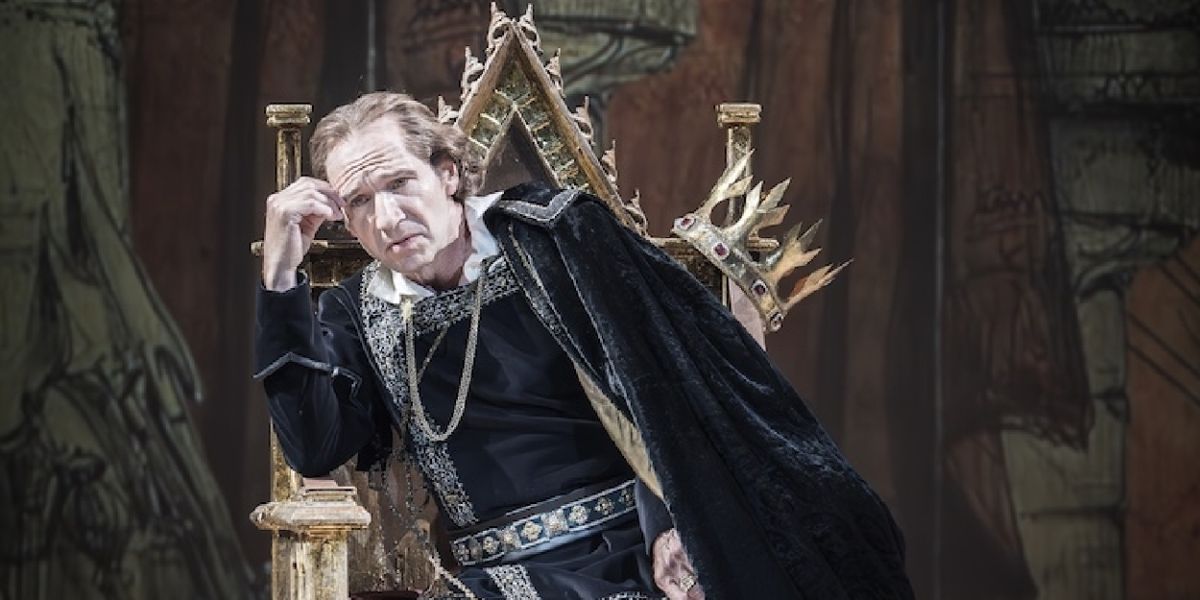
 Ralph Fiennes is totally mesmerising in David Hare's new play Grace Pervades, the first of a trio of works in an adventurous Ralph Fiennes season at Theatre Royal Bath with Theatre Royal Bath Productions and Second Half Productions.
Fiennes plays Victorian stage legend Henry Irving, the first actor to be bestowed a knighthood back in 1895. Surely such an honour's overdue for Fiennes, who's reached National Treasure status with a multitude of screen hits such as Conclave, Schindler's List and The English Patient, and stage triumphs like Hamlet, The Master Builder and Antony and Cleopatra.
Fiennes certainly has the audience in his hands from the outset in director Jeremy Herrin's well-paced show travelling between various timeframes and locations. Fiennes holds the stage in a still but commanding fashion and is masterful delivering Hare's dry wit – there are as many one-liners here as in a stand-up comic set – along with conveying raw poignancy when required.
Grace Pervades examines the on- and off-stage relationship between stern actor-manager Irving and sensitive, generous actress Ellen Terry. Ever the consummate perfectionist who insists on rehearsing his exhausted cast into the early hours, Irving is the unyielding yin to Terry's more intuitive and amenable yang.
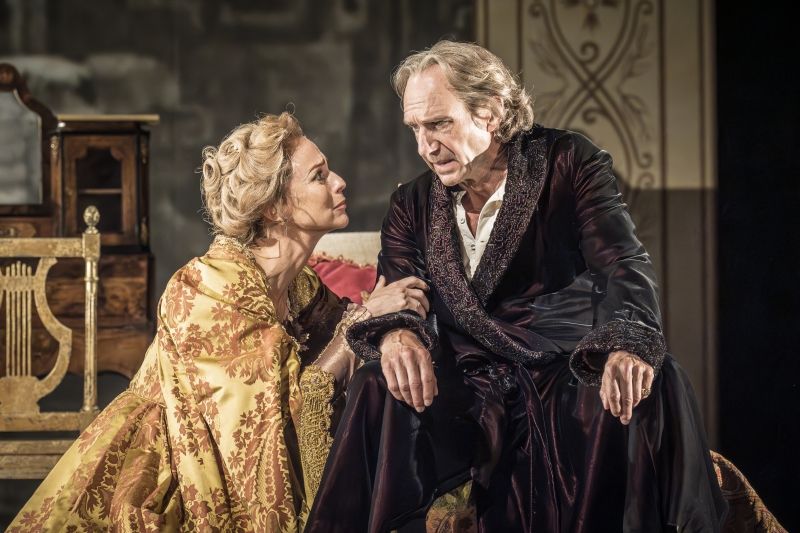
Photo credit: Marc Brenner
When Terry (played by an excellent Miranda Raison from Spooks and Anne Boleyn) delicately advises Irving to look at other actors instead of the audience when speaking his lines, she gets one of the biggest laughs of the night.
She also points out that his "attention to detail doesn't extend to the women" stuck with underwhelming roles and pleads to be let loose as Rosalind in As You Like It. Irving dismisses the play as "ridiculous," but ironically actor-manager Fiennes in an Irving-worthy moment will direct Shakespeare's comedy as part of his season next month.
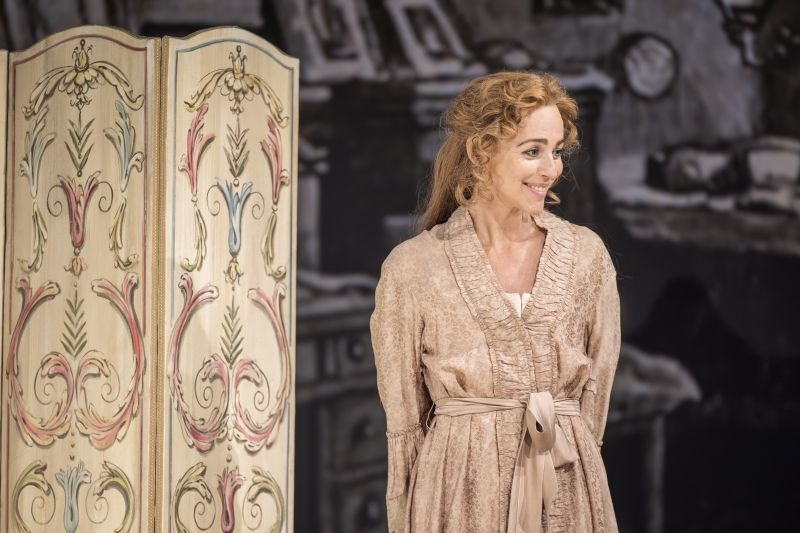
Photo credit: Marc Brenner
This tale of an adventuresome duo is told, with mixed success, from the points of view of Terry's illegitimate (shocking at the time – "grace pervades the hussy") children. Her son, Edward Gordon Craig (Jordan Metcalfe having fun rendering a boastful, commercial failure) declares after three years rehearsing a 1911 Stanislavsky Hamlet in Moscow that it might be better with no actors and no texts. He then adds hilariously: "Ideally, we would never open".
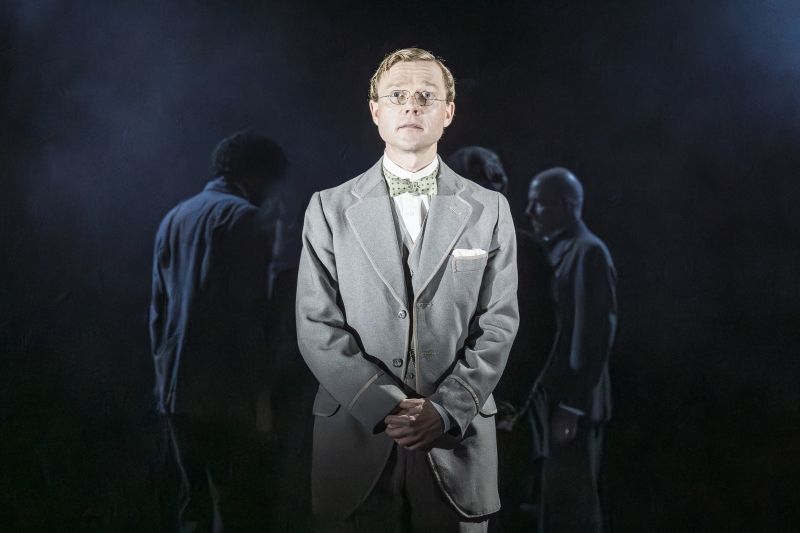
Photo credit: Marc Brenner
Meanwhile, his unsung heroine sister Edith (Ruby Ashbourne Serkis) works as a gifted costume maker for Irving and then produces numerous, feminist shows in her mother's barn in Kent with her bohemian friends.

Photo credit: Marc Brenner
Although Hare gives a good sense of how the next generation presents material to audiences in the evolution of theatre, I'm not sure we need quite so much of Edward and Edith. I'm also not convinced we require a great deal from side characters like Isadora Duncan (a wonderful dance by Saskia Strallen though) and references to Peter Brook being a fan of Edward's stripped-down purist tendencies. Although fascinating biographical tidbits, these scenes are to the detriment of fewer between Irving and Terry, which is where the heart of the story lies.
For despite differences in technique and temperament, the Irving/Terry phenomenon changes the face of theatre – making everything more exciting and colourful over their 20-plus years working together at Irving's The Lyceum in London's West End. We are treated to snatches of Fiennes/Irving as Malvolio, Hamlet and Cardinal Wolsey, and Raison/Terry's Beatrice and Portia against Bob Crowley's resplendent backdrops and beautiful lighting by Peter Mumford. I would have loved even more of Irving and Terry.
In addition, there's a delicious 'did they or didn't they' sub-plot hanging in the air, with regards to whether Irving (who was married) and Terry had an actual affair or not. What really matters, however, is what they achieved publicly and personally in one of the longest theatrical partnerships on record in Fiennes and Hare's collaborative love letter to the couple – and to the magic of theatre.
Grace Pervades runs at Theatre Royal Bath until July 19. The Ralph Fiennes Theatre Royal Bath Season runs until October 18.
Photo credits: Marc Brenner







Reader Reviews
To post a comment, you must register and login.