


Review: BREAKING THE CODE, Oxford Playhouse
Mark Edel-Hunt’s Turing is instantly compelling
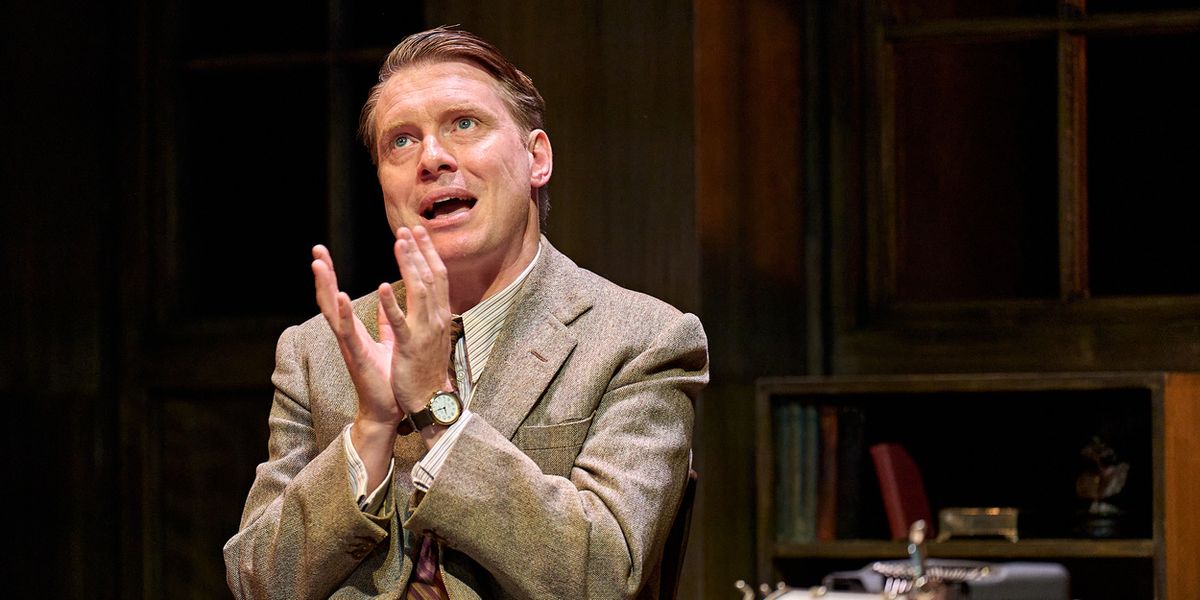
 We all know the names ‘Bletchley’ and ‘Alan Turing’, if only thanks to the 2014 film The Imitation Game starring Benedict Cumberbatch. Hugh Whitemore’s Breaking the Code follows a similar trajectory, documenting Turing’s journey from school boy to death in a collection of non-chronological scenes. Through Whitemore’s play we are able to gain an insight into the life of this character, piecing together his genius and his struggles slowly into a complete understanding.
Opening in a police station, we watch his life begin to unravel as a burglary begins to lead the police to other truths. Stepping backwards we meet his childhood Best Friend, learn about his time at Bletchley Park breaking the Enigma code, and gain insight into a relationship later in life. These narratives cross each other, one uncovering truths in another, until the inevitable ending is reached.
Mark Edel-Hunt’s Turing is instantly compelling, drawing the audience in with his wonderfully sweet depiction of the school boy and his awkward but likeable adult. This is undeniably a story which is held together by the lead actor, the other characters appearing through his life in poignant but arguably small moments.
There is some clear chemistry between Turing and these various characters, in particular Carla Harrison-Hodge’s Pat Green, yet there is the subtle suggestion of autism through the awkwardness of Turing’s relationships throughout. Unlike his sexuality, this element of his person is not forefronted at any point, but it is suggested in the chewing of the nails and the blunt truths spoken.
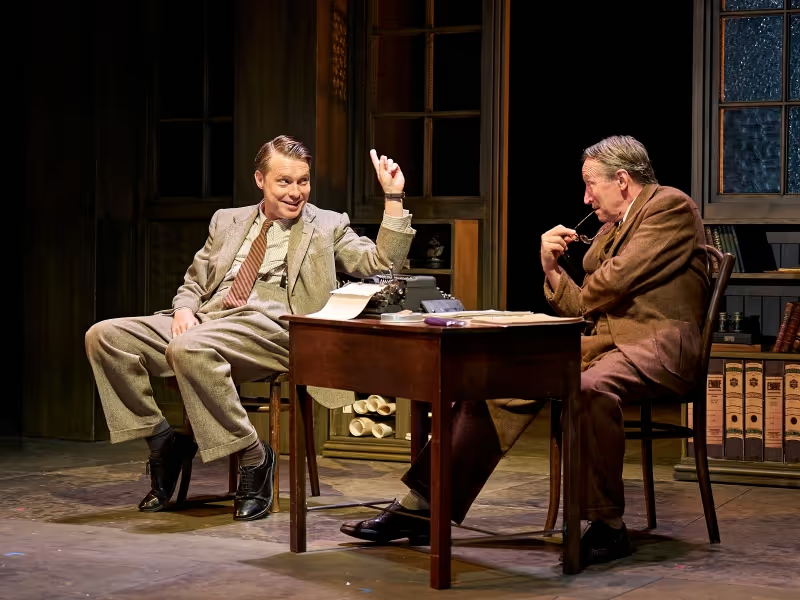
Photo Credit: Manuel Harlan
One of the most beautiful interactions comes late in the play when Turing is in Greece and he is telling Joe Usher’s Nikos his story. There is a wonderful tenderness here which has been lacking in many of his relationships until this point.
The story may not be chronologically told, but this does not mean that the audience needs to be reminded at which point in the story we are in. It is clearly sign posted within the scene, allowing us to always know precisely where we are at any moment. Thought has clearly been put into the transitions, with well choreographed moments enabling the cast to effectively and stylishly take us from one location to the next. Jonathan Fensom’s set is a versatile one, never changing and yet able to be inside and outside, home and Bletchley, depending on the needs of the scene and not being so basic as to be uninteresting.
The ample windows cut into the set provide lighting designer Johanna Town with interesting opportunities, some of which she grasps. Although, the most interesting lighting choices come in the second half, when the audience are treated as the boys of Sherborne school in assemblies through the raising of the houselights. Through this the audience are brought into the action, perhaps most poignantly for the epilogue.
With the inclusion of an epilogue by Neil Bartlett, the themes of AI and technological advancement that already run through the play are brought to the forefront. This acknowledgement of relevance did not feel strictly necessary, but was well performed by Joseph Edwards all the same.
Overall, the play bears a lot of similarity to the classic British drama, the plot slowly unfolding and at an even tempo. This does mean that the first half drags slightly, especially when establishing the timeline, but the second half has a far more engaging pace. Ultimately, it is the classic story of the tortured artist, or in this case scientist.
Breaking The Code is at Oxford Playhouse until 11 October
Photo Credits: Manuel Harlan
Sign up for all the news on the Fall season, discounts & more...







Reader Reviews
To post a comment, you must register and login.