


Review: THE MOTHER PLAY: A PLAY IN FIVE EVICTIONS at Studio Theatre
The autobiographical world of playwright Paula Vogel comes alive in the illuminating and fragilely evocative “tone poem” of a play
 Click for Tickets
The autobiographical world of playwright Paula Vogel comes alive in the illuminating and fragilely evocative “tone poem” of a play entitled The Mother Play at the Studio Theatre. This very moving and occasionally caustic play explores all the hard issues of life in a family—such as death, illness, financial problems and –above all—the dislocation that occurs from constant moving to new locations. (Indeed, the subtitle of the play is “ A Play in Five Evictions”). The Herman family is composed of a very peripatetic mother who has survived the onslaught of a divorce and unwanted children, but she passes so much rage onto her two children, and she drowns herself in martinis.
This vehicle is decidedly not “plot heavy” but rather a bit of a dramatic coming to terms by talented playwright Vogel(as the alter ego of the lesbian daughter Martha) with the death of her gay brother, her own growing sexuality and her “ gorgon-like “mother. This intimate family has learned to create their own parallel universe as a bulwark against the world’s harsh realities but the world seeps into the home. Playwright Vogel highlights every defense mechanism and emotional survival skill of this family (that seems to have sprung from a Lanford Wilson, John Guare, or a Tennessee Williams play---this is intended as a compliment for these are superb theatrical influences).
Playwright Vogel is an advocate for the LGBTQIA community, and she grew up in the DMV area---consequently, there is a rich emotional and autobiographical mine to fill in this play. Audiences are sure to identify with many of the locations and references mentioned throughout the play. The main thrust of the play seems to be the questions of ----why do we hurt those we love ? When is a child totally free of parental influence? Why do we grieve only after we have lost someone ?
Director Margot Bordelon moves this ninety-minute play along with an assured hand with blending the savage wit and family drama of this play of a family trying to forge ahead despite their broken dreams. Ms. Bordelon touches on the universal chords that will touch audiences of all demographics ---why do parents reject their gay children? Is a parent who sacrifices so much to raise her children entitled to have her children follow her every dictate? These universal questions are explored within the specifics of this extremely well-written play. The mother and two children characters interact with guarded affection towards one another-- as their constant moving around with hardly any financial means and a controlling mother has set their nerves on edge.
Kate Eastwood Norris as the mother, Phyllis Herman, vividly displays the strong steel nerves of her character while, concurrently, showing the vulnerability underneath her strong persona. Ms. Norris is completely in the moment in all of her scenes, and she acts out an extended non-speaking passage of preparing a martini with controlled relish and precision. Ms. Norris inhabits her character so well that one often wonders if her character is a victim of her own personality or is she responsible for her behavior? Is her homophobia a product of her upbringing? What motivates her to lash out at her children?-----is it because her mother was also abused and generational cycles can repeat themselves? Ms. Norris beautifully shows the sacrifices she made for her children.
The character of Carl is based on playwright Vogel’s brother, and this character is played with subtle irony and pathos by Stanley Bahorek. Mr. Bahorek’s protection and guidance towards his sister (Zoe Mann) are played with such a generosity of spirit. Mr. Bahorek’s character must struggle with his gay identity as time passes in the seventies and the eighties –--heartbreakingly, he develops AIDS as the plague years ensue and this development brought many tears from the audience.
As the daughter Martha (playwright Vogel’s autobiographical character), actor Zoe Mann compellingly delineates the tortuous relationship that she has with her demanding mother. Ms. Mann also portrays her budding lesbian identity with a sense of empowerment and assurance. Ms. Mann’s scenes helping her mother in an assisted living residence are sensitively rendered.
The musical passages/songs which define the changes of time over the years are exceptionally well-chosen and atmospheric; there are standards as well as more contemporary songs included ---sound designer Sinan Refik Zafar incorporates the music with richness and texture.
Technical components are paramount in a play like this ---as mood and tone are so essential to the success of this evocative play.
Lighting by Amith Chandrashaker is atmospherically employed.
Scenic design by Krit Robinson efficiently conveys the succession of dwellings that the family lives in.
Costume design by Danielle Preston nicely conveys the sartorial style of the seventies and the eighties.
The persona of the mother has dominated plays from Amanda in The Glass Menagerie to Mary Tyrone in Long Day’s Journey into Night and this enticing play by Paula Vogel is no exception for the character of Phyllis Herman will haunt your mind and heart. Do not miss Studio Theatre’s production of The Mother Play!
Running Time: 90 minutes with no intermission
The Mother Play: A Play in Five Evictions runs through January 4, 2026, at the Studio Theatre located at 1501 14th Street, Washington DC, 20005.
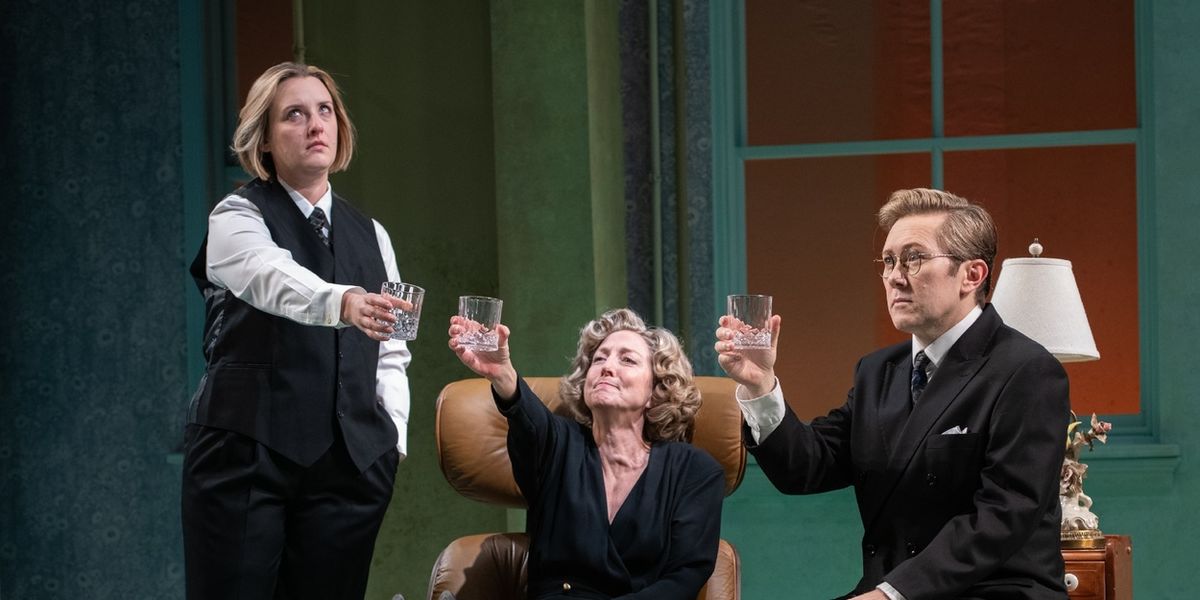
Photo credit: L-R Zoe Mann, Kate Eastwood Norris and and Stanley Bahorek in Studio Theatre's production of The Mother Play: A Play in Five Evictions.
Photo by Margot Schulman.



|
Misery Aldie Mill Historic Park (8/20-8/30) |

|
Macbeth Three Notch Theatre (8/06-8/15) |
|
No Exit by Jean-Paul Sartre ARTfactory (9/11-9/20) |

|
The Dinner Detective Murder Mystery Dinner Show The Dinner Detective Washington DC (9/12-9/12) |

|
Interplay Orchestra presents "Time of Our Lives" F. Scott Fitzgerald Theatre (10/07-10/07) |

|
A Gentleman's Guide to Love and Murder Olney Theatre Center (7/02-8/23) |

|
Josh Groban Wolf Trap (8/22-8/22) |

|
Hairspray Hylton Performing Arts Center (9/18-9/27) |

|
Hamlet Folger Shakespeare Library (3/02-4/11) |

|
Rockville Musical Theatre presents "Caroline, or Change" F. Scott Fitzgerald Theatre (10/31-11/15) |
Reader Reviews
To post a comment, you must register and login.