


Review: ORFEO ED EURIDICE at Four Seasons Centre For The Performing Arts
Austere minimalism sets the stage in this COC production of Gluck's mythological classic
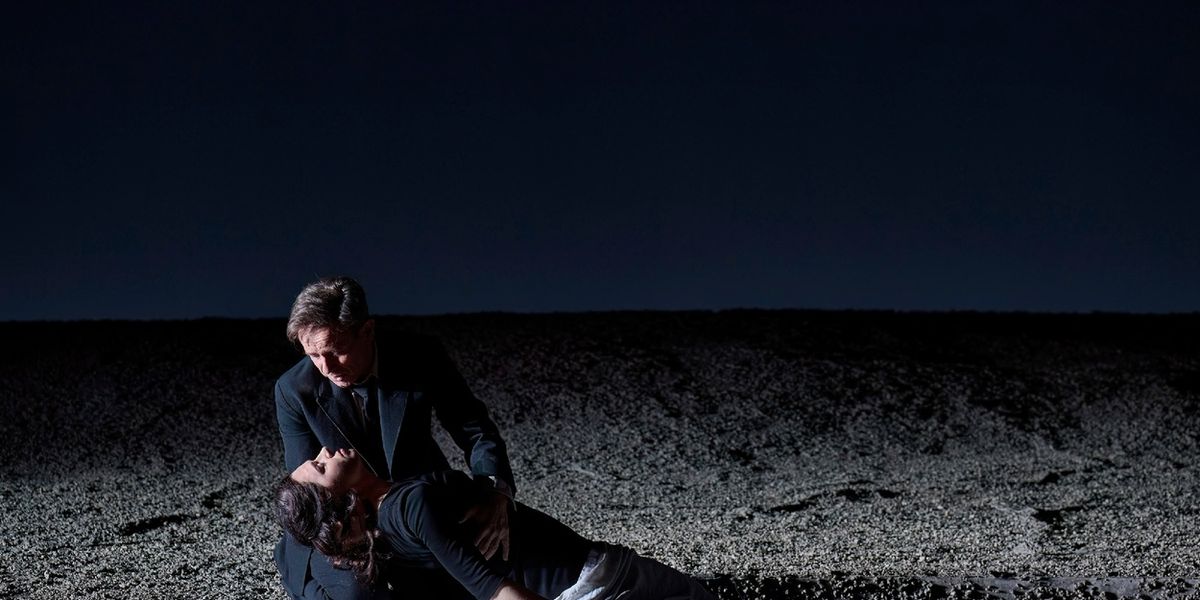
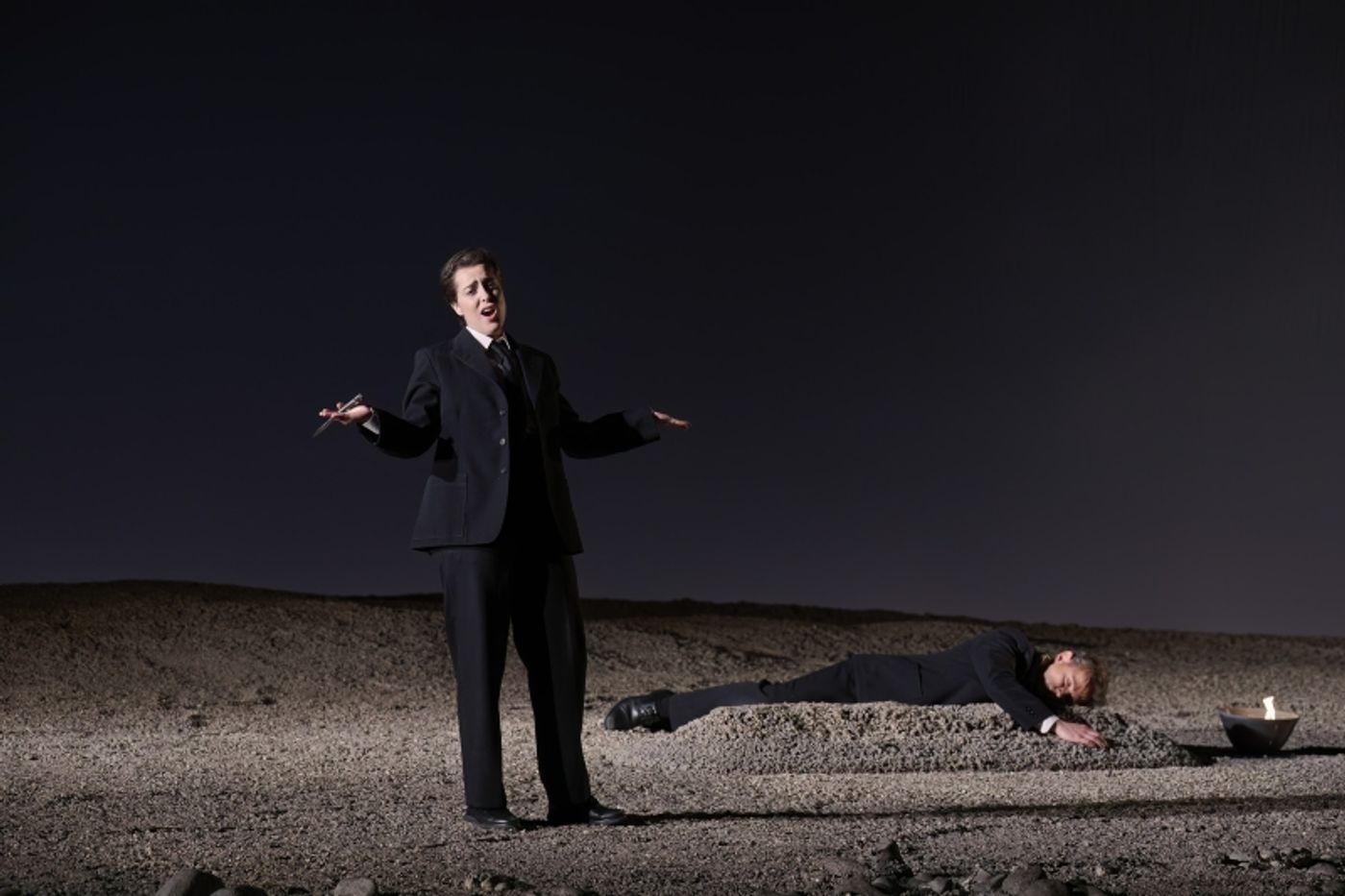
A black curtain remains lowered throughout the overture to Gluck’s Orfeo & Euridice in the Canadian Opera Company’s 2025-26 revival production directed by Cristophe Gayral (original director Robert Carsen). When the curtain comes up, we are at Euridice’s funeral, the traditional chorus of nymphs and shepherds rendered as somberly clad mourners. An almost-entirely black and white retelling of this quintessential Greek myth ensues.
While I am a lifelong opera lover and COC fan, this production did not land for me. Facing death is undoubtedly a central theme of the story, but this was realized a tad too literally on stage for my liking. For 90 minutes, we literally stared into the void. Throughout the entire show, the backdrop is a monochromatic gradient expanse. In a similarly monotonous fashion, the stage during the opening scene was covered in gravel. As Orpheus treks through the underworld, it's covered in gravel. He retrieves Euridice from the Elysian fields - more gravel. Apart from some fire at the top of the 2nd act, there was an astonishing lack of visual interest or imagination during this production.
I want to stress that the vocal performances have nothing to do with my dislike of this production. In fact, if you are a lover of baroque singing and the unique counter-tenor timbral quality, it is worth seeing for those reasons alone. Counter-tenors train to develop a robust falsetto range, allowing them to sing male characters that were originally written for castrati. Iestyn Davies as Orfeo has an open, uncovered approach that is distinct from what I have heard from most countertenors. Taking the lid off the sound allows a ruby-like shimmer to appear on his high notes, which is a feast for the ears. In a performance where the audience’s reactions were as reserved as the approach to staging his performance of “Che farò senza Euridice?” elicited unrestrained applause.
Similarly, Anna-Sophie Neher did a fine job as Euridice. She has a very rapid vibrato that is graceful and feminine, and not weak or strident. She brought great musical vitality to her lengthy musical passages of frustration as Orfeo refuses to look at her while he leads her out of the underworld.
Unfortunately, the dramatic performances mirrored the lifelessness of the backdrop and sets. For example, the potential dramatic impact of Neher’s singing is muted by the fact that Euridice can only express her frustration by swatting at gravel while standing in a hole - there are no other props or set pieces to work with.
I was so unentranced by this performance that it confounds my ability to review Catherine St-Arnaud in the role of Amore. Love’s appearance in this short 3-hander is brief but pivotal to the plot in that Amore sends Orpheus on the underworld quest and brings about the quest’s resolution. Catherine St-Arnaud is a talented singer, but the way this role was realized achieved nothing other than to effect those two plot points. When Amore makes their second appearance, she is dressed in the exact same little black funeral dress that Euridice has been wearing the entire time, which confused my companion and me.
Consistent with the overall flat affect of this production, the orchestra’s playing was serviceable. It just didn’t feel like anyone believed in the story they were telling.
My companion and I agreed that this 90-minute production felt longer and more soporific than some 4-hour-long COC shows we’ve seen. Given the resounding applause during curtain calls, it’s clear that not everyone in the audience agreed with our take, so don’t take my word for it. Based on the chatter we heard as we left the theatre, the stark minimalism worked for some people, and superb vocal performances went a long way toward mitigating a rather uninspired interpretation of this tried and true work.
Photo by Michael Cooper of Catherine St-Arnaud and Iestyn Davies in the Canadian Opera Company's 25/26 production of Gluck's Orfeo ed Euridice


|
Othello Stratford Festival (5/22-9/27) PHOTOS |

|
LABOUR The Theatre Centre (9/10-9/12) |

|
ANNULÉ - Il était une fois... Noël Théâtre Capitole (11/25-11/29) |

|
GRAHAM100 Terminal Theatre (4/30-5/02) |

|
Jane Austen's Northanger Abbey Guild Festival Theatre (8/06-8/23) |

|
Grand Soft Day Young People's Theatre (4/24-5/02) |

|
Fred Penner: The Hero In You Young People's Theatre (3/06-3/20) |
|
UNIONVILLE CANADA DAY CELEBRATION Unionville Millennium Square (7/01-7/01) |
|
The Last Five Years Orillia Opera House (8/06-8/13) |

|
Heist Theatre Aquarius (4/28-5/15) |
Reader Reviews
To post a comment, you must register and login.