


Review: Lerner and Loewe's MY FAIR LADY at the Suncoast Broadway Dinner Theatre
The show closes on May 18.
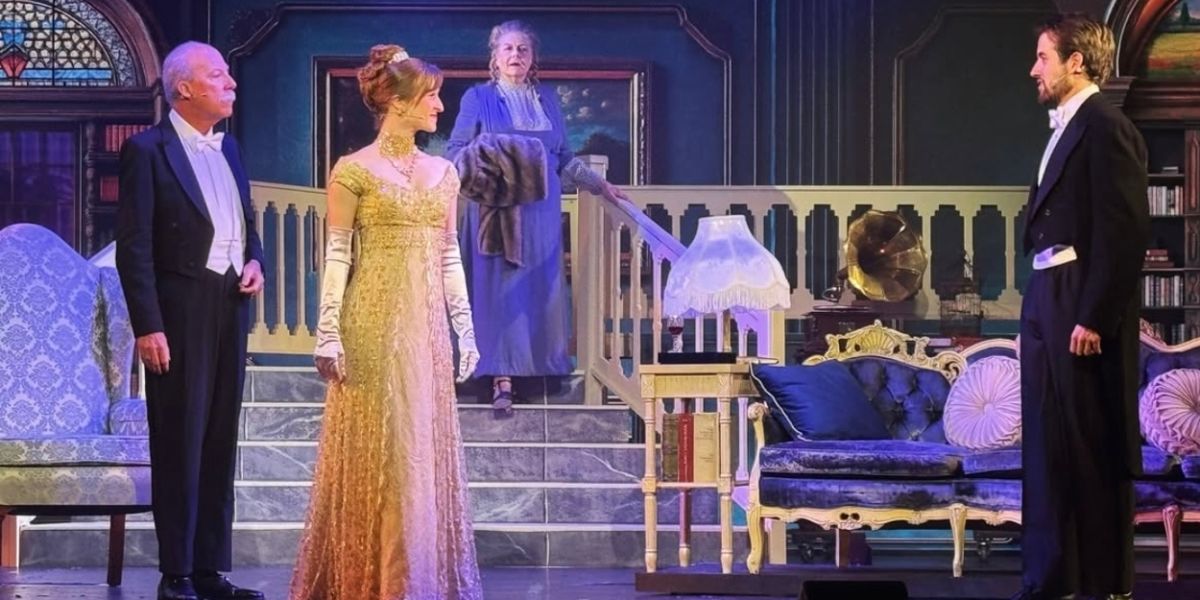
Is MY FAIR LADY the perfect musical?
I know certain Broadway aficionados point to it as the tops of the top, the pinnacle, the one where the musical theatre gods were shining during its creation. With the sophisticated composer Fritz Loewe complementing that polished wordsmith, Alan Jay Lerner, they became a composing duo that rivaled the best of contemporaries Rodgers and Hammerstein with a splendor of, say, the future Lennon-McCartney at their most buoyant. (Although Lerner and Loewe’s musicals would explore darker themes, they would never dive into the dark alleys of, say, Kander and Ebb; I could never imagine the Brigadoon duo writing songs like “Don’t Tell Mama” or “The Morphine Tango.”)
Face it, there is no such thing as a perfect musical, but if I am forced to choose one as “the most perfect,” then my pick surely wouldn’t be My Fair Lady. (Nothing beats She Loves Me, which gets my vote.)
Although I have seen My Fair Lady several times, it has been far from my go-to. Part of that comes from a severe case of PBSD (Post Boredom Stress Disorder) after watching the famed 1964 film version. I always thought the movie, which won eight Academy Awards and is as beloved to its fans as a stray kitten that winds up at their house and now calls it home, to be hokey, stodgy and turgid, despite the grand music and clever lyrics. And I never bought into Rex Harrison’s Henry Higgins and Audrey Hepburn’s Eliza Doolittle; they always seemed either forced and harrumphing (Harrison) or quaintly charming and a bit bland (Hepburn). There was just no excitement for me with these two stars in these loverly parts.
But the stage show is something else. It’s fast moving, with joyous music and the very cynical but pinky-out tastefulness of the lyrics. It boasts so many wonderful characters, each with a specific arc, and though far from short, it sort of breezes by. You don’t realize that it’s nearly three hours long.
I have some issues with the show—mainly that Higgins’ songs have a sameness about them and should just be called “Ranting About Women,” including “Why Can’t the English?”, “I’m an Ordinary Man,” and “I’ve Grown Accustomed to Her Face.” When you have a strong Henry, and when they are marvelously performed and sung, the songs get away with all that bellowing. But when you have a talk-singer like Rex Harrison, to my ears at least, they just drone on and on.
I am not alone in my eye-rolling snobbery when it comes to My Fair Lady. Even at the time of the Broadway show’s opening, when the critical raves were off the charts, some of the more snobbish theatre buffs thought the show was merely okay, as indicated in this line from “Opening Doors” from Stephen Sondheim’s Merrily We Roll Along: “I saw My Fair Lady/I sort of enjoyed it.”
Well, I just saw a production My Fair Lady at the Suncoast Broadway Dinner Theatre, and I didn’t just “sort of” enjoy it; I really enjoyed it.
For those of you who haven’t seen My Fair Lady, the show, based on George Bernard Shaw’s Pygmalion, centers on haughty phonetician Henry Higgins who wages that he can transform a brash Cockney flower seller, Eliza Doolittle, into a proper lady who can pass as a member of high society. Eliza certainly transforms, but maybe not in the way that either she or Higgins would like. There are side stories, but the main one becomes how Henry, slowly and against his misogynistic will, falls for Eliza, and she for him.
Part of the reason this production of My Fair Lady works so well comes down to the two leads; Kyle Channell as Henry and Juli Biagi as Eliza really make us feel and root for their budding romance. Both of them give astounding performances that should be rewarded with standing ovations.
Mr. Channell is a very young Henry Higgins; he’s twenty-four and looks twenty-four, even with a beard. As devised by Shaw as well as Lerner and Loewe, Henry is supposed to be much older than twenty-one-year-old Eliza. In fact, in Shaw’s original, Henry is described as a “robust, vital, appetizing sort of man of forty.” Henry has to be older in order for him to be so annoyingly and irascibly set in his ways, and for him to also gain notoriety and riches as a renowned phonetician. (At twenty four, Mr. Channell looks like a grad student instead of a master linguist.) For this brazen head of the Women Haters Club to be so unmoving in his philosophies—and then suddenly moved by Eliza—it becomes more effective if he is older.
But this is a different world, and these days this older man and younger woman attachment doesn’t quite vibe, the erudite sugar daddy and his much-younger damsel in phonetic distress. We now look at such a pairing as icky. And if you doubt that, then please just ask manther Bill Belichick and his 24-year-old girlfriend, Jordan Hudson.
That said, I was able to push any misgivings of age aside because Mr. Channell is so winning in the role. And his romance with Eliza actually became more believable and appeasing. Mr. Channell is a dynamo as Henry, full of pomposity and sneer, looking down at those lower than he (i.e. everyone else, with the possible exception of his friend, Colonel Pickering, sort of Dr. Watson to Higgins’ Sherlock Holmes, brilliantly played by Patrick Cogan).
He’s the most physical Henry I’ve ever seen and certainly one of the most entertaining. He makes the most of each line of dialogue, so playful in his disdain, and he does enough verbal trickery to make both George Bernard Shaw and Alan Jay Lerner proud.
Higgins is so full of himself, a pedantic child of sorts, and his work on “I’m an Ordinary Man” was brilliantly realized. He would fake start, garner applause, then rant some more as he sings: “But let a woman in your life/And your serenity is through/She'll redecorate your home, from the cellar to the dome/Then go on to the enthralling fun of overhauling you…” Enthralling, that may be the best word to describe Mr. Channell’s performance.
It's always a welcome relief when you have a Henry Higgins who can actually sing, and we’re not just stuck in a Rex Harrison Hellscape where there’s nothing but frantic talk-singing.
Ms. Biagi is equally as grand. For the first few moments I worried that we might need subtitles to understand her Cockney, but she grows stronger and stronger as the show goes on, just as Eliza does, and it’s inspiring to watch. Her songs are astounding: “Just You Wait” and the breathtaking “I Could Have Danced All Night,” the latter one of the most vibrant expressions of self-worth and joy ever penned. And the iconic “Rain in Spain,” sung with Higgins and Colonel Pickering, became a showstopper.
The ending of this My Fair Lady will melt even the hardest of hearts.
Brady Ryan Phillips, looking like the hybrid of Haley Joel Osmond and a young Alan Jay Lerner, is a worthy Freddy Eynsford-Hill, marvelously performing one of the show’s signature songs, “On the Street Where You Live.” Regina Harbour is wonderful as the anchor of the show, Mrs. Pearce; she’s always in the moment, rightfully reacting but never overreacting to the tug-of-war struggle between Eliza and Henry. And Andi Garner is quite strong as Mrs. Higgins, a seemingly sane respite from her son’s over-the-top fury.
Best of all is Howie Schal’s Alfred P. Doolittle, who gets the best part in the show and the best songs: “With a Little Bit of Luck” and “Get Me to the Church on Time.” Bearded Ms. Schal is bigger than life, resembling a combination of Bob Hoskins and John Rhys-Davies. And he quickly became an audience favorite.
The ensemble in this My Fair Lady is more than just an ensemble; they are the heart and soul of the show, moving the sets in character whether as a street sweeper or one of Higgins’ servants. Jennifer Jackson, Ellen Sisley, Jennifer Hope, Alaina Bozarth, Rachel Knowles, Elias Husgafvel, Nazmokeem Harvey, Kristofer Holz and Terry Farley all do remarkable work. I love how each ensemble member is a full-fledged character or busybody, not just a boring B.O.S. (Body On Stage). I also appreciate that there’s more dancing in this production (thanks to Charity Terrio’s choreography), more youthful energy, and songs like “The Servants’ Chorus (Poor Professor Higgins)” in their hands become some of the stronger numbers of the night (it’s prime Lerner and Loewe territory, like the song “Guinevere” from Camelot).
Music director Zachary Ryan does exquisite work with the cast, and his three-piece band sounds solid, with Mr. Ryan on the keyboards, Irv Goldberg on bass, and David Dodge on drums. There were moments when the music seemed more like something you’d hear at a carnival than one of the most famous musical theatre scores, but it works overall.
Tom Hansen’s set is incredible, ably aided by Dalton Hamilton’s lighting design, with projections and scenery taking us immediately from Higgins’ abode to the streets of London. It’s scrumptious. And Annie Le's extravagant costumes add to the scrumptiousness. However, whoever was responsible for the program needs to know that the music is by “Frederick Loewe” and not the misspelled “Lowe” as printed in large letters on the front cover.
Kurt and Charity Terrio have directed a robust production full of verve and zest, and as stodgy as the story may seem, it’s never boring, never tedious. It’s a classic done right.
And the dinner was quite nice, especially the Bangers and Mash with Onion Petal Gravy and Smoked Beef Brisket with Brown Ale BBQ. As for the drinks offered, there’s a Wouldn’t it be Lover-ly (a honeysuckle and elderflower Martini), With a Little Bit of Luck (a triple-chocolate mudslide with vanilla vodka), and a Just You Wait (a fizzy strawberry refresher Mocktail). My server also happened to be the amiable lad playing Henry Higgins, and he was a damned good waiter, but he’s an even better performer.
I love it when a production far exceeds my expectations, and my lack of excitement going into a beloved musical that I personally don't like much was only matched by my absolute thrill of it as I exited. I left satiated and thoroughly entertained with a new outlook on an old show. And there’s nothing better than that.
The Suncoast Broadway Dinner Theatre’s production of My Fair Lady closes Sunday, May 18.

|
St. Pete Country Fest – Friday Vinoy Park (11/20-11/20) |

|
Burn This Shimberg Playhouse, Straz Center for the Performing Arts (7/15-8/01) |
|
Load Bearing Walls The Off-Central (3/25-4/04) |
|
Constellations The Off-Central (10/15-10/25) |
|
The Mel Brooks Musical: Young Frankenstein Carrollwood Cultural Center (3/12-3/21) |
|
|
Jonathan Van Ness: Hot & Healed Comedy Tour 2026 Seminole Hard Rock Tampa Event Center (11/19-11/19) |
|
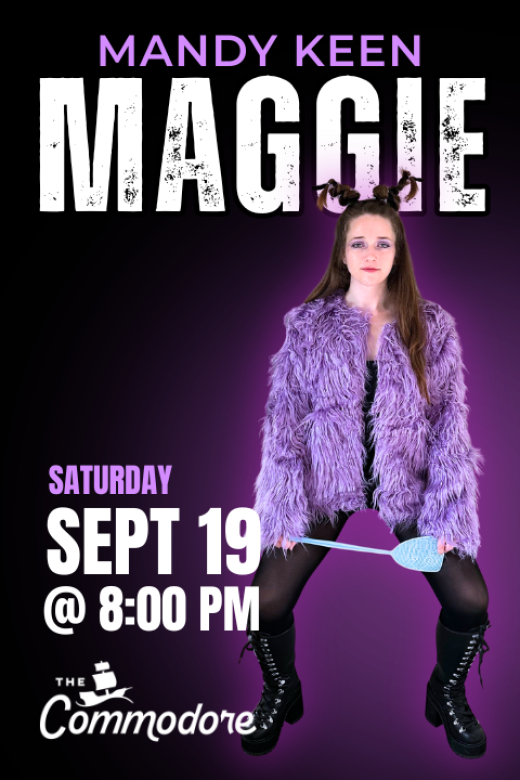
Mandy Keen: MAGGIE The Commodore (9/19-9/19) |
|
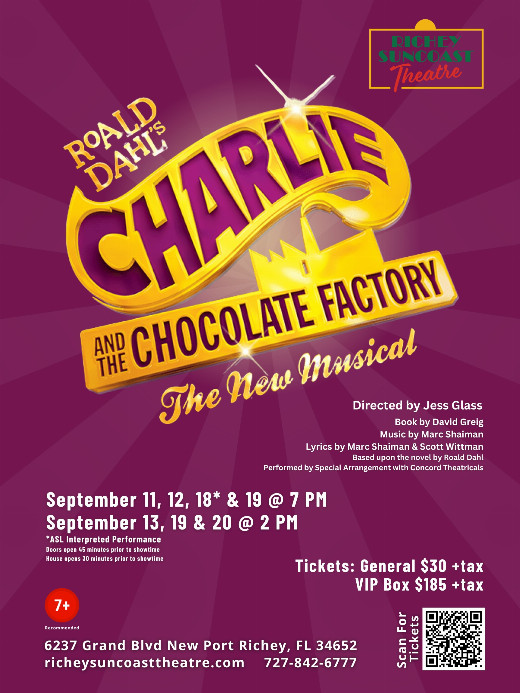
Roald Dahl's Charlie and the Chocolate Factory – The New Musical Richey Suncoast Theatre (9/11-9/20) |

|
IN THE WAKE OF LIFE Tree Fort Productions (9/18-9/20) |
|
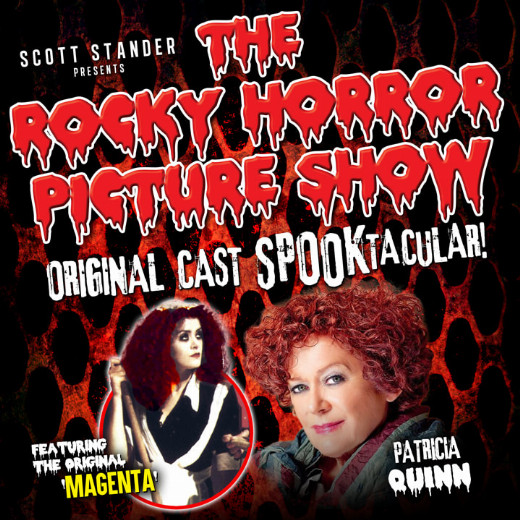
The Rocky Horror Picture Show Spooktacular Tour with Patricia Quinn Straz Center Ferguson Hall (10/22-10/22) |

Reader Reviews
To post a comment, you must register and login.