


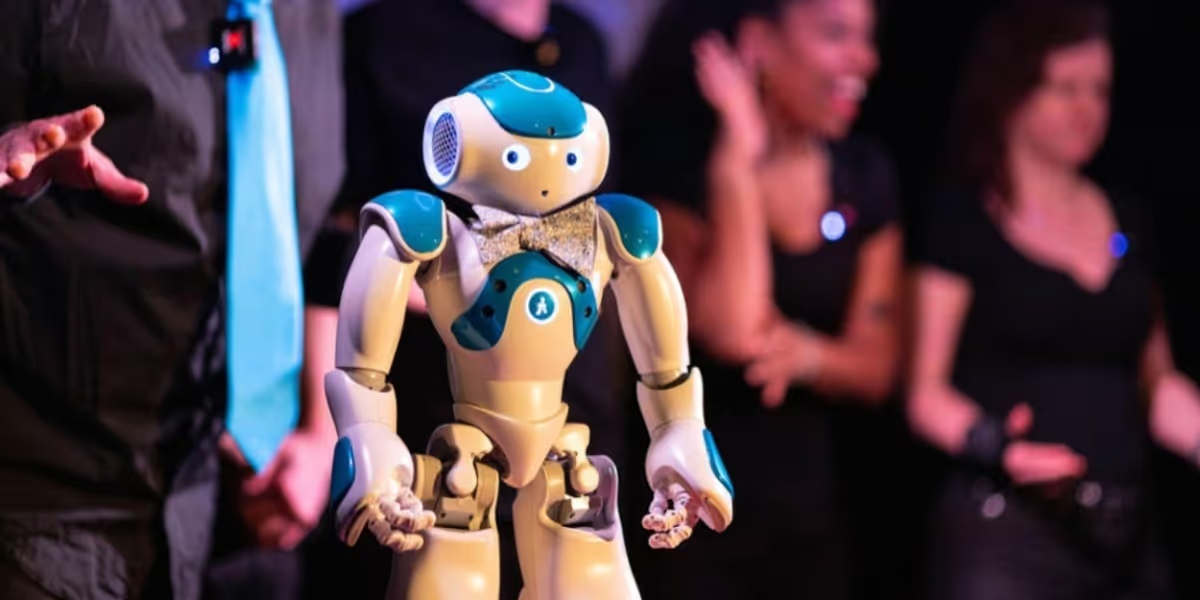
BWW caught up with director Piotr Mirowski to chat about bringing RoboTales to the 2025 Edinburgh Festival Fringe.
Tell us a bit about RoboTales.
RoboTales is our new improvised theatre comedy show with a mixed cast of humans and a robot powered by artificial intelligence. It is our latest creation: we are Improbotics, a science comedy troupe, who since 2016, have been creating shows that connect audiences with experimental technology, engage audiences about AI ethics, perform grounded theatrical improvisation and entertain festival punters looking for comedy.
This year, the show that we are bringing to Edinburgh is an improvised choose-your-own adventure game, played in front of the audience by the talented cast of Improbotics. The twist in RoboTales is that a robot writes and directs the show. The bot uses speech recognition and state-of-the-art AI (we developed the software ourselves) to analyse the improv scenes and generate silly new choices and strange transitions.
How involved do the audience get?
In RoboTales, the audiences control the story by voting on their phones for their preferred choice (like a modern take on the choose-your-own adventure books), and then the actors take the story forward. It is like "Black Mirror: Bandersnatch", brought to life by AI and the actors' imagination and improv talent. There are many other examples of audience involvement, from shouting suggestions like in a typical improv show, to getting on stage to participate in a thought-provoking and consent-based deep fake-based scene.
What are the risks of leaving an element of your show up to AI?
The unpredictable nature of AI, and the fact that we are running a complex AI system in Fringe theatre conditions, are our two main risks.
When we started doing shows with AI, back in 2016, it simply generated nonsense that was a creative challenge for the actors, as they had to justify what the robot would say. As the suggestions from AI were interestingly weird, we called this working with the "glitch aesthetic" and we used AI to create absurdist theatre. In the past few years, language models became publicly available, and we have been updating our technology but faced a new limitation: these language models became more boring and predictable, because the teams of engineers building them tried to make them "honest, harmless and helpful" (not terribly useful for comedy), and we had to work hard to keep those AI outputs interesting. This forced us to redefine our relationship to those tools and to figure out how to make the AI tools genuinely helpful for improvisers, finding the right balance between quirkiness, keeping track of characters and narrative strands in long-form improvisation, and not getting into the human improvisers' way.
The second risk is failure. That's where you need a "maker" mindset, which is common to both improvisation and to the scientific method. I see so many parallels between the two. Improv is all about making offers to your stage partner, knowing that only some of them will work and be funny, and about taking and accepting that risk. Science is all about collaborating, trying new ideas, knowing that most experiments will fail. Like good scientists, improvisers learn from their mistakes over their training, and they also make hypotheses at the start of each scene (Who? What? Where? What is the game of the scene?). Like good theatre people, scientists often improvise scrappy new technical solutions with limited budgets and time. Back in 2017, a reviewer wrote about our show: "never work with robots". Obviously, we did not listen!
How long have you been working with AI and what changes have you seen since then?
In my professional life, I started working on building AI back in 2002 - when it was a completely fringe subject. I even had to avoid mentioning "artificial intelligence" when I was writing my computer science PhD, as even academics were not taking that concept seriously. I started working on language models (the algorithms that power chatbots) back in 2010, when it was a miracle if they could generate one sentence that sounded like human language. How things have changed! Today, you can't sell anything without mentioning "artificial intelligence".
In the back of my mind, as an artist, I wanted to bring language models on stage and to explore their absurdity. I was fascinated by how the Surrealists wrote their "Exquisite Corpses" (collectively making stories one word at a time), and had read Keith Johnstone's seminal textbook on improvisation, where a small footnote actually mentioned language models. I had to wait until about 2015, when these algorithms (and the amount of data they could be trained on) could be good enough to generate somewhat sensical text, and fast enough for live performance. I decided I had to try to improvise on stage with a robot, powered by a language model that I designed from scratch. A year later, I met Kory Mathewson, another researcher in robotics and an improv comedian at the Rapid Fire Theatre in Edmonton, Canada, who had the same idea. Kory and I became friends and we set up to create a theatre company, called Improbotics, where human actors raise up to the challenge to improvise alongside machines.
Obviously, what the language models would generate back in 2016-2020 did not make sense, so our theatre company's ethos was to make your stage partner look good, even when it is a robot! Then as language models became more powerful, we gave AI a new role, which was to be creatively useful for the improv actors. In other words, the new challenge became for the AI to try to make its stage partners (us) look good on the stage, and to allow us, despite its many limitations, to perform grounded, emotional theatrical improvisation.
What would you like audiences to take away from the show?
We hope the audiences take away a "maker" mindset that is common to both improvisation and to tinkering with robots and technology. On the one hand, talented improvisers are telling a story and play around challenges thrown by an AI system (and amplified by audience choices). On the other hand, the show also features very real and very fragile technology, deployed in the extreme conditions of a Fringe venue, with me fixing any tech issues live. If standard improv is like building a plane in mid-flight, our show adds having to wrangle a mischievous autopilot. The best compliments we received were from audience members who told us they were inspired to dare and try something new.
In a broader sense, I would love for the audiences to consider AI as one of the possible tools for theatre making, and to acknowledge how much agency they can have when they use it. Our show involves AI in a live theatre performance that centers the human actors, disproving the fallacy that "creative labour can be automated" and that AI can in any way replace artists. Like every Edinburgh punter knows, we are here to experience the art made by vulnerable human beings, and to connect to their lived human experience, which simply cannot be automated, no matter how advanced AI technology will become.
Photo credit: Roxy Van Der Post
Sponsored content
Get Broadway News on WhatsApp
Receive the latest updates, breaking news, and exclusive coverage from Broadway directly in WhatsApp.

|
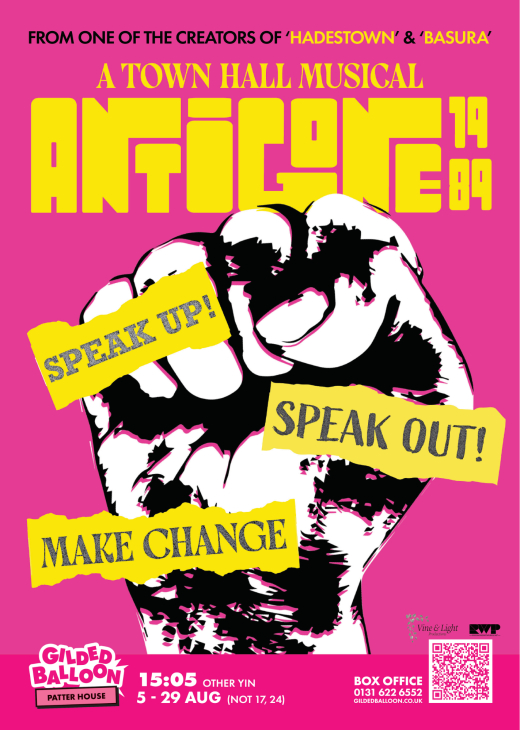
Antigone 1989: A Town Hall Musical Gilded Balloon Patter House (8/05-8/29) |
|
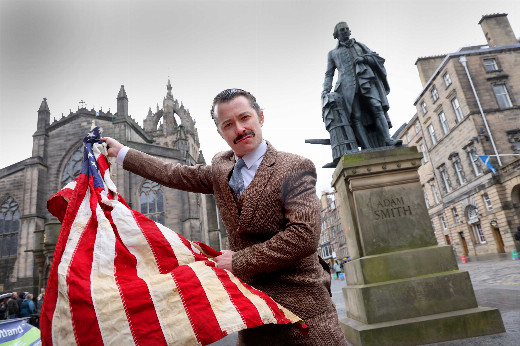
The Business Man and The Case of M. Valdemar Greenside Venue @ Riddles Court (Willow Studio) – Venue 16 - 322 Lawnmarket, Edinburgh EH1 2PG (8/07-8/28) |

|
Stayin’ Alive Gilded Balloon Patter House (8/05-8/31) |

|
Rollers Forever King's Theatre (10/27-10/31) |
|
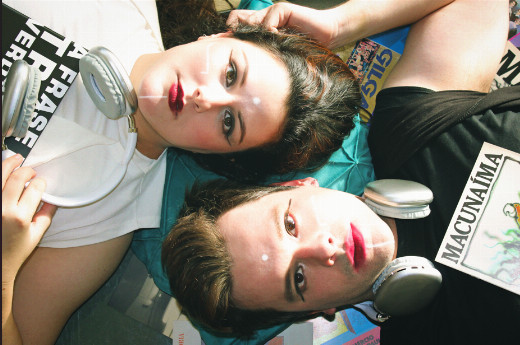
Argonauts Zoo (Playground 1) (8/07-8/30) |

|
Jitters Summerhall (8/06-8/30) |

|
A Costume Drama ZOO (Playground 3) (8/07-8/30) |
|
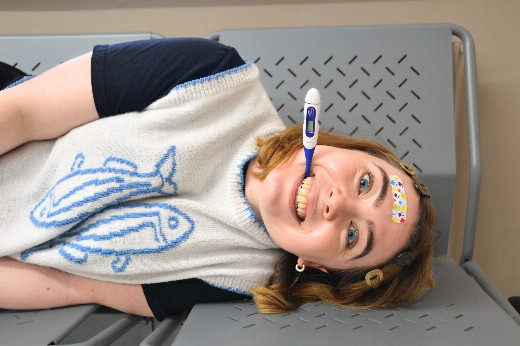
In a Bad Way Gilded Balloon Patter House (Blether), (8/05-8/31) |
|
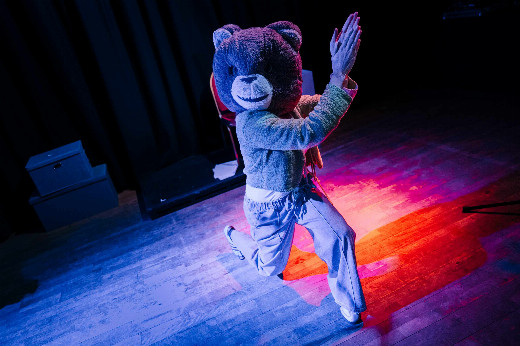
Man or Bear Summerhall (8/06-8/30) |
|
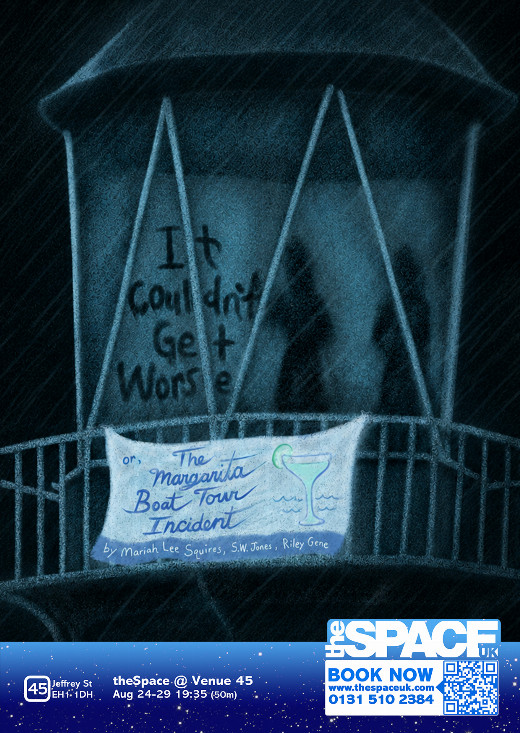
It Couldn’t Get Worse; or, The Margarita Boat Tour Incident Venue 45 at theSpace (8/24-8/29) |