


Interview: William Thomas Hodgson of PRIMARY TRUST at TheatreWorks Silicon Valley
Hodgson stars in the regional premiere of Eboni Booth's Pulitzer Prize-winning play, running March 7th through 29th in Palo Alto
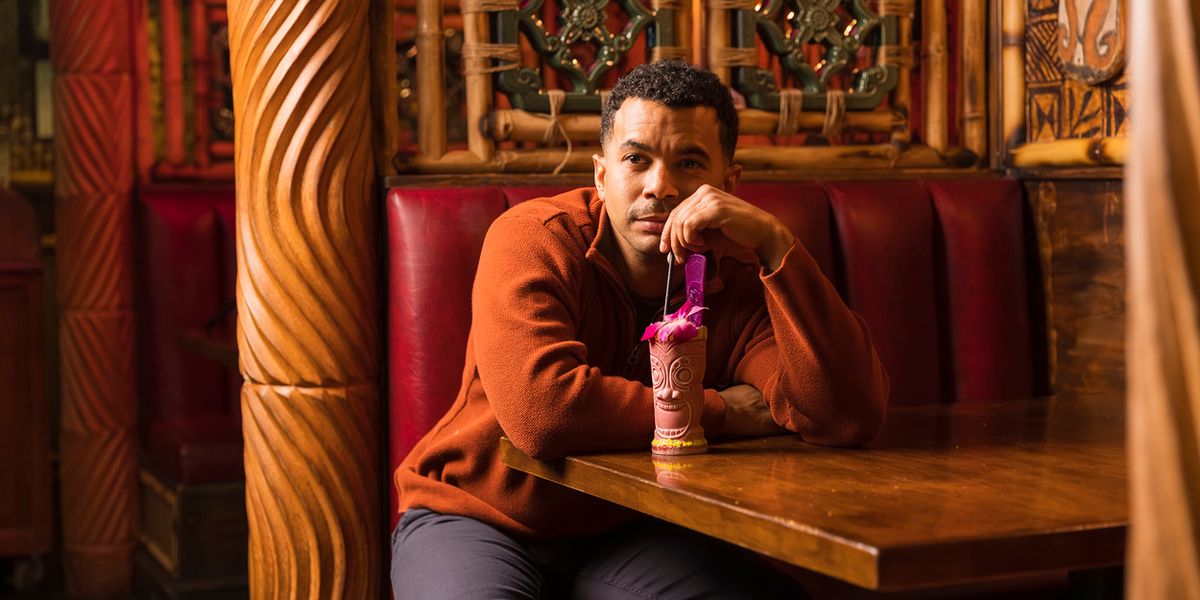
As a theater writer covering the entire Bay Area scene I know I’m not supposed to play favorites, but if I’m being honest, Eboni Booth’s Primary Trust at TheatreWorks Silicon Valley is the play I’m most looking forward to seeing this season. True, the plot setup sounds a little quotidian - 38-year-old bookstore worker Kenneth enjoys nightly chats over happy hour Mai Tais at the local tiki bar - but I’ve heard from multiple people who’ve seen previous productions that the play is incredibly moving. It’s even developed a devoted fan base who travel the country to experience it in different incarnations. And as if that weren’t high enough recommendation, it also won the 2024 Pulitzer Prize for Drama. Small wonder that it is on track to be one of the most frequently produced plays in the country this year.
TheatreWorks’ production stars William Thomas Hodgson in the role of Kenneth, under the direction of the prolific Jeffrey Lo. Bay Area native Hodgson has been carving out quite a career for himself over the past decade or so, giving notable performances in a wide range of plays while also serving as Co-Artistic Director of Oakland Theater Project. Theatergoers may recall his beguiling Gentleman Caller in Lo’s production of The Glass Menagerie at San Francisco Playhouse, his saucy turn as Le Detective in Mrs. Christie at TheatreWorks Silicon Valley, or his hilarious and poignant take on the title character in Cyrano at Aurora Theatre, just to name a few of his more recent credits.
I spoke with Hodgson by phone last week shortly before he was to start rehearsal for the day. We talked about why Primary Trust moves audiences so deeply, his formative training at the Pacific Conservatory of Performing Arts, his experiences performing Every Brilliant Thing which is currently on Broadway starring Daniel Radcliffe, his unorthodox bi-national upbringing and his hopes for a healthier, more sustainable model to support theater artists. He struck me as an exceedingly thoughtful person and one who truly believes in the transformative power of the theatrical experience. It wasn’t lost on me that in our conversation he kept returning to the concept of community. The following has been edited for length and clarity.
How familiar were you with Primary Trust before being cast as Kenneth?
I definitely heard buzz about it and I also got to read a script of it early on. So I’ve been in love with it, and just kind of wondered what it was, cause it is a different thing on the page than the imaginings of it I see happening around the country. So I’ve been kind of obsessed with it for a while.
I have to say it’s the play from the past few years that I’ve most wanted to see. Friends have highly recommended it and I’ve heard some people have become obsessed with it, traveling around the country just to see it in different productions. At the same time, it is reportedly maybe a little elusive on the page. When I interviewed TheatreWorks Artistic Director Giovanna Sardelli a few months ago, she said when she first read the script, she didn’t fully grasp its potential. That suggests there’s way more to this play than initially meets the eye.
Well, it is theater so I think there’s more in between the lines than what’s on the page. We’re hearing buzz about people who were moved by seeing the visual art of it, the community art of it. But then I also think that it’s got a lot of concepts and it’s very theatrical. Actors play multiple characters, and there’s time jumps but they’re never really explained, and so you have to get like an emotional value of what those time jumps mean. And I think there is something about the actors and a director and designers having filtered it through their brains and making sense of the world and presenting their imagination between the lines that fleshes out the piece - in a way that good theater does.
I think there’s something in that complexity that is so charming as well, that it becomes an everyman’s story and so you understand his journey. I had a playwright teacher, Naomi Iizuka, and she said that with a good play sometimes you can’t put a pin on what it’s about; it’s like it makes you feel a thing. She uses the Liz Lerman method of what pops in this play, what is the essence of the play, what’s the event of the play? Cause maybe we can’t really say what it’s about. Even in Kenneth’s own omniscient narrator paragraph that he starts the show off with, it’s kind of about seven things. It’s about finding himself and finding a friend and finding a job, it’s about love and it’s about small chances. And it’s like all of that is the main thesis of the play… that I can’t articulate. [laughs]
Tell me about Kenneth. Who is he?
He’s a really positive and imaginative person, but I think he’s lonely and he’s found all these coping mechanisms in a beautiful, brave way to get through the hardships of life. He presents this story about these small kindnesses throughout a period in his life that allowed him to find community in a new way.
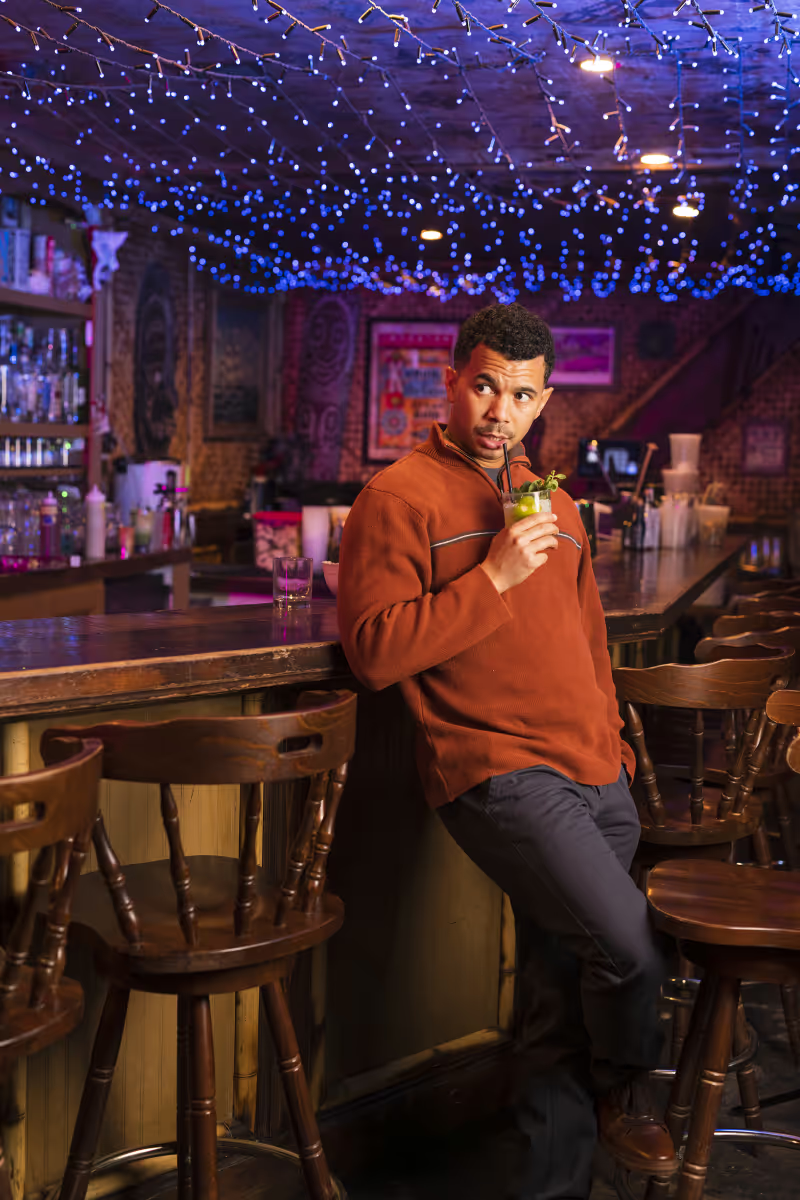
TheatreWorks Silicon's Valley's production of Primary Trust
This production reunites you with director Jeffrey Lo, whom you’ve worked with several times now. How would you describe his approach as a director?
I love Jeffrey. He’s super-imaginative and he brings great artists together. I love the people I meet in his rooms, in addition to the really great people in this cast. In concert with everyone, as well as the designers, he fleshes out the world. The different versions of this play have been really different from each other it seems like, so there’s a lot of theatricality and concepts behind the words. I love the team that Jeff has been leading - [Scenic Designer] Chris Fitzer brings a really strong concept to it and Greg [Robinson], our sound designer, has brought a ton of really strong choices, which have informed the work as we go along. And I do feel like that’s Jeffrey’s style. He’s very welcoming.
The cast includes Dan Hiatt who’s been a pillar of the Bay Area theater community for decades. Had your paths ever crossed before?
No. I’d seen him in audiences plenty of times, but I feel so lucky to be able to work with him. He’s hilarious and he’s very rigorous. At some of the theaters I’ve worked at, I’ve gotten to see some pillars of the theater community and there’s a beautiful niceness and humor and rigor that I got to see role modeled. And Dan is very, very funny.
Where were you born and raised?
I was born in Walnut Creek, California. My family is British and Trinidadian, so my parents met in the military here, but I pretty quickly lived in England for a long period of time.
Where in England?
The north, close to Newcastle, Durham county.
At what age did you move back to the States?
Well, my grandparents lived in America for a while, which was why my mom was here and I did have aunts here and uncles here, so I was kind of back and forth and then at around ten I was more here than there.
Did you find going back and forth between two cultures difficult?
I had a lot of family on both sides, so I never felt like I was alienated and I did get to have roots. There were definitely some privileges and some hardships, but it kind of all worked out in the end.
You studied theater at Pacific Conservatory of the Performing Arts (PCPA).
Yeah, that’s such an amazing program.
I’ve always been fascinated by PCPA because it seems like such a great training ground for theater makers, but I feel like it isn’t that well-known by northern Californians. How helpful was PCPA to you as an up-and-coming artist?
It completely changed my life. I didn’t know that I was going to go into theater. I went to college and then kind of dropped out and was looking for something to do, and I had only done a couple of shows before I went to PCPA. It was super-affordable and accredited through Allan Hancock College and you get a Board of Governors waiver if you are from California. That means you are getting a bunch of people from underserved communities congregating there and meeting each other and networking. It’s really diverse in lots of ways. It’s kind of a masters’ program, so as a crash course in theater you get some tech experience. I’m not sure if it’s a fully-fledged tech program anymore, but they do full design for their professional shows and then you get mainstage work, which is unheard of.
I think their view of theater is also really helpful. They are finding a way to make a company of actors, giving them long-term work, and daylong work, acting as well as teaching, so I feel like they have their own community in a way that some theaters don’t anymore. There is a certain level of rigor that they bring to their performance, as well as diversity, and I think that’s a winning formula. I’m sorry [for going on a bit], but I’m really big on PCPA! [laughs]
That rep company model used to be the norm in regional theater, but it’s gradually become rarer and rare over the past few decades.
Yeah, being trained on that so young, after I decided to really pursue theater, I was looking for other company models – OSF [Oregon Shakespeare Festival] and places where actors had long-term work and were creating community, weren’t just kind of dipping in and doing some job knowing they would leave. I think it changes the space.
You’ve done two different productions of Every Brilliant Thing, which Daniel Radcliffe is performing on Broadway right now. With its heavy subject matter and extensive audience interaction, I would imagine it brings challenges as an actor. What was it like to perform that piece?
It was really hard. It’s a beautiful, beautiful piece and I got to see it at Edinburgh Fringe, cause my parents lived at that time in Edinburgh, and then they did a recording of it. We brought it to my company, Oakland Theater Project, and Michael [Moran], the Co-Artistic Director and I, did that together as a small project. Then I also did it with Jeffrey Lo in Walnut Creek, and it was very different, like really different audiences. [The first production] we were in downtown Oakland, pretty close to pandemic, we had a lot of young audiences, and it was pretty ragtag and we made it ourselves, because we just wanted to do something. The other one, we had a much older, socioeconomically a much more established, audience in Walnut Creek, and they both responded to it.
The shows I’m really interested in a lot of time have a community element in some way, like it is more than just the “TV/film/educationness” of it, which is really important to me, but I want it to be funny (I honestly am very lowbrow. [laughs]) The thing that makes you feel like “Oh, I gotta go out on a Friday night and be with other people, and see and hear people have other reactions,” there’s something about that that makes it special. So being able to see that on an audience of young people who were close to suicidal ideation, either in their own experiences or people around them, and then older people who were farther from that. But both of them I would be waiting for 45 minutes and be like “I’m so sorry, I have to leave. I can’t talk to all of you individually, but I can tell that just the writing of the script has struck a chord with you.”
So that was really fascinating, but it was hard, just being with that and being with everyone else’s reflection of that. And beautiful and something I’ll never forget.
You have such a wide-ranging resume – comedy, drama, musicals, contemporary works, period pieces, Shakespeare, classics. Plus, you’re Co-Artistic Director of Oakland Theater Project. Where would you like to see your career go from this point?
Like a lot of us, I am just wondering what this crossroads is for theater. Theater models are changing, the way we pay people and fund ourselves, and in reflection of that, the work that we do is changing. Like my company used to have a 50-person cast every single show and then the pandemic changed that, and funding changed that. Thankfully we’re still able to do that every year at least, but we also do a lot of two-handers and four-handers. Looking at other companies, I see patterns of theater changing. So, honestly, there’s a survivalist part of me, of like “How can I pay my bills?” Even doing well in this industry is not doing great. So how do we self-sustain, and how do we sustain this industry that I think is doing something for America that we don’t really articulate?
I want to keep working and I love the idea of a company model, places that give actors and artists more substantial or longer-scheduled work. There’s so much anxiety around theater, and I do think that art is made when there’s long-term opportunities for people. And you know there’s nepotism and there’s all sorts of things behind that as well, but there have to be more safety nets, and I think that’s one of them. I loved working at Mixed Blood and Guthrie and some of the theaters in Minneapolis where there are somewhat socialist funding models, and it helps. And they can justify that because of studies about how that actually benefits their ecotourism.
So, yeah, I hope that there’s something like that in the future. Or a little bit of that.
(Photos by Tracy Martin)
---
Primary Trust will perform March 4-29, 2026 at Lucie Stern Theatre, 1305 Middlefield Road, Palo Alto. For tickets and additional information, visit TheatreWorks.org or call 877-662-8978.
Weekly top stories - unsubscribe anytime.

|
The Madness of Lady Bright Venue: iMPACt Center for Art & Dance (11/06-11/15) |

|
Gutenberg! The Musical! Hillbarn Theatre (10/08-11/01) |
|
Lena Hall: In Concert Feinstein's at the Nikko (11/06-11/07) |

|
The Secret Garden Marin Shakespeare Company’s Downtown Theatre (11/27-12/20) |
|
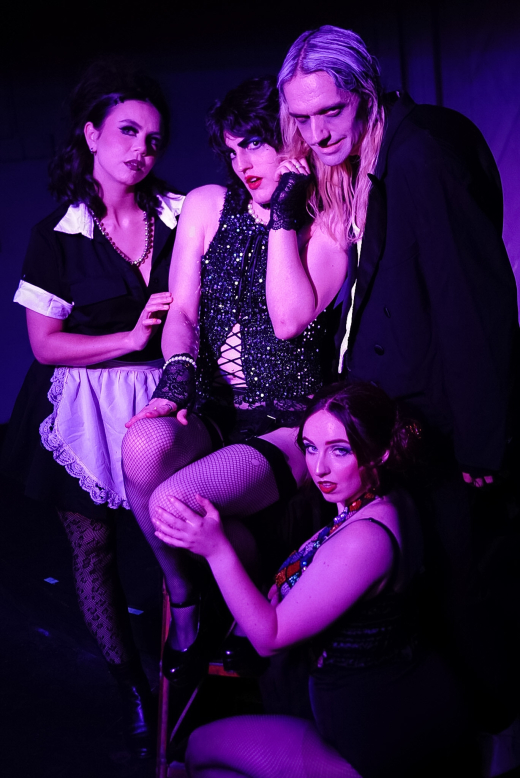
The Rocky Horror Show Paper Wing Theatre (10/09-10/31) |

|
The Fall Show Shotgun Players Ashby Stage (9/26-10/25) |
|
|
The Who's Tommy San Jose Center for the Performing Arts (11/17-11/22) |
|
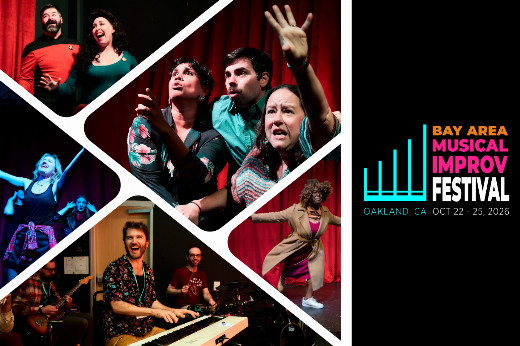
Bay Area Musical Improv Festival - Saturday 4:30PM Show All Out Comedy (10/24-10/24) |
|
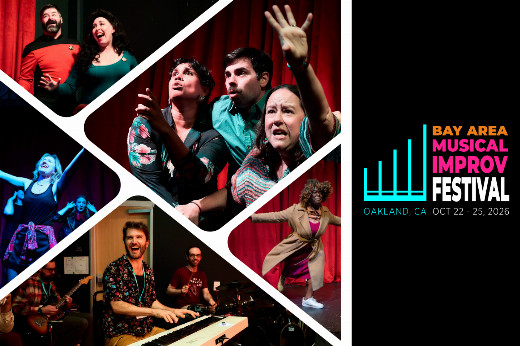
Bay Area Musical Improv Festival - Sunday 3:30PM Show All Out Comedy (10/25-10/25) |
|
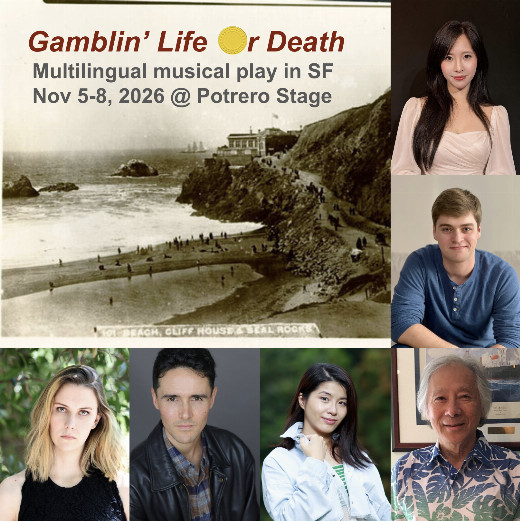
Gamblin' Life or Death Potrero Stage (11/05-11/08) VIDEOS |