Review: CABLE STREET, Marylebone Theatre
The sold-out musical comes back for another run.
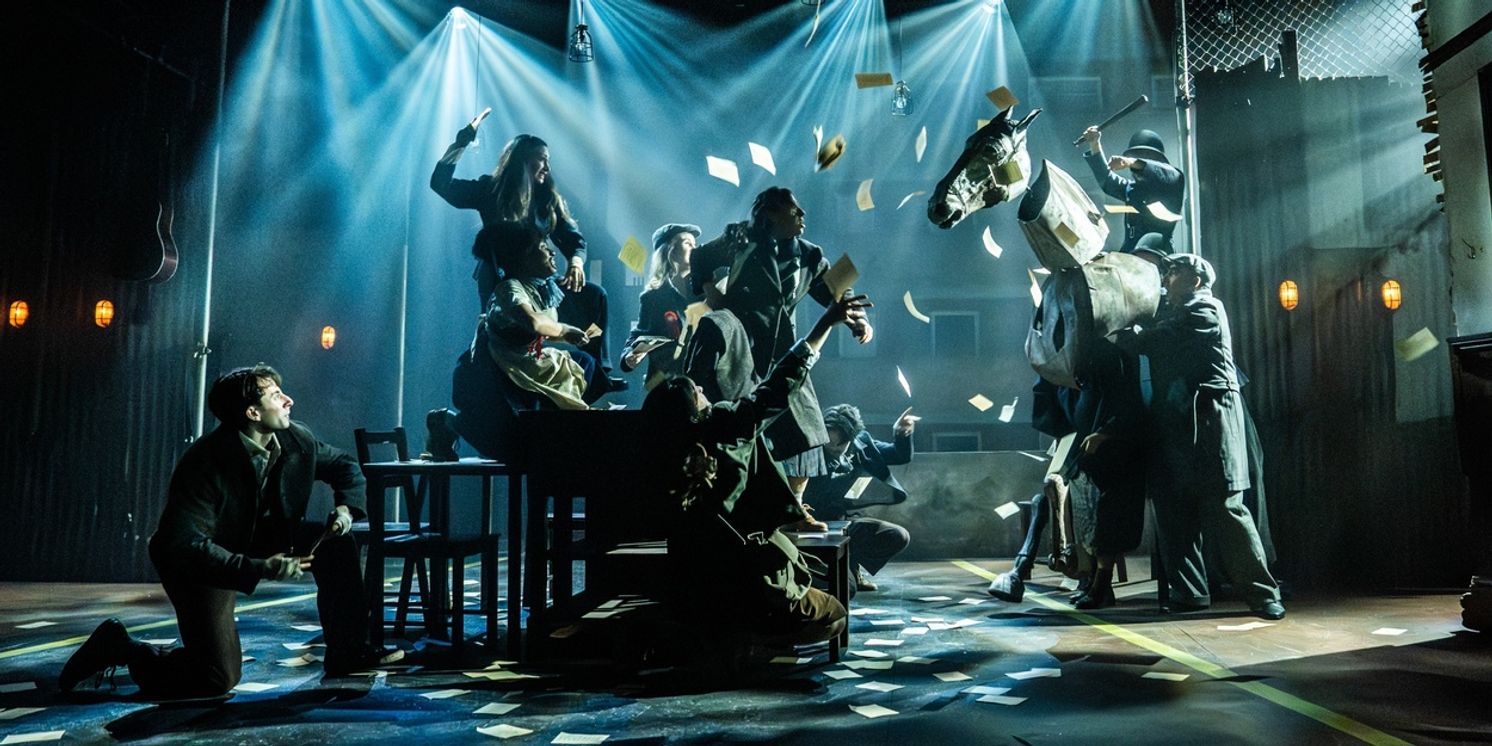
 October 1936, Oswald Mosley and the British Union of Fascists march on East London. When they reach Cable Street, a stone’s throw from Whitechapel, they find that its people have gathered in a united front against fascism. British, Irish, Jewish, and communists are blocking the road, ready to fight. Written by Tim Gilvin and Alex Kanefsky, Cable Street couldn’t be more timely.
After two successful runs at Southwark Playhouse, the musical returns to remind us that there’s strength in unity. As ICE murders innocent citizens who stand up to injustice across the pond and Union Flags keep going up on our home turf, this is the high-energy, anti-fascist history lesson we need.
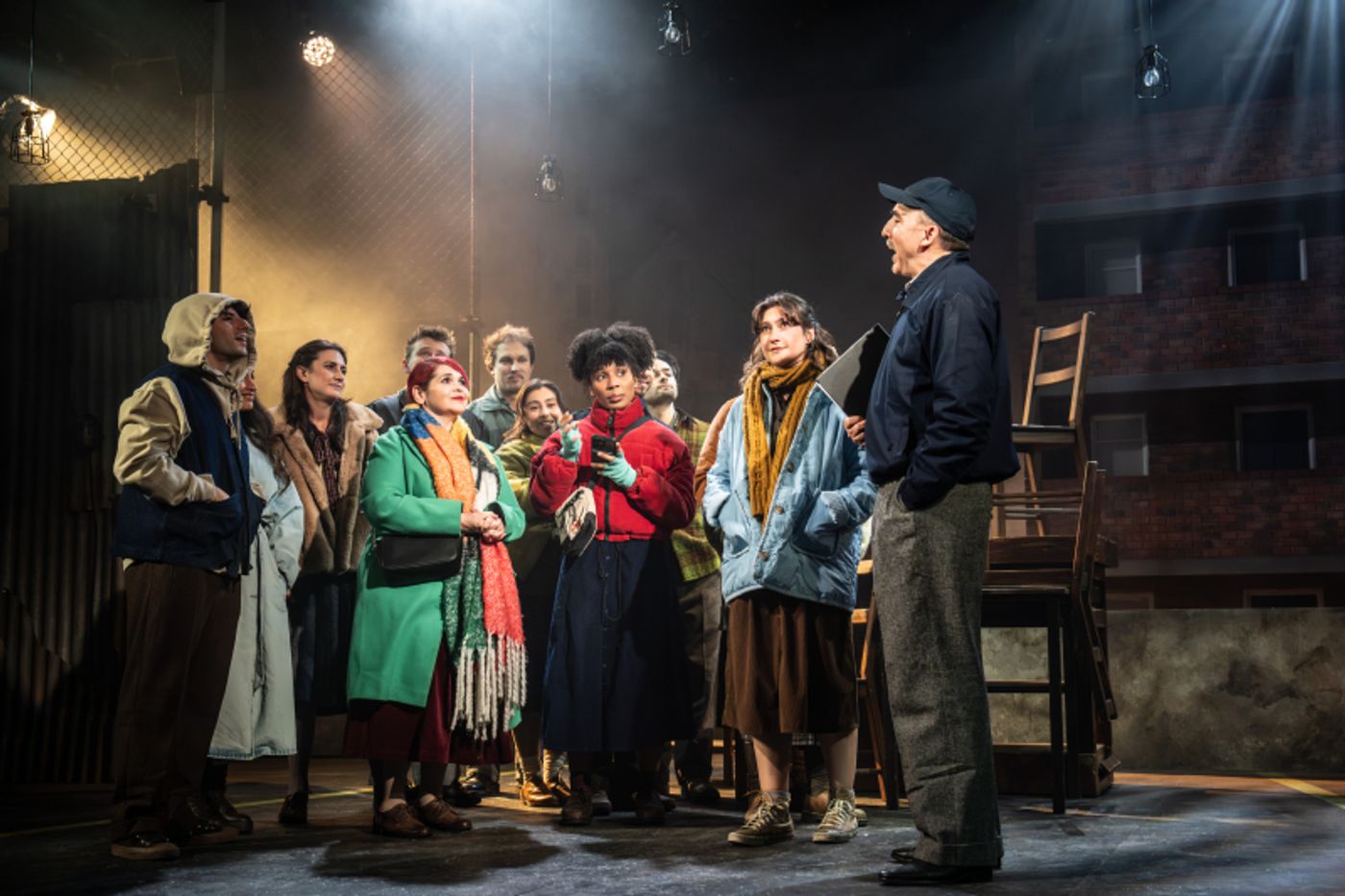
Gilvin and Kanefsky frame their core story within the pretext of a walking tour of East London. Oonagh, an American on holiday to discover her mother’s roots, joins Steven’s group. As he tells the tourists about the events that led to the Battle of Cable Street, the company shed their modern-day clothes and go back in time, where we meet Sonny, Mairead, and Ron. The formula is tried and tested, but it works.
Sonically, we see a strong mix of contemporary pop influenced by folk, Irish trad, and R&B – the aural representation of the street’s multicultural background. The score is exciting and engaging as it twists to adapt its genre slightly with each character. We say subtly, but the composers decide to give Sonny a distinctly rap track. The music instantly and drastically swerves whenever he takes over, even when the change is a little too strident to be a comfortable transition.
Invigorating choral numbers and passionate solos build an accomplished piece of theatre. Thumping odes to progress (“What Next”) sit side by side with reminders that hatred and violence are just around the corner (“BUF Anthem”, “Let Me In”). Surprisingly, there are a good number of comic songs among the more profound, stirring calls to arms and moving ballads. Comedy regularly breaks the tension, but successfully remains in service of the plot: the paper boys who invade the scene mocking their respective broadsheets make for a funny interlude, yet still provide historical facts from the eye of public opinion.
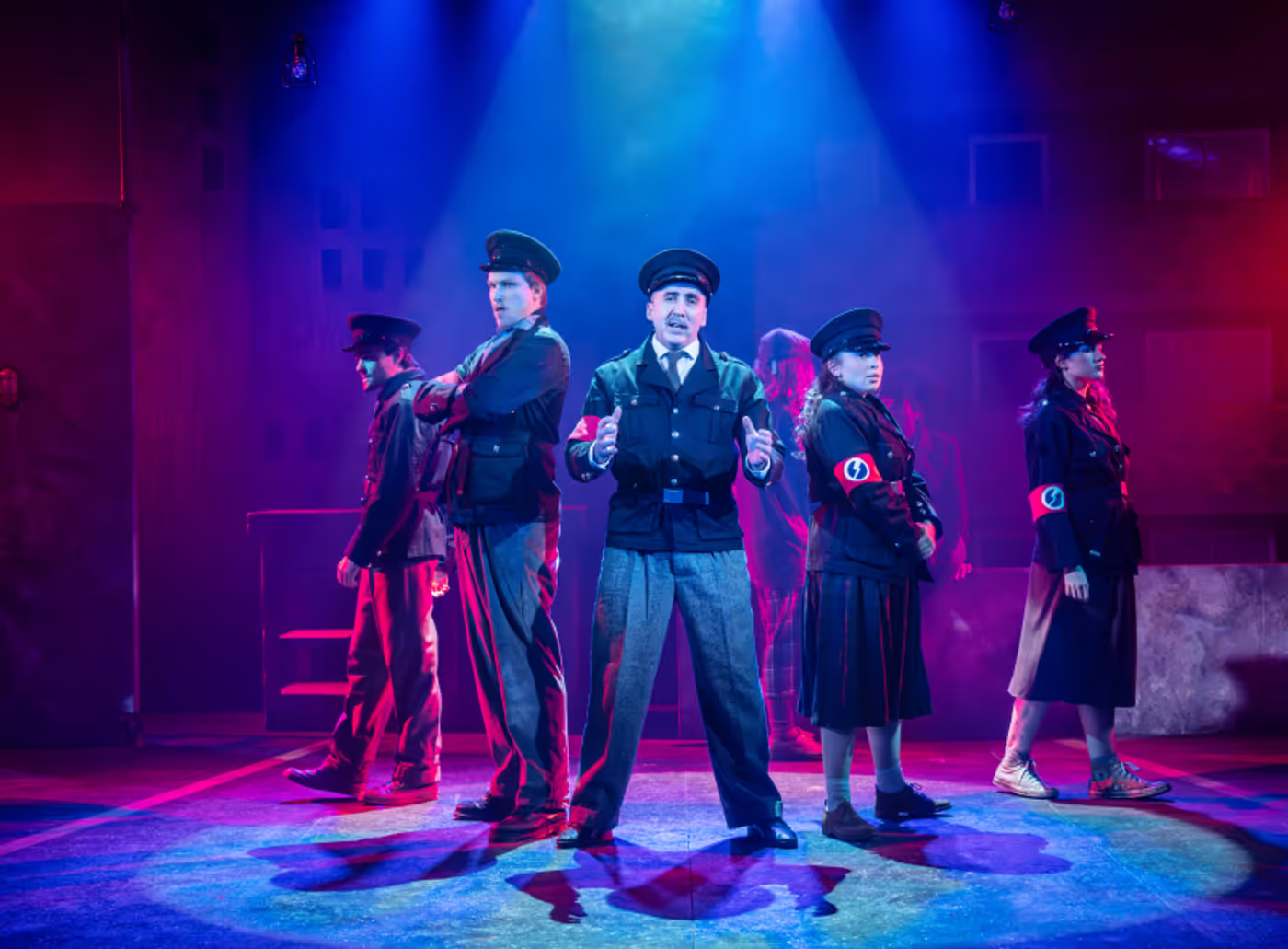
Adam Lenson’s direction is smooth and taut, often intersecting multiple contexts that blend together visually but remain separate dialogically. The performances are remarkable. Standing out from an exquisite cohort, Jez Unwin handles a collection of eclectic roles who are frequently in harrowing contrast with one another. For instance, after beautifully delivering “Only Words”, an elegiac song where he shares his fears and prays for his son’s safety, he’s handed a black shirt. His swift transformation from worried father to unfeeling brute is simply arresting.
Lizzy-Rose Esin-Kelly (Mairead), Isaac Gryn (Sammy), and Barney Wilkinson (Ron) weave the trio of protagonists, navigating their characters’ difficulties with confidence. Mairead and Sammy confront different hardships than Ron, a young boy from the North who moved to London with his mum to try to find work. As an Irish immigrant and a British Jew respectively, their lives are outlined by a precarious balance. Charismatic and easygoing, Sammy goes as far as changing his name and hiding his Jewishness to get a job.
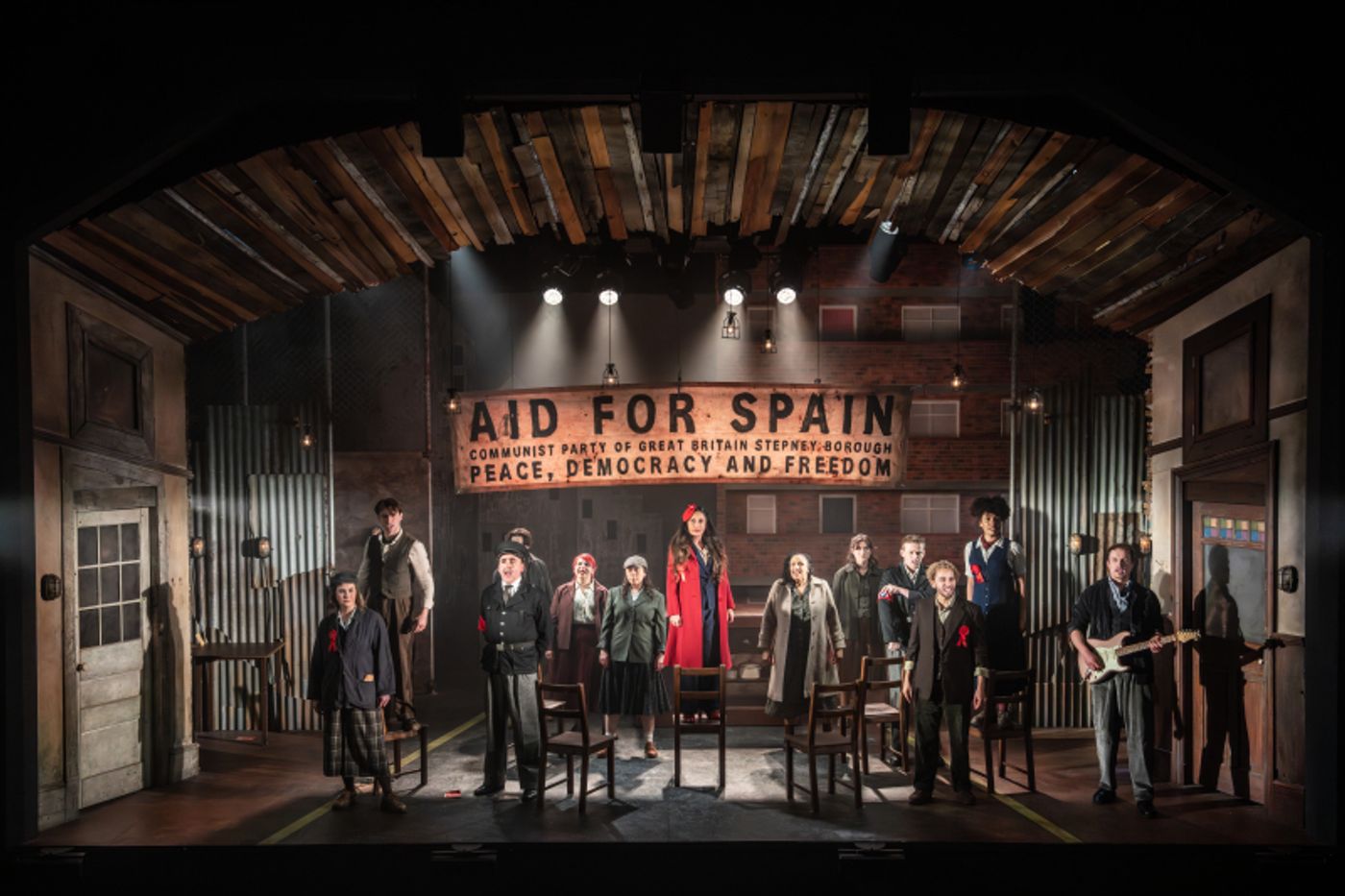
Ron, on the other hand, is the perfect example of how slippery the alt-right pipeline is. The BUF (as the contemporary right wing does too) preys on his desperation, offering false hope and scapegoats to stoke the fires of social discontent. They share the same angst and unease at home. Their families, unable to keep up with the continuous rent increases due to precarity and unemployment, all face eviction.
The realities of mid-30s Britain are all reflected on stage: the aftermath of the Great War (Ron’s own father lost his life at the Somme) and the following economic crisis have left the nation depleted and hungry. The score tackles the subject matter from a personal point of view, associating these various concerns with specific facets of the characters’ existence (Sammy’s father stresses that their presence in the country can be contested at any moment; Ron’s mother recollects the wartime struggles).
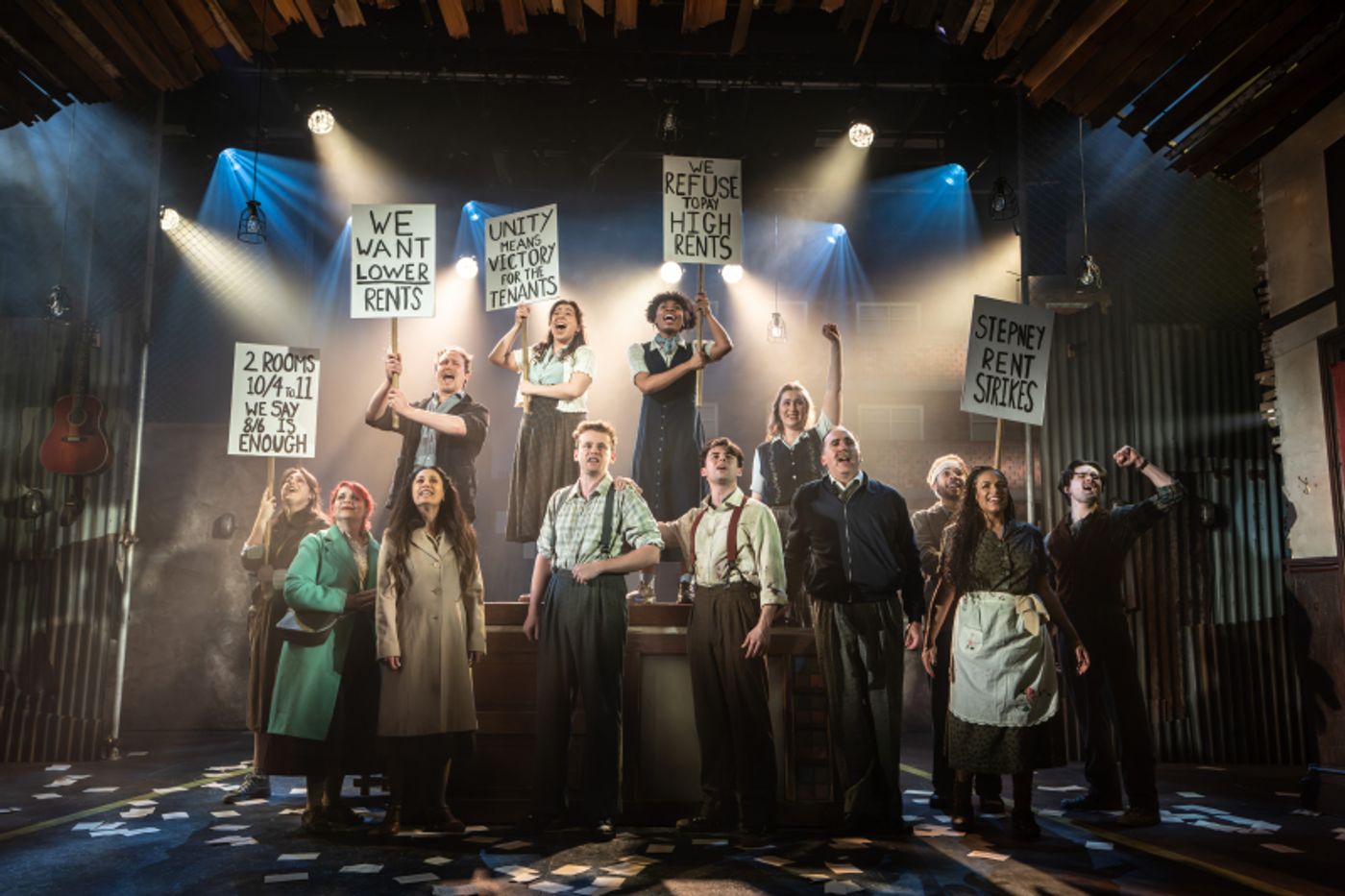
Cable Street is an inspiring and inspired musical. Educating and entertaining, it’s a celebration of cultural collaboration, a reminder that what we’re living now has happened before and it will likely happen again if we don’t act quickly. This production happens at a time when the evidence of the rise of the far right is streaming live on our screens. As violence unfolds, we are reminded of the words of Holocaust survivor Karl Stojka: “It was not Hitler who arrested me, nor Göring, nor Goebbels. I was arrested by the janitor, the grocer, the milkman, the tobacconist. They were handed SS uniforms, SA armbands, and suddenly they were gods.”
Cable Street runs at Marylebone Theatre until 28 February.
Photo Credits: Johan Persson