Interview: Daphne Rubin-Vega on Her 'Profound' Shakespeare in the Park Debut in TWELFTH NIGHT
Great Performances: Twelfth Night premieres Friday, November 14 at 9/8c on PBS.
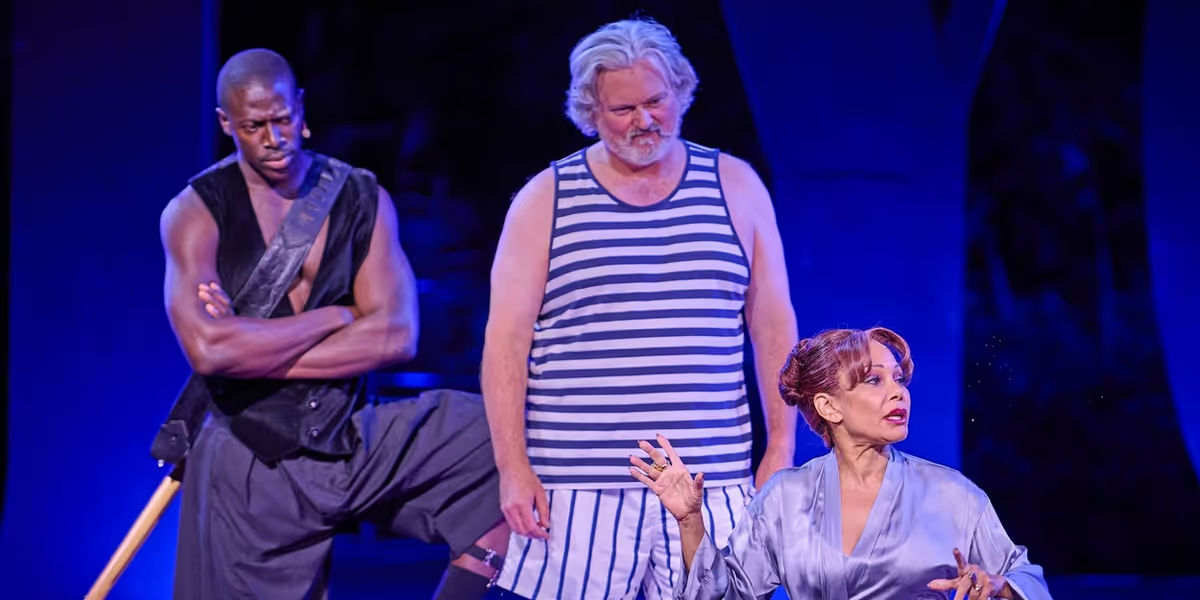
For Daphne Rubin-Vega, starring in Twelfth Night at the Delacorte Theatre was akin to a religious experience. "It's nothing short of sacred," the Tony nominee said of performing in the iconic venue. As an outdoor amphitheater, the space is completely exposed to forces of nature, including wind and rain. The latter is exactly what happened during the first performance with an audience.
"It's challenging to pretend it's not there. So [the] truth is to incorporate it... Just working with the element of nature... working in spite of it is another thing, and that incorporates a bit of recognition that there's respect for the elements."
Rubin-Vega played Maria in the production, the witty housemaid to Sandra Oh's obsessive Olivia. The all-star cast also included Lupita Nyong’o, Junior Nyong’o, Peter Dinklage, and Jesse Tyler Ferguson.
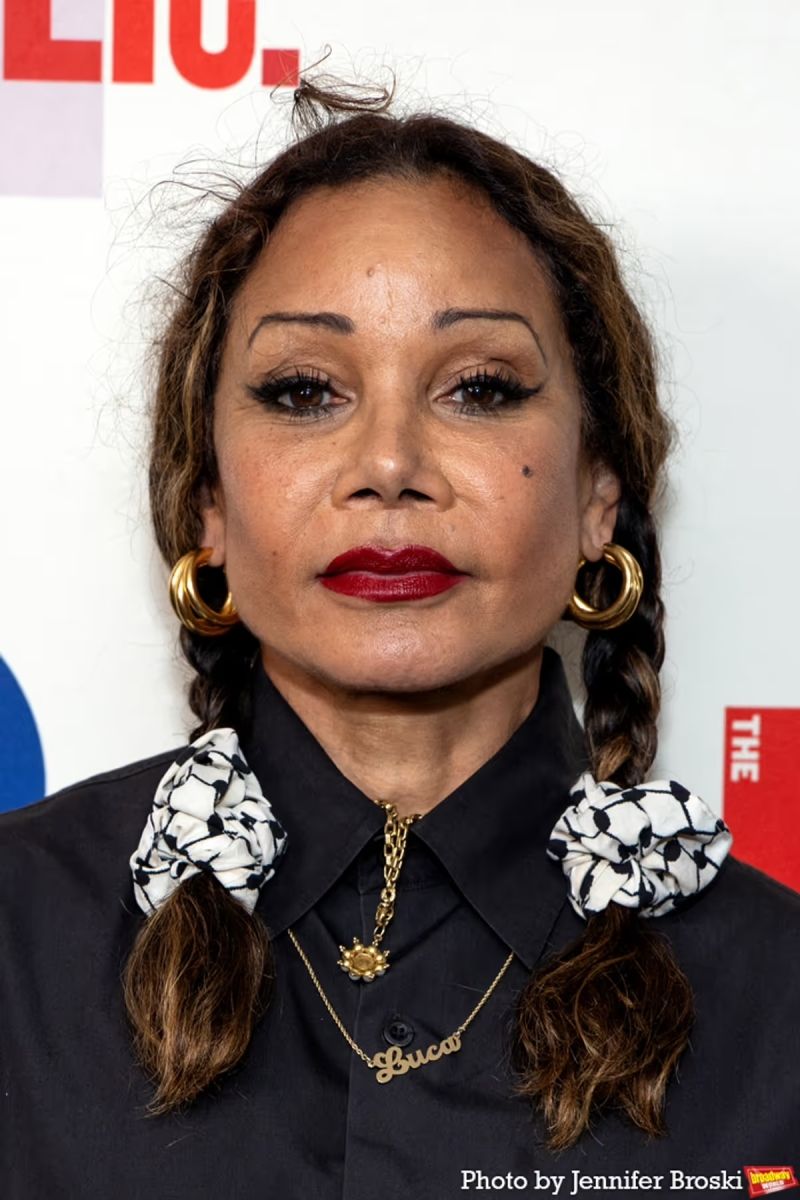
The production served as the official reopening show of the longtime home to Shakespeare in the Park, now revitalized and updated.
During the run, the show was recorded by Great Performances, continuing a tradition of bringing Free Shakespeare in the Park productions to the arts channel.
Ahead of the PBS airing, we caught up with the performer, who made her Shakespeare in the Park debut in the production, and spoke about her experience in the show, working with director Saheem Ali, and her relationship with the work of Shakespeare. Great Performances: Twelfth Night premieres this Friday, November 14 at 9/8c on PBS.
This interview has been condensed for clarity and length.
I know this was your first time doing Shakespeare in the Park. How did the experience differ from your expectations? Was there anything that surprised you along the way, or once you got in front of an audience in the newly restored space?
[Doing] the tech in the heat was grueling/awesome. But once we got on that stage, it was like a baptism. The invited dress, of course, was the first time we really locked it in, or, rather, attempted to lock it in. It was overcast and it rained and we had to stop. But it truly was an experience of being galvanized by nature, the water, the rain. For the theater to be the park and for nature to be the encasement of theater was a really spectacular thing. I wasn't really thinking about how profound that would be. It's nothing short of sacred.
What was it like collaborating with Saheem Ali on this production? What kind of atmosphere did he create in the rehearsal room?
Saheem has an infectious laugh. He brings it into the space, and so there is always a very palpable presence of joy, I think, that he establishes in the space. So that was a refreshing anchor to have. My first time working with Sheem, I felt that he was very reliant. I think he trusted that I was a good actor, and so he let me find things, and at certain places [would] help me to recalculate a course.
Do you like to look at other actors' interpretations of a character like Maria, or do you try to build your version of the character with the script, the director, and the vision of that particular production?
Yes, to all of the above. I saw Imelda Staunton's performance. I don't ever try to emulate another actor. That's not all at all. I find it refreshing to see somebody else's take because it's never really what I would think or do and so it's always good to have that meter. I really use the text and the relationships that I'm having in the cast. I created a Maria based on who she was in this world and her relationships with the different agents in the show: her relationship with Toby, her relationship with Malvolio and Olivia and Andrew and the ladies in waiting. It was fun to just play around with different possibilities of what my relationship is with Feste. Sometimes it was a lot naughtier than others, so that was interesting. I think that Maria got more solid the more I felt marinated. I mean, I always use the word "marinated." In theater, you marinate and it's [that idea of] sitting well with the other substances.
But then it's really a rocket ship taking off. Once you've taken off, you have to let all that stuff go. Nothing matters but my relationship with you on this stage right now and what you're saying and how it's impacting me and looking into your eyes and assessing your behavior. It was truly, I call it a unicorn of an experience. It was like all those tropes of a sand mandala in the wind. It's like when you do this kind of theater, it is beautiful and perfect and sacred. Or imperfect, of course.
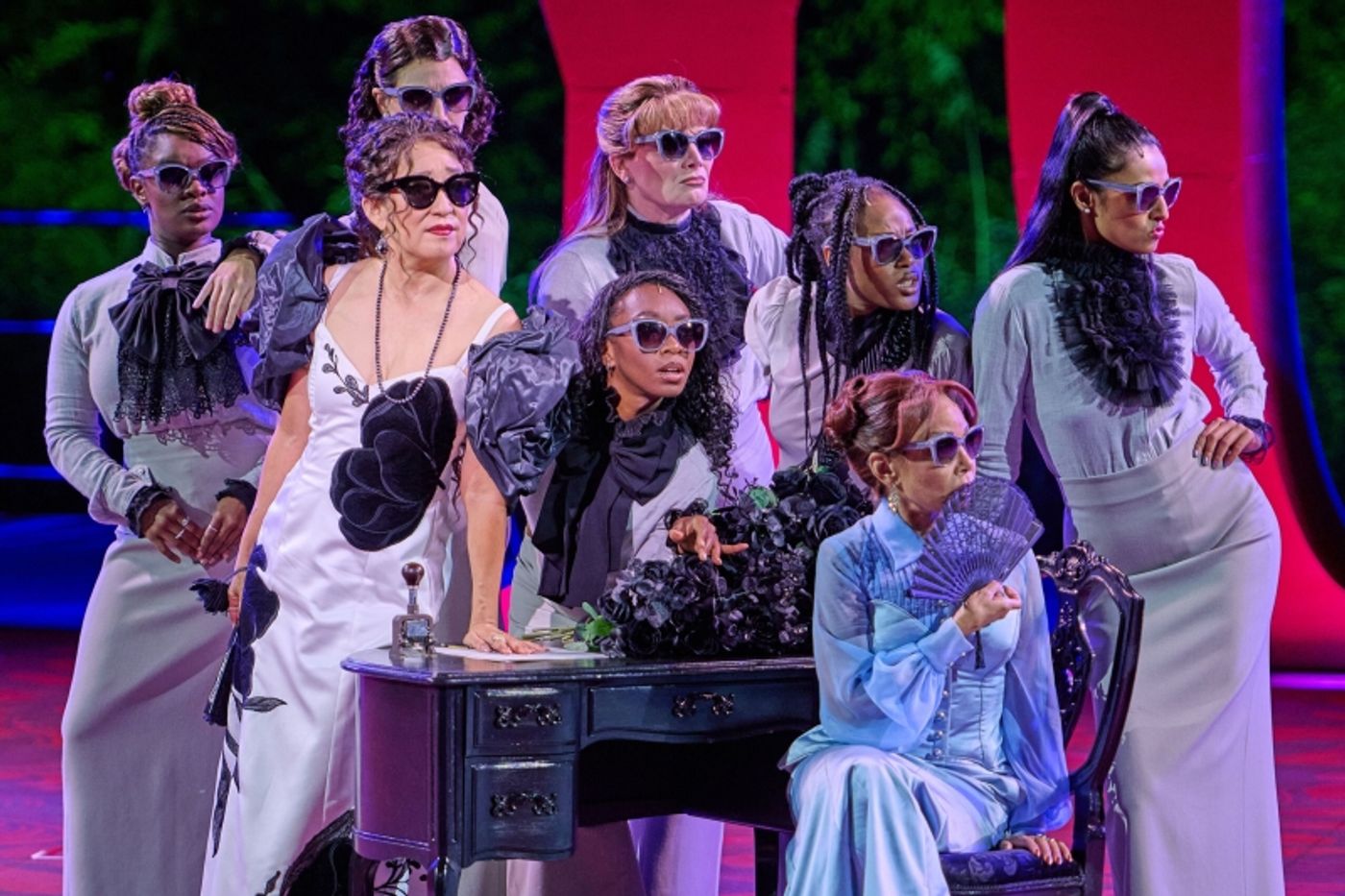
When you are performing in a stage production that is being filmed, how does it affect your performance? Do you find yourself aware of the cameras?
There's an absolute awareness [but] it's not forefront in my mind. I make a point of moving it over, like phlegm on the vocal chords. I'm not a novice at being recorded, so the beautiful thing about theater for me is that I can get to do it again and try different things. I think that I tried to just let it go and not be too much. There was a moment when there was a drone about; other than that, I was not aware of the cameras. Doing the show, there were moments where I'd pass by the video village, and so I'd sneak peeks at what was happening prior, and it would just remind me that we're being filmed and to trust it. I think that by the time we filmed it, it was like, "I think I know what I'm doing. I'm having a hell of a great time, and it looks like the people who are shooting it know what they're doing because it looks beautiful. It looks good." The one thing that I made a point of was making sure I didn't have ice packs on my knee during the filming. I knew it would stick out with that.
This PBS broadcast may be the first time some audiences are encountering the work of Shakespeare. Can you share a formative Shakespeare experience you have had, not as a performer, but as an audience member?
The comedic one is being a kid and my mom taking me to Shakespeare in the Park and I don't remember what I saw because I had to go to the bathroom so bad. I'll never, ever, ever forget that Shakespeare. I have to be honest, my experience and love of the Bard has been in older age as a full adult. I think as a young person, it felt like Shakespeare was very rarefied. It was very niche and distinguished, and it held a certain rarefied air that was not attainable. I could play at it, but it had to be done a certain kind of way and interpreted very precisely, and so it wasn't speaking to me. But in my older age, discovering it and seeing different interpretations of Richard II and Richard III, and [wondering] who would I be if I were Gertrude or Tamora? He doesn't pull any punches, and he's baudy AF. He's a topper, and brilliant. Just so multilayered.
I noticed learning the King James version of the Bible, which is something that my mother's side of the family was familiar with, being Barbadian and West Indian; there's something about the way they speak that made Shakespeare accessible. That florid language is something that is actually very common in the West Indies. There are just different levers in my head that get activated when I give them permission to play in the playground of Shakespeare. It's really amazing.
Watch a clip from the PBS broadcast below:
Photo Credit: Joseph Sinnott