


Review: Jarrett Winters Morley's History of THE GREAT COMET Strikes at 54 Below
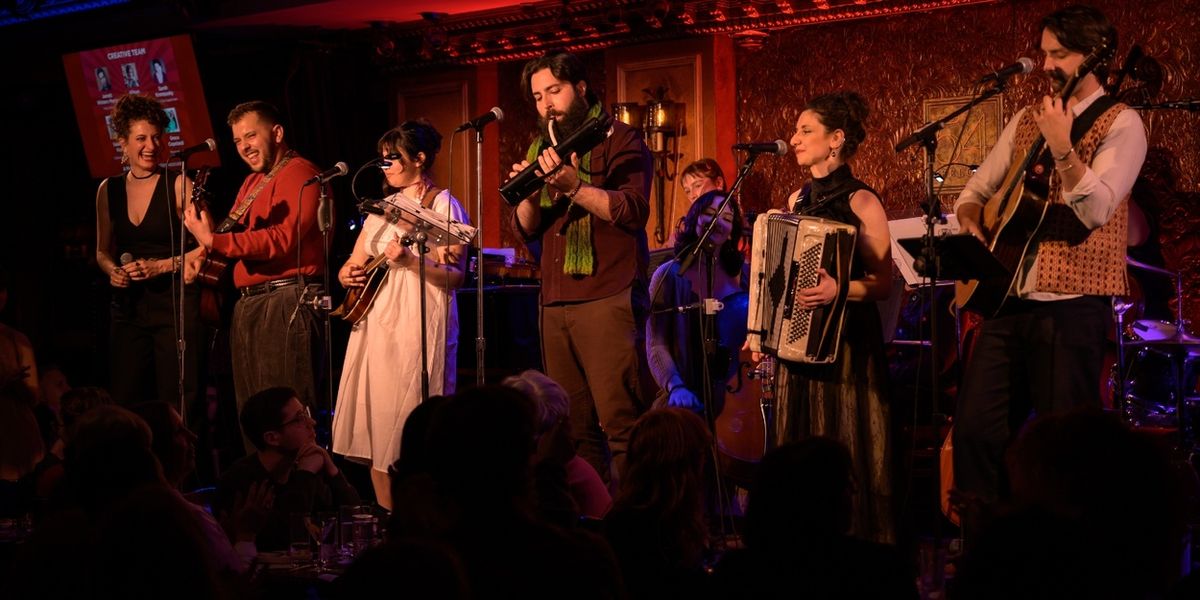
For a brief evening beneath Broadway, the comet burned close enough to touch in the 1/23 concert, THE HISTORY OF NATASHA, PIERRE & THE GREAT COMET OF 1812
I have a confession to make.
I am one of the very few devoted musical theatre enthusiasts who somehow missed Natasha, Pierre & The Great Comet of 1812 during its Broadway run, a production widely hailed as both a critical triumph and an artistic outlier. A small regret, certainly. Yet that absence proved unexpectedly fortuitous, allowing me to encounter this singular work for the first time through a very different lens. Or, more accurately, through a Lekolite.
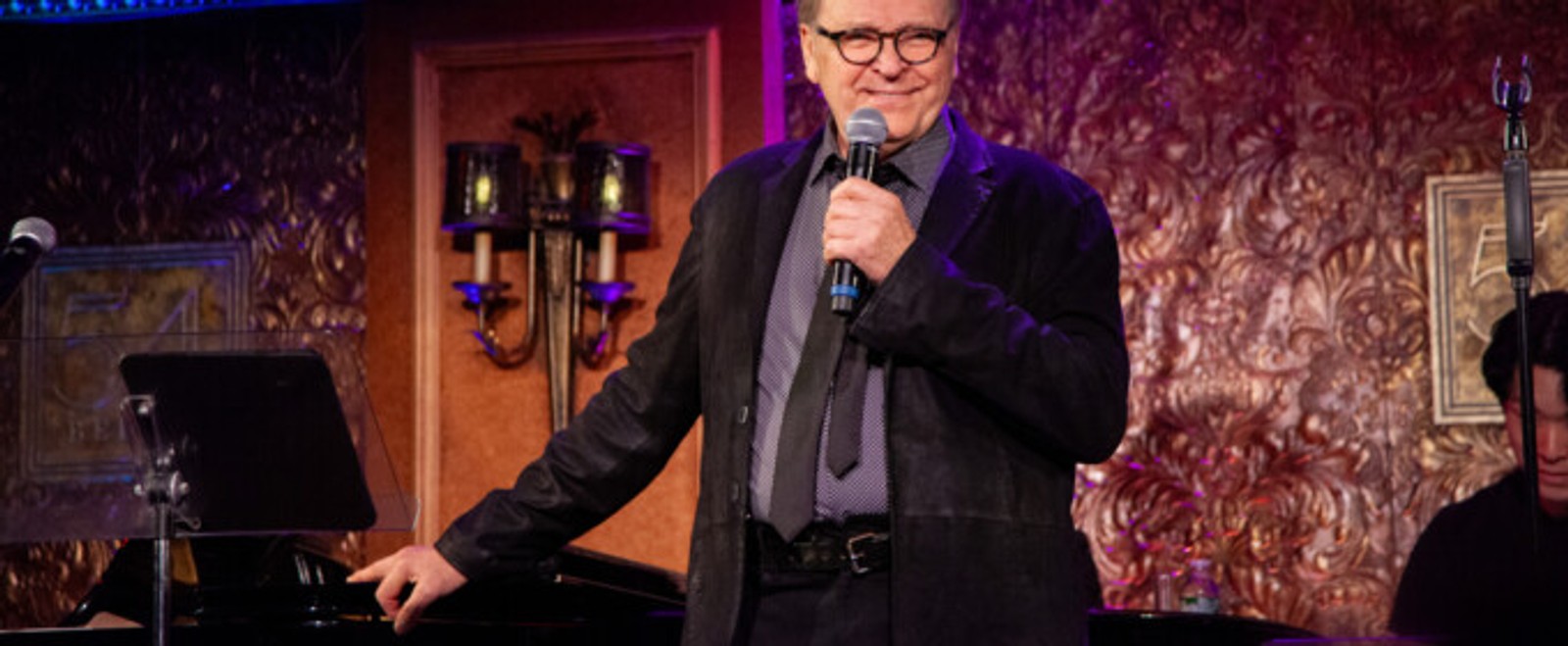
The setting could not have been more apt. 54 Below, Broadway’s subterranean salon, remains one of the city’s most evocative performance spaces. Brick-lined, warmly lit, and deliberately intimate, it fosters a sense of proximity that feels less like observation than participation. Storytelling there acquires a confidential tone, as though the performers are speaking not to a room but to individuals. For a work as immersive, eccentric, and emotionally transparent as Great Comet, the venue proved an ideal partner.
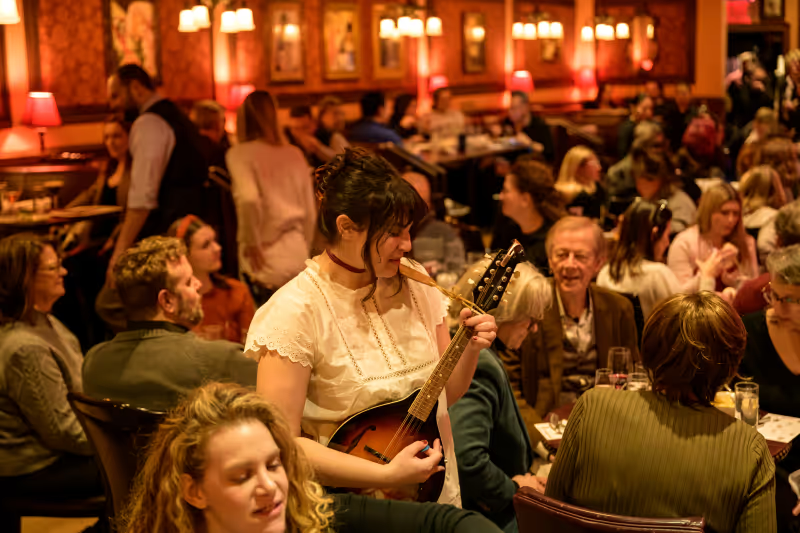
This concert presentation titled The History of Natasha, Pierre and The Great Comet of 1812 was guided by a narrator, Jarrett Winters Morley, himself a gifted singer and a generous host. He traced the show’s improbable journey from an audacious idea drawn from roughly seventy pages of War and Peace, through workshops and Off-Broadway incarnations, to A.R.T. in Cambridge and ultimately to Broadway. One cannot help but admire the creative nerve of Dave Malloy and his collaborators. Adapting Tolstoy is an act of ambition. Doing so with this level of musical invention and narrative coherence borders on the reckless. Remarkably, it succeeds.
What distinguished the evening was the intelligence with which narration and music were interlaced. Songs were not merely excerpts but extensions of the story being told, illuminating the evolution of the piece while simultaneously advancing its emotional logic. Rather than a lecture punctuated by musical numbers, the evening unfolded as a coherent theatrical argument about how art is shaped, refined, and ultimately released.
Sung-through and stylistically adventurous, Great Comet features one of the most distinctive scores to reach the musical theatre in recent memory. Its musical language draws freely from Russian folk and gypsy traditions, electronic textures, classical forms, indie rock, and ritualistic chant, fused with remarkable assurance. The prologue alone, a raucous, communal invocation I liken to a Russian gypsy “Twelve Days of Christmas,” earned its keep immediately, establishing tone, rhythm, and invitation before one had time to settle fully into the evening.
The performers at Friday night’s 7 pm performance were uniformly accomplished. Though I have no Broadway production for comparison, it was easy to imagine each of them stepping seamlessly into their roles in a full scale production.
For those less familiar, Natasha, Pierre & The Great Comet of 1812 distills a portion of War and Peace, focusing on Natasha Rostova, newly engaged and dangerously susceptible to romantic illusion; Anatole, charming and corrosive; and Pierre Bezukhov, an introspective observer searching for moral footing. It is a story concerned with longing, misjudgment, and the possibility, however tentative, of grace.
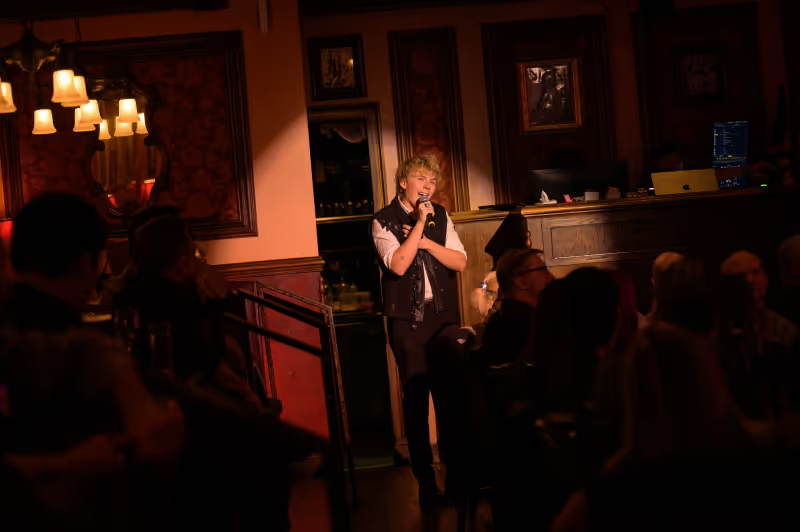
As ever, 54 Below offered its trademark closeness. If there was room for improvement, it lay in technical execution. Lighting was occasionally imprecise, leaving performers in shadow for entire numbers, and the sound mix at times obscured lyrics that deserve clarity. These are modest shortcomings within an otherwise richly satisfying evening, and they do little to diminish the venue’s standing as one of Manhattan’s most cherished performance rooms.
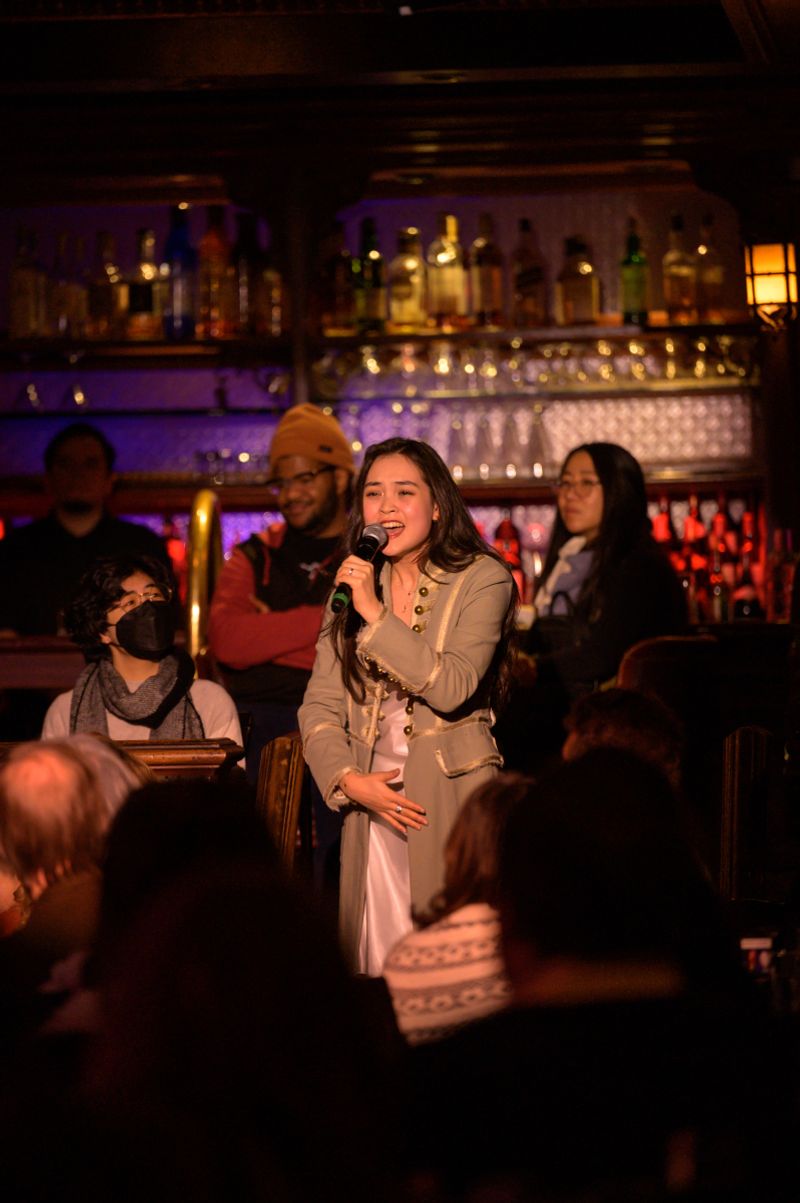
My tablemates, a couple from Yonkers and devoted admirers of the original stage production, responded with unqualified enthusiasm, which felt like its own quiet validation. The stage itself was notably crowded, with approximately twelve performers sharing the limited space. Given the venue, this is no small undertaking. Some performers worked from within the audience, a choice that promises intimacy but occasionally faltered due to sightline and lighting constraints. Greater mobility through the room might have allowed their presence to register more fully.
The orchestra, a compact ensemble of nine musicians, including cast members doubling on instruments, handled what must be a formidable score with confidence and color. The reduced forces never felt diminished. Particular recognition belongs to Lindsay Zaroogian, whose accordion anchored the sound with appropriate flair, while her performance as Marya revealed a voice of breadth, character, and fearless expressivity. Credit is also due to Jacob Rose for his thoughtful and effective electronic music adaptation.
While the strength of the evening lay in its ensemble spirit, one other performance warrants special mention. Casey Martin Klein, taking on the role of Pierre, navigated the part with assurance and emotional clarity. Without invoking comparisons unnecessarily, he brought a warmth reminiscent of the role’s Broadway originator while offering something distinctly his own. His instrument revealed surprising flexibility and precise tone, and his unaffected sincerity anchored the evening.
Among the musical high points were a deeply felt “Dust and Ashes,” delivered with restraint and emotional intelligence, and the ingeniously constructed “Letters,” a sequence that remains a small marvel of musical dramaturgy.
This Great Comet concert was limited to a single performance at 54 Below. Should the opportunity arise to encounter it elsewhere, it is well worth seizing. Some theatrical experiences dazzle through scale. Others reward attention. This one manages both, and for a brief evening beneath Broadway, the comet burned close enough to touch.
Photo credit: Grace Copeland Photography
Learn more about Jarrett Winters Morley's other work and upcoming shows at www.jarrettwintersmorley.com
Find more upcoming shows at 54 Below on their website here

Sign up for all the news on the Fall season, discounts & more...
|
Jensen Freeman: Neon Nights Laurie Beechman Theatre (9/26-9/26) |

|
The Beat Goes On Don't Tell Mama (10/08-10/08) |
|
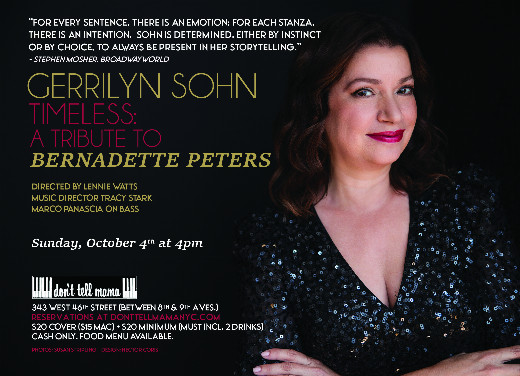
Timeless: A Tribute to Bernadette Peters Don't Tell Mama (10/04-10/04) |
|
The Bowery Boys: Ghost Stories of Old New York Joe's Pub at The Public Theater (10/31-10/31) |

|
Kate Douglas Joe's Pub at The Public Theater (10/05-10/05) |
|
Marilyn Maye 54 Below (11/25-11/25) |
|
Murray Hill: Showbiz! Joe's Pub at The Public Theater (11/21-11/21) |
|
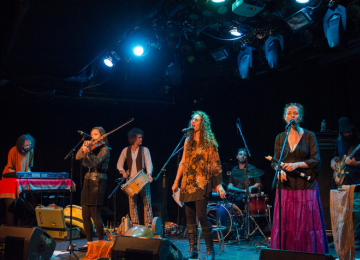
Pharaoh's Daughter Joe's Pub at The Public Theater (11/08-11/08) |
|
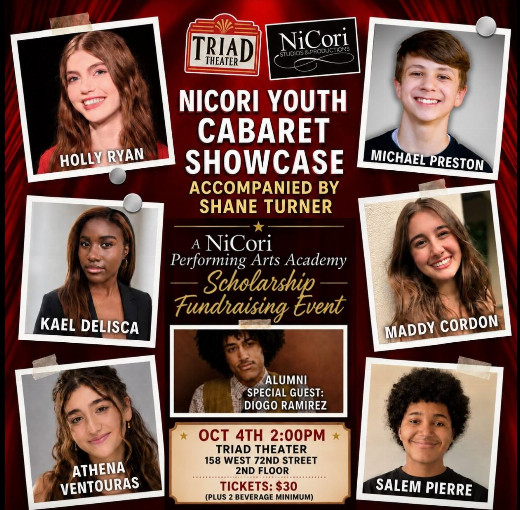
NiCori Youth Cabaret Showcase - A NiCori Performing Arts Academy Scholarship Fundraising Event Triad Theater (10/04-10/04) |
|
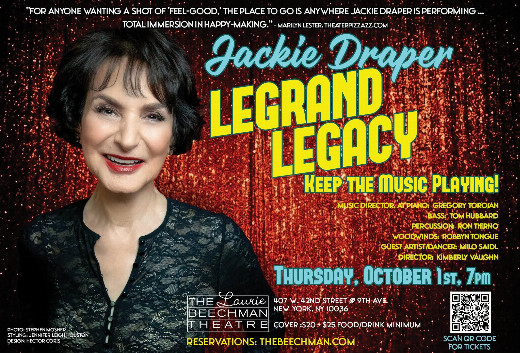
Jackie Draper: Legrand Legacy – Keep the Music Playing! Laurie Beechman Theatre (10/01-10/01) PHOTOS |

Reader Reviews
To post a comment, you must register and login.