

Interview: Jane Don't on the Key to Winning the Rusical on RUPAUL'S DRAG RACE
New episodes of RuPaul's Drag Race air Fridays at 8 p.m. ET/PT on MTV.
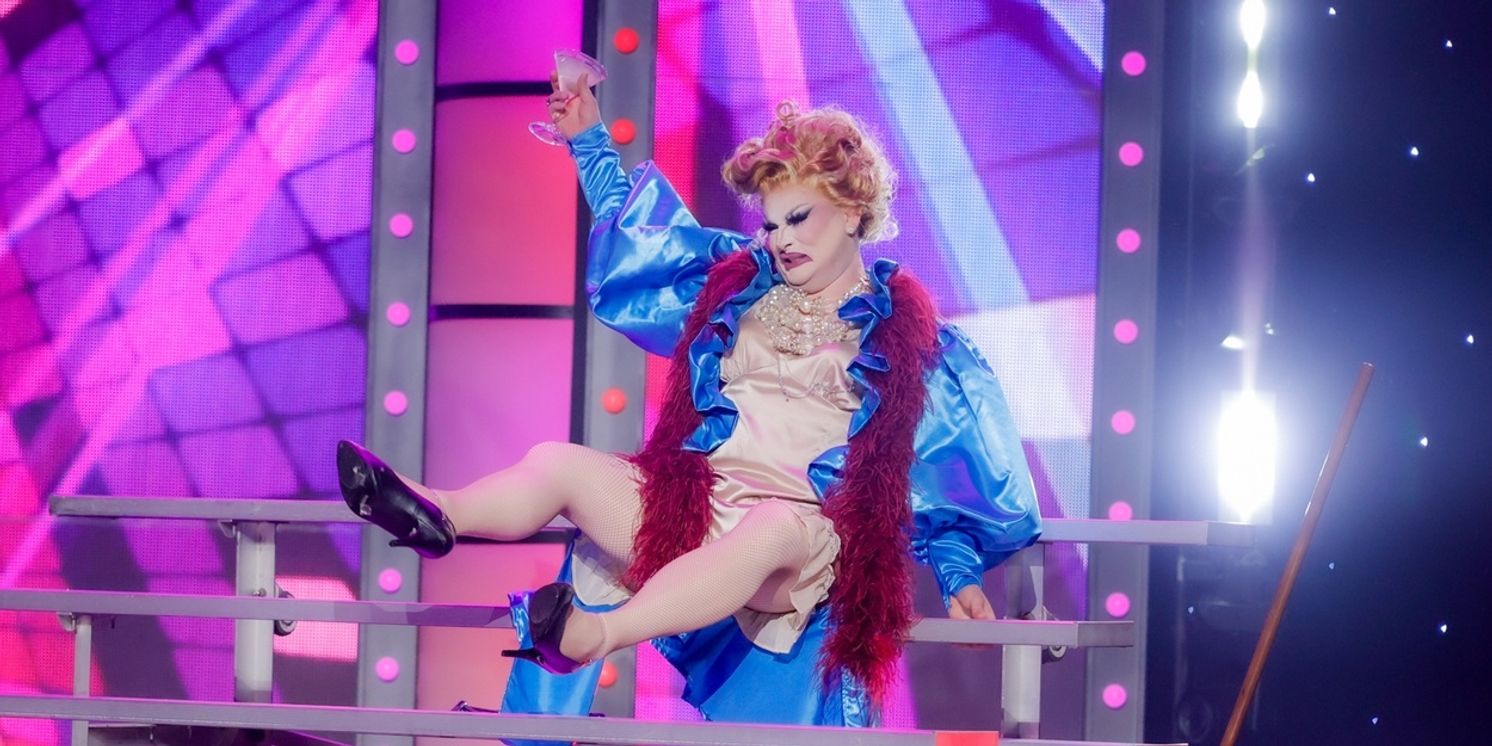
Last Friday's episode of RuPaul's Drag Race featured one of the hardest challenges of the season: the Rusical. A make-or-break moment for many contestants, this year's Rusical was based on Annie, infusing ballroom culture with the classic musical to create Fannie.
Jane Don't, the Seattle-based Queen with a background in musical theatre, was the winner of this year's challenge. Taking on the show-stopping role of "Miss Shenanigans" – a send up to Annie's 'Miss Hannigan – Jane Don't clutched her second win of the season.
BroadwayWorld caught up with Jane Don't discuss what she thinks is the key to winning the Rusical, along with her upbringing in performing, falling out of love with theatre, and where she hopes her theatrical career leads her in the future.
It's mentioned in the episode that you have musical theater training. What was your introduction and upbringing in theatre?
My middle school used to do musical theater productions, I think one every year. I went to a Catholic school, but I think my music teacher was gay, which is sort of, think if you're going to go to Catholic school, at least have a secret gay music teacher.
I think my first show was either Annie, or maybe I was 'Winthrop' in the Music Man. Going even further back, my love of musical theater really stems from my grandma. My grandma was a tap dancer. She wasn't like a singer, but she was a very intense like tapper for a lot of her life. So she was doing musical theater chorus stuff when she was younger. Growing up, she lived close to us. So growing up, she would babysit me a lot and we would watch all of the MGM movie musicals. We watched Singin' in the Rain and The Sound of Music, The King and I, Grease. So I loved all of those.
I feel like it was just sort of present in my life from a really early age. It was pretty clear from an early age that I was very attracted to it. When I got a little bit older, I started doing like local kind of children's theater. Shout out to Spokane Children's Theater. I ended Spokane Civic Theater. I did shows there and I took classes there. I was taking like improv intensive in like seventh and eighth grade. You can tell I was wildly popular. I was clearly the coolest kid in seventh and eighth grade going to my improv class.
For a long time, my goal was to do really intense theater. I was reading Laurence Olivier's Letter to a Young Actor, and I was like, "I'm gonna go to the Yale Drama School and work for a repertory theater." I was doing Shakespeare. I was like, "Musical theater's kind of corny." I actually went to college for opera performance.
Where did you go?
I went to a school here in Washington called Pacific Lutheran University. They have a really, really great voice program. Sorry, because I started taking voice lessons when I was in high school because of theater stuff. As I got older, I wanted to be like serious about this. I want to go do opera performance. Then I got there and I did that for a few years and I was like, "This is way too serious." I just did not fit in like at all.
I ended up, by the end, sort of switching to like a more of a musical theater concentration. I guess it was sort of a convoluted path. I've always been in theater and I've always been really, really musical. I think those two things have kind of woven and braided themselves in different ways throughout my life.
Was pursuing drag a response to realizing you didn't want to take yourself as seriously? Or was that just a different factor that had come in separately?
I think it was a response. I was in college I was in a pretty intense kind of conservatory environment. It's not a conservatory but the program was modeled on the conservatory system so it's very, very intense. I would get out of voice lessons and then go and do three hour rehearsals for whatever show we were doing. I took harp for three years because I was kind of bored. Just to add something.
It just got to a point where I felt really, really kind of burned out. Then as I was moving into my junior and senior year, when you're sort of getting ready to go into the real world. I was going on professional auditions to start transitioning out of college and figure out these next things. I would go and do these professional auditions. I was getting callbacks. I was doing reasonably well.
But I hate auditioning. I'm not good at auditioning. Again, it was so serious. Everything was so serious and felt so high stakes and stopped feeling fun. When I graduated, I stopped performing for I think five or six years. I didn't think I was good enough. I felt like I was always getting pigeonholed into comedy roles. I was always too fat or too gay or whatever. It just didn't feel fun anymore. I think drag was my way of trying to reclaim this sort of love performing that I had in a way that felt like it was like on my terms.
Getting into this week's episode, the Rusical is such a pillar in each season. I think it can kind of make or break it for everyone. In your opinion, what is the key to succeeding and winning at the Rusical in RuPaul's Drag Race?
Yeah, I mean to your point, shout out to the Drag Race team because obviously this can't make it to camera but they really go all out for the Rusical. I think it was the hardest thing that any of us did while we were there, in my opinion. It's intense and it's multidisciplinary. You're recording vocals, there's choreo, you're working with Jamal [Sims], you know, and we were doing a lot of runs of that show and long, long days. So shout out to production, you can tell like at this point, they know it is a pillar of the franchise that this is a major, major point and they really treat it like that. I had a ton of fun doing it.
As for the key, I've been thinking about this a lot the past few days, actually. I think the key is very simple: make choices. I feel like that's such an acting school answer, but I really think that's like what it boils down to. I think it helps if you can sing. [Myki Meeks] and I are very, very close in the whole thing. Myki's voice is beautiful. It helps if you have a gorgeous voice. It helps if you have some training. I just fundamentally think it's about making strong choices. They're giving you a role. They're giving you the dialogue.
The thing that I think separates the people who struggle versus the people who thrive are is just how willing they are to make choices and fill out the character. I think that's what a lot of [Juicy Love Dion]'s critiques were this week, that they just didn't feel like there was a point of view or a characterization.
There were so many pieces of that of my part in that in the Rusical. There were just things that I just pitched to Jamal. I was like, "Jamal, I'm just going to do this shot where I was crawling off stage in front of Myki and Darlene [Mitchell]. I was just like, "I'm going to do the... Jamal had sort of given me my flight pattern or whatever. He was like, you're going to end here and do this kind of crunchy split. And then I was like, "Okay, cool." And he was like, "Then you'll get up and just leave the stage or whatever." I was like, "I think it's funnier if I just crawl because it was a long way. It's funnier if I just crawl the entire way."
Things like that, even when you're not getting direction, making choices. Being present, trying to make moments in as many places as you can. I think that's really what it's about.
Right now in theater, we're seeing Drag Race alums like Jinkx Monsoon and Bob the Drag Queen sell out these Broadway runs. I loved hearing you discuss your relationship on theater. Moving forward, where do you see your relationship with it going? Do you have plans to pursue theatre in the future?
Oh my God, yeah. I think it's always kind of been my long-term goal. To move back into like more of a theatrical space. I'm like so blown away and overwhelmed by the fact that there are now finally, it seems like, there's like a space for like drag artists, but also just like really visibly queer people in theater and on Broadway, like Alex Newell in Shucked, too. I'm so happy that we're finally getting to see that like there is an appetite for this kind of thing. It's not just this like box that we have to check. People want to come see queer people do what they do on stage.
Personally, yeah. I would love to move into – if there are any casting directors out there, would love to meet with you. I think for me, I'm always sort of interested in the kind of cabaret world. One of my favorite shows of all time is Elaine Stritch at Liberty. That kind of one-woman storytelling, blending song and acting and storytelling. Those kinds of things. I would love to move into more of that space. I'd love to move into the like BenDeLaCreme of it all, writing and producing my own work. I think at this point for me, theater is definitely the goal.
Photo Credit: MTV

Videos