

Review: IVAN FISHER AND THE BUDAPEST FESTIVAL ORCHESTRA at Carnegie Hall
The Budapest Festival Orchestra offered a performance of Mahler’s Symphony No. 3 that did not merely impress — it recalibrated expectations.
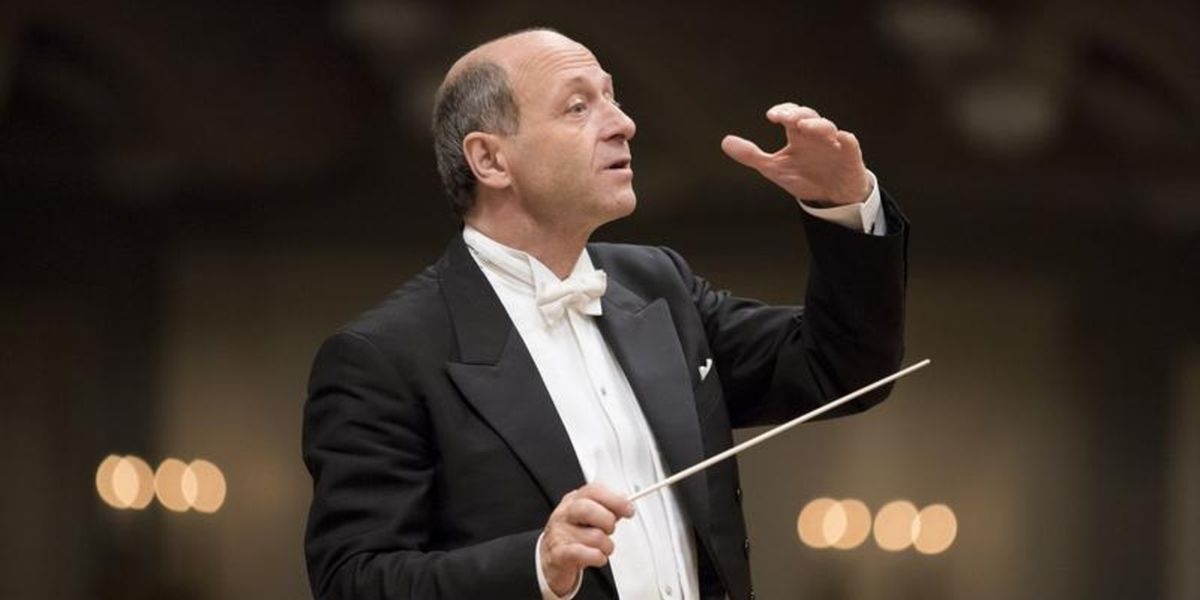
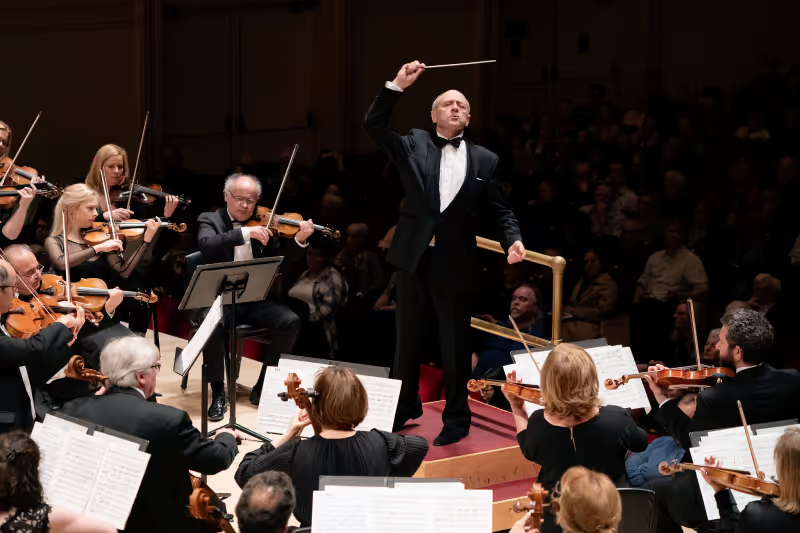
On February 7 at Carnegie Hall, the Budapest Festival Orchestra offered a performance of Mahler’s Symphony No. 3 that did not merely impress — it recalibrated expectations. Under the direction of Ádám Fischer, the vast symphony unfolded not as a monument of orchestral mass, but as a living, breathing ecosystem of sound, shaped with an almost uncanny command of scale and atmosphere. I have heard many Mahler Thirds over the years; this one stood apart immediately. Fischer’s conception was less architectural than elemental — less about spectacle than about awakening.
From the opening movement, the orchestra played with a sense of inevitability rather than force. Instead of the usual emphasis on sheer volume and weight, Fischer drew out an astonishing range of gradations. The famous opening did not bludgeon; it emerged. Climaxes grew organically from within the texture, as if the music were discovering itself in real time. His dynamic control bordered on the supernatural — an other-worldly ability to make massive forces feel intimate.
Most striking was his handling of the horns. Mahler writes heroically for them, and conductors often treat the part as an opportunity for grandeur and blaze. Fischer asked for the opposite: extraordinary softness. The players responded with breathtaking discipline, sustaining pianissimo lines that hovered at the edge of audibility. Anyone who understands brass playing knows how difficult this is — horns naturally bloom, and to restrain them requires both supreme technique and complete trust in the conductor’s concept. In the notably cold environment of Carnegie Hall that evening — hardly ideal for brass stability — the achievement was all the more remarkable. The effect was magical: distant, pastoral, almost metaphysical.
Throughout the middle movements, Fischer avoided caricature. The rustic dances never became vulgar; the animal world never became comic. Instead, each episode felt connected within a single philosophical arc. In the third movement, which Mahler based on “Ablösung im Sommer” — another Wunderhorn song — Fischer let it emerge in a beautifully understated way, carried by ravishingly characterful woodwind playing that floated effortlessly and felt less quoted than remembered.
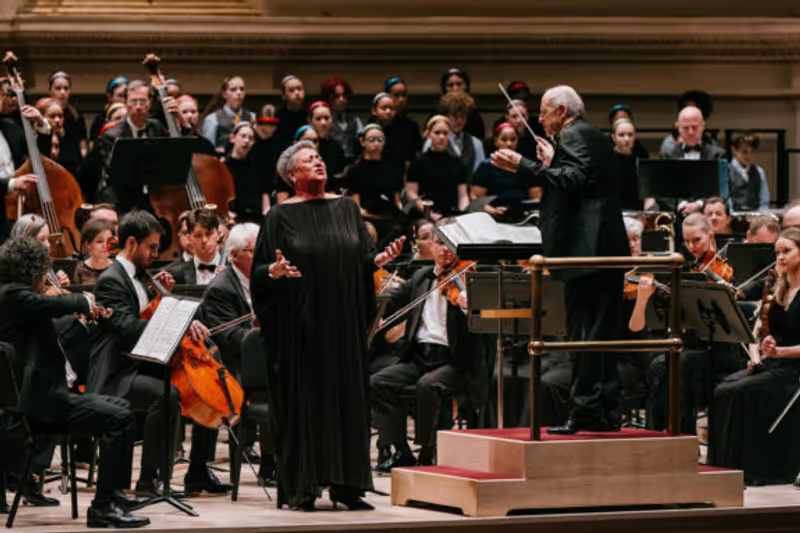
The fourth movement’s mezzo-soprano solo, drawn from the writings of Friedrich Nietzsche and steeped in his dark, inward worldview, was beautifully delivered by Gerhild Romberger. Her tone was grounded and introspective, floating effortlessly above the orchestra’s transparent texture. Fischer allowed the line space to breathe, resisting sentimentality and trusting Mahler’s simplicity.
The fifth movement — Mahler’s setting of “Es sungen drei Engel” from Das Knaben Wunderhorn — brought a sudden, childlike radiance. Unlike many of Mahler’s earlier Wunderhorn songs, this one was conceived specifically as part of the symphony (1893–1896), requiring not only the alto soloist but both women’s and boys’ choruses. The combined ensembles met the moment superbly: the Trebles of Westminster Symphonic Choir (Donald Nally, Director) and the Young People’s Chorus of New York City (Elizabeth Núñez, Director) sang with bright, perfectly balanced tone and refreshing naturalness. Rather than sounding decorative, the choral writing became part of the symphony’s metaphysical progression — innocence interrupting the earthly realm.
Then came the final movement.
Here the performance transcended excellence and entered rarity. The strings produced the most sensuous sound I have ever heard in this work — not lush for its own sake, but glowing from within. Fischer paced the long adagio with immense patience, allowing each harmonic arrival to feel earned. The orchestra never rushed toward climax; instead it moved as though guided by gravity toward light. When the great culmination finally arrived, it did not overwhelm — it illuminated.
Silence at the end felt almost structural, as though the hall itself needed time to return to ordinary existence.
This was, in every respect, a phenomenal performance — technically superb, intellectually coherent, and emotionally overwhelming. More importantly, it was distinctive: a Mahler Third shaped not by grandiosity but by listening. Fischer achieved something rare — he made a gigantic symphony feel inevitable rather than constructed.
One of the finest performances of Mahler’s Third Symphony I have ever experienced, and unquestionably among the best heard in Carnegie Hall in recent years.
-Peter Danish


Sign up for all the news on the Fall season, discounts & more...
|
American Composers Orchestra: New Virtuoso: Low End Theory at Carnegie Hall Carnegie Hall (3/18-3/18) |
|
American Composers Orchestra: Hello, America: We Gather Here at Carnegie Hall Carnegie Hall (10/27-10/27) |
|
Carnegie Hall Presents: Santiago Cañón-Valencia and Victor Santiago Asuncion Carnegie Hall (11/10-11/10) |
|
New York Festival of Song: First-Name Basis New York Festival of Song: First-Name Basis (10/20-10/20) |

|
NYFOS Next: This Now Naked Life The Theater at 150 W 17th Street (11/15-11/15) |
|
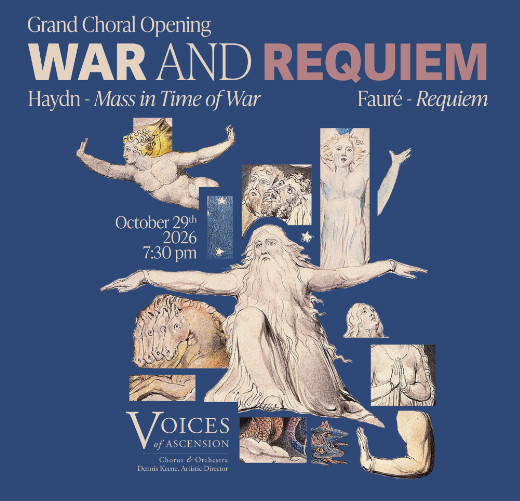
Grand Choral Opening: War & Requiem Church of the Ascension (10/29-10/29) |

Reader Reviews
To post a comment, you must register and login.