


Mandy Gonzalez and More Set for in BSO 2025–26 Season
The season will feature Renée Fleming, Yo-Yo Ma and many more.
The Boston Symphony Orchestra has unveiled its 2025–26 season running from September 17, 2025, through May 3, 2026. Interwoven with programmatic themes, the season celebrates anniversary milestones in America’s, Boston’s, and Symphony Hall’s history; reflects upon how faith and spirituality inspire creativity and insight; and explores how artists past and present respond to the changing natural environment. These themes take center stage not only in musical performances but also alongside collaborations with scholars, activists, and artists who will deepen our understanding of our historical, cultural, and intellectual landscapes.
Continuing the BSO’s unparalleled legacy of supporting contemporary composers and premiering new music, the 2025–26 season offers five world or American premiere commissions, including two by Composer Chair Carlos Simon, and several Boston premieres of BSO-commissioned works. In a season-long residency, violinist Augustin Hadelich performs two programs with the BSO, guest performs with the Boston Symphony Chamber Players (BSCP), and gives two recitals while also working with students in the community.
Rounding out his 30th anniversary year, Keith Lockhart conducts the Boston Pops throughout the season with star soloists like Mandy Gonzalez and concerts celebrating Halloween, the Day of the Dead, the Lunar New Year, and St. Patrick’s Day. Artistic Partner for Education Thomas Wilkins returns to conduct a gospel-themed BSO concert as well as the annual Youth and Family Concert Series. The Tanglewood Festival Chorus (James Burton, conductor) joins the BSO for six programs including the orchestra’s first-ever performances of Samuel Barber’s opera Vanessa. Co-presentations of visiting orchestras include the Vienna Philharmonic, with Nelsons conducting and soloist Lang Lang, the Puerto Rico Symphony Orchestra, and students from the Interlochen Arts Academy and soloist Yo-Yo Ma. With guest performances by many of the world’s most highly acclaimed soloists (Seong-Jin Cho, Renée Fleming, Evgeny Kissin, Yunchan Lim, Midori, and Yuja Wang, to name a few), conductors, and choral ensembles, the coming BSO season offers audiences many opportunities through both concerts and related humanities events in Symphony Hall and at community venues to experience extraordinary music-making and its timeless capacity to inspire joy, offer solace, and unite us in our shared humanity.
Opening Week Programs (Sept. 17–20)
The season opens with a panoply of programs that welcome a broad range of audiences to experience the breath of phenomenal artistry and commitment to community-building that define the BSO today. First off, the annual free Concert for the City returns for its largest and most inclusive program ever with performances by more than a dozen arts education partners in the community, the BSO, the Pops, and the Tanglewood Festival Chorus led by Nelsons, Wilkins, Lockhart, and Burton (Sept. 17). In an exciting new addition to this season’s opening festivities, instrumental and vocal ensembles from Boston’s plethora of colleges and conservatories perform a free program titled Music’s Next Generation: A College Music Showcase (Sept. 18). The BSO Opening Gala kicks off the celebration of Symphony Hall’s 125th anniversary and offers an All-American program led by Nelsons with works by John Williams, John Adams, Barber, and Gershwin as well music arranged by Jessie Montgomery. Gala guest artists include South African soprano Golda Schultz, jazz saxophonist James Carter, BSO percussionist J. William Hudgins, and newly appointed principal double bass Caleb Quillen (Sept. 19). Continuing the celebration of his 30 years as Boston Pops conductor, Lockhart and the Pops are joined by Broadway superstar Mandy Gonzalez singing the iconic music of Lin-Manuel Miranda in the world-premiere production of Everything I Know to conclude the opening festivities (Sept. 20). Click here for program details during Opening Week.
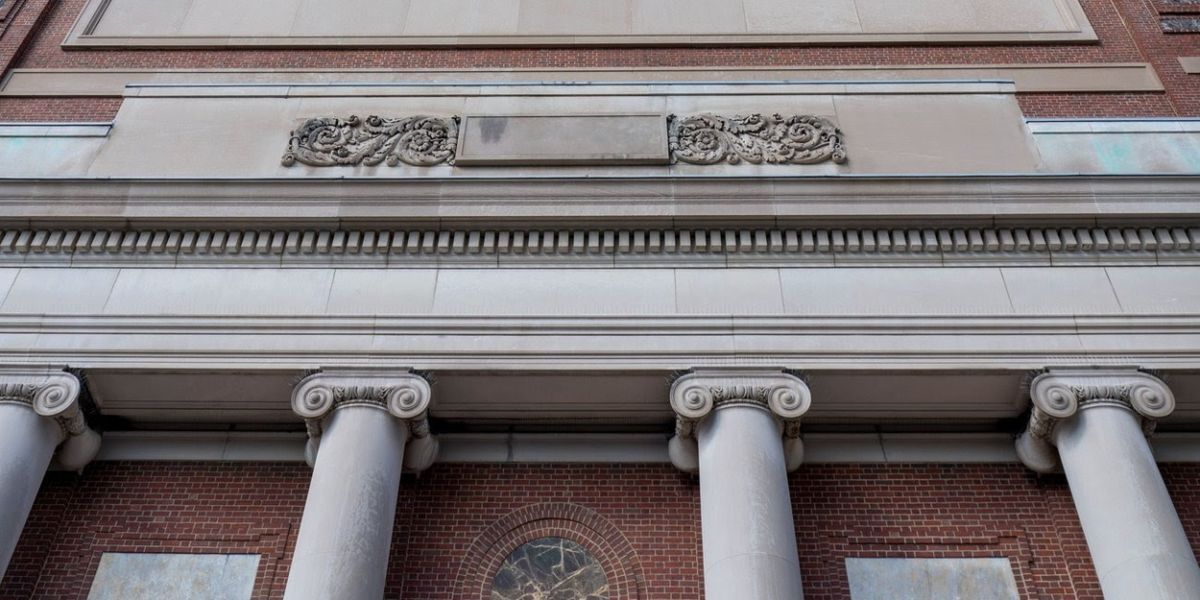
Concert programs and humanities events celebrating Symphony Hall’s 125th anniversary explore the European cultural influences that civic leaders like BSO founder Henry Lee Higginson aspired to put a unique Boston stamp on at the time Symphony Hall opened in October 1900. Designed by McKim, Mead & White, one of the era’s most prominent architectural firms, with acoustics based on the then-emerging science of architectural acoustics developed by Harvard Professor Wallace Clement Sabine that remain unrivaled and removable raked flooring for flexible “music hall” seating configurations, Symphony Hall gave Boston one of the world’s most modern and highly regarded concert venues. The site of hundreds of world premieres and storied debut performances, Symphony Hall has long been a crucible for musical innovation and a gathering place where people of all backgrounds can share in the power of live music and mark important civic, cultural, and even personal milestones. The building is a beloved Boston and U. S. National Historic Landmark. Humanities events are planned to explore the history of Symphony Hall and Boston as a center of innovation and culture around 1900. (More about the history of Symphony Hall.)
Fall 2025 Concerts and Events Celebrating Symphony Hall 125: European and American music composed around this pivotal time in Boston’s and America’s history is featured in two Nelsons-led BSO programs and the season’s first Boston Symphony Chamber Players (BSCP) performance in the first two weeks of October. Nelsons leads the BSO, soprano Nikola Hillebrand, and the Lorelei Ensemble under artistic director Beth Willer in Debussy’s Impressionist-inspired Nocturnes and Mahler’s Symphony No. 4, enduring works that premiered in 1900 and 1901, respectively (Oct. 2–4). Contemporaneous chamber works by Beach, Koechlin, Loeffler, Mahler, and Saint-Saëns are performed by the Boston Symphony Chamber Players with pianist Randall Hodgkinson, and former BSO Assistant Conductor Earl Lee conducting mezzo-soprano Sasha Cooke in Mahler’s Songs of a Wayfarer (Oct. 5). To commemorate the 125th anniversary, Nelsons leads a reprise of Symphony Hall’s inaugural program, Beethoven’s monumental Missa Solemnis with the Tanglewood Festival Chorus (James Burton, conductor) mezzo-soprano Wiebke Lehmkuhl, tenor Klaus Florian Vogt, and bass Franz-Josef Selig (Oct. 9–11). Click here for Symphony Hall 125 information and related program details.
E Pluribus Unum: From Many, One
Inspired by the spirit of America’s motto, E Pluribus Unum: From Many One is a multi-year celebration that embraces the plurality and singularity of American music and probes the crosscurrents of the art form as a parallel to societal change in our nation. The 2025–26 season’s repertoire includes about three dozen works by composers who have woven the rich tapestry of American music, from Copland, Barber, and Bernstein to modern trailblazers like John Williams, John Adams, Tania León, and Carlos Simon. The season offers American music in a range of genres with special focuses on opera composed in the late 20th century (Samuel Barber’s Vanessa and John Adams’ The Chairman Dances and excerpts from Nixon in China), music of the Americas, and uniquely American sounds like gospel, jazz, and Hollywood music. Along with his operas, Adams’ work is featured in other programs throughout the season from September’s Opening Gala (Short Ride in a Fast Machine) and October’s BSO concert with Hadelich performing the Violin Concerto to February’s recital with Hadelich and Orion Weiss (Road Movies) and the BSO’s closing program in May (Harmonium). There is also a focus on the music of Antonín Dvořák, whose work was in dialogue with American spiritual and folk traditions (his Symphony No. 9, From the New World and Cello Concerto, both composed in America in the 1890s, as well as his earlier Violin Concerto and Symphonies No. 7 and No. 8).
Early 2026 BSO and BSCP Concerts and Events Celebrating America’s 250th Anniversary: An E Pluribus Unum: From Many, One festival is planned for early 2026, with four BSO programs (three led by Nelsons and one by Thomas Wilkins), a BSCP concert, several solo performances by violinist Johnny Gandelsman, and related humanities events throughout January and early February. Nelsons opens the new year leading Barber’s opera Vanessa in collaboration with the Boston Lyric Opera with both the Tanglewood Festival Chorus (James Burton, conductor) and the Boston Lyric Opera Chorus (Brett Hodgdon, conductor) and a stellar cast including soprano Jennifer Holloway making her BSO debut in the title role, mezzo-sopranos Anne Sofie Von Otter and Samantha Hankey, tenor Pavel Černoch, baritone Thomas Hampson, and bass Wei Wu (Jan. 8 & 10). Known for his affinity for leading concert operas and vocal music, Nelsons conducts the BSO’s first full performance of the Pulitzer Prize-winning work, which The New York Times lauded as “the best American opera ever presented” when it premiered to 17 curtain calls at the Metropolitan Opera in 1958.
In following week’s program, superstar pianist Seong-Jin Cho, whose recordings of Ravel’s piano concertos with the BSO and Nelsons were recently released, returns to perform Tchaikovsky’s Piano Concerto No. 1, which was given its world premiere in Boston in 1875, with Nelsons and the BSO (Jan. 15–17). The same program includes Bernstein’s life-affirming, Judeo-Christian-inspired Chichester Psalms with the Tanglewood Festival Chorus and a BSO co-commission by Allison Loggins-Hull, Rhapsody on a Theme by Joni for flute and orchestra with BSO principal flute Lorna McGhee making her solo debut with the orchestra. On the same weekend Cho joins the BSCP (Jan. 18) for Brahms’ Piano Quartet in G minor on a program featuring the world premiere of a BSO-commissioned work by Carlos Simon as well as Valerie Coleman’s Rubispheres, for flute, clarinet, and bassoon.
To celebrate one of America’s greatest and most expansive composers, Nelsons leads an all-John Williams program (Jan. 22–25) with pianist Emanuel Ax performing the Boston premiere of Williams’ Piano Concerto, which is scheduled for its world premiere at Tanglewood on July 26. Violinist Gil Shaham joins for TreeSong, whose world premiere he performed at Tanglewood in 2000, and the Theme from Schindler’s List. The program also includes other selections of Williams’ film music: “The Float” from Catch Me if You Can and the Suite from Close Encounters of the Third Kind.
As part of both the E Pluribus Unum: From Many, One festival and the multi-season focus on Faith in Our Time, the BSO performs the Boston premiere of Good News Mass, a new co-commission by Composer Chair Carlos Simon that draws deeply on the gospel music he learned growing up in his father’s church. BSO Artistic Partner Thomas Wilkins conducts the sprawling multimedia work, which includes narration by librettist and spoken word artist Marc Bamuthi Joseph, video by Melina Matsoukas, and vocal contributions by tenor Zebulon Ellis, gospel choruses, and others. Simon’s mass is paired with another work of faith by contemporary Jewish composer David Lang. Inspired by the world of Charles Ives and the simplicity of New England hymns, poor hymnal was composed for the Grammy-winning vocal ensemble The Crossing (Donald Nally, artistic director), using a wide variety of texts to contemplate how we respond to those in need. The January 29 and 31 programs include both works, and the January 30 program brings the BSO to a to-be-announced venue in the community to perform the Good News Mass.
Violinist and 2024 MacArthur Genius Grant recipient Johnny Gandelsman gives several solo performances at various venues during the month of January, drawing on his “This is America” anthology of music composed during the pandemic, which he performed selections of at Tanglewood in 2024. Talking about his pandemic project, Gandelsman said: “People were isolated, sick, scared and exhausted. In thinking about ways one person could make a small difference, it occurred to me that in many ways amplifying voices of others, whether it's those of centuries past, or ones of today, is an essential part of being a Classical musician. I decided to commission new works for violin from American and US-based composers, asking each one to reflect in some way on the time we were all living through.”
The E Pluribus Unum: From Many, One festival concludes with Artist-in-Residence Augustin Hadelich and pianist Orion Weiss performing selections from their 2024 CD American Road Trip, which traverses the American musical landscape of past and present from New England’s Amy Beach and Charles Ives to California’s John Adams, Atlanta’s Carlos Simon, and Black-Haitian composer Daniel Bernard Roumain. This concert takes place in Thomas Tull Concert Hall in MIT’s new Linde Music Building.
The BSO’s celebration of America’s 250th, which begins next week with Ken Burns’ “The American Revolution” event co-presented with GBH, continues this summer with the Boston Pops July 4 Fireworks Spectacular on the Esplanade and in America-inspired works performed at Tanglewood. The celebration carries on throughout 2026 with Boston Pops programs next spring, concerts at Tanglewood, and the annual Fourth of July Fireworks Spectacular on the Esplanade, a signature event of the Semiquincentennial celebration of Independence Day.
Humanities events are planned to deepen our understanding of America’s historical, cultural, and intellectual landscape. Click here for E Pluribus Unum: From Many, One program details and composers.
Augustin Hadelich Residency
One of the great violinists of our time, Augustin Hadelich has performed regularly with the BSO since his 2012 debut at Tanglewood, consistently dazzling audiences with his intensity of phrasing, soulful lyricism, and warm tone. His 2025–26 residency promises to deepen his relationship with the orchestra and audiences through performances in a variety of settings and across genres, showcasing the full versatility and virtuosity of his artistry. Off-stage Hadelich will work with local music students from Project STEP, Boston Youth Symphony Orchestras, and others.
The residency begins in October with a performance of John Adams’ Violin Concerto with the BSO and Nelsons (Oct. 16–18), followed by a solo recital in the Cathedral Church of St. Paul of works by Paganini, Telemann, Coleridge-Taylor, and Ysaÿe, concluding with J. S. Bach’s Partita No. 2 in D Minor, considered the “Everest” of violin performance (Oct. 19). The winner of the GRAMMY Award for Best Classical Instrumental Solo in 2016, Hadelich’s most recent release is American Road Trip (2024) recorded with pianist Orion Weiss, who joins Hadelich to perform selections from their album in the Linde Music Building at MIT (Feb. 1). With the BSCP, he performs Chausson’s Concerto for violin, piano, and string quartet with pianist Marc-André Hamelin (Feb. 15). The residency’s final program comes at the end of the month when Hadelich joins the BSO to perform Thomas Adès’ Concentric Paths, for violin and orchestra, with Adès conducting (Feb. 26–28). Click here for the Augustin Hadelich Residency program details by date.
Premieres and Commissions
The BSO has long stood as one of the world’s most prolific commissioners of new music, and its stages have premiered important works by celebrated composers from Samuel Barber, Amy Beach, Leonard Bernstein, Aaron Copland, George Gershwin, and John Williams to Thomas Adès, Harrison Birtwistle, Henri Dutilleux, Osvaldo Golijov, Sofia Gubaidulina, Kaija Saariaho, and Aleksandra Vrebalov (see list of all commissions). The coming season offers world premieres of two BSO commissions by Composer Chair Carlos Simon, one performed by violinist Augustin Hadelich as part of his season-long residency and the other for the Boston Symphony Chamber Players. Simon’s Good News Mass, a BSO co-commission, receives its Boston premiere with local gospel choruses and a cast of guest vocalists.
Other highly anticipated world premiere commissions to be performed by the BSO next season are Tania León’s Time to Time and a new work for two pianos and orchestra by Andrew Norman, composed for and featuring brothers Lucas and Arthur Jussen. During Opening Week, the Pops performs the world-premiere production of Everything I Know with Mandy Gonzalez singing the music of Lin Manuel Miranda. The season offers the American premiere of Esa-Pekka Salonen’s Horn Concerto, a BSO co-commission, with the composer conducting the BSO and soloist Stefan Dohr, principal horn of the Berlin Philharmonic. John Williams’ Piano Concerto, composed for and performed by Emanuel Ax, receives its Boston premiere following its world premiere with the BSO at Tanglewood on July 26. In addition, the season features the U.S. premiere of Day Night Day by Outi Tarkiainen, to be performed by the BSO in both Boston and at Carnegie Hall, and the Boston premiere of Allison Loggins-Hull's Rhapsody on a Theme for Joni, for flute and orchestra, an ebullient tribute to Joni Mitchell (both works are BSO co-commissions). Click here for list of 2025–26 premieres and commissions by date.
Faith in Our Time
For millennia, artists have turned to music to seek the answers to life’s biggest questions. Faith in Our Time is a multi-year journey into how faith, spirituality, and religion have shaped music across history. The exploration, which begins later this month with the world premiere commission of Aleksandra Vrebalov’s Love Canticles in dialogue with Stravinsky’s Symphony of Psalms and continues at Tanglewood with Carlos Simon’s new choral work for the Tanglewood Festival Chorus paired with Beethoven's Symphony No. 9, is a reflection on the religious and spiritual dimension of works past and present. In 2025–26, Beethoven’s Missa Solemnis, Bernstein’s Chichester Psalms, Carlos Simon’s Good News Mass, David Lang’s poor hymnal, and Ives’ Fourth Symphony are among the works that explore how composers and audiences look to various faith traditions for inspiration and insight. At a time in which we are all hungry for meaning, Faith in Our Time highlights music’s power to inspire, heal, and unite across cultures and beliefs. Humanities events are planned to further delve into the faith theme. Click here for list of Faith in Our Time programs by date.
Where Words End: Music and the Natural World
The power, fragility, beauty, and danger of the natural world has long been an inspiration and source of fascination for artists. Through concerts and related humanities events, this multi-season focus studies the intersection of the arts and nature and how our actions profoundly impact the environment. Where Words End: Music and the Natural World begins this summer during Tanglewood’s Festival of Contemporary Music with a program titled “The Natural World” that features compositions by Gabriela Ortiz, Arthur Márquez, and Ellen Reid, as well as other Tanglewood programs with works by Matthew Aucoin (Music for New Bodies) and Gabriella Smith, who is known for her focus on nature. In 2025–26, Smith’s Bioluminescence Chaconne, which uses the natural world as a metaphor for musical structure and process, or vice versa, is paired with Tchaikovsky's nature-themed Suite from Swan Lake. On the same theme, the Puerto Rico Symphony Orchestra performs Luis Quintana’s On the Ethereal Nature of Bioluminescence. Thomas Adès’ Aquifer, which depicts the geological dynamism of water, is paired with Beethoven’s Symphony No. 6, Pastoral. John Williams’ TreeSong was inspired by walks in Boston Common. Grace-Evangeline Mason’s The Imagined Forest takes the audience on a journey through fantasy, folklore, and the danger of the woodlands. “The Moldau,” a movement from Smetana’s Má Vlast, depicts the Czech river’s journey. Humanities events are planned to further delve into the nature theme. Click here for a list of Where Words End: Music and the Natural World programs by date.
BSO Concerts Led by Music Director Andris Nelsons
Marking his twelfth season as the Boston Symphony Orchestra’s Ray and Maria Stata Music Director, Andris Nelsons presides over 14 different programs during the 2025–26 season, joining some of the world’s greatest artists for repertoire that spans nearly two and a half centuries. In addition to conducting at Concert for the City, the Opening Gala, and the two previously described Symphony Hall 125 programs, Nelsons conducts a fall program that pairs a work that looks back to the height of the classical era—Mozart’s final Symphony No. 41, Jupiter—with a piece that heralded the dawn of 20th-century music—Strauss’ Ein Heldenleben, the last of the composer’s eight epic tone poems, composed in 1898 (Sept. 25–27). Nelsons’ fall schedule also includes a concert with BSO artist in residence Augustin Hadelich performing John Adams’ harmonically rich Violin Concerto, on a program that includes Tchaikovsky's Fifth Symphony, a meditation on fate that is a beloved cornerstone of the symphonic repertoire (Oct. 16–18). After the new year, Nelsons conducts Seong-Jin Cho in Tchaikovsky’s Piano Concerto No. 1 on a program that also includes Allison Loggins-Hull's Rhapsody on a Theme by Joni (Jan. 15–17) and Bernstein’s Chichester Psalms (Jan. 15 & 17 only). Other works by Tchaikovsky offered during the season are the Suite from Swan Lake and the Manfred symphony.
Following his previously described E Pluribus Unum: From Many, One programs in January, Nelsons returns in March and welcomes back 2022 Van Cliburn International Piano Competition winner Yunchan Lim for the Schumann Piano Concerto (Mar. 19–22). The concert’s romantic theme continues with Tchaikovsky’s introspective Manfred symphony. The next weekend, on March 27–28, soprano Renée Fleming and baritone Thomas Hampson join Nelsons, the Tanglewood Festival Chorus, and the BSO to offer excerpts from John Adams’ groundbreaking 1987 opera, Nixon in China, reprising their roles from the 2023 Paris Opera production; Adams’ related work, The Chairman Dances (Mar. 26 and 28 only), and Antonin Dvořák’s Symphony No. 9, From the New World complete the American-styled programming. On April 2 and 4, Nelsons welcomes Tokyo-born rising star pianist Mao Fujita in his BSO debut performing Mozart’s lively and delightful Piano Concerto No. 21 in C, K.467. The program also includes the U.S. premiere of Outi Tarkiainen’s Day Night Day, a BSO co-commission inspired by traditional melodies from the composer’s native Lapland, and Sibelius’ rarely performed Symphony No. 1. On April 8, virtuoso pianist Lang Lang joins Nelsons and the BSO to perform Edvard Grieg’s Piano Concerto in a concert that features Dvořák’s Symphony No. 9, From the New World and Tarkiainen’s Day Night Day. Nelsons and the BSO perform the Adams, Dvořák, Tarkiainen, Sibelius, and Greig works with guests Renée Fleming, Thomas Hampson, and Lang Lang at Carnegie Hall on April 9 and 10, respectively, continuing the BSO's more than 130-year history of annual performances at the celebrated New York institution (click here for the BSO’s 2026 Carnegie Hall announcement).
Repeating a successful new program that debuted in November 2024, Nelsons shares the podium with the previous summer’s Tanglewood Music Center Conducting Fellows on April 3. The 2025 TMC Conducting Fellows Leonard Weiss and Yiran Zhao lead two movements from Smetana’s homage to his Czech homeland, Má Vlast, along with Nelsons conducting Sibelius’ First Symphony and Tarkiainen’s Day Night Day. Click for the full list of 2025–26 programs conducted by Music Director Andris Nelsons by date.
BSO Concerts Led by Guest Conductors
The 2025–26 season offers exciting BSO debuts by conductors Jonathon Heyward and Nodoka Okisawa and the Symphony Hall debuts of Andrey Boreyko and BSO Assistant Conductor Anna Handler, as well as much anticipated returns to the Symphony Hall podium by Thomas Adès, Herbert Blomstedt, Esa-Pekka Salonen, Artistic Partner Thomas Wilkins, Assistant Conductor Samy Rachid, and others.
Superstar soloist Yuja Wang joins returning Venezuelan conductor Domingo Hindoyan on Oct. 23-25 for Prokofiev’s Second Piano Concerto; Copland’s optimistic Third Symphony (a work that the BSO premiered in 1946 under Serge Koussevitzky) and Bernstein’s Three Dance Episodes from On The Town round out the program. The following month, Japanese conductor Nodoka Okisawa, a protégée of longtime BSO Music Director Seiji Ozawa, makes her BSO debut with Dvořák’s Seventh Symphony and Takemitsu’s Requiem for strings, a work Stravinsky hailed as a masterpiece. The Ozawa tribute continues with Midori, a longtime Ozawa collaborator, as soloist in Dvořák’s Violin Concerto (Nov. 6–8).
Headlining the Nov. 13–15 concerts is the world premiere of the BSO-commissioned Time to Time by Pulitzer Prize-winning Cuban American composer Tania León. Frequent guest conductor Dima Slobodeniouk leads this celebration of Caribbean composers, which also includes saxophonist James Carter in Roberto Sierra’s Concerto for Saxophones and Orchestra. Fast-rising star and Baltimore Symphony Orchestra Music Director Jonathon Heyward makes his BSO debut on Nov. 20–22 with a rarity, the Violin Concerto by 20th-century Ukrainian-born composer Thomas de Hartmann, featuring celebrated violinist Joshua Bell performing music from his 2024 CD Thomas de Hartmann Rediscovered. The program also spotlights two works of vivid storytelling: Grace-Evangeline Mason’s 2021 work The Imagined Forest and Mussorgsky’s Pictures at an Exhibition. The month’s offerings conclude with BSO Assistant Conductor Samy Rachid in an all-Dvořák program (Nov. 28 and 29), the Czech composer’s folk inspired Eighth Symphony and the beloved Cello Concerto with the award-winning Spanish cellist Pablo Ferrández.
On Feb. 5–7, BSO Assistant Conductor (and recently appointed Kapellmeister at the Deutsche Oper Berlin) Anna Handler makes her Symphony Hall debut with Concertmaster Nathan Cole who will be making his BSO concerto solo debut. Long-time Principal Viola Steven Ansell is Cole’s solo partner in Mozart’s Sinfonia concertante; Tchaikovsky's Swan Lake suite and American composer Gabriella Smith’s 2019 work Bioluminescence Chaconne complete the program. The next week, Esa-Pekka Salonen makes his first return to Symphony Hall since 2012 with the highly anticipated American premiere of a horn concerto, a BSO co-commission he composed for Stefan Dohr, principal horn of the Berlin Philharmonic. The concerto draws on material from Anton Bruckner’s soaring, brass-friendly Symphony No. 4, Romantic, which is programmed for the second half of this concert (Feb. 12–14).
Also returning to Symphony Hall is former BSO Artistic Partner and composer Thomas Adès who conducts the orchestra in two of his own works—the violin concerto Concentric Paths with 2025–26 BSO artist in residence Augustin Hadelich—and his recent composition Aquifer with Beethoven’s Symphony No. 6, Pastoral (Feb. 26–28). Nonagenarian Swedish conductor Herbert Blomstedt leads an All-Brahms program (March 5–7) with the Tanglewood Festival Chorus in two choral masterpieces, Nänie and Schicksalslied (Song of Destiny), along with the composer’s final symphony, the lyrical Symphony No. 4. On April 16–18, popular Dutch duo-pianists Lucas and Arthur Jussen return to Symphony Hall for a BSO-commissioned world premiere written for them by American composer and Grawemeyer Award winner Andrew Norman; Finnish conductor Susanna Mälkki also leads the BSO in Rachmaninoff’s Symphonic Dances and Ravel’s Mother Goose suite.
In his first appearance with the BSO since 2015, star pianist Evgeny Kissin plays a trio of Russian piano concertos by Scriabin, Rimsky-Korsakov, and Prokofiev (the Concerto No. 1), alongside conductor Andrey Boreyko. The program also offers Rimsky-Korsakov’s Russian Easter Festival Overture (Apr. 23 and 25). On the season’s final weekend (April 30–May 2), Dima Slobodeniouk conducts the BSO in a program featuring the Tanglewood Festival Chorus in one of John Adams’ first major works, the spaciously pulsating Harmonium, and closing with Beethoven’s Symphony No. 9. Click here for a list of 2025–26 programs led by guest and assistant conductors by date.
Humanities Events
As with the current season’s Beethoven and Romanticism and Decoding Shostakovich festivals, humanities events to complement the 2025–26 season’s thematic focuses on Symphony Hall 125, E Pluribus Unum: From Many, One, Faith in Our Time, and Where Words End: Music and the Natural World are planned. These events are designed to enrich and contextualize the concerts taking place on the Symphony Hall stage through speaker programs, films, art exhibits, and performances by small ensembles at venues in the community. Details will be announced at a later date.
The Boston Pops
Continuing the celebration of his 30th year as Boston Pops Conductor, Keith Lockhart leads live-to-picture performances of The Princess Bride in Concert (Sept. 13 & 14). Directed by Rob Reiner, the film has an all-star cast led by Robin Wright, narration by Peter Falk, and an unforgettable score by Mark Knopfler, now for the first time specially arranged for symphony orchestra. Frequent Pops guest and Broadway superstar Mandy Gonzalez returns to sing the iconic music of Lin-Manuel Miranda in the world-premiere production of Everything I Know (Sept. 20). From the groundbreaking anthems of Hamilton and In the Heights to the heartfelt melodies of Moana, Encanto, and The Little Mermaid, Gonzalez brings Miranda’s music to life with her signature vocal brilliance and captivating stage presence.
For Halloween weekend, Lockhart and the Pops perform Disney's Hocus Pocus in Concert live to picture (Oct. 30 & 31, 7:30 p.m.). With a score by Emmy® Award-winning composer John Debney, the 1993 comedy film stars Sarah Jessica Parker, Bette Midler, and Kathy Najimy as resurrected Salem witches. Organist Brett Miller, who performed at last November’s screening of Nosferatu, returns for a solo accompaniment of the 1925 silent film version of The Phantom of the Opera on Symphony Hall’s prized Aeolian-Skinner organ (Oct. 31, 10:30 p.m.). Lockhart and the Pops again present El Día de Muertos – Day of the Dead, a musical celebration of the Mexican tradition of remembrance and reverence (Nov. 1).
In addition to December’s annual Holiday Pops and New Year’s concerts (to be announced at a later date), the Pops performs their first-ever Lunar New Year concert (Feb. 21) with a joyful program of renewal that honors the rich heritage of communities across Asia. Around St. Patrick’s Day, Lockhart and the Pops present Celtic Night, a celebration of Irish music that draws from their GRAMMY-nominated Celtic Album (Mar. 14). Click here for Boston Pops programs by date.
Co-Presentations with Visiting Orchestras
The season welcomes three visiting orchestras for concerts co-presented with partners. Presented in association with Inquilinos Boricuas en Acción, the Puerto Rico Symphony Orchestra led by Maximiano Valdés makes its first-ever Boston appearance to perform works by Roberto Sierra, Angélica Negrón, and a selection of Puerto Rico’s rich popular musical traditions. (Nov. 16). Their performance is part of the E Pluribus Unum: From Many, One celebration, honoring the diverse voices that shape our nation’s musical heritage. The BSO partners with Michigan’s renowned Interlochen Center for the Arts to co-present its centennial tour “Imagine US: Celebrating America 250.” Under the baton of Cristian Măcelaru, students from Interlochen Arts Academy perform with guest soloist Yo-Yo Ma. The Interlochen program features a new work for cello and orchestra by Wynton Marsalis along with Ives’ Symphony No. 4 and Reena Esmail’s RE|member (Mar. 15) The student musicians will participate for educational programs in the community throughout the season as well. The illustrious Vienna Philharmonic Orchestra, on a U.S. tour with Andris Nelsons and pianist Lang Lang, returns to Symphony Hall for the first time since 2003 as part of a co-presentation with the Celebrity Series of Boston. The program features Mahler’s Symphony No. 1 and Lang Lang performing Bartok’s Piano Concerto No. 3 (Mar. 3). Click here for a list of visiting orchestras by date.
Boston Symphony Chamber Players
Founded in 1964, the Boston Symphony Chamber Players (BSCP) combine the talents of BSO principal players and renowned guest artists to explore the full spectrum of chamber music repertoire with programs planned to complement adjacent BSO concerts and festival themes. Concertmaster Nathan Cole serves as music director of the ensemble. This year’s BSCP membership welcomes new principal double bass Caleb Quillen, who was recently appointed to replace Edwin Barker next season; Barker is retiring later this year after 48 years in the chair.
The BSCP open their 2025–26 series of four Sunday afternoon concerts at New England Conservatory’s Jordan Hall on October 5 with Earl Lee conducting the previously described program of music by American and European composers active at the time of the Symphony Hall’s opening in 1900. Amy Beach and Charles Martin Loeffler were both prominent in Boston’s musical community at the turn of the century. Charles Koechlin and Camille Saint-Saëns represent two generations of Parisian music, while Mahler was active in Vienna. Guests Sasha Cooke (mezzo-soprano) and Randall Hodgkinson (piano) join the BSCP for this program marking the hall’s 125th anniversary. An all-Mozart program that leans into the intimacy, lightness, and intricacy of the composer’s chamber music follows with pianist Inon Barnatan as guest for the Quintet in E-flat for Piano and Winds, which Mozart himself declared one of his finest works (Nov. 2). The previously described E Pluribus Unum: From Many, One chamber music program with the world premiere of a new work by Carlos Simon also features star pianist Seong-Jin Cho for the Brahms Piano Quartet No. 1 in G minor and offers Valerie Coleman’s Rubispheres (Jan. 18). As previously described, artist in residence Augustin Hadelich and pianist Marc-André Hamelin join the BSCP for Chausson’s Concerto for violin, piano and string quartet. The program also includes Debussy’s Sonata for flute, viola, and harp and Esa-Pekka Salonen’s Memoria for wind quintet (Feb. 15).
In a fifth BSCP performance, which takes place on a Friday evening at Symphony Hall, BSO Assistant Conductor Samy Rachid conducts an all-Stravinsky program that includes The Soldier’s Tale, a razor-sharp fable of fate and temptation (Apr. 24). Click here for a list of the Boston Symphony Chamber Players programs by date.
Youth and Family Programs
The BSO’s 2025–26 Youth and Family Concert Series includes a week of concerts led by BSO Artistic Partner for Education and Community Engagement Thomas Wilkins (March 9–14). The season also offers two annual programs with the Boston Youth Symphony Orchestra: Prokofiev’s beloved Peter and the Wolf with conductor Federico Cortese and the Boston Ballet School (Nov. 8) and the popular Music and Magic program featuring magician Matt Roberts, led by conductor Marta Żurad (Apr. 25).
In another highlight for young audiences, Circle Round, WBUR’s award-winning family folktales podcast, returns for live recordings on October 11 and February 7. Host Rebecca Sheir and composer Eric Shimelonis are joined by actors and BSO musicians to bring engaging stories to life.
Friday Evening Series
The new Friday Evening Series offers three 7:30 p.m. concerts with no intermission and pre- and post-concert activities tailored to the repertoire of each program. The Friday evening dates are: January 16, March 27, and April 24. Other Friday concerts begin at 1:30 p.m.
Open Rehearsals, Community Chamber Concerts, and Tanglewood Learning Institute Events
Open rehearsal programs for the general public and specifically for high school students, continue through the 2025–26 season. The dates for the High School Open Rehearsals are November 13, February 5, and April 16; these are ticketed to school groups at a discount through Group Sales. (Boston Public School groups are admitted free of charge.) Other ticketed open rehearsals are planned for November 6, January 15, February 12, and April 23. All Open Rehearsals take place on Thursdays at 10:30 a.m. and include pre-concert talks starting at 9:30 a.m.
|
Rendezvous with Rachel Revere™ Vokes Theatre (8/30-8/30) |
|
John Cameron Mitchell: Hedwig 25th Anniversary Movie Tour Boch Center (10/01-10/01) |
|
School of Rock Firehouse Center for the Arts (8/21-9/06) |
|
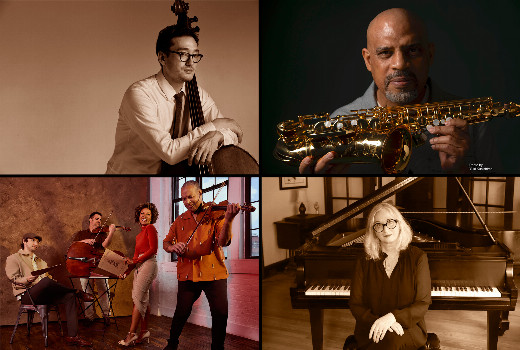
Alchemy: Classical Meets Jazz Cape Cod Chamber Music Festival (8/14-8/14) |
|
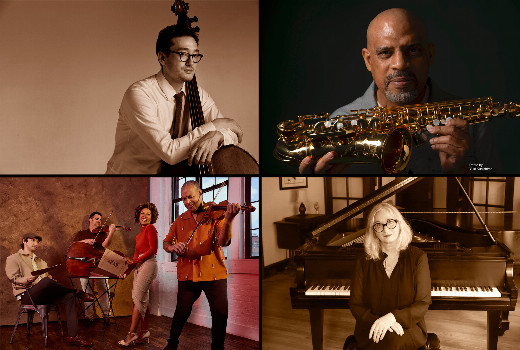
Alchemy: Classical Meets Jazz Cape Cod Chamber Music Festival (8/13-8/13) |
|
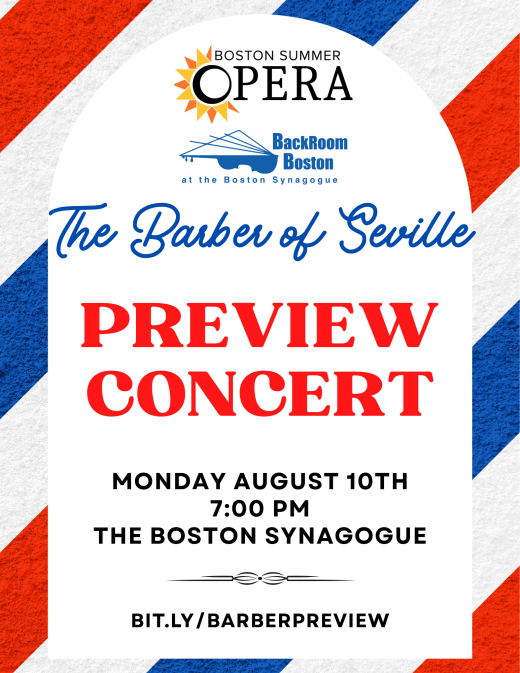
The Barber of Seville Preview Concert Boston Synagogue (8/10-8/10) |
|
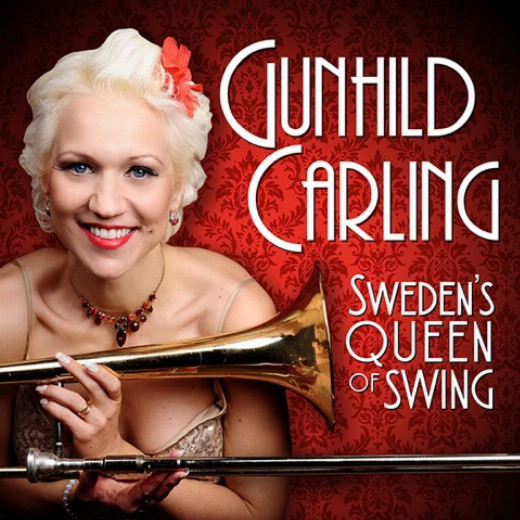
Gunhild Carling at City Winery Boston City Winery Boston (9/16-9/16) |
|
Therapy Gecko Live Arts at the Armory (8/30-8/30) |
|
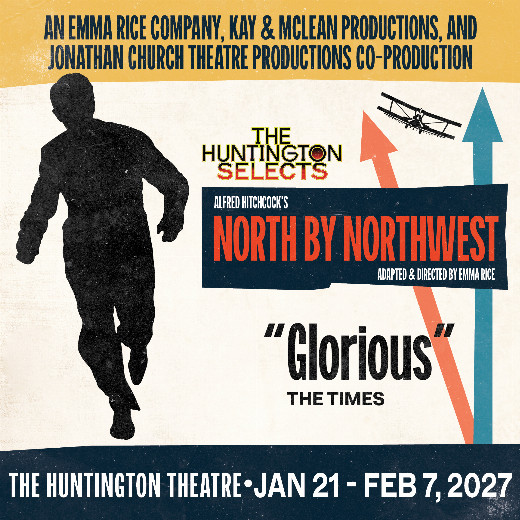
Alfred Hitchcock's North by Northwest Huntington Theatre (1/21-2/07) |
|
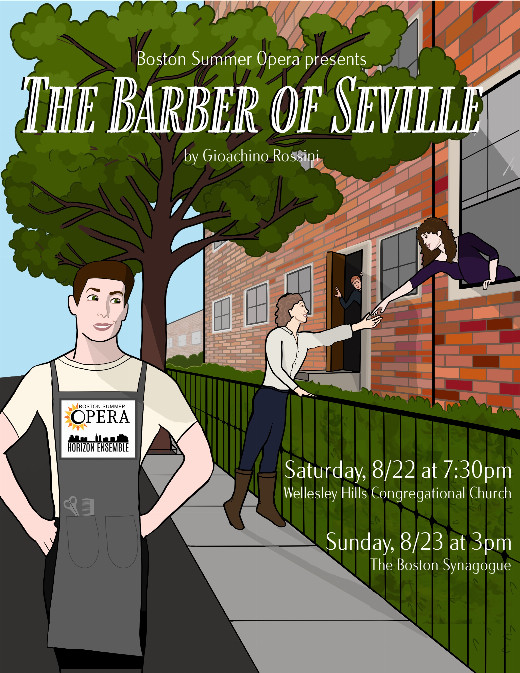
The Barber of Seville by G. Rossini with Boston Summer Opera & Horizon Ensemble Boston Synagogue (8/23-8/23) |