


|
The World of Theatre: Tradition and Innovation
(11/29/2005) The World of Theatre is the first introduction to theatre book to truly focus on diversity and globalism, integrating coverage of multicultural, international and experimental theatre throughout. Theatre is presented as a global and multicultural form that reflects both traditional and evolving world views. While the American commercial theatre and European forms are central to the text, alternative theatres are placed side by side for comparison and contrast in each chapter, thus avoiding the s... |
 |
|
The Wadsworth Anthology of Drama
(6/25/2003) Known through three editions as the boldest and most distinguished introduction to drama, William Worthen's pace-setting text continues to provide exciting plays usefully situated within their historical and cultural contexts. |
 |
|
Theatre World 1994-1995, Vol. 51
(1/1/2000) Theatre World, the statistical and pictorial record of the Broadway and off-Broadway season, touring companies, and professional regional companies throughout the United States, has become a classic in its field. The book is complete with cast listings, replacement producers, directors, authors, composers, opening and closing dates, song titles, and much, much more. There are special sections with biographical data, obituary information, listings of annual Shakespeare festivals and major drama a... |
 |
|
Theatre World 1993-1994, Vol. 50
(1/1/2000) Theatre World, the statistical and pictorial record of the Broadway and off-Broadway season, touring companies, and professional regional companies throughout the United States, has become a classic in its field. The book is complete with cast listings, replacement producers, directors, authors, composers, opening and closing dates, song titles, and much, much more. There are special sections with biographical data, obituary information, listings of annual Shakespeare festivals and major drama a... |
 |
|
The Social Significance of Modern Drama
(1/1/2000) Out of print virtually since its completion in 1914, Emma Goldman's pioneer work Social Significance in Modern Drama bridges modern drama and political philosophy, pointing out the road that remains to be travelled toward a theatre of social empowerment. Activist, feminist, philosopher and anarchist, Emma Goldman was a passionate thinker about all things modern when the 20th century was still raw and new. The emergence of her treatise on the theatre after years of obscurity is certain to arouse ... |
 |
|
A Challenge for the Actor
(1991) This volume completes Hagen's earlier classic, Respect for Acting (Macmillan, 1973). The beliefs, professionalism, and standards of training and performance that make Respect required reading for all actors are explored in this acting textbook that represents a lifetime of performance and teaching. Unlike the more academic texts, Hagen's study reflects exercises, insights, and techniques that have been taught and practiced in acting studios and on stages for many years. Readers should not be pu... |
 |
|
Technical Theater for Nontechnical People
(2004) Two under-appreciated theatrical specialties, technical production for the novice and audience development, take center stage in these two thorough works. With hundreds of production/design/technical credits behind him, Campbell has written what will certainly become a standard introductory text on technical theater. All facets of production are clearly explained in jargon-free prose, and unfamiliar terms are highlighted and defined in an appended glossary. In addition to separate chapters on t... |
 |
|
An Unsocial Socialist
(1972) An Unsocial Socialist was published in 1887, having been written in 1883. The tale begins with a humorous description of student antics at a girl's school then changes focus to a seemingly uncouth laborer who, it soon develops, is really a wealthy gentleman in hiding from his overly affectionate wife. He needs the freedom gained by matrimonial truancy to promote the socialistic cause, to which he is an active convert. Once the subject of socialism emerges, it dominates the story, allowing only ... |
 |
|
Bacchae
(1999) Euripides' classic drama about the often mortifying consequences of the unbridled--and frequently hysterical--celebration of the feast of Dionysus, the God of wine. |
 |
|
Impro: Improvisation and the Theatre
(1987) Impro ought to be required reading not only for theatre people generally but also for teachers, educators, and students of all kinds and persuasions. Readers of this book are not going to agree with everything in it; but if they are not challenged by it, if they do not ultimately succumb to its wisdom and whimsicality, they are in a very sad state indeed . . . .Johnstone seeks to liberate the imagination, to cultivate in the adult the creative power of the child . . . .Deserves to be widely read... |
 |
|
Theatre: Collaborative Acts
(2003) Theatre: Collaborative Acts stimulates creative thinking through its interwoven themes of theatre as culture, collaboration, spatial art, and a dynamic fusion of past and present. The central premise of the text is that theatre is entertainment and art. It allows us to escape, relax, and refocus. Theatre also stimulates creative thinking and provokes discussion of artistic, social and ethical questions. Through their study of theatre, students develop lifelong tools to help them enjoy, analyze, ... |
 |
|
Wicked - Piano/Vocal Arrangement
(2004) Nominated for a whopping 10 Tony Awards in 2005, Wicked is an undeniable Broadway smash! A prequel to the all-American classic The Wizard of Oz, this new musical is a character study of Elphaba and Glinda, school roommates who grow up to become the Wicked Witch and the Good Witch, respectively. We are very proud to offer several songbooks featuring this delightful music, including a Vocal Selections book which contains the vocal line with piano accompaniment (00313268), and a Piano/Vocal Selecti... |
 |
|
Twelfth Night
(2005) Freshly edited text based on the best early printed version of the play Full explanatory notes conveniently placed on pages facing the text of the play Scene-by-scene plot summaries A key to famous lines and phrases An introduction to reading Shakespeare's language An essay by a leading Shakespeare scholar providing a modern perspective on the play Illustrations from the Folger Shakespeare Library's vast holdings of rare books |
 |
|
Truth in Comedy: The Manual of Improvisation
(1994) Who would have ever thought that learning the finer points of improvisation could be such fun? The "Harold," an innovative improvisational tool, helped Saturday Night Live's Mike Myers and Chris Farley, George Wendt (Norm on "Cheers") and many other actors on the road to TV and film stardom. Now it is described fully in this new book for the benefit of other would-be actors and comics. The "Harold" is a form of competitive improv involving six or seven players. They take a theme suggestion from... |
 |
|
Acting for the Camera
(1997) Culled from Tony Barr's 40 years' experience as a performer, director and acting teacher in Hollywood, this highly praised handbook provides readers with the practical knowledge they needwhen performing in front of the camera. This updated edition includes plenty of new exercises for honing on-camera skills; additional chapters on imagination and movement; and fresh material on character development, monologues, visual focus, playing comedy and working with directors. Inside tips on the studio s... |
 |
|
The Art of Acting
(2000) This second collection of Adler's papers precedes the material found in the previous collection (Stella Adler on Ibsen, Strindberg and Chekov, LJ 4/15/99), ending as she begins text analysis. Here Kissel (David Merrick) has taken tapes, transcriptions, notebooks, and other sources to reconstruct an acting course in 22 lessons. What results is Adler at her strongest. Coming from a theatrical family and having studied with Stanislavsky, she became an old-fashioned autocratic teacher determined to ... |
 |
|
The Empty Space: A Book About the Theatre: Deadly, Holy, Rough, Immediate
(1995) In The Empty Space, groundbreaking director Peter Brook draws on a life in love with the stage to explore the issues facing any theatrical performance. Here he describes important developments in theatre from the last century, as well as smaller scale events, from productions by Stanislavsky to the rise of Method Acting, from Brecht's revolutionary alienation technique to the free form Happenings of the 1960s, and from the different styles of such great Shakespearean actors as John Gielgud and ... |
 |
|
Acting One
(1997) Used to teach beginning acting on more campuses than any other text, Acting One contains twenty-eight lessons based on experiential exercises. The text covers basic skills such as talking, listening, tactical interplay, physicalizing, building scenes, and making good choices. |
 |
|
Zoot Suit and Other Plays
(1992) This collection contains three of playwright and screenwriter Luis Valdez's most important and recognized plays: Zoot Suit, Bandido! and I Don't Have to Show You No Stinking Badges. The anthology also includes an introduction by noted theater critic Dr. Jorge Huerta of the University of California-San Diego. Luis Valdez, the most recognized and celebrated Hispanic playwright of our times, is the director of the famous farm-worker theater, El Teatro Campesino. |
 |
|
The Taming of the Shrew
(2000) If there has ever been a groundbreaking edition that likewise returns the reader to the original Shakespeare text, it will be THE APPLAUSE FOLIO TEXTS. If there has ever been an accessible version of the Folio, it is this edition, set for the first time in modern fonts. The Folio is the source of all other editions. The Folio text forces us to re-examine the assumptions and prejudices which have encumbered over four hundred years of scholarship and performance. Notes refer the reader to subseque... |
 |
|
Sanford Meisner on Acting
(1987) Meisner, a member of the Theater Guild and the Group Theater, has devoted most of 50 years to teaching acting and is one of the great unsung resources in American theater. This book is not an acting text, but a journal of a 15-month course taken by 16 adult actors. We follow them as they progress from early exercises through preparation to detailed scene work. Meisner emphasizes emotional truth and acting as the reality of doing. His students find the course difficult, but most improve markedly.... |
 |
|
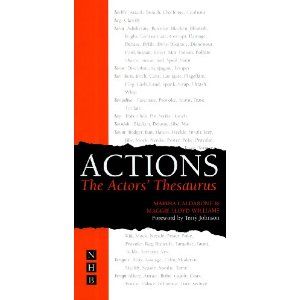
Actions: The Actor's Thesaurus
(2004) An essential companion for actors in rehearsal – a thesaurus of actions words to revitalize performance. Actors need actions. They cannot act moods. They need to be doing something with every line. They need verbs. They need an aim to achieve, and an action selected to help them achieve that aim. “Actions” are active verbs. In order to perform a line truthfully, the actor needs to find exactly the right action to suit that particular situation and that particular line. That is where... |
 |
|
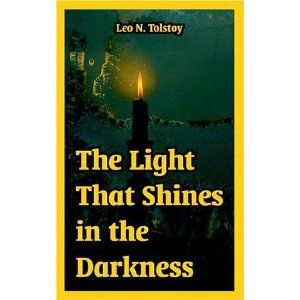
Light That Shines in the Darkness
(2004) The Light That Shines in the Darkness – the last of Tolstoy’s plays, was left unfinished. In Russia it is prohibited on account of its allusions to the refusal of military service. Yet it is in some ways the most interesting of Tolstoy’s posthumous works. It is obviously not strictly autobiographical, for Tolstoy was not assassinated as the hero of the piece is, nor was his daughter engaged to be married to a young prince who refused military service. But like some of his other writings... |
 |
|
Rosencrantz and Guildenstern Are Dead
(1988) Rosencrantz and Guildenstern Are Dead is an absurdist, existentialist tragicomedy by Tom Stoppard, first staged at the Edinburgh Festival Fringe in 1966. The play expands upon the exploits of two minor characters from Shakespeare's Hamlet, the courtiers Rosencrantz and Guildenstern. The action of Stoppard's play takes place mainly "in the wings" of Shakespeare's, with brief appearances of major characters from Hamlet who enact fragments of the original's scenes. Between these episodes the two ... |
 |
|
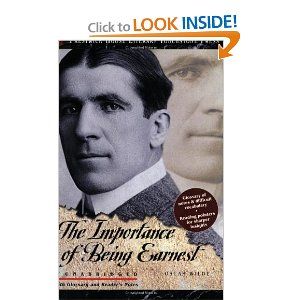
The Importance of Being Earnest
(2005) Oscar Wilde's madcap farce about mistaken identities, secret engagements, and lovers' entanglements still delights readers more than a century after its 1895 publication and premiere performance. The rapid-fire wit and eccentric characters of The Importance of Being Earnest have made it a mainstay of the high school curriculum for decades. Cecily Cardew and Gwendolen Fairfax are both in love with the same mythical suitor. Jack Worthing has wooed Gewndolen as Ernest while Algernon has also pos... |
 |
|
The Power of Darkness
(2005) Count Lev Nikolayevich Tolstoy (1828-1910) commonly referred to in English as Leo Tolstoy, was a Russian writer - novelist, essayist, dramatist and philosopher - as well as pacifist Christian anarchist and educational reformer. He was the most influential member of the aristocratic Tolstoy family. His first publications were three autobiographical novels, Childhood, Boyhood, and Youth (1852-1856). They tell of a rich landowner's son and his slow realization of the differences between him and his... |
 |
|
Free Shakespeare
(2000) This expanded edition of Free Shakespeare is a tool to liberate the works of Shakespeare from directors and academics who seek to impose their ideas upon the plays. John Russell Brown empowers actors and readers to approach the plays freshly and boldly armed with the many different interpretations inherent in the plays. Recognized as a benchmark for the understanding of Shakespearean performance in the twentieth century, a new chapter explores the technological and funding challenges facing Shak... |
 |
|
My Breath in Art: Acting from Within
(2000) Filled with invaluable advice for all actors and vocalists, this guidebook by Beatrice Manley addresses such topics as: how to clear the body of emotional debris * how to get feedback from your body * what to do with your hands * how to release habitual tension * the inner structure of feeling * avoiding overpreparation * and many more. |
 |
|
Black Comedy - 9 Plays
(2000) This first-of-its kind collection includes a wide range of works, from an early examination and critique of American society after World War II to plays that reflect socio-political concerns that kept pace with historical events, like the sit-in demonstrations, the bus boycotts, black nationalism, and the womenÕs liberation movement. A hybrid of comedic forms including satire, farce, comedy of manners, romantic comedy, dark comedy, and tragicomedy are presented through vernacular language, stan... |
 |
|
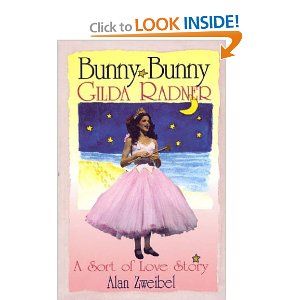
Bunny Bunny - A Sort of Love Story
(2000) Subtitled "Gilda Radner: A Sort of Love Story," this autobiographical play tries to recapture the non-sexual, but deeply felt relationship between Radner, one of Saturday Night Live's original Not Ready-for-Prime-Time players, and Alan Zweibel, who was a writer for the show. Alternately comic and heartbreaking, the play follows these two overgrown kids as they ride their bumper-car lives right up to Radner's death from ovarian cancer. Their loyalty and love glows through every scene. The book is... |
 |
|
Dear: A New Play
(2000) The script to "one of the most tender yet devastating plays of the Drexlerian oeuvre is the musical romance Dear. It takes place in the Eisenhower Fifties, the early years of television. There is an elegiac quality for the tragicomedy punctuated by the sentimental music of the era...The play is about Jessie Clup, a Queens housewife whose philandering husband has deserted her. Her only culpa is her fixation on Perry Como, the ex-barber, crooner kin, reigning TV star." - Rosette Lamont, StageView. |
 |
|
A Chekhov Concert Duets & Arias Conceived & Composed by Sharon Gans & Jordan Charney
(2000) "A tapestry of plays, stories, and letters artistically woven together to form a beautiful new work worthy of Chekhov's own heart and hand. The American artists Sharon Gans and Jordan Charney have reconceived Chekhov in their duets and arias with sensitivity and passion of the finest dramatic caliber. The true wonder and character of Chekhov shines through...enlightening!" - Moscow Contemporary Theater |
 |
|
Alarums & Excursions: Our Theatres in the 90s
(2000) Charles Marowitz casts a critical eye upon the highpoints of the last theatrical decade, in preparation for a new millennium. In a series of reviews, think-pieces, essays and commentaries culled from publications as varied as The London Times and Theatre Week magazine, Marowitz examines the work of such major playwrights as Mamet, Stoppard, Shepard, Neil Simon, Beckett, Gurney, Pinter, Kushner, Baitz, Shanley, Williams and McNalley. Marowitz dramatically captures the anger, anxiety, spectacle, a... |
 |
|
Mad About Theatre
(2000) Mad About Theatre is a systematic analysis of the major issues confronting our theatre today: The Decline of Broadway; The Generally Poor Quality of American Stage Acting; The Pretentiousness of our Avant-Garde; The Narrowness of our Playwriting; Broadway In Search of a Musical Fix; Subsidized British Theatre in the Age of Thatcher and Beyond; The Inflated Directing of the Classics; The Growing Vitality of our Regional Theatres (in Playwriting as well as Acting and Directing); The Innovative Use... |
 |
|
The Best American Short Plays 1995-1996
(1999) The latest edition of this useful series offers 12 one-acts reflecting the wide range of contemporary American theater. For those who prefer their theater comic, there is David Ives' humorous meditation on identity, Degas, C'est Moi, and Susan Cinoman's slice-of-life look at shopping rituals, Fitting Rooms. Those who think drama should be made of sterner stuff should sample Cassandra Medley's moving Dearborn Heights, about discrimination in the North, and Jonathan Levy's Old Blues, a touching p... |
 |
|
Spring's Awakening
(2000) Spring's Awakening is a tragi-comedy of teenage sex. Its fourteen-year-old heroine, Wendla, is killed by abortion pills. The young Moritz, terrorized by the world around him, and especially by his teachers, shoots himself. The ending seems likely to be the suicide of Moritz's friend, Melchior, but in a confrontation with a mysterious stranger (the famous Masked Man) he finally manages to shed his illusions and face the consequences. |
 |
|
Slings And Arrows: Theater In My Life
(2000) "He's a marvelous storyteller: gossipy, candid without being cruel, and very funny. This vivid, entertaining book is also one of the most penetrating works to be written about the theater." - Publishers Weekly |
 |
|
Script into Performance: A Structuralist Approach
(2000) An analysis of script interpretation for the theater. The text includes theories on performance as well as examples from the works of Shelley, Ibsen and Pinter.In his new preface, Hornby laments the modernization of classic plays which he believes subverts the original text. - From Library Journal |
 |
|
The Best American Short Plays 1994-1995
(2000) Christopher Durang ¥ Craig Fols ¥ J.E. Franklin ¥ David Mamet ¥ Steve Martin ¥ Elaine May ¥ Max Mitchell ¥ Rich Orloff ¥ Jacquelyn Reingold ¥ Ronald Ribman ¥ Murray Schisgal ¥ Jules Tasca ¥ Thornton Wilder ¥ Doug Wright. |
 |
|
Cyrano de Bergerac
(2003) Rostand's masterpiece-and the ultimate triumph of the great French romantic tradition-is the magnificent hero-for-all-seasons, Cyrano de Bergerac. |
 |
|
The Day the Bronx Died
(2000) This engrossing drama by Michael Henry Brown had its world premiere in 1992. This book features the complete script of the story of two childhood friends, one black, the other white, and their struggle to live in a racist world. |
 |
|
Ghost in the Machine
(2000) The playscript to Ghost in the Machine by David Gilman begins with a common situation - that of a missing fifty dollar bill - and spins it into intriguing questions of probability, chance and the complexities of musical composition: illusion and reality. |
 |
|
The National Black Drama Anthology: Eleven Plays from America's Leading African-American Theaters
(2000) "Though New York remains the de facto capital of American theater, much of the most daring and interesting work today is done by regional theaters. This is doubly true of plays by African American authors, who, despite a few notable exceptions (August Wilson, George C. Wolfe), suffer under a commercial apartheid that keeps black plays off Broadway. Of necessity, African American theater artists have to create their own venues from the ground up. This wide-ranging anthology edited by the founder ... |
 |
|
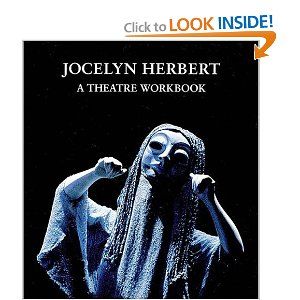
A Theater Workbook
(2000) "This wonderful, wonderful book, beautifully edited and staged (and I do mean that word) is four achievements in one: a record of a life's work presented brilliantly; a theatre workbook of practical value to every theatre design course in the country; an example to be followed of personal integrity, professionalism, and respect for the text; a model in publishing of how to link the written word and visual image creatively on the page." - The Royal Arts Society Journal. Includes 525 photographs, ... |
 |
|
Style : Acting in High Comedy
(2000) This book isn't a critical examination of high comedy. Rather, it's a collection of suggestions for the middlemen: the actors who have to catch the comic spark from the playwright and pass it on to the audience. The effort involved must be imperceptible: one has to acquire the cleverness, the articulacy, the febrility of the characters - and then make the whole laborious exercise seem like swimming through silk...The characters in high comedies don't find verbal sophistication difficult or unfam... |
 |
|
The End of Acting: A Radical View
(2000) From Richard Hornby's preface: This book is written for those who act, those who teach acting, and those who are interested in seeing it. It is both a theoretical work and a call for action. This book is an unashamed attack on the American acting establishment ... The concepts derive from my graduate seminars in acting theory and history in the School of Theatre at Florida State University ... Much of the feistiness of those classes carries over into this book ... If my arguments serve only to s... |
 |
|
The Actor's Eye: Seeing and Being Seen
(2000) With this landmark compilation of classes and exercises, anyone can afford to be coached by the man whose students are propelled from his legendary classes at Northwestern University to Broadway and Hollywood. "Acting is as simple as brick-laying and as great as Leonardo da Vinci's art," writes Downs. The Downs approach coaches the actor to make the essential connections between his character and the forces that govern him so that "craft is inevitable and art is made possible." |
 |
|
I Am a Man: A New Play
(2000) "...a play about power, leadership, and the rough-and tumble process of social change. In its multifaceted search for the meaning behind the headline-grabbing events in Memphis, and in its depiction of the roots of black-vs.-black power struggles, it offers both food for thought and an emotional punch." - Hedy Weiss Chicago Sun Times |
 |
|
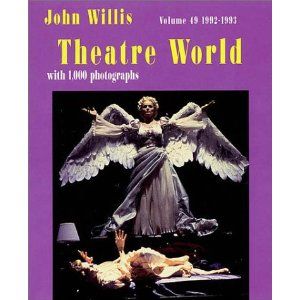
Theatre World 1992-1993, Vol. 49
(2000) Theatre World, the statistical and pictorial record of the Broadway and off-Broadway season, touring companies, and professional regional companies throughout the United States, has become a classic in its field. The book is complete with cast listings, replacement producers, directors, authors, composers, opening and closing dates, song titles, and much, much more. There are special sections with biographical data, obituary information, listings of annual Shakespeare festivals and major drama a... |
 |
|
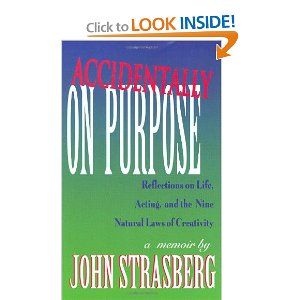
Accidentally on Purpose: Reflections on Life, Acting and the Nine Natural Laws of Creativity
(2000) The author is the son of Lee Strasberg (a major force in the history of the Actors Studio), brother of Susan (the actress) and a would-be theater guru in his own right. His book is a combination autobiography ("My parents were too busy with their own dreams of success... for me") and a how-to guide to creative acting, his answer to his father's famous "Method," which, he says, only taught actors to think like actors. Lee Strasberg is presented as a selfish martinet who came alive only at the Stu... |
 |
Videos