


|
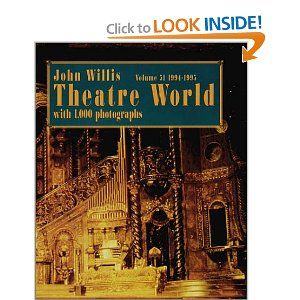
Theatre World 1994-1995, Vol. 51
(1/1/2000) Theatre World, the statistical and pictorial record of the Broadway and off-Broadway season, touring companies, and professional regional companies throughout the United States, has become a classic in its field. The book is complete with cast listings, replacement producers, directors, authors, composers, opening and closing dates, song titles, and much, much more. There are special sections with biographical data, obituary information, listings of annual Shakespeare festivals and major drama a... |
 |
|
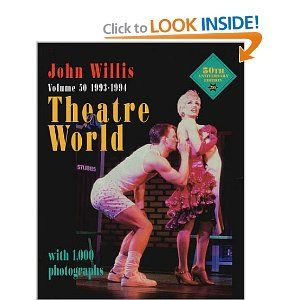
Theatre World 1993-1994, Vol. 50
(1/1/2000) Theatre World, the statistical and pictorial record of the Broadway and off-Broadway season, touring companies, and professional regional companies throughout the United States, has become a classic in its field. The book is complete with cast listings, replacement producers, directors, authors, composers, opening and closing dates, song titles, and much, much more. There are special sections with biographical data, obituary information, listings of annual Shakespeare festivals and major drama a... |
 |
|
The Social Significance of Modern Drama
(1/1/2000) Out of print virtually since its completion in 1914, Emma Goldman's pioneer work Social Significance in Modern Drama bridges modern drama and political philosophy, pointing out the road that remains to be travelled toward a theatre of social empowerment. Activist, feminist, philosopher and anarchist, Emma Goldman was a passionate thinker about all things modern when the 20th century was still raw and new. The emergence of her treatise on the theatre after years of obscurity is certain to arouse ... |
 |
|
Polaroid Stories
(1/1/1999) Naomi Iizuka’s 1997 play, Polaroid Stories, consciously uses stories, characters and themes from Ovid’s Metamorphoses to tell the stories of street kids living on the edge in a desolate, urban landscape. Because these characters are named after Orpheus and Eurydice, and Echo and Narcissus, or based on stories of Dionysus, and Ariadne and Theseus, and because scenes are entitled “The Story of Semele” or “Theseus in the Labyrinth,” Iizuka creates a world that has two dimensions: the g... |
 |
|
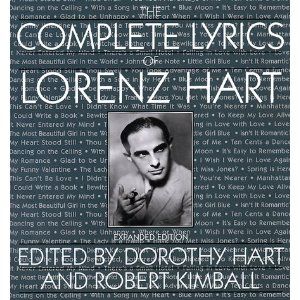
The Complete Lyrics Of Lorenz Hart
(1/1/1995) This expanded edition includes an appendix of previously uncollected and newly discovered lyrics. |
 |
|
Musicals!: A Complete Selection Guide for Local Productions
(12/2/1994) From A . . . My Name Is Alice to The Zulu and the Zayde, this second edition of a title first published in 1984 contains information about 500 musicals (100 of which are new to this edition) available for production by community theaters and schools. Listed alphabetically by title, each entry includes date of original production, playwright, composer, lyricist, plot summary, licensing agent and music publisher, recordings and librettos available (for in-depth research by the user), and cast (num... |
 |
|
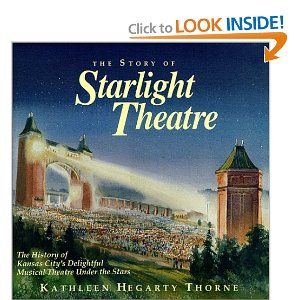
The Story of Starlight Theatre
(3/1/1992) Starlight Theatre is a magic place where an evening of musical theatre under the stars in Kansas City's Swope Park speaks so strongly of emotion that the audience is transformed by the presence of the creative experience. This book is filled with historical photos and provides a "behind the scenes" look at the real workings of the second largest outdoor theatre in the United States. A must for theatre goers everywhere. Unlike many other art forms, live outdoor theatre is a participatory expe... |
 |
|
Soliloquy: The Shakespeare Monologues - The Men
(12/31/1969) Your one-stop classical workshop! At last, over 175 of Shakespeare's finest and most performable monologues taken from all thirty-seven plays are here in two easy-to-use volumes (Men and Women). Selections travel the entire spectrum of the great dramatist's vision, from comedies, wit and romances, to tragedies, pathos and histories. Soliloquy! is an excellent and comprehensive collection of Shakespeare's speeches. Not only are the monologues wide-ranging and varied, but they are superbly annota... |
 |
|
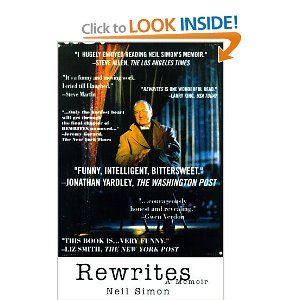
Rewrites: A Memoir
(12/31/1969) After serving an apprenticeship under Sid Caesar and Phil Silvers in Los Angeles, Neil Simon returned to New York at age 30 to embark on a career as a playwright. Some 35 years and three dozen plays later, the most successful comedy writer in the history of the American stage is still at it. In Rewrites, Simon reflects on his career, his relationship with his older brother and mentor Danny, and the loss of his wife Joan to cancer. Along the way, he reveals the price he has paid for his achieveme... |
 |
|
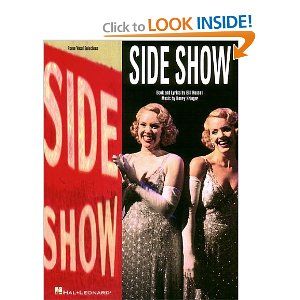
Side Show
(12/31/1969) This collection features PVG arrangements of 16 songs from the recent Broadway run of this controversial, critically acclaimed new musical that will be opening next year in Europe. Songs include: Come Look at the Freaks * The Devil You Know * Feelings You've Got to Hide * I Will Never Leave You * Leave Me Alone * Like Everyone Else * One Plus One Equals Three * Private Conversation * Say Goodbye to the Freak Show * Tunnel of Love * We Share Everything * When I'm by Your Side * You Should Be Love... |
 |
|
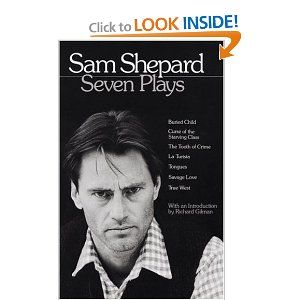
Sam Shepard: Seven Plays
(12/31/1969) Sam Shepard is the Pulitzer Prize–winning author of more than forty-five plays. He was a finalist for the W. H. Smith Literary Award for his story collection Great Dream of Heaven, and he has also written the story collection Cruising Paradise, two collections of prose pieces, Motel Chronicles and Hawk Moon, and Rolling Thunder Logbook, a diary of Bob Dylan's 1975 Rolling Thunder Review tour. As an actor he has appeared in more than thirty films, and he received an Oscar nomination in 1984 for... |
 |
|
Saturday Night Fever - Piano/Vocal/Guitar Songbook
(12/31/1969) Features 7 hit songs from Saturday Night Fever: How Deep Is Your Love * If I Can't Have You * Jive Talkin' * More Than a Woman * Night Fever * Stayin' Alive * You Should Be Dancing. |
 |
|
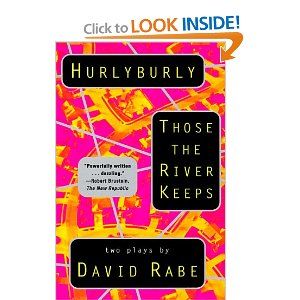
Hurlyburly and Those the River Keeps: Two Plays
(12/31/1969) Full Length, Drama Characters: 4 male, 3 female Interior Set This riveting drama took New York by storm in a production directed by Mike Nichols and starring William Hurt, Sigourney Weaver, Judith Ivey, Christopher Walken, Harvey Keitel, Cynthia Nixon and Jerry Stiller. Characters nose deep in the decadent, perverted, cocaine culture that is Hollywood, pursing a sex crazed, drug-addled vision of the American Dream. Later stage and screen incarnations have attracted such actors as Ethan Hawke,... |
 |
|
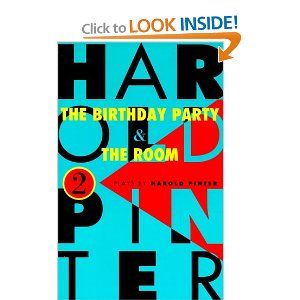
The Birthday Party and The Room: Two Plays
(12/31/1969) In The Birthday Party, a musician who escapes to a dilapidated boarding house becomes the victim of a ritual murder in which everyone- assassins, victim, and observers- implacably plays out the role assigned him by fate.The Room, a derelict boarding house again becomes the scene of a visitation of fate when a blind Black man suddenly arrives to deliver a mysterious message. |
 |
|
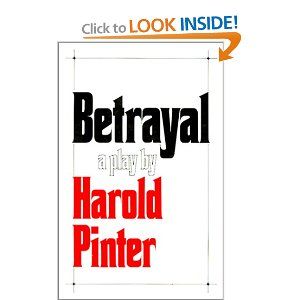
Betrayal
(12/31/1969) Part of a collection of Harold Pinter's works, this is a comedy of sexual manners in which Pinter captures the psyche's sly manoeuvres for self-respect with sardonic forgiveness. Written in 1978 by the author of "The Caretaker", "The Lover", "The Homecoming" and "The Birthday Party". --This text refers to an out of print or unavailable edition of this title. |
 |
|
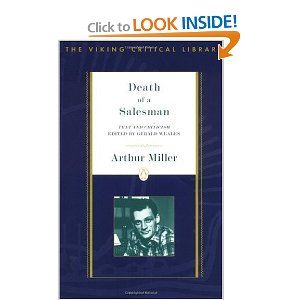
Death of a Salesman
(12/31/1969) The tragedy of a typical American--a salesman who at the age of 63 is faced with what he cannot face: defeat and disillusionment. |
 |
|
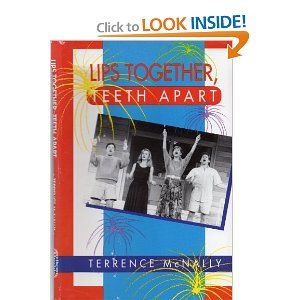
Lips Together, Teeth Apart
(12/31/1969) The author of such critically acclaimed plays as The Lisbon Traviata and Frankie and Johnny in the Clair de Lune, Terrence McNally has graced the American theater with a voice that captures our fear of intimacy in the modern age with dead-on insight, wit, and poignancy. But never has he blended these disparate elements into such a brilliantly cohesive whole as he has in Lips Together, Teeth Apart,hailed by Frank Rich of the New York Times as McNallys"most ambitious and most accomplished play yet... |
 |
|
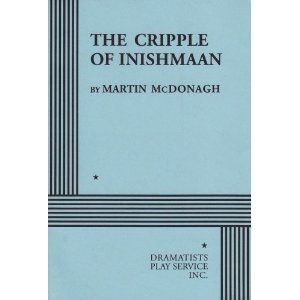
The Cripple of Inishmaan
(12/31/1969) In 1934, the people of Inishmaan learn that the Hollywood director Robert Flaherty is coming to the neighboring island to film a documentary. No one is more excited than Cripple Billy, an unloved boy whose chief occupation has been grazing at cows and yearning for a girl who wants no part of him. For Billy is determined to cross the sea and audition for the Yank. And as news of his audacity ripples through his rumor-starved community, The Cripple of Inishmaan becomes a merciless portrayal of a w... |
 |
|
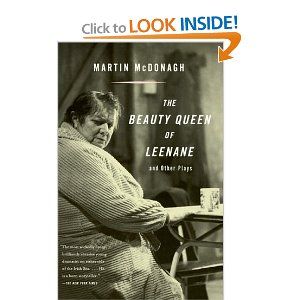
The Beauty Queen of Leenane and Other Plays
(12/31/1969) These three plays are set in a town in Galway so blighted by rancor, ignorance, and spite that, as the local priest complains, God Himself seems to have no jurisdiction there. The Beauty Queen of Leenane portrays ancient, manipulative Mag and her virginal daughter, Maureen, whose mutual loathing may be more durable than any love. In A Skull in Connnemara, Mick Dowd is hired to dig up the bones in the town churchyard, some of which belong to his late and oddly unlamented wife. And the brother... |
 |
|
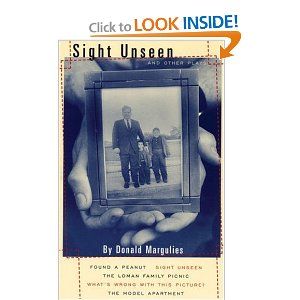
Sight Unseen and Other Plays
(12/31/1969) Margulies's plays explore individuals' needs to be part of a group, usually a family, a religion, or both. Sometimes these are bitingly funny, as in the parodical Loman Family Picnic, about a young man who escapes his unhappy family life by imagining a musical of Death of a Salesman. Sometimes the plays are surreal, as in the Twilight Zonish What's Wrong With This Picture? about a dead wife and mother who is resurrected by her family's intense need--and then must convince them to let her rest in... |
 |
|
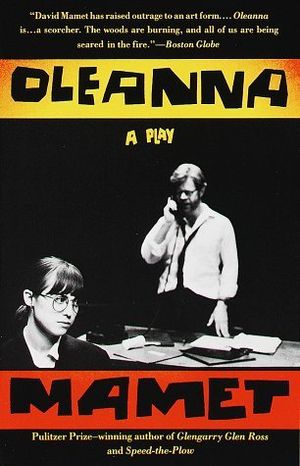
Oleanna
(12/31/1969) In David Mamet's latest play, a male college instructor and his female student sit down to discuss her grades and in a terrifyingly short time become the participants in a modern reprise of the Inquisition. Innocuous remarks suddenly turn damning. Socratic dialogue gives way to heated assault. And the relationship between a somewhat fatuous teacher and his seemingly hapless pupil turns into a fiendishly accurate X ray of the mechanisms of power, censorship, and abuse. |
 |
|
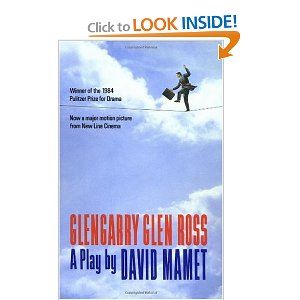
Glengarry Glen Ross
(12/31/1969) Winner of the 1984 Pulitzer Prize, David Mamet’s scalding comedy is about small-time, cutthroat real estate salesmen trying to grind out a living by pushing plots of land on reluctant buyers in a never-ending scramble for their fair share of the American dream. Here is Mamet at his very best, writing with brutal power about the tough life of tough characters who cajole, connive, wheedle, and wheel and deal for a piece of the action—where closing a sale can mean a brand new Cadillac but losin... |
 |
|
Spinning into Butter: A Play
(12/31/1969) Set on a college campus in Vermont, Spinning into Butter is a new play by a major young American playwright that explores the dangers of both racism and political correctness in America today in a manner that is at once profound, disturbing, darkly comic, and deeply cathartic. Rebecca Gilman challenges our preconceptions about race relations, writing of a liberal dean of students named Sarah Daniels who investigates the pinning of anonymous, clearly racist letters on the door of one of the colle... |
 |
|
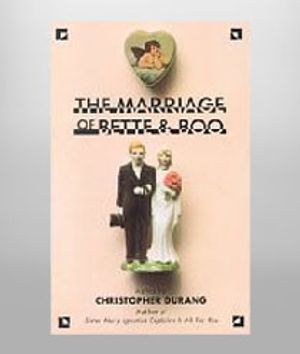
The Marriage of Bette & Boo
(12/31/1969) As the play begins Bette and Boo are being united in matrimony, surrounded by their beaming families. But as the further progress of their marriage is chronicled it becomes increasingly clear that things are not working out quite as hoped for. The birth of their son is followed by a succession of stillborns; Boo takes to drink; and their respective families are odd lots to say the least: His father is a sadistic tyrant, who refers to his wife as the dumbest woman in the world; while Bette's side... |
 |
|
Laughing Wild and Baby with the Bathwater: Two Plays
(12/31/1969) “Laughing wild amid severest woe” perfectly describes the fiercely ironic comedy of Christopher Durang’s Laughing Wild (which takes its title from this Thomas Gray quotation via Samuel Beckett) and the previously unpublished Baby with the Bathwater. In Laughing Wild, two comic monologues evolve into a man and a woman’s shared nightmare of modern life and the isolation it creates. From her turf battles at the supermarket to the desperate clichés of self-affirmation he learns at his “pe... |
 |
|
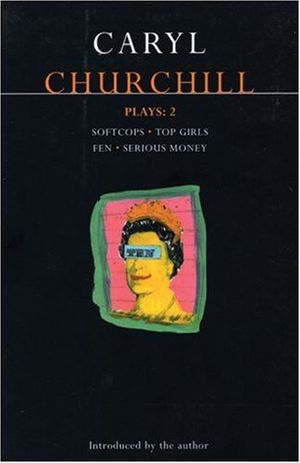
Churchill Plays: 2
(12/31/1969) This second collection of plays by Caryl Churchill includes "Objections to Sex and Violence", "Softcops", "Top Girls", "Fen" and "Serious Money". |
 |
|
Churchill: Plays One
(12/31/1969) The plays in this volume represent the best of Churchill's writing up to and including her emergence onto the international theatre scene with Cloud Nine. The volume also contains a new introduction by the author as well as short prefaces to each play. |
 |
|
The Mousetrap and Other Plays
(12/31/1969) Readers will be front-row center for this special trade collection of Agatha Christie's greatest suspense plays, which includes: The Mousetrap, the longest-running play in history, Ten Little Indians and Witness for the Prosecution, both made into classic films, Appointment with Death, The Hollow, Towards Zero, Go Back to Murder, and one of Christie's personal favorites, The Verdict-all perfectly staged by the Queen of Crime. |
 |
|
Marina Carr: Plays 1
(12/31/1969) Marina Carr: Plays 1 introduces the work of a major new voice in playwrighting. Carr has been praised for the beauty and uniqueness of her language, was cited by The Independent as "a hugely valuable dramatic voice," and has even been compared to Eugene O'Neill. A prominent voice in British letters who has been building momentum in the United States for the past decade, Carr's four critically acclaimed works are gathered together here for the first time. |
 |
|
A Man for All Seasons
(12/31/1969) The classic play about Sir Thomas More, the Lord chancellor who refused to compromise and was executed by Henry VIII. |
 |
|
The Norman Conquests A Trilogy of Plays
(12/31/1969) This brilliant comic trilogy details the amorous exploits of Norman, assistant librarian, whose one aim is to make the women of his life happy—these women being, as it happens, three sisters, one of them his wife, who can’t wear contact lenses because “life with Norman is full of unexpected eye movements.” Each play stands uproariously on its own yet interlocks with the others to form an ingenious Chinese puzzle of successive relations. |
 |
|
Edward Albee: A Singular Journey
(12/31/1969) The American playwright Edward Albee's greatest glories came early in his career. When his first play, The Zoo Story, debuted in Provincetown, Mass., in 1960, he was called, as Gussow (cultural writer for the New York Times) puts it here, "our homegrown equivalent of Beckett." After his masterpiece, Who's Afraid of Virginia Woolf? was staged in 1962, Albee was heralded as the voice of his generation. Then came two decades of debilitating alcoholism and commercial and critical flops. However, his... |
 |
|
Acting With Shakespeare: The Comedies
(12/31/1969) In this book adapted from a television master class, actress Janet Suzman has crafted a superbly concise and clearly written account of how to develop fully realized characters in Shakespeare. Here she shares her poignant observations. Includes a foreword, and great photos throughout. Also available: DVD, HL00314739 |
 |
|
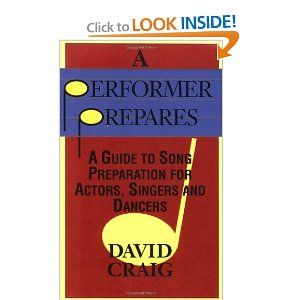
Performer Prepares: A Guide to Song Preparation for Actors, Singers and Dancers
(12/31/1969) A Performer Prepares is a 13-part master class on how to perform on any stage from bleak rehearsal room to the Palace Theatre. The class covers the basic Broadway song numbers, from show ballad to showstopper. With precise, logical steps and dynamic and entertaining dialogues between himself and his students, David Craig takes anyone with the desire to shine from an audition to final curtain call. These lessons on the pages recreate as closely as possible the unique interpersonal dyamic of Craig... |
 |
|
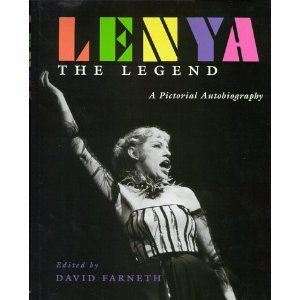
Lenya the Legend
(12/31/1969) Born Karoline Blamauer in Vienna in 1898, Lenya spent an impoverished childhood there before launching her career in Zurich and then Berlin, where she met and married Weill. The toast of the Berlin arts scene, Weill and Lenya left Germany in 1933 following the election of Hitler as chancellor. Weill was Jewish and an advocate of freedom of expression--his play Der Silbersee ("The Silver Lake"), which contained a caricature of Hitler, had already been banned by the authorities. The couple went to... |
 |
|
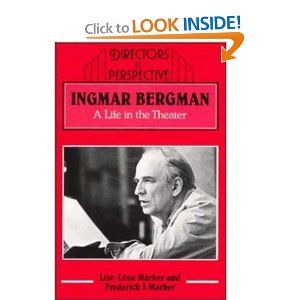
Ingmar Bergman: A Life in the Theater
(12/31/1969) A revised and expanded edition highlights the developments that have occurred in the interim since the first edition with reference to Bergman's triumphant return to the Royal Dramatic Theatre in Stockholm after years of self-imposed exile. |
 |
|
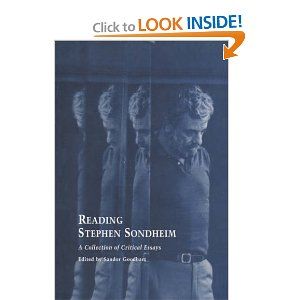
Reading Stephen Sondheim: A Collection of Critical Essays
(12/31/1969) Stephen Sondheim is arguably the most important writer for the American musical stage today, the equivalent in his field of Miller, Albee, O'Neill, and Williams. Yet he has rarely been treated seriously within the academy. Reading Stephen Sondheim: A Collection of Critical Essays is an attempt to remedy that situation. Bringing together scholars and critics from a wide variety of literary and theoretical perspectives, this book undertakes to examine all of Sondheim's major productions and themes... |
 |
|
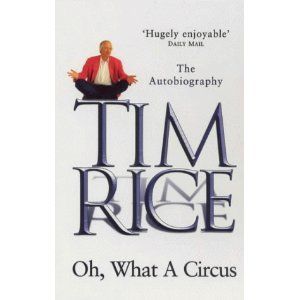
Oh What a Circus
(12/31/1969) With wit and candour, Tim Rice describes the gilded path that took him from cricket and comic-obsessed schoolboy to one of the world's best-known lyricists. Along the way he worked as a petrol pump attendant and articled clerk before becoming a management trainee at EMI. But it was his fateful meeting with Andrew Lloyd Webber in 1965 which was to be the turning-point in Tim's career. Immediate fortune didn't follow and it took the album of Jesus Christ Superstar to reach no.1 in the States befor... |
 |
|
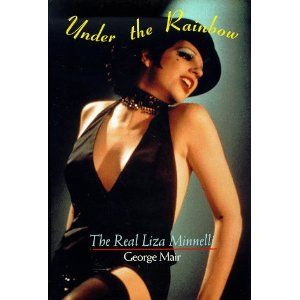
Under the Rainbow: The Real Liza Minnelli
(12/31/1969) The daughter of Judy Garland and movie director Vincente Minnelli, Liza Minnelli has endured excruciating trauma and failure and exhilarating passion and success - with the help of drugs, lovers, and a few close friends. Under the Rainbow is the touching story of a bewildered little girl searching for the childhood she never had and a love that has eluded her. There are two Lizas: the dynamic entertainer whose dramatic voice and stage presence embraced the romantic imagination of her audience; a... |
 |
|
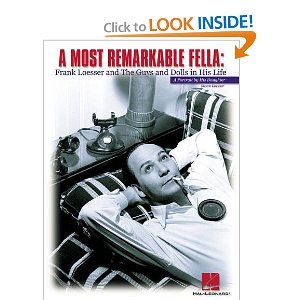
Frank Loesser: A Most Remarkable Fella
(12/31/1969) The daughter of one of America's most prolific and enduring composers turns her pen to an engaging, revealing portrait of her father, her family and the life they shared in the giant shadow that his fame cast. With the 1992 Broadway revivals of Guys and Dolls and The Most Happy Fella, Frank Loesser's music once again reverberates around the nation. Loesser was the composer, lyricist and driving force behind these classics, as well as How to Succeed in Business Without Really Trying and Where's C... |
 |
|
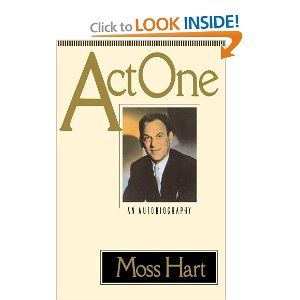
Act One: An Autobiography
(12/31/1969) With this new edition, the classic best-selling autobiography by the late playwright Moss Hart returns to print in the thirtieth anniversary of its original publication. Issued in tandem with Kitty, the revealing autobiography of his wife, Kitty Carlisle Hart, Act One, is a landmark memoir that incluenced a generation of theatergoers, dramatists, and general book readers everywhere. The book eloquently chronicles Moss Hart's impoverished childhood in the Bronx and Brooklyn and his long, determin... |
 |
|
The Street Where I Live
(12/31/1969) This is a highly personal biography of three great shows: My Fair Lady, Camelot, and Gigi. Warm, witty, loving, often hilarious, and poignant in its affection for a glorious era in the American theater, it is the story of what Mr. Lerner calls "the sundown of wit, eccentricity, and glamour." The author himself, try as he will to keep himself out of his pages, emerges not merely as a great talent, but as a man of laughter and love. His principals, however, are Moss Hart and Fritz Loewe, with a st... |
 |
|
Lorenz Hart: A Poet on Broadway
(12/31/1969) Lorenz Hart singlehandedly changed the craft of lyric writing. When Larry Hart first met Dick Rodgers in 1919, the commercial song lyric consisted of tired cliches and cloying Victorian sentimentality. Hart changed all that, always avoiding the obvious, aiming for the unexpected phrase that would twang the nerve or touch the heart. Endowed with both a buoyant wit and a tender, almost raw sincerity, Hart brought a poetic complexity to his art, capturing the everyday way people talk and weaving it... |
 |
|
Cole Porter: A Biography
(12/31/1969) In 1933 Irving Berlin wrote to composer-lyricist Cole Porter, ”I am mad about Night and Day.” Millions of others throughout the world have been ”mad about” that Porter gem, as well as dozens of others, including, to name just a few, Begin the Beguine, From This Moment On, It’s De-Lovely, Just One of Those Things, Love for Sale, and My Heart Belongs to Daddy. Cole Porter (1891-1964) set new standards for popular song-writing, and his lyrics and melodies are as bright and sophisticated t... |
 |
|
Cole Porter
(12/31/1969) This richly told biography reveals the private and public life of one of the most important and beguiling composer/lyricists of the century -- the incomparable Cole Porter, whose songs were the essence of wit and sophistication and whose life was marked by tragedy, courage, sorrow, and secrecy. |
 |
|
Judy Garland: Beyond the Rainbow
(12/31/1969) Morley and Leon's profusely illustrated overview of the singer-actress beloved as much for her pathetic life as for her performances has the signal virtue of acknowledging her core fandom--gay men. Garland's appeal to gay men quite possibly arose out of her love, however misplaced, for her improvident and alcoholic as well as homosexual father. One very close friend was a gay man, two of her five husbands were homosexual, and she urged her daughter Liza to marry the homosexual Peter Allen. Compl... |
 |
|
As Thousands Cheer: The Life Of Irving Berlin
(12/31/1969) A look at the life and prolific career of one of America's most successful songwriters. |
 |
|
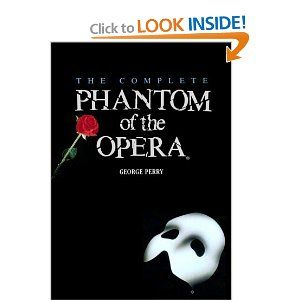
The Complete Phantom of the Opera
(12/31/1969) Andrew Lloyd Webber's musical Phantom of the Opera has been a smash hit worldwide. Now, here is the definitive account of this theatrical masterpiece, tracing the Phantom legend from its origins in historical fact through numerous artistic incarnations to the present day. The book includes the complete libretto and many specially commissioned color photographs of the production. |
 |
|
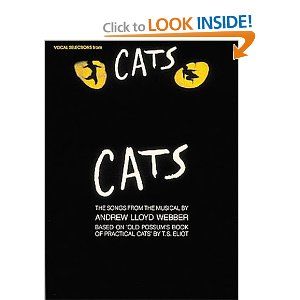
Cats: Vocal Selections
(12/31/1969) This outstanding collection features ten top songs from Andrew Lloyd Webber's beloved musical: The Ad-dressing of Cats * Bustopher Jones: The Cat About Town * Gus: The Theatre Cat * Jellicle Songs for Jellicle Cats * The Journey to the Heavyside Layer * Memory * Mr. Mistoffelees * Old Deuteronomy * The Old Gumbie Cat * Skimbleshanks: The Railway. |
 |
|
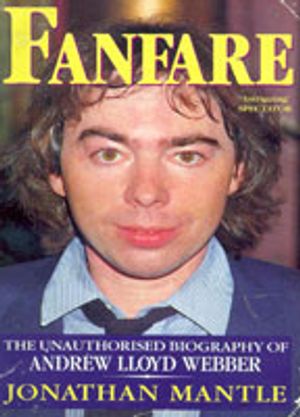
Fanfare: Unauthorized Biography of Andrew Lloyd Webber
(12/31/1969) A biography of Andrew Lloyd Webber, this book looks at his bohemian upbringing, his relationships with his brother and Tim Rice and his application of classical training to the world of pop music. The author has also written "In For a Penny: the Unauthorized biography of Jeffrey Archer". |
 |
Videos