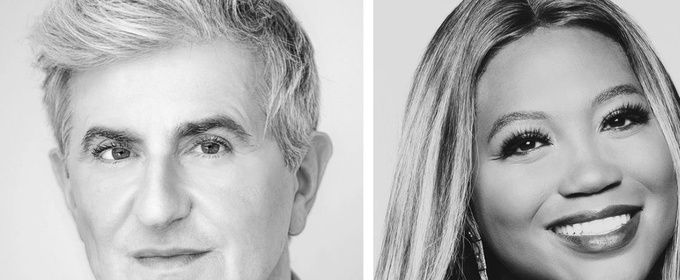
The American Composers Orchestra Will Perform The New Virtuoso: For Art's Sake
The performance is on October 29.
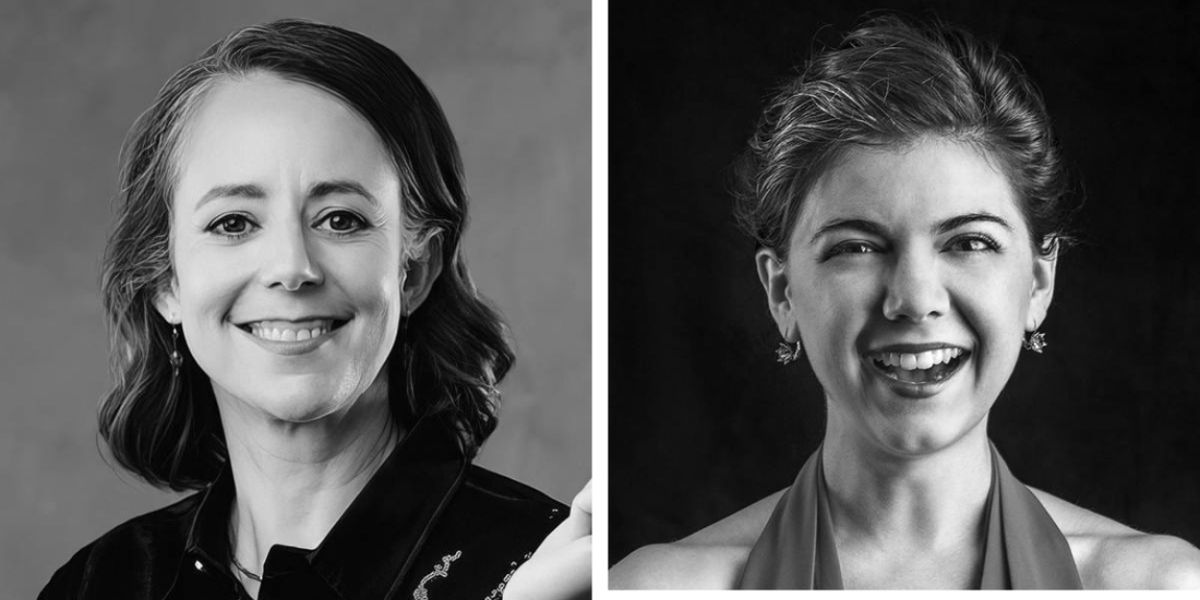
On Wednesday, October 29, 2025 at 7:30 PM, American Composers Orchestra will present The New Virtuoso: For Art's Sake, led by Mélisse Brunet in her debut at Carnegie Hall's Zankel Hall. The second iteration of The New Virtuoso series, the program highlights five visionary composers and performers who experiment with possibility and defy norms on their instrument - such as electronically-collected dream data, sonically reactive moving sculptures, graphic music scoring, art history, gestural conduction, and the creation of new, culturally informed instruments - thereby becoming leading technicians and innovators in the field of orchestral music
All ACO co-commissions, the works on this program include the world premieres of Aaron Israel Levin's Lear in the storm; Mazz Swift's Memory FIVE: Freedom Initiate for Conductrix and Orchestra; Elijah Daniel Smith's The Fall of Ideals; and Tamar Muskal's Square Off for voice, interactive kinetic sculpture, and orchestra featuring Lucy Fitz Gibbon and artist Daniel Rozin; as well as the New York premiere of Raven Chacon's Inscription.
In Aaron Israel Levin's Lear in the storm, commissioned through the EarShot Readings, the titular monarch of Shakespeare's King Lear is shunned by his daughters and takes flight into a tempest, whose violence symbolizes the aging king's own rage and unraveling mind. "Imagine what this elemental madness sounds like," Levin asks the listener. "Now, imagine again. Equal parts berserk and sinister, Lear in the storm reimagines this turbulent and psychologically charged episode." The piece's score is characterized by restless energy, unexpected turns, and more than a touch of the absurd. Rhythmically driven sections are interrupted by fleeting moments of calm, leading to an extended vibraphone soliloquy before the final climax. Along the way, instruments that rarely step into the spotlight-piccolo, tuba, and triangles-emerge as unlikely voices, conceived as concertos in miniature, which punctuate this tempestuous orchestral landscape.
Violinist, singer, composer, and conductor Mazz Swift's Memory FIVE: Freedom Initiate for Conductrix and Orchestra, developed via ACO's EarShot CoLABoratory program, explores the technique of conduction developed by Butch Morris, paired with graphic score notation. The piece follows the Conductrix on a journey through place and meaning to find self-discovery and deeper expression. Conductrix is initiated into a New Alchemy. She "teases out the gold from the sludge of patriarchal, hierarchical, capitalistic, dichotomous thinking. [and asks] What are we?"
Inscription is Pulitzer Prize-winning composer Raven Chacon's first work for full orchestra and incorporates extended techniques Chacon has developed and experimented with in his previous compositions from the past 25 years, which have become central to his compositional voice and style. Co-commissioned by the Dallas Symphony Orchestra and the Tucson Symphony Orchestra and developed via the EarShot CoLABoratory program, Inscription utilizes techniques ranging from standard Western notation conventions to graphic notation and text, creating a score that oscillates between transcriptive and prescriptive roles. The work expands the fixed nature of scores and their interpretations, seeking endless permutations from performing the permanent marks.
The Fall of Ideals is written as Elijah Daniel Smith's response to America's current political climate and the seeming "abandonment of the principles and enlightenment era ideals that previous generations of politicians at least pretended were their guiding stars." Smith distorts, reinterprets, and destroys some of the most recognizable or breathtaking music of the Baroque and Classical eras "in the same way that those currently in power have distorted, reinterpreted...and destroyed the philosophical identity of this country."
Square Off for voice, interactive kinetic sculpture, and orchestra is a bold interdisciplinary work that unites the creative voices of composer Tamar Muskal, visual artist Daniel Rozin, and opera director-librettist Daniel Kramer in a performance where music, sculpture, and text are inseparable. Together, they have created a piece that is both theatrical and deeply personal; a reflection of identity through music and image. At the center of the piece is Rozin's celebrated Wooden Mirror, a kinetic sculpture composed of hundreds of wooden tiles that tilt to form a living, ever-changing image. Wooden Mirror becomes a Second Stage for the singer, Lucy Fitz Gibbon, who appears both live and as a reflected presence on the surface of the sculpture. This doubling heightens the drama, allowing the singer to embody both her immediate voice and her mediated reflection. Daniel Kramer's lyrics trace a striking psychological journey, while Muskal's orchestral score drives this journey with music that is energetic, urgent, and unrelenting. The orchestra propels the drama forward, its rhythmic vitality, dense textures, and relentless momentum amplifying the singer's emotional intensity. Square Off asks its audience to witness not only the singer's journey from self-denial to self-acceptance but also to confront their own reflection-textured, imperfect, and always human.