


How Michael Arden Is Redefining Broadway
This spring, Arden directs The Lost Boys on Broadway.
 Click for Tickets!
Charles Kirsch is the 17-year-old host of the theater podcast Backstage Babble, where he has conducted over 250 in-depth interviews with some of Broadway’s best. In “Stage Direction,” he is using material from the podcast and additional interviews to chronicle the career and impact of some of the most influential theater directors.
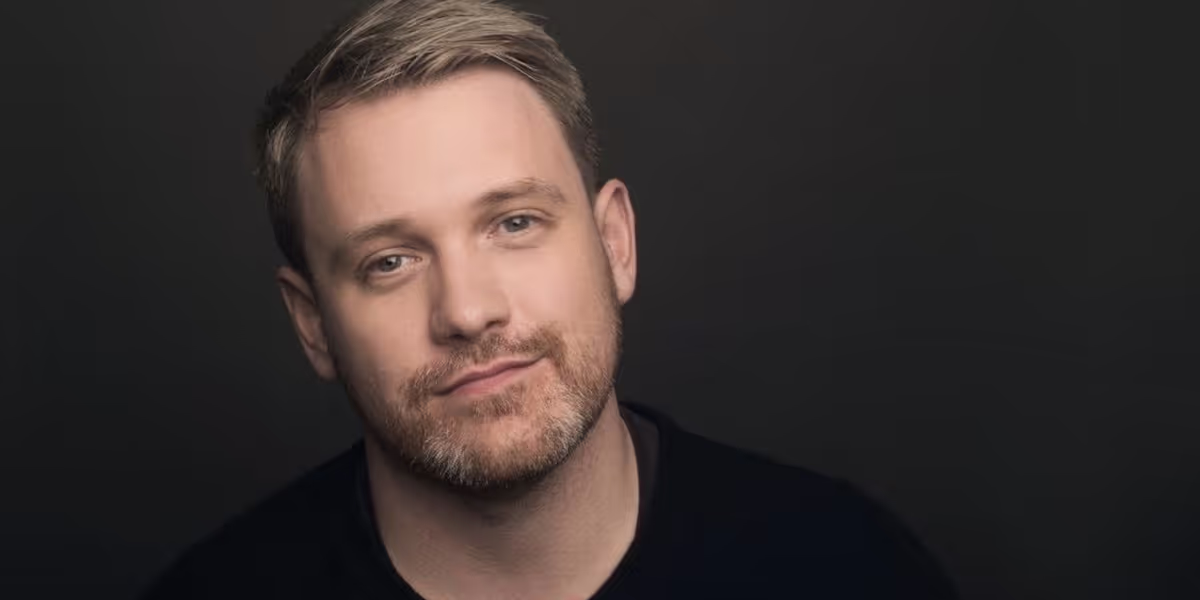
As the recipient of two Tony Awards for Best Director of a Musical in the past three years, there’s no question that Michael Arden is at the top of his game. Between thrilling and inventive revivals of Parade and Once On This Island, and exciting new work like Maybe Happy Ending and the upcoming The Lost Boys, Arden has shown a remarkable ability to create theatrical magic.
Will Aronson and Hue Park, themselves Tony winners for their work on Maybe Happy Ending, spoke about Arden’s visual genius: “Spectacle always runs the risk of overwhelming a story. But Michael and his design team created a stunning spectacle that consistently enhances the story and emotions. It’s a paradoxical combination of elegant minimalism and epic grandeur. It doesn’t seem possible, but that’s what they pulled off.”
Arden is clearly a master at bringing text to life onstage. Stephen Flaherty, who penned the score for Once On This Island, fondly remembered Arden’s initial proposal for his revival. Arden handed Flaherty and his partner Lynn Ahrens a manila envelope featuring an a cappella demo of the score, arranged by longtime Arden collaborator AnnMarie Milazzo. Flaherty was initially skeptical of the idea, but a meeting with Arden changed his mind.
“Michael Arden asked, “How do we tell our stories if everything we have is taken away from us? Imagine a storm devastating everything. How do you rebuild? How do you make music with nothing?” So slowly I realized why he made that a capella demo. Nothing was left after the storm but our own humanity, our own voices. We talked about story circles. About making musical instruments from debris. One man’s junk could be another man’s means of expression.”
Matthew Johnson Harris collaborated with Arden on two major projects – as an assistant director on Parade and as a choreographer on the out-of-town run of The Preacher’s Wife. He recalled a special moment watching Arden work: “I will never forget sitting next to him and the extraordinary Heather Gilbert while they were lighting Parade during tech rehearsals. When we reached the funeral sequence, Michael had an idea: the funeral partners would shift into slow motion, almost like a Greek portrait, during the sustained chorus note. He asked Heather to bathe the stage in a blue wash, with a single golden light landing on Mrs. Phagan as she lifted her gaze on the lyric “The sun can still burn down.” Then, as the moment resolved, the lighting quietly returned to a natural day look. I let out an audible gasp as if I was in church. That moment of theatrical magic, born from Michael’s instinctive understanding of design and staging to convey emotional storytelling, was a masterclass.”
Arden’s actors are just as enthused as the creative teams he collaborates with. One of Arden’s first directing projects was a revival of Merrily We Roll Along at The Wallis Theater in California. Donna Vivino played the role of Mary Flynn in that production, and she recalled: “I was a new parent while taking on the role of Mary, and Michael’s support of me as a working mother is something I will never forget. His compassion and understanding made the experience even more meaningful, both artistically and personally.”
This compassion may have something to do with Arden’s own career as a performer. Perhaps his most memorable stage role was as Quasimodo in The Hunchback of Notre Dame. He was directed in that show by Scott Schwartz, who praised Arden’s acting skill: “He is of course incredibly smart, but he is also a very intuitive artist and has an extraordinary sense of space and physicality. Of course, now he brings that sense into all the shows he directs. I remember well the day he mentioned to me that he was thinking about Quasimodo’s deafness. We both felt it was an important part of the character, and Michael asked if he could bring some aspects of American Sign Language into the show. During rehearsals, we never set exactly when and how ASL would be used, he went by instinct. Over the course of rehearsal, Quasimodo’s use of ASL and the physical and emotional language that developed from this idea became a deep part of the character. It was very beautiful and very moving and created an essential template for Quasimodo moving forward.”
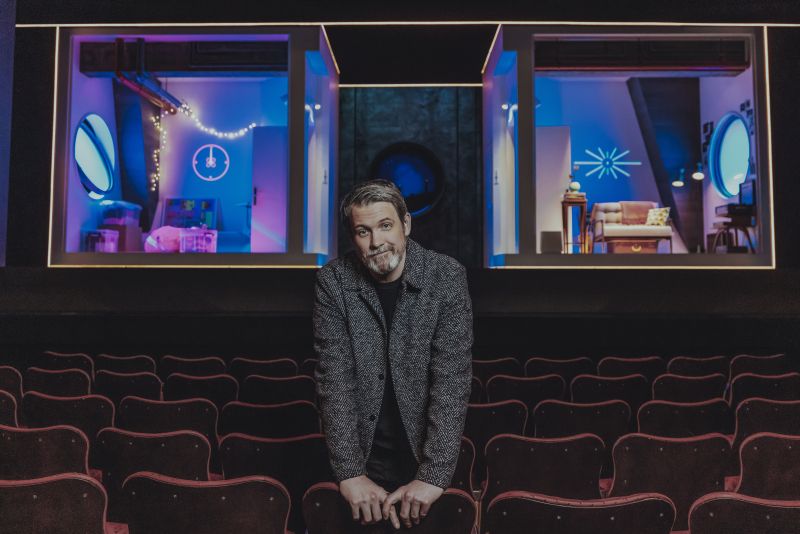
Bobby Conte Thornton, later a star of The Who’s Tommy, worked with Arden early in his directing career on a revival of My Fair Lady at Bay Street Theater. Thornton pointed out that Arden "approached a classic musical like a new play. We spent our first week of My Fair Lady rehearsals investigating every word, returning to the original Shaw text in Pygmalion, questioning and imagining each moment without the fear of being shot down or minimized. At the end of the week, we came in to find the entire set taped out on our rehearsal floor, lined with tables full of props, and an invitation from Michael to ‘just do the show!’ To still carry our scripts, not to worry about cheating out — just to make bold choices based on what we’d talked about in our table work and have fun. And we did!”
Arden made his Broadway directing debut with the Deaf West production of Spring Awakening. Kathryn Gallagher, one of the stars of that production, was more of a rock singer than a theater performer at the time. But Arden quickly taught her a valuable lesson: “The first day in the theater, once the show was fully blocked, Michael told us to forget everything and do the play exactly like we wanted. I don’t remember if any of our improv made it into the show — but I do remember our group of actors became a real company that day. Give a man a fish, feed him for a day; teach a man to fish, and you feed him for a lifetime. Michael taught all of us to fish that day.”
For Tony-nominated actress Isabel Keating, Arden’s reputation preceded him. “When I played Madame Morrible in Wicked at the Gershwin, I was greeted daily across the alley over at Circle in the Square, by Once on This Island’s infamous GOATS! They watered and aired them out on 50th Street around the corner from our stage door! Of course, that made me want to see that production even more than I already did.”
Keating and Arden finally worked together on his most recent Broadway project, The Queen of Versailles, which closed in December 2025. Keating summed up the love many of Arden’s collaborators have for him: “Michael inspires me to bring my best self in the moment. It is a very satisfying and powerful way to work, and I am grateful for the time I have had with him.”
Listen to full episodes of Backstage Babble here!
Prefer BroadwayWorld in Google Search?
Add us as a preferred source so our stories show up more often in Top Stories and Google’s AI answers — for you.
Sign up for all the news on the Fall season, discounts & more...

.png?format=auto&width=365)




