


Review: World Premiere of WHAT OPA DID at Theatre 40 through 2/15
Performances continue through February 15, 2026 on Thursday through Saturday at 7:30 p.m. Sunday at 2:00 p.m.


The world premiere of What Opa Did follows Kate, a young New Yorker, as she confronts her Jewish grandparents’ past in Germany where they were forced to hide with their baby during the World War II. As Kate uncovers the truth about her Opa leaving the family to fend for themselves for three years at the height of rounding up and sending people to concentration camps and the choices he and her Oma had to make to survive, Kate grapples with the moral complexities of their actions and the impact of secrets on their identities.
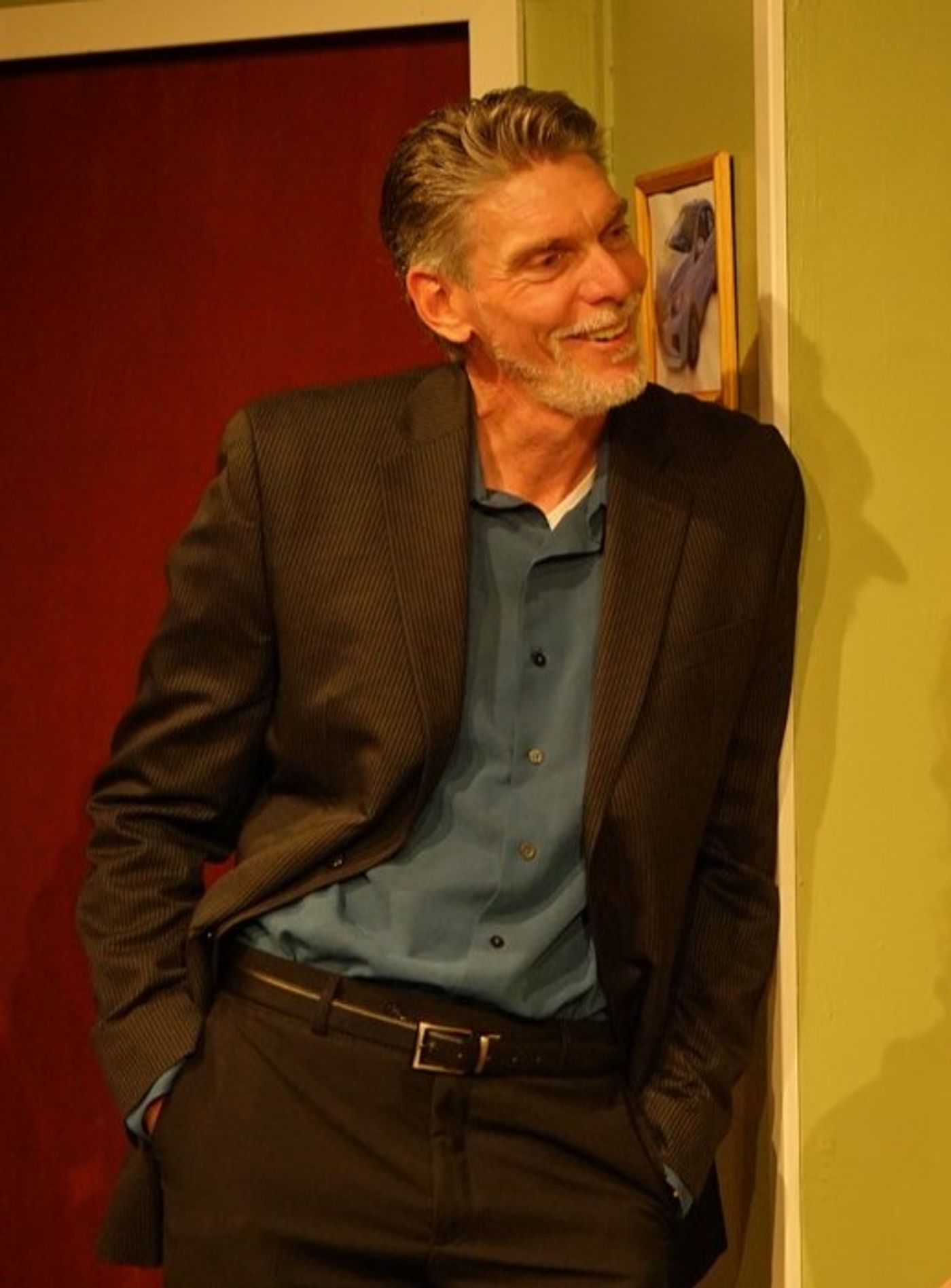 Christopher Franciosa (pictured in Theatre 40's production of "Becky's New Car") is the playwright. He is the son of the late film and tv star Tony Franciosa and Rita Thiel, a Holocaust survivor who shared her family’s experiences while in hiding and then in the camps. While this play is based on true facts of his grandparents’ lives, such as knowing his Opa “left his family for three years during the war, had an affair, and was arrested and placed in a concentration camp,” and his Oma “was all alone with her daughters in the country outside of Leipzig, a place she had never been, trying to survive without her husband.” Franciosa remembers his loving older grandparents, both half Jews, but had to fill in the details between the known facts with speculation and imagination.
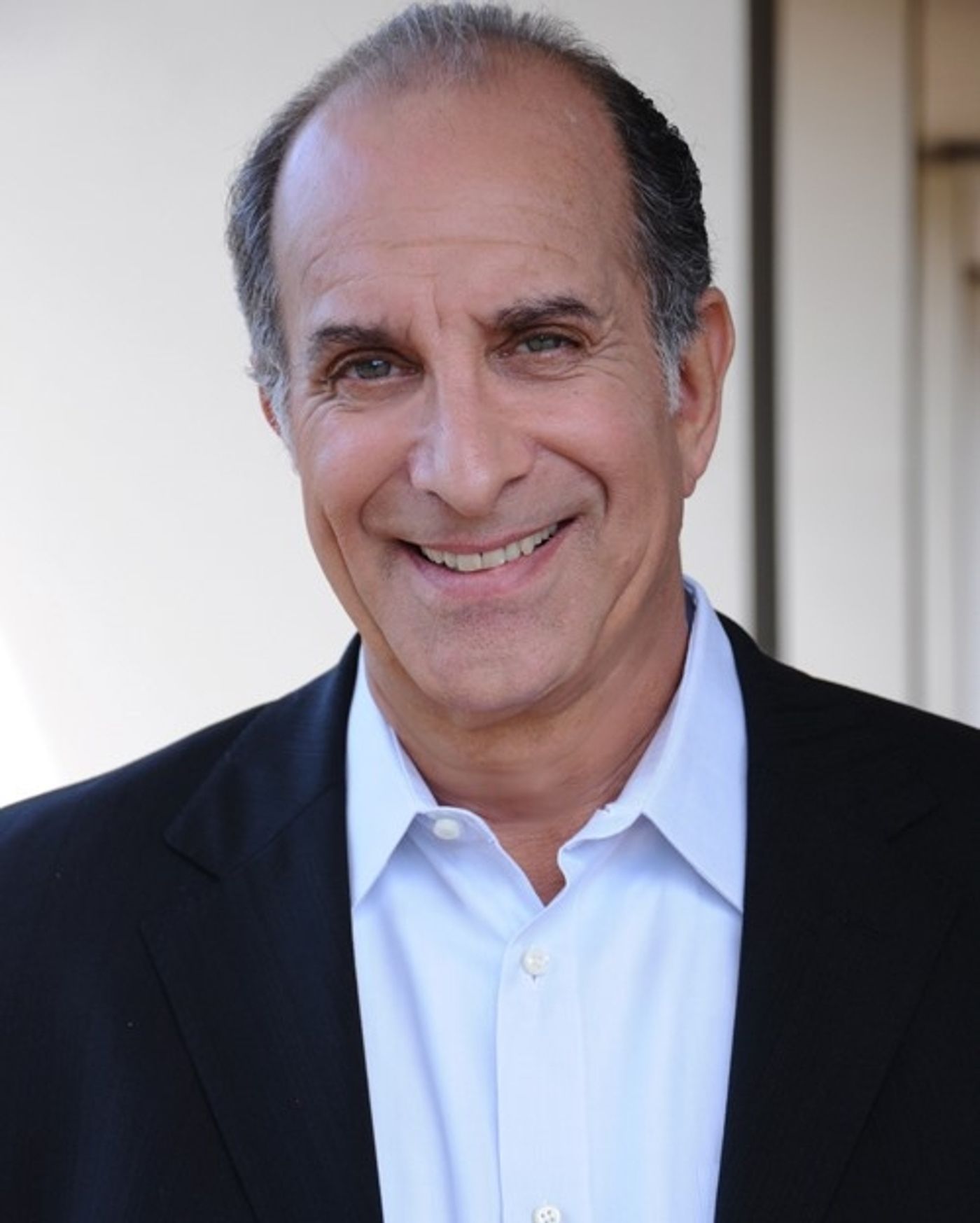 Directed by James Paradise (pictured) who experienced anti-Semitism growing up right after the war and acknowledges “the time has not yet come where this global behavior has become a discard human character element,” realizes how important it is to “never forgot” the atrocities committed in the name of a brutal dictator. “What Opa Did is a play about survival under the most extreme of hateful circumstances.” Beckoned by its subject matter and wonderful characterizations, Paradise grasps the subject matter and opens the audience to understand why decisions were made in the name of survival, even though doing so went against the honest nature of those being hunted down.
Meghan Lewis portrays Kate who lives in Brooklyn but seeks out her Opa in Germany to get the real facts behind what happened there during the war to share with Dr. Hirsch (voice over by C.T. Frank), an executive at the Simon Wiesenthal Center in Los Angeles. Her older Opa is authentically represented by Allan Wasserman as a gruff man in his seventies who does not want to share the details of his family’s survival during World War II.
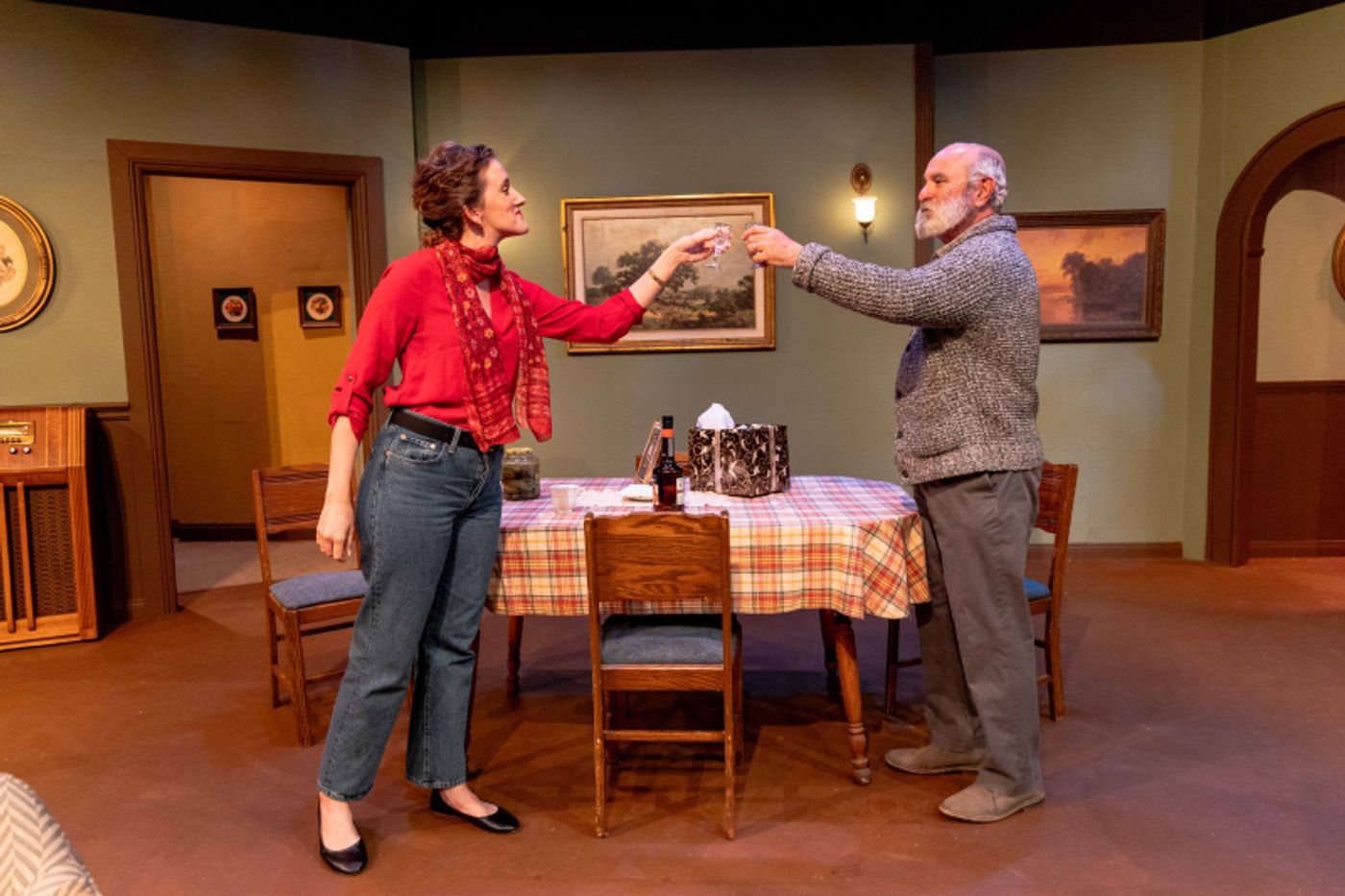
Meghan Lewis and Allan Wasserman
Photo credit: Demian Tejeda-Benitez
As he shares about it with Kate over glasses of schnapps, we meet her grandmother Elisabeth (Lilli Passero), a woman in her thirties who, like her husband, considers herself German first and Jewish second. Scenes of her life with a young Opa (Jeremy Schaye) as they make decisions about their survival in Germany, and then with Victor Montez as Karl Braun, a young SS officer who takes pity on the young woman left alone in the woods to care for herself and her daughter, show us what they did to survive.
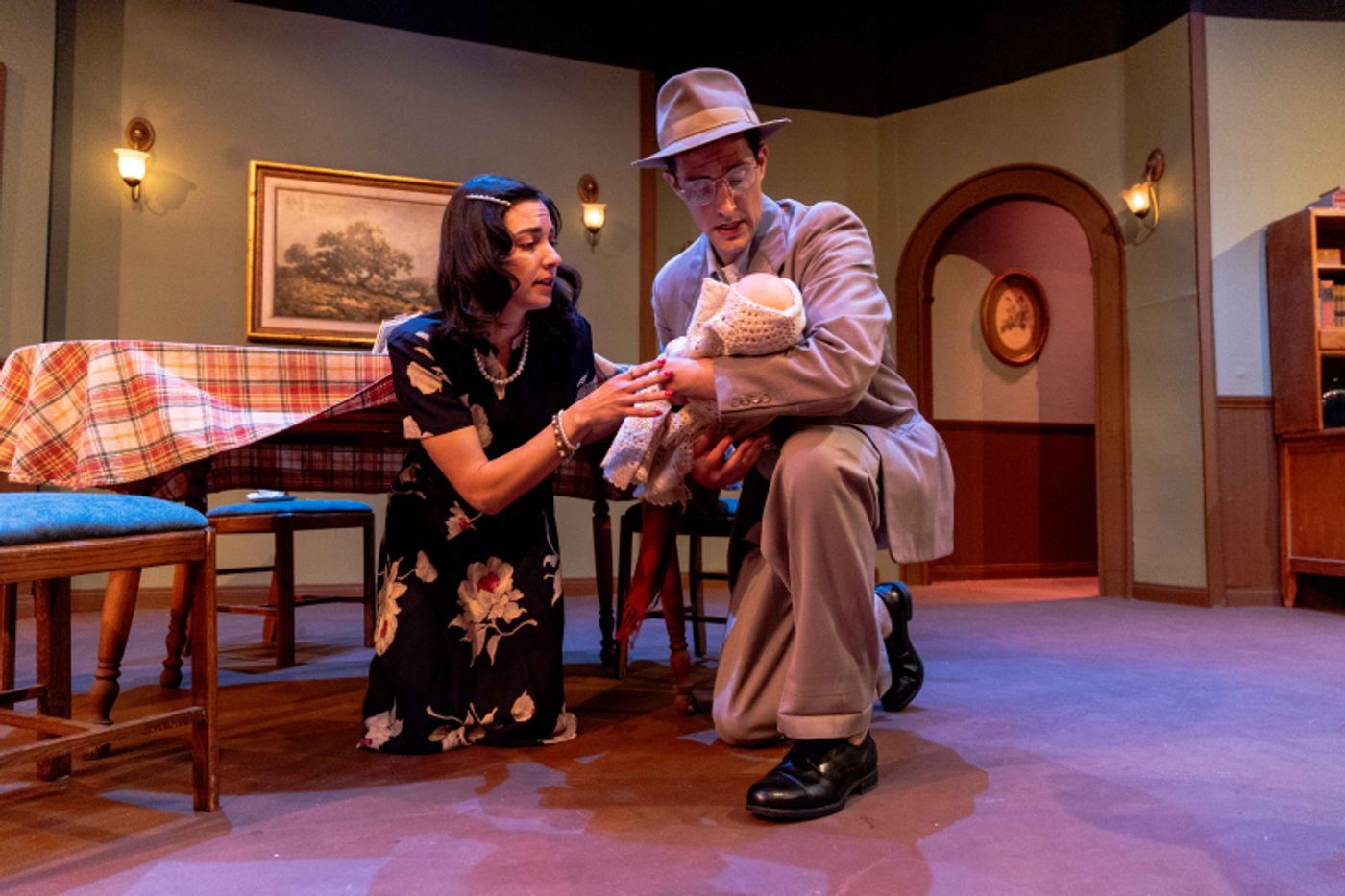
Lilli Passero and Jeremy Schaye
Photo credit: Demian Tejeda-Benitez
We learn that her grandmother had no idea for three years if her husband was alive and ever coming back after leaving to search for his lost uncle in Munich who was taken to Dachau. And all that time, her grandmother needed to figure ways to provide shelter, food, and clothing for herself and her daughter. And in the process, Kate learns how her grandparents’ decisions directly affect her life as she knows it.
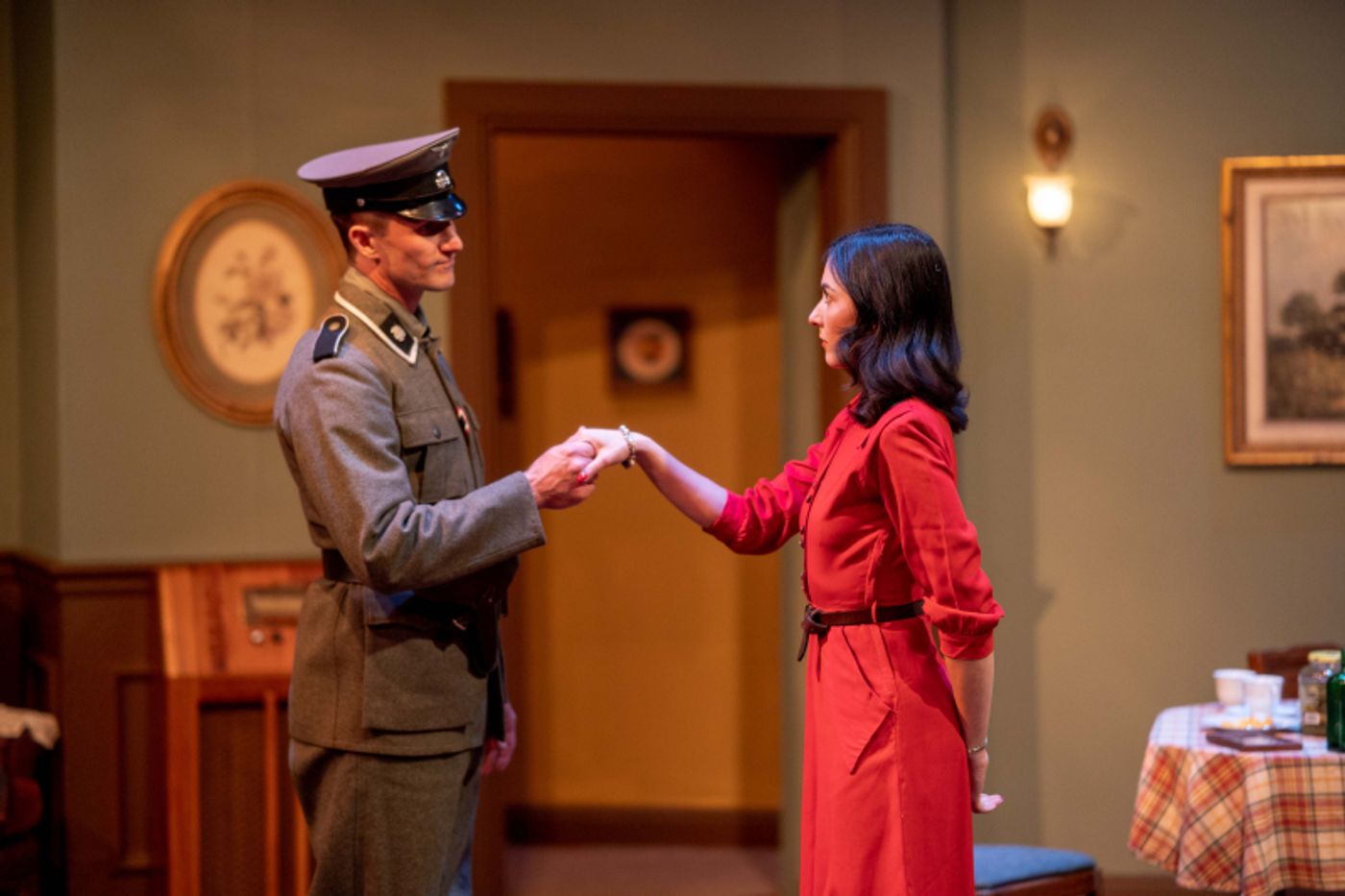
Victor Montez and Lilli Passero
Photo credit: Demian Tejeda-Benitez
It's masterful and brutally honest storytelling at its best, with each actor dedicated to showing each person as a human being, not just either good or bad, while trying to cope with the reality of their lives. Each just wants to survive on their own terms, but are faced with making decisions based on the will of others. How they accept those circumstances brings to light the extent of what people will do to save themselves and the ones they love.
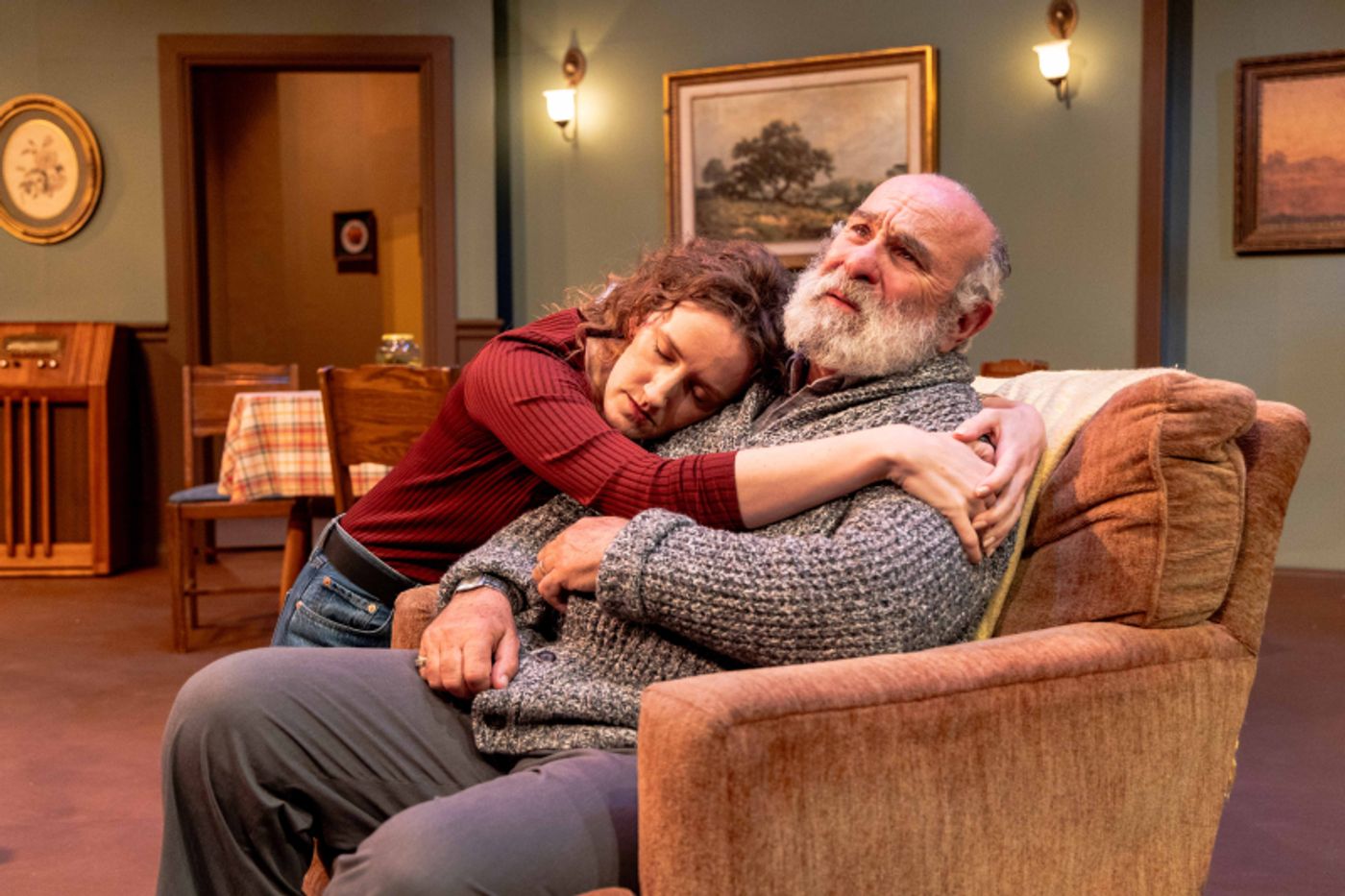
Meghan Lewis and Allan Wasserman
Photo credit: Demian Tejeda-Benitez
What Opa Did is not just a historical drama; it is a profound exploration of how the past continues to resonate in our lives today. Playwright Franciosa challenges us to reflect on our own identities, the legacies we inherit, and the secrets kept which, when known, can change our lives in a moment of hidden revelation.
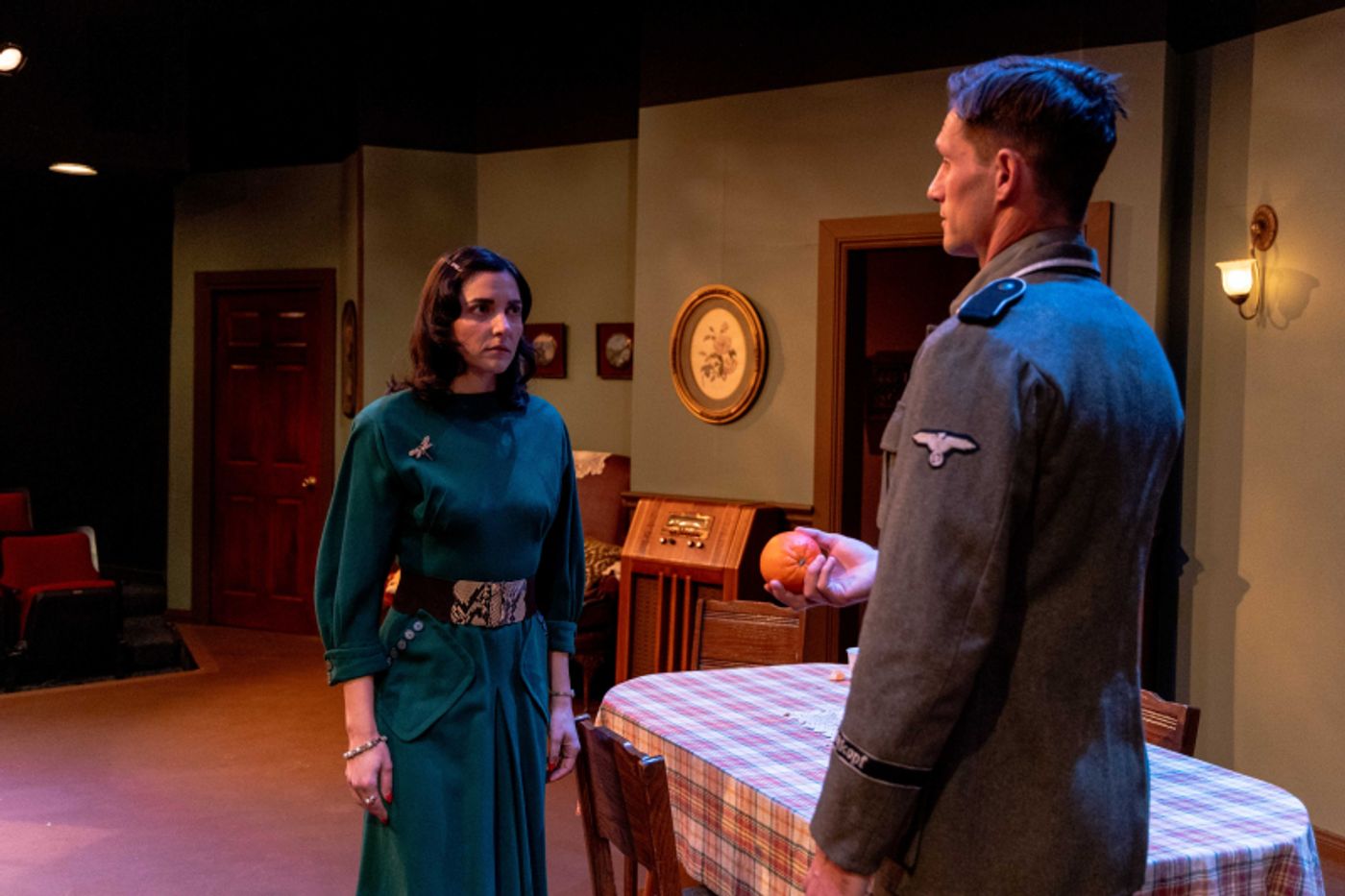
Lilli Passero and Victor Montez
Photo credit: Demian Tejeda-Benitez
Tech credits are solid including Jeff G. Rack’s set design which allows stories to be told across generations; Derrick McDaniel’s lighting design which effectively pulls focus to each shocking scene; Nick Foran’s sound design which includes the dreaded marching of Nazi soldiers, air raid sirens, and how a radio connected those hidden to the outside world; Michael Mullen’s period perfect costume design; and Judi Lewin’s hair/wig/makeup design. Stage manager Bill Froggat mans the booth to perfection with lights and sound cues, while actors move set piece and props into place for each scene.
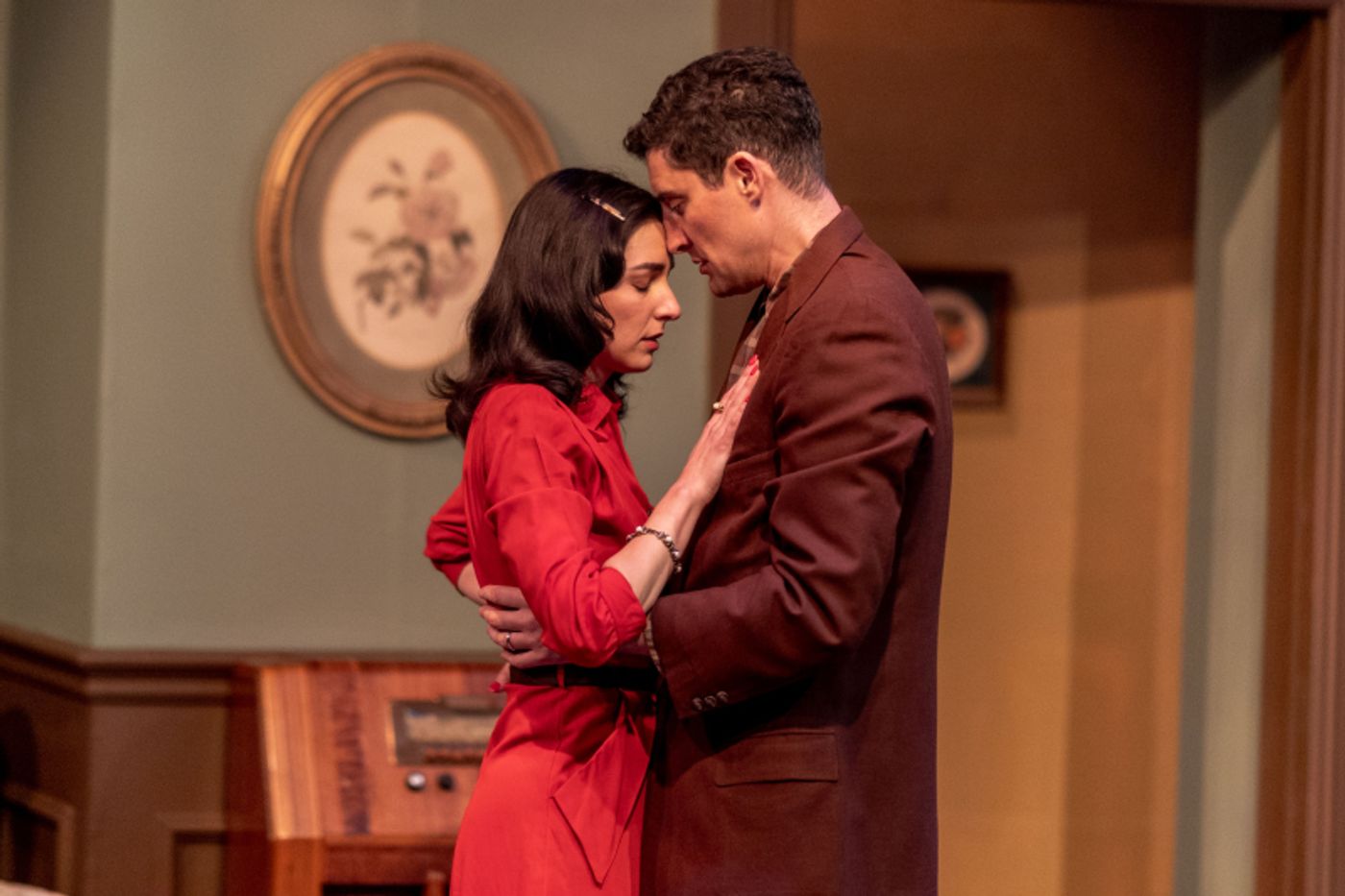
Lilli Passero and Jeremy Schaye
Photo credit: Demian Tejeda-Benitez
The world premiere of What Opa Did, written by Christopher Franciosa and directed by James Paradise, is presented in partnership with Holocaust Museum LA and produced by David Hunt Stafford for Theatre 40, located in the Mary Levin Cutler Theatre located on the campus of Beverly Hills High School at 241 S. Moreno Dr., Beverly Hills, CA 90212. There is ample free parking available in the lot adjacent to the theatre entrance via the driveway at the intersection of Durant and Moreno Drives.
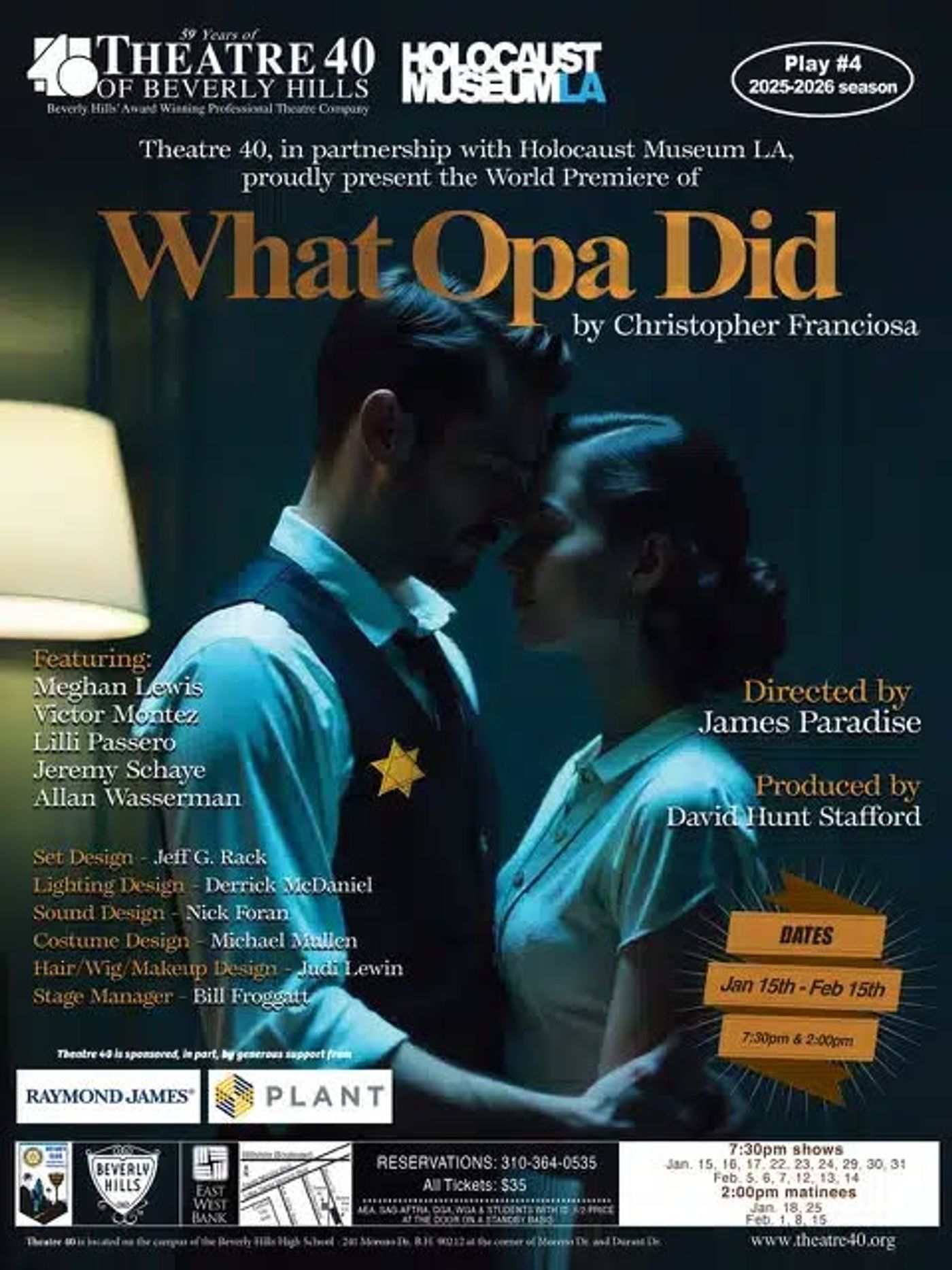
Performances continue through February 15, 2026 on Thursday through Saturday at 7:30 p.m. Sunday at 2:00 p.m. Tickets are $35, available by calling (310) 364-0535 or online at http://theatre40.org. All performances are open seating with available tickets sold at the box office prior to show time. There is an intermission with light snacks available for purchase.
Reader Reviews
Videos