

Review: How Founding Fathers Found Love in MAHAR KEMERDEKAAN
On August 24, the theater production company Broadwayang put on their latest production, Mahar Kemerdekaan (“The Dowry of Independence”) at Gedung Kesenian Jakarta.
By: Rakaputra Paputungan Dec. 12, 2025
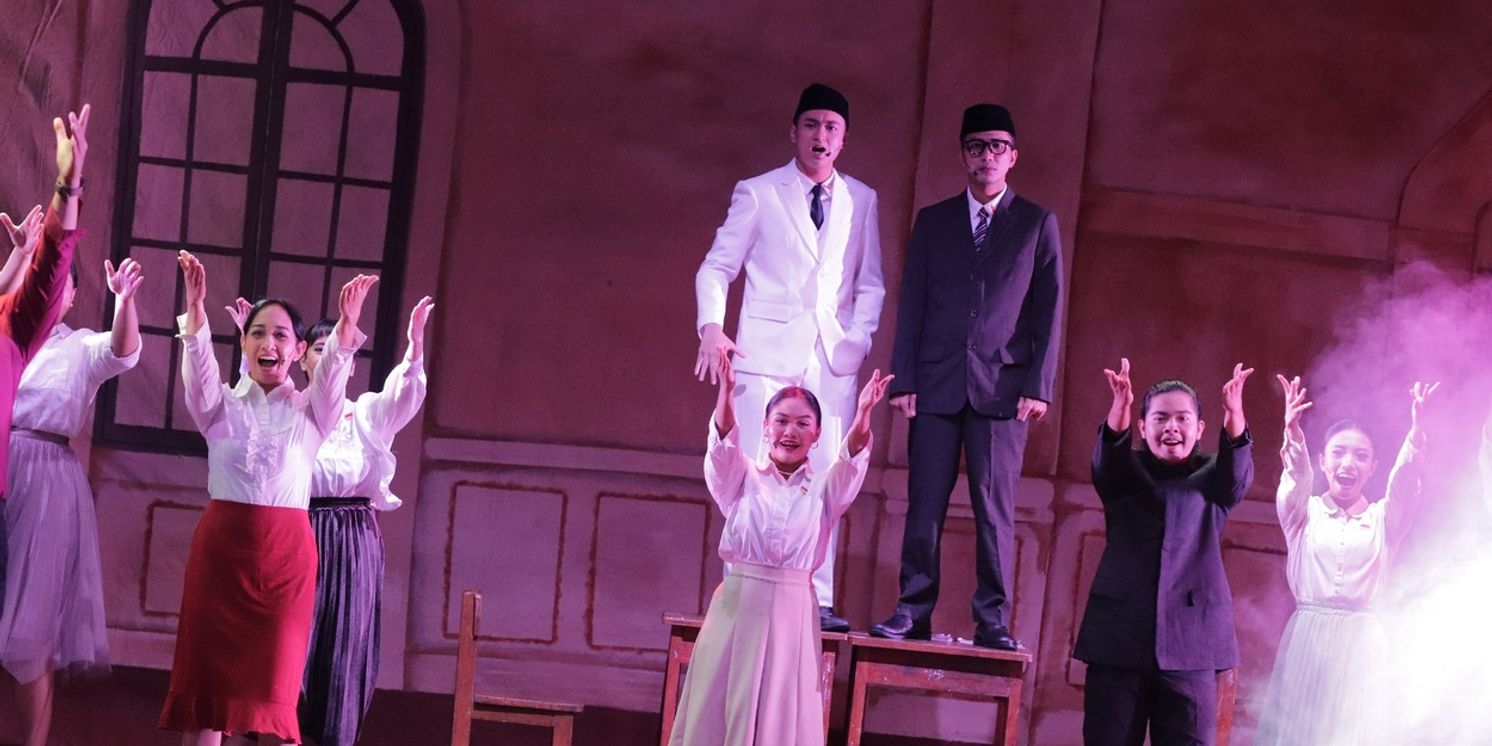
On August 24, the theater production company Broadwayang put on their latest production, Mahar Kemerdekaan (“The Dowry of Independence”) at Gedung Kesenian Jakarta. It’s based on the true story of Indonesia’s founding fathers and how their love lives intertwine with the struggle for independence.

The show is created and directed by Mikail Edwin Rizki, the founder of Broadwayang. The show features original songs by Rendy Foster Silitonga and Mikail Edwin Rizki, as well as choreography by Dhira Ramadhani and Gusti Kusuma Yogi.
Mahar Kemerdekaan tackles a genre that is still a relative rarity within the Indonesian musical theatre sphere: historical. The show is based on the real story of the romantic lives of Indonesia’s founding fathers – Soekarno and Hatta. Although, as the pre-show announcement clarified, there are “dramatic adjustments” made during the writing process.

The story opens with freedom fighter Sutan Sjahrir (Haris Sakadian) discussing with Hatta (Imanuel Christian Galih Rangga P.) about the ongoing colonization by the Dutch, and his fear that he would grow old without seeing Indonesia becoming an independent nation.
Hatta rebukes this worry, saying he is fine with keeping up the fight for independence even if the resulting freedom could only be enjoyed by their children. As if to highlight his commitment to the cause, Hatta declares that he shan’t marry until Indonesia gains its independence.

This declaration also serves as the premise of the rest of the show. We follow the freedom fighters – chiefly, Soekarno (Mikail Edwin Rizki) and Hatta as the fight of independence intertwines with their romantic life.
In contrast with Hatta’s deliberate avoidance of romance, Soekarno is a true casanova. At the start of Mahar Kemerdekaan, he is already involved with Inggit Garnasih (Santi Dwisaputri), an older woman who’s also his landlord.
Yet, soon enough, Soekarno encounters Fatmawati (Nadhira Nasution), a student in his class. He’s immediately charmed by her inquisitive and intelligent nature and seeks a romantic relationship with her.

This infidelity hurts Inggit, who has been working hard selling homemade powders and herbal drinks to support Soekarno. Eventually, Inggit and Soekarno part ways.
Meanwhile, the Japanese imperial forces seize control of Indonesia (then called Dutch East Indies). As World War II rages on, eventually Japan surrenders to the allied forces. The younger freedom fighters, seeing a once-in-a-lifetime opportunity, push Soekarno and Hatta to make a declaration of Indonesia’s independence
They finally set out to do so on August 17th, 1945, thereby proclaiming Indonesia’s status as an independent nation.
Soekarno prods Hatta to make good on his promise and find a good woman to marry. Hatta sets his eyes on Rachmi (Katarina Dewi Chintya Anindita), the daughter of a couple who was also involved in the independence movement. The two fall in love posthaste and get married in a jubilant celebratory number.

Although the wedding scene would have made a fitting finale, the show goes on. The consequences of Soekarno’s womanizing tendencies are finally shown. Fatmawati, learning that Soekarno has fallen for yet another woman, goes to talk to Inggit. The two scorned women sing a beautiful yet tragic duet.

Hatta himself gradually becomes disillusioned by Soekarno and his apparent egocentrism. This chasm between them grows until Hatta finally resigns from his position as vice-president. Meanwhile, Soekarno chooses to stay as president – until the downfall that waits for him, years beyond the show’s scope.
Mahar Kemerdekaan has an intriguing idea at its core: examining the private lives of the nation’s founding fathers before, during, and after Indonesia’s independence. And, during some scenes, this premise works beautifully. It was delicious to see them banters, flirtations, heartbreaks; it humanizes these national heroes.

Unfortunately, this dichotomy – between the fight for freedom and personal lives – can also make the scenes disjointed. This is especially apparent in the latter ones, where some plot points just don’t get enough build up, making it feel that we’re just taken from one scene to another without a flow to the proceeding.
Thankfully, the cast members consistently put on solid performances. The acting was largely grounded with just enough dramatic flair, a befitting approach for a historical play – neither too dry nor overdone. The wording used in the script comes off as authentic for the era.
Of course, the roles with the most focus are Soekarno and Hatta. And the duo playing them – Mikail Edwin Rizki and Imanuel Christian Galih Rangga P. provided the necessary contrast through their acting. Mikai’s Soekarno was eloquent and charismatic, yet somewhat arrogant and too flirty for his own good, a suitably complex portrayal. And opposite him, Imanuel’s Hatta was level-headed and mature. His quiet composure brought out a charm that made him every bit as compelling as Soekarno.

The women likewise brought contrasting personalities; Santi’s Inggit was regal, with a palpable sense of serene yet resolute dignity. And Nadhira’s Fatmawati started as perhaps too reserved and quiet, but blossomed into a gentle yet firm young woman once she realized that she, too, was replaceable.
The ensemble did great in bringing the crowd scenes to life. Dzubyan Mitsal Sitr Dano in particular stole the scenes in which he was featured; he played a 4th wall-breaking comedic relief character who got the biggest laughs from the audience. That being said, these comedic scenes felt out-of-place with the rest of the show; perhaps a more subdued approach would help in making them more tonally consistent

The musical numbers are good and fitting for each moment, from the festive to the somber. There is also a significant amount of scoring besides. While the score is richly textured and beautifully performed, some of the transitional passages feel overly jubilant and bright for the moment, which can be a bit distracting.
As for the production design, in general they work fine for the show, with the era-appropriate costuming being a highlight. The set design however, felt similarly disjointed as the script; while it worked fine for each scene, the different approaches made for a fractured whole – some sets were more monochromatic and interpretive, while others leaned colorful and literal.

Overall, Mahar Kemerdekaan was a competent showing from a relatively young production company. It had many good parts, including the premise, acting, and parts of the script. But, just like Soekarno and Hatta, it didn’t quite come together in the end. That being said, the few flaws are largely correctable and we eagerly await Broadwayang’s next production.

Broadwayworld Indonesia was a media partner of Mahar Kemerdekaan.
Reader Reviews
Videos