


Maryna Lazorenko: 'A Seven-Minute Film Either Moves You, or It Doesn't – There's No Marketing Department to Compensate for a Weak Story'
Award-winning producer of MasterChef Ukraine talks about why the future of format television belongs to stories with genuine human impact.
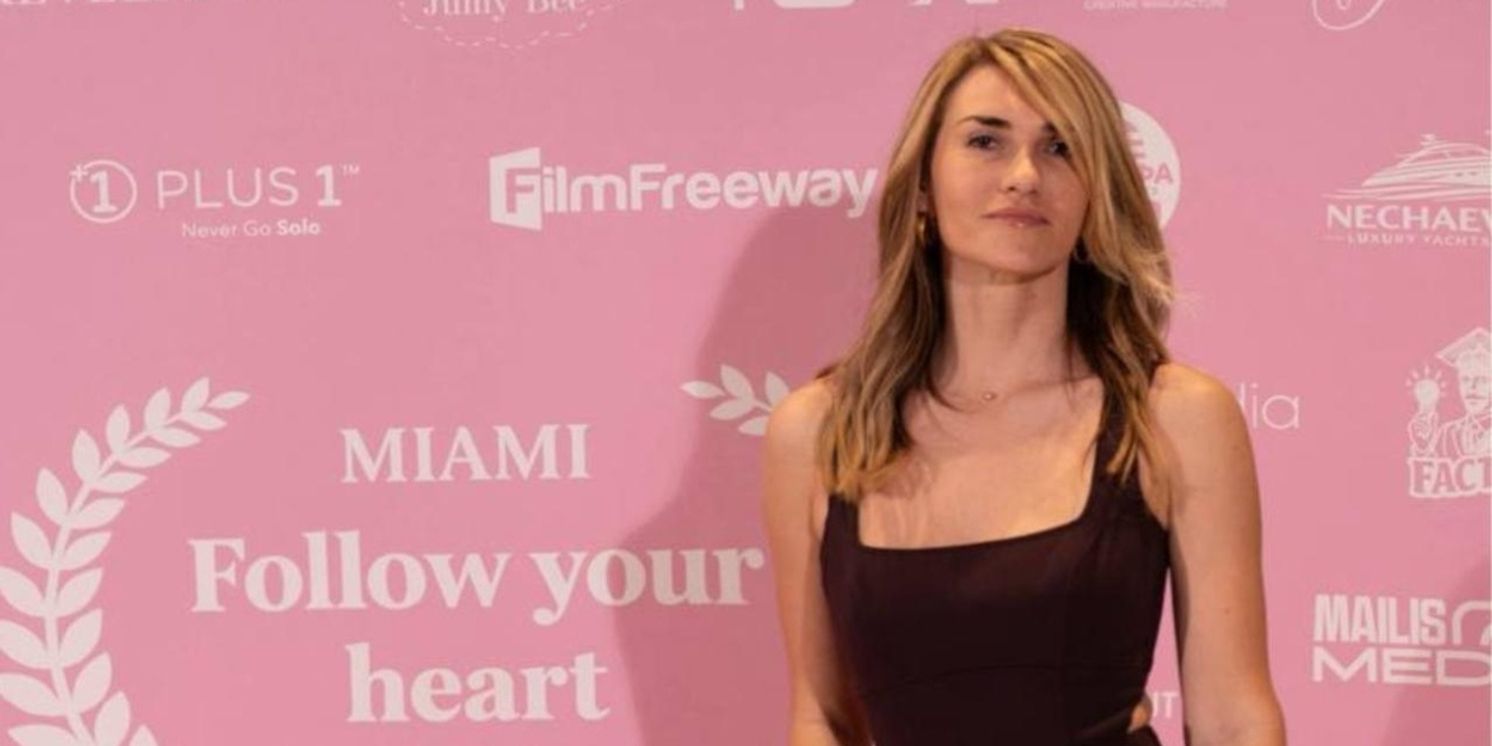
Written by Molly Peck
K7 Media's global forecast identified a notable tonal shift in reality TV: audiences are moving away from strategy-heavy competition and gravitating toward emotionally grounded narratives centered on collaboration and interpersonal stakes. For Maryna Lazorenko, the producer behind MasterChef Ukraine's Teletriumph-winning season, who trained multiple executive producers from the ground up and recently sat on the jury of the Follow Your Heart international film festival in Miami, this trend comes as no surprise. Having spent years crafting both high-rated entertainment and social reality projects aimed at genuinely helping participants, she built her career at the intersection of ratings and real human impact. Below, Lazorenko breaks down why some formats vanish after one season while others become cultural fixtures, how zero budget overruns across an entire career is a creative statement rather than an accounting one, and what happens when a producer shaped by Ukraine's fiercely competitive media landscape sets out to crack the American market.
Maryna, K7 Media's 2026 forecast, talks about reality TV moving toward softer, emotionally driven formats. You've produced both entertainment-focused and socially oriented projects – do you see this shift happening on the ground?
I've felt it for a long time, honestly. When I was running MasterChef, the episodes that resonated most were never just about cooking technique or elimination drama — people tuned in because they cared about the contestants, their struggles, their families, their reasons for being there. On social reality projects, which have always held a special place in my career, the audience response was even stronger. Viewers don't just want to watch someone win a prize; they want to witness a genuine transformation. So when analysts describe this shift now, it feels like the industry is finally catching up with what producers who pay attention to audience reactions have already known for years.
MasterChef Ukraine won the national Teletriumph award as Best Format Show in 2016, during your time as producer. What did running that project teach you about balancing spectacle with substance?
Everything about MasterChef was a lesson in managing contradictions. You need high energy and visual spectacle to grab the remote-control generation, but if the emotional core is hollow, ratings collapse by the third episode. My job was to make sure both sides fed each other, that the drama came from real stakes, not manufactured conflict. Budget discipline played a major role in that, too. Across my entire career, I've never had a budget overrun on any project, not once. And it isn't about being stingy – it's about knowing exactly where every resource creates the most impact, on screen and behind the camera.
STB appointed you producer after just four months and a single project, a position many colleagues who'd been at the channel for years wanted. What gave you that edge so early?
Speed of learning. From my very first year of university, I was already working on television sets – while most classmates were still figuring out what the industry even looked like. I worked as an administrator on large-format projects like Krok do Zirok, Fabrika Zvyozd, and Narodna Zirka, where every day is a crash course in logistics, team dynamics, and creative problem-solving. At Film.UA, I rotated through multiple roles: administrator, project coordinator, assistant director. Each position gave me a different angle on the production machine. By the time I arrived at STB, I already understood the full chain, and once the leadership saw how quickly I grasped the operation of that particular channel, the decision wasn't about tenure; it was about readiness.
Your university story is striking, too; a class of 68 dwindled to just 13 graduates, and your own curator once tried to have you expelled for alleged "professional unsuitability." How did that experience shape the producer you became?
It built resilience that no masterclass can teach. When someone in authority tells you that you're not cut out for this work, without any real grounds, you face a choice: internalize the doubt and quit, or channel it into results. I chose the results. By my third year, I was among the top students. And later, after graduation, that same curator and I ended up collaborating on multiple projects with no hard feelings. But that early pressure taught me something I carry into every production: never fold under someone else's doubt. If you know the work is good, stand behind it.
In January, you served on the jury of the Follow Your Heart international film festival in Miami, which screened work from 30 countries. How does evaluating short films compare to producing large-scale format television?
Judging short films engages a completely different part of your brain. In format TV, you're managing a massive system: hundreds of people, tight deadlines, brand guidelines, and advertiser expectations. A film festival strips all of that away and forces you to respond to pure creative intention. A seven-minute film either moves you or it doesn't; there's no marketing department to compensate for a weak story. What I appreciated most about the experience was seeing filmmakers from such different backgrounds presenting work at one event. It reminded me why I got into this business, not for the logistics, but for the stories.
Speaking of stories as someone who's spent most of her career inside format TV, what kind of content actually grabs you when you're watching as a viewer, not a producer?
Honestly, I struggle to watch anything without mentally dissecting it – that's an occupational hazard. But the projects that really stick with me are the ones where I forget to analyze. Social reality formats do that to me most often, especially when a participant's arc is so raw and unscripted that you can't look away. At the festival in Miami, there was a short film that had almost no dialogue, just visuals and sound design, and it held the entire room in silence. No budget, no stars, no brand behind it, just precision of intent. As a producer, that's humbling. It reminds you that all the logistics and scheduling in the world are just scaffolding; the building itself is always the story.
You've trained a number of executive producers who started under you as administrators and went on to build successful careers of their own. What's the most common mistake you see in young producers?
Confusing ambition with readiness. Many talented people want to run an entire production before they understand what every department actually does. I always tell them the same thing: work THE FLOOR first. Handle budgets, coordinate logistics, sit in editing until three in the morning, not because suffering is noble, but because a producer who hasn't done those jobs will never earn the trust of the teams doing them. Authority in production is built through competence, not titles. Once you've done the work at every level, people follow you because they know you understand what you're asking of them.
You're now based in Miami, aiming to establish yourself in the American market. Ukrainian and American audiences grew up on very different television traditions – do you plan to change your approach, or bring what worked in Kyiv to Miami as is?
Both, and neither. You can't copy-paste a production philosophy across borders: audience expectations, humor, pacing, emotional triggers are all shaped by culture. Ukrainian viewers, for instance, respond to sincerity very quickly; they can smell a fake setup from the first frame. American audiences are more format-literate, they've seen everything, so the bar for surprise is higher. But the deeper mechanics are universal: people everywhere care about stakes that feel real, characters they can root for, and payoffs that respect their time. What I'll adapt is the packaging. What I won't change is the core principle, that every creative decision must serve the story, not the other way around. Scale of opportunity and scale of competition exist in equal measure here, and finding your place takes patience. But I'm not starting from zero – I'm applying everything I've learned to a new geography.
Photo Credit: Maryna Lazorenko
Videos