Interview: Producer Mark Michelson on CHILDREN OF EDEN, Broadway Economics, & More
The producer discusses the musical’s long road to Broadway, its Chicago concert staging, and his candid views on theatre economics.
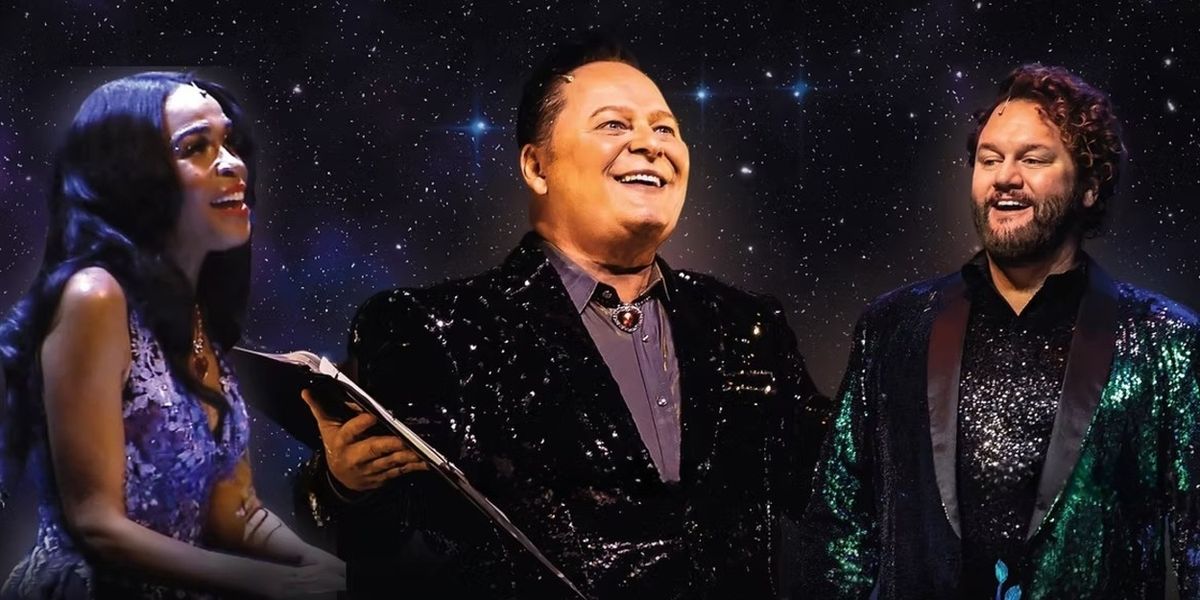
After five years of headlines, pivots, and industry speculation, Children of Eden producer Mark Michelson is finally sharing an in-depth look at the journey behind the revamped production. From pandemic disruptions to touring roadblocks and a candid critique of Broadway’s economic structure, Michelson offers insight into why the beloved Stephen Schwartz musical has taken an unconventional path and what may lie ahead.
The revamped Children of Eden production has circulated the news for the past five years. When did that journey actually begin and what’s the latest?
So we officially started down the road toward a Broadway-aimed production in 2020. And then, obviously, COVID hit. Of course this paused things, but it didn’t just pause things, it completely reshaped the economic and logistical reality of theatre. The entire ecosystem changed overnight.
Why has the show not played Broadway yet?
That’s a question better fit for the authors who know the history better than I; however, from what I’ve gathered, it’s always had to do with economics. It’s a large show. It’s expensive and I’m sure that played a role. From my own experience, the subject matter can also give people pause. The piece is freely based on the Book of Genesis so you tend to see reactions from opposite ends of the spectrum. Some more secular audiences assume, without seeing it, that it must be pushing a religious agenda.
Meanwhile, some deeply religious audiences are wary of any biblically inspired work that takes artistic liberties, viewing it as irreverent or sacrilegious. We live in a time when people can be quick to draw lines before they’ve even engaged with the material. What I can say is this: I identify as a Christian. My business partner identifies as an atheist. We both love this piece. And I think that says something. Whatever your background or beliefs, if you actually experience the show, you’ll understand why it resonates. At its heart, it’s a celebration of our shared humanity and that’s the kind of art I want to be part of.
When you came out of the pandemic, was Broadway still the plan?
Broadway didn’t really feel like the right call at that point. Things are a little different now, but after reassessing the landscape at that time, it became clear that a Broadway engagement for Children of Eden didn’t really make economic sense. The show, at its scale, actually made far more sense as a touring property, which we looked into.
Is there a plan to tour?
The touring market is effectively controlled by a small number of decision-makers. Between the COVID backlog of shows that were already "owed" tour slots at the time and the oligopolistic nature of the industry, getting a large-format show on the road, especially one that hasn’t played Broadway, is extraordinarily difficult. You’re told, implicitly or explicitly by gatekeepers that you need the Broadway stamp first. And that’s where the logic, in my opinion, starts to fall apart, but sometimes you have to play the "rules of someone else’s game," to quote a certain composer, so we re-examined a Broadway run but wanted to workshop it a bit first before making that kind of investment.
So you basically pivoted?
Exactly. We decided to roll up our sleeves and actually explore the material again. Not as a commercial product, but as art. The way to do that was through a staged reading.
Why a staged reading, and why Chicago?
Chicago has one of the richest theatre ecosystems in the country. It’s full of artists who are deeply serious about the craft, not just the marketplace. Given our roots and our admiration for that community, it felt like the right place. We assembled an incredible team of Chicago artists, including Kyle Hass as Artistic Producer, and Jeff Award winners Derek Van Barham and Heidi Joosten as director and music director, respectively. However, we didn’t limit our team to Chicagoans. Nicholas Ranauro, a New York based choreographer, for example, led the movement style for the concert, and I think he was really genius in what he did with it. The team only had two weeks to put this together and when you assemble a team of that kind of talent it elevates the process immediately.
How should audiences think about this staged reading compared to a full production?
They shouldn’t confuse the two at all. This reading is not a reflection of what a full-scale production would look like. There are no elaborate costumes, no scenery, none of that. People are literally reading the material. It’s theatre at its most organic stage. What we wanted was a chance to really digest the text and the music. That said, we still wanted to elevate the experience for the audience visually and explore different potential artistic directions. The concert is certainly a step up from just reading the material in a rehearsal room. The design team has created something like an artistic collage, a blend of visual and conceptual ideas that nod to the show’s 30-year life in stock theatres, churches, schools, and community productions, while also offering a glimpse of "what could be" in a fully realized production.
That history is something you wanted to honor?
Very much so. Children of Eden has lived a thousand different lives in a thousand different spaces. The Paper Mill Playhouse album is iconic and has ignited generations of fans of the show. The staged reading allowed us to explore different motifs and artistic interpretations without committing to a single aesthetic, but all the while find the connective heart the piece has across different productions. That freedom and necessity to explore is rare once significant money enters the equation, so we were glad to have had that opportunity.
How did you go about casting the show?
Honestly, it wasn’t easy. This is a vocally demanding show, not just for the principals, but for the ensemble as well. We needed a full company with a strong classical foundation to handle the score. The writing requires stamina, control, and depth, so building the right ensemble was critical. With the principals, I intentionally sought artists from varied musical backgrounds to bring distinct vocal colors to the piece.
I saw Michelle Williams in Aida years ago, and the flexibility and earthiness in her voice immediately struck me. It felt right for Eve. She has this youthful spirit, but she’s also grounded and maternal without losing vulnerability.
David Phelps is, in my opinion, one of the great vocalists of our time and a natural storyteller with his music. With his gospel roots, I knew he would bring both power and transcendence to the material.
Sam Tsui brings a fluidity and ache that feels perfect for Cain. Beyond the vocals, what he brings as an actor is such honesty and relatability.
Koryn Hawthorne has a grounded richness in her voice that resonates beautifully with Yonah.
Father was the toughest role to cast. That darker, classical resonance and the kind of vocal authority the role demands is increasingly rare in today’s Broadway ecosystem. I saw Randal Keith in the final tour of Les Misérables years ago, and in my opinion, he was the finest Valjean I’ve ever experienced. His performance commands a space with real authority and intensity, balanced with genuine truth and heart. That combination made him perfect for the role of Father.
You’ve also spoken about wanting to open up the development process to audiences.
Yes. The reading and workshop phase is typically part of R&D that’s closed off to insiders. But honestly, it’s one of the most exciting and joyful parts of making theatre. We wanted audiences to experience that with us. Ideally, this becomes more normalized, letting people into the process, not just the final result.
You’ve been very critical of Broadway as a system. Why?
Because people fundamentally misunderstand what Broadway is. It’s not a meritocracy. It’s a real estate business; it’s a "pay to play" business. Quality has almost nothing to do with what ends up on Broadway anymore and I feel like it shows in the material.
What are the biggest financial barriers?
Loading a show into a Broadway theatre can cost millions because of real estate terms with unions. And if you say, "Fine, I won’t go to Broadway. I’ll tour instead," you hit another wall. Most of the subscription bases large enough to support shows of this size are controlled by two dominant entities, and they want to prioritize shows that play Broadway first. It’s a closed loop.
Why don’t you think the Broadway brand matters?
Because I believe most people don’t actually care. Die-hard theatre enthusiasts are a small slice of the audience. My uncle will see a regional production of anything and refer to it as a "Broadway show." I believe this reflects the majority of America. They don’t really know the difference and they don’t care where a show has played geographically. They just want it to be good.
So will Children of Eden ever make it to Broadway?
There have definitely been conversations. I personally believe the piece deserves that stage. But for 2026, the focus is on developing distribution models beyond Broadway. We’re working on a pretty intensive project to reinvent the economics of theatre altogether, whereby everyone wins financially and the art form doesn’t die. That said, Children of Eden will always hold a special place in my heart. One way or another, it will continue to be seen in a way that honors both the art and the people who make it. I think people should stay tuned.
Where can somebody stream the concert?
You can buy tickets to stream the concert at chicagolandtheatrefund.com. You can redeem your ticket between April 23 and April 26, which gives you a 48-hour rental period to view it. After the 26th, the concert will not be available anywhere. If you want to see it, this is your chance.
Prefer BroadwayWorld in Google Search?
Add us as a preferred source so our stories show up more often in Top Stories and Google’s AI answers — for you.
Sign up for all the news on the Fall season, discounts & more...
.jpg?format=auto&width=300)