
Interview: Marc Shaiman Talks SOME LIKE IT HOT, His Just-Published Memoir, and More
Composer's Tony Award-winning musical will be at Citizens Opera House through February 8

To say that the Tony Award-winning 2022 musical “Some Like It Hot,” which Broadway in Boston is presenting at Citizens Opera House through February 8, has quite a pedigree is putting it mildly.
Based on the classic 1959 film of the same name, the Marc Shaiman and Scott Wittman musical – telling the story of a pair of male musicians who witness a murder and, with gangsters hot on their trail, disguise themselves as women and hop a cross-country train for a life-changing trip – won more theater awards than any other show in the 2022–23 season.
With music and lyrics by Shaiman and lyrics by Wittman, book by Matthew López and Amber Ruffin, and direction and choreography by Casey Nicholaw, “Some Like It Hot” received 13 Tony nominations – winning four Tony Awards including Best Costume Design of a Musical, Best Choreography, and Best Orchestrations – and the 2023 Grammy Award for Best Musical Theater Album.
 For composer and lyricist Shaiman, “Some Like It Hot” is just one recent project in a 50-year career that has seen him find considerable success in every entertainment field – from Broadway and the concert stage to feature films and television.
Indeed, his collaborations with lyricist Scott Wittman on Broadway musicals, including “Hairspray” – the 2003 Tony Award winner for Best Musical and Best Original Score – “Catch Me if You Can,” and “Smash” as well as “Some Like It Hot,” have earned him three Tony nominations, while he has also won two Emmy Awards, for co-writing the 64th Annual Academy Awards and for the original song “Which of the Pickwick Triplets Did It?” for the fifth season of the Hulu series “Only Murders in the Building.”
Shaiman has also received seven Academy Award nominations, for films including 1993’s “Sleepless in Seatle” and 1995’s “The American President,” two of the many movies he did with the late director Rob Reiner.
On January 27, the Newark native’s memoir, “Never Mind the Happy: Showbiz Stories from a Sore Winner,” was released by Simon & Schuster.
Shaiman was at his home in New York – where he lives with his husband Louis Mirabal, a retired lieutenant commander in the U.S. Navy – recently when he took time out for a Zoom call to discuss “Some Like It Hot,” his just-released memoir, and more.
How did the idea for a second stage adaption of “Some Like It Hot” come about?
The idea for it came from the late Craig Zadan and Neil Meron, his producing partner. Scott and I worked with Craig and Neil on the 2007 feature film version of “Hairspray,” and I’ve worked with Craig since I was 19 years old and did the musical arrangements for Peter Allen’s Broadway concert “Up in One.” Then Scott and I worked with Craig and Neil on the NBC-TV series “Smash” in 2012–13. After the series ended, they called Scott and me to ask if we would be interested in doing a new Broadway version of “Some Like It Hot.”
Are you a fan of the movie and did you immediately say yes?
Well, God knows I hope, like any human on Earth, I’m a fan of the movie, of course! It’s so good that you have to love it. But after working on the TV series of “Smash,” and also having then just worked on “Charlie and the Chocolate Factory” on Broadway and the feature film “Mary Poppins Returns,” the idea of tackling yet another iconic project that already has people with their arms folded across their chest when they come in, as opposed to them being open-hearted and open-armed, if that’s an expression, made Scott and me initially very reticent about this project.
Were the earlier versions daunting?
They sure were, because the first Broadway adaptation, 1972’s “Sugar,” with Robert Morse, Tony Roberts, and Elaine Joyce, was written by two giants of musical theater, Jule Styne and Bob Merrill. I was like, “Oh, man, so now we’re up against an iconic movie with iconic performances, and another Broadway musical.” That opened us up to a lot of comparisons, because the 1959 film – based on the 1935 French comedy “Fanfare of Love” – not only starred Jack Lemmon, Tony Curtis, Marilyn Monroe, and Joe E. Brown, but was directed Billy Wilder.
How did Zadan and Meron get you to agree to do this show?
They snagged us when they said, “Well, we’ve been thinking that the character of Sugar should be black. They were mostly thinking about ways to make an audience recognize that this new musical would be not just a carbon copy of the movie or of the earlier stage musical. And that instead, we were going to tell the same basic story, but with new ways of looking at it.
And the idea of Sugar being black and confident just so appealed to Scott and me. She would be like Billie Holiday or Lena Horne. Also, the idea of moving it to the early ‘30s would allow us to change the sound of the music. That’s what really caught our attention, because we thought that would be kind of fabulous. That’s when we said, “Yes!”
Were you immediately thinking what your score might be like?
Yes, because we had been writing songs for “Smash” that were Marilyn Monroe-ish, and one of them, “Let’s Be Bad,” was written to be as if it were a song in the movie-within-the-series, which was to be like “Some Like It Hot.” So we had already dipped our toes into this kind of music.
That song “Let’s Be Bad” has had quite a life, hasn’t it?
We had a song called “The Good Neighbor Policy” and it was sweet and witty, but Casey finally said to us, “Guys, it’s just not hot enough, it needs to be sexier. They need to be really wanting to let it all go.” And Scott and I went home, and we were like, well, what would the girls be saying? They’d be like, “Let’s go to Mexico, let’s have fun, let’s be bad.” And we realized we’d already written the song for the fourth episode of “Smash,” where it was so brilliantly choreographed by Josh Burgos and amazingly performed by Megan Hilty.
As you can imagine, it was like our brains were fried. So, we just thought, could we repurpose it? And we called Casey, and we wrote to Bob Greenblatt and Neil Meron, our producers, and said we have this idea that we’re sure you’re probably going to say, no, no, no, no to, we shouldn’t do that. But we’d already written the song! I said, “Can we just use ‘Let’s Be Bad?’ We’ll repurpose it, and we’ll figure out new lyrics for what’s needed in the plot of ‘Some Like It Hot.’” And, to our surprise, everyone said sure.
What else can audiences look forward to in this version of the story?
The all-girl band, instead of going to Florida as they do in the movie, go to California, which really brought out a kind of Lena Horne-ishness in Sugar. That she was fantasizing and had been dreaming that she could be a movie star, that she’d break that barrier, is so interesting and makes this version feel very different.
Did that impact your ideas for the score?
It changed everything and that just really appealed to us. It also allowed for a more contemporary exploration of Jerry's self-realization that he really likes living as Daphne, which leads to the big number "You Could Have Knocked Me Over With a Feather" and the joyous lyric, "The lady I'm loving is me!"
The musical has a contemporary feel to it, too. In addition to Sugar being a black character, how else was that achieved?
Updating the show to figure out how to deal with the subjects of gender and trans, when those words weren’t even in use in the 1930s, was the goal. There wasn’t any of that vocabulary in the movie or the earlier musical, but Lord knows those feelings have existed since people first walked the earth.
Do you remember your own first experiences with the transgender community?
Scott and I have known trans people since the first time we ever did shows in New York City, starting in 1976. We have been loving friends and compatriots with a lot of trans people, like actress Holly Woodlawn, one of the Warhol Superstars, clothing designer and celebrity impersonator Alexis Del Lago, and Ethyl Eichelberger, a drag performer and playwright who was a leading actor with Trinity Rep in Providence in the 1960s and early ’70s.
Are there nods to them in the character of Jerry/Daphne?
Absolutely, in the form of a love letter that reflects our love for them and our continued respect and amazement at their courage for living their lives as they did – without the vocabulary, and without the community. They were out there just trying to protect one another. They were pioneer people, pioneer women really. Even though we were with them all the time, I still can’t imagine what life was like for them on a daily, 24-hour basis. And so, we were very happy to have a project like this where we could exalt them.
Besides you and Scott, who else was involved in reshaping this part of the story?
Matthew López was the one who said, we’ve got to figure out how not to make the old-fashioned jokes that always go something like, “Oh, look, it’s a guy in a dress, hah hah,” but to go deeper. We wanted to get away from those kinds of lines, but they are an integral part of the plot, so we had to find a way to make them work today.
It’s all there in the Billy Wilder movie. He made a movie for his time, but there’s a published script where, after Osgood says, “Nobody’s perfect,” it says in parentheses something like, “It’s a story that can’t be told yet,” or something like that. I can’t remember exactly.
Do you think that Wilder had any of these ideas when he was making the film?
Sort of, I would imagine. Throughout the movie, the Jack Lemmon character is loving being a woman. And Lemmon is excited and thrilled that Daphne is engaged to Osgood. It’s all right there in Wilder’s brilliant title, “Some Like It Hot.” It’s great, because it means, right there in those four words, that some like this, and some like that, and it’s all good, and everyone should be welcome to like what they like.
So if you like it hot or cold, or short, or fat, there is a place for you. Scott and I loved grabbing ahold of that as a lyric in our song “Some Like It Hot,” and being able to go on and on with those references to how and what you could love and like in life while trying to embrace what others like, even if it’s not for you. You know, live and let live, because there are different strokes for different folks, as we used to say.
Casey Nicholaw famously stepped in as a last-minute replacement for Mark Lotito in the role of Spats, a Chicago gangster, for several performances on Broadway. Would you ever consider doing something similar?
When “Hairspray” was running on Broadway, I did have a fantasy that I could play Edna. I really felt I could, but no one else seemed to agree and I’ve never brought anything like that up since. I did do “Fame Becomes Me” in 2006. It was great fun to be on stage with Martin Short, as you can imagine. Not to mention, I got to show my behind in that show.
There was a scene where I pretended to physically be Marty, because he was narrating from the other side of the stage. I played Marty in a hospital bed, where he dies suddenly and is going to heaven. In the scene, I got up from the hospital bed and walked towards heaven with my back to the audience, only wearing a hospital gown. I showed my rear end to a Broadway audience, eight shows a week. I discovered that if you don’t have to look at the people you are baring yourself to and see the horror on their faces, it can be fun.
Your new memoir also sounds like fun. Tell me about it?
The title is “Never Mind the Happy,” which comes from my mother. One New Year’s Day, my sister called my mother and said, “Ma, I want to be the first to wish you a happy and healthy New Year!” And my mother replied, “Never mind the happy.” So, it’s not in my blood, to embrace the joy and happiness that come my way. Really, though, the book is filled with the dream-come-true stories that I've been lucky enough to experience in my life.
Has your mother been a fan of your work all along the way?
You’ll have to ask her, but I know she’s very proud of me. My father has passed away, but he was as well. My mother, who is 97 and lives in Florida, just read my memoir, which has quite a few things in it that probably surprised or shocked her, or maybe made her sad to think that I had not shared the more serious, grief-filled moments in my life with her. So, there’s a lot that she learned about me by reading my story now.
How did you go about writing the book?
When it comes to social media, I’m old enough that I’m still on Facebook, as well as other things, so if the anniversary of “Hairspray” opening on Broadway came up, I would write some kind of reminiscence about that. I’ve worked on something like three million movies, and so when it was the 25th anniversary of “When Harry Met Sally” or “Sleepless in Seattle, I would write a story abou what happened while I was working on that movie.
Everyone kept saying, “Oh, Mark, you should write a book.” And finally, I took them up on it, before I forgot the details of my life.
Do you dish about people and places?
Yes, but not in a salacious way. There are some stories in it that may have a few people saying, “I wish you hadn’t said that.” But it is my life and my story. These things all happened to me. There are a few grudges, but mostly fond memories. I beat myself up more than anyone else in the book.
What really concerns me is that since the book was printed, I’ve been thinking, “Oh my god, I can’t believe I didn’t mention so-and-so.” I mean, I really can’t believe it. Now I don’t know who’s going to be more upset with me, the people I mentioned or the people I didn’t.
Did you have any help jogging your memories?
Some of the memories just really stick. There are times that you don’t remember what you did yesterday, but there are moments in your life that you’ll never forget. And once I started writing, I would remember more of those. There is one fabulous thing about the internet that’s called Newspapers.com. You put your name in it, and an area of America, and anything that’s ever been written about you in a newspaper shows up. It’s like a modern version of the microfiche machines that characters in old movies would go to the library to use.
I was reminded of so much, like when I did one show after another as a teenager in community theater. I was able to put my whole life in chronological order, including all the cabaret acts that I worked on in the late 1970s and early ’80s in New York City, and everything that’s happened since then.
What stands out most in your mind about your career achievements?
The night that I worked with Bette Midler when she was Johnny Carson’s final guest on “The Tonight Show,” in 1992, and sang “One for My Baby (and One More for the Road)” directly to Johnny. You could hit me on the head with a hammer 10,000 times and I’d still never forget that, not one second of it. It’s in my DNA now. I'd been one of Bette's biggest fans since I was a teenager and here we were working togeher.
I helped co-create that moment with Bette, figuring out what the song would be, and doing everything the way a musical director or arranger does. It’s one of my proudest moments and it’s one of the only ones that I can watch and think, “That was perfect.” Otherwise, I beat myself up over most everything, but not that night with Bette and Johnny. It’s one of the biggest events of my life. To this day, if someone says, “Hey, let’s watch that,” I say “Alright, I can watch it again.”
You’ve worked with show business greats like Midler, Mariah Carey, Martin Short, Billy Crystal, Whoopi Goldberg, Harvey Fierstein, and, of course, Rob Reiner, who, along with his wife Michele, was stabbed to death in his Brentwood, California, home on December 15. What memories can you share of Rob Reiner?
It’s hard to talk about Rob so soon after his death I haven’t been able to grieve, because it doesn’t seem real. The thing that I remember most, though, was his faith in me and how he showed it by giving me more movie jobs than anyone else on Earth, including myself, would have thought I’d be able to do. But Rob sensed something in me and he said to my agent, when I first got an agent, that he shouldn’t be questioning whether or not I could do something. Then Rob offered me the 1990 movie “Misery.” I had done “When Harry Met Sally” with Rob the previous year, but that was using existing songs, existing music which I just had to arrange and orchestrate in the right way.
But then Rob asked me to compose an actual film score for “Misery,” a psychological thriller, and he said to my agent, “Talent is talent. Marc can do this.” From then on, I was happy to try and do my best on every movie I did with Rob. His faith made it possible for me to do all these different genres of music. When I think of Rob, however, what I treasure most is our friendship, and what we call the hang, for hanging out. You find it in any profession, but in show business, where slings and arrows come your way publicly, it’s even more important. Because if you can’t have a good time with the people you’re working with, then why bother? And I always had a good time with Rob.
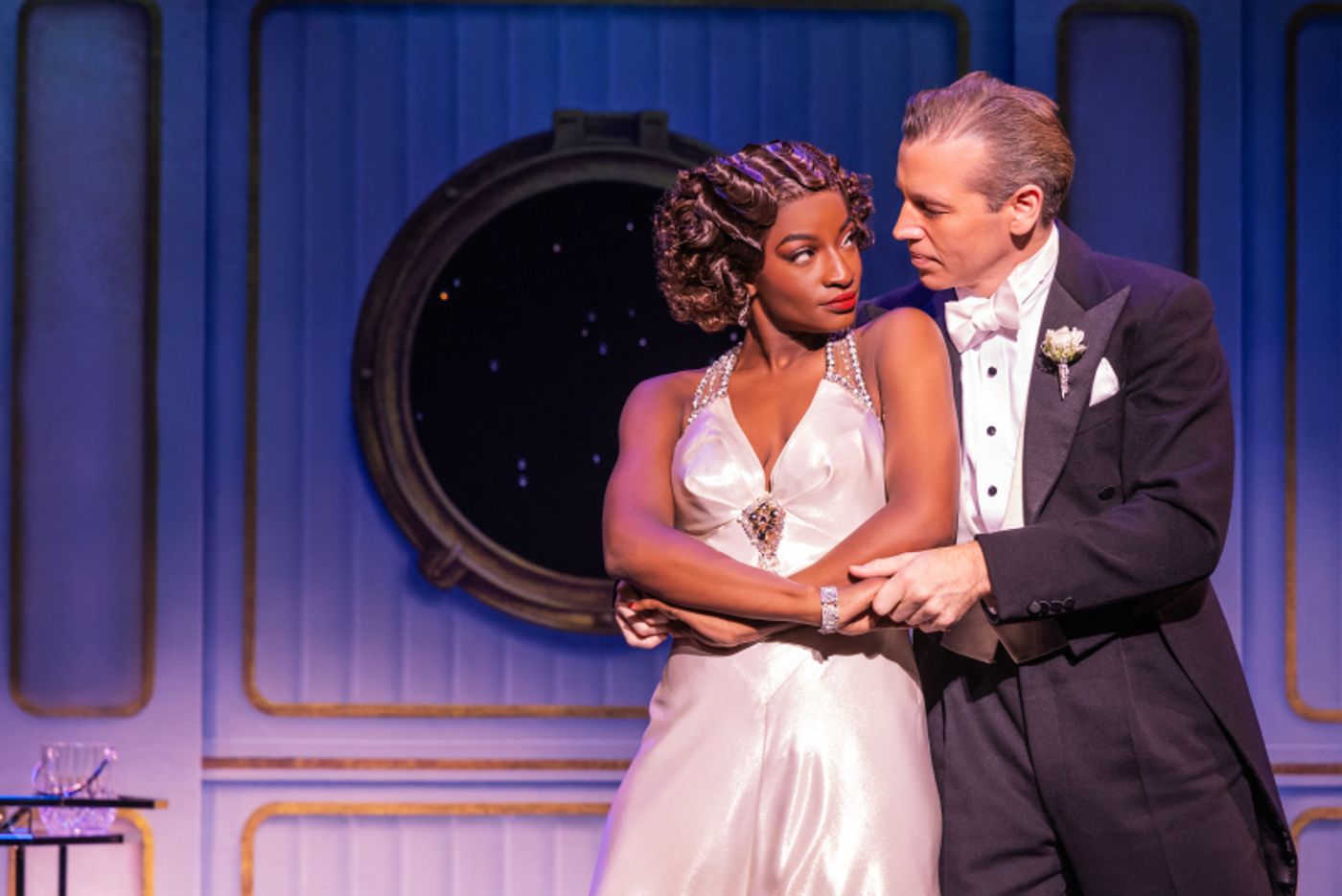
Photo captions: Above, composer, lyricist, and author Marc Shaiman. At left, Leandra Ellis-Gaston (Sugar) and Matt Loehr (Joe/Josephine) in the first national touring company of “Some Like It Hot.” Shaiman headshot courtesy of Broadway in Boston; production photo by Matthew Murphy.