Robin de Jesús on BLACK RABBIT Cast and His Chef Role
All episodes of Black Rabbit are now streaming on Netflix.
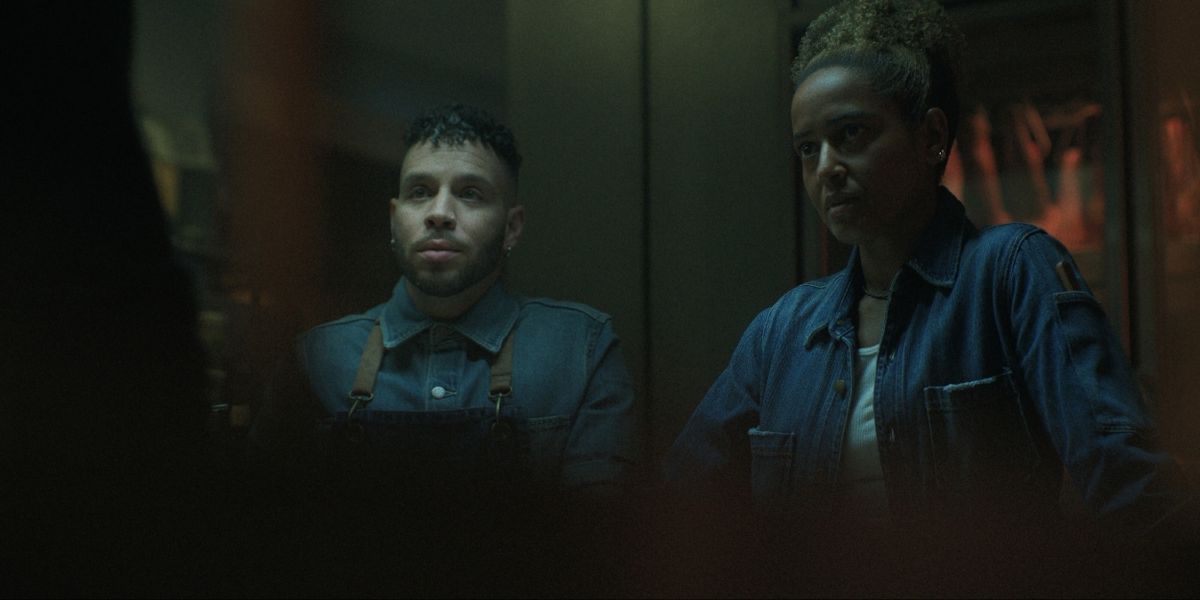
In Netflix's Black Rabbit, Robin de Jesús is tapping into a brand-new genre. The Broadway alum plays the character of Tony in the new crime series, an ambitious chef at a top New York hotspot. A cook himself, the actor is the first to point out that this is a far cry from his usual work.
Under the supervision of Jude Law's Jake Friedkin and head chef Roxie, played by Amaka Okafor, de Jesús describes Tony as a fun-loving "hustler," always chasing the next opportunity for pleasure. In the series, this becomes complicated when Jake and his brother Vince (Jason Bateman) get into trouble with dangerous loan sharks. Before too long, Tony and Roxie feel the negative repercussions of this as well.
With a rich theater background in shows like In the Heights, La Cage Aux Folles, and The Boys in the Band (all of which garnered him Tony nominations), de Jesús has frequented the screen more and more in recent years. In 2020, he reprised his performance of Emory in the screen version of Joe Mantello's The Boys in the Band, and, a year later, reunited with Lin-Manuel Miranda in his directorial debut tick, tick... BOOM!
With Black Rabbit now on Netflix, BroadwayWorld caught up with the performer, diving into this new series, his own love for cooking, and his dream stage project.
Note: Minor spoilers ahead for Black Rabbit
This interview has been condensed for clarity and length.
What were some of your first thoughts when you read this script and learned about your place within this story?
When we first got the scripts, we all got extra information that, perhaps, the audience doesn't receive directly now, but is still there in subtext. A huge thing for Roxie and Tony was that it was this call to consciousness. Tony was the hustler, selling drugs on the side, and always ready to have fun. So for him to clock certain things that happen and go, "Oh wow, it's time for me to grow up. If this is the cost of that life, then I want better."
I think that's also Roxy's influence on him. Part of the backstory for me was that Roxy really saved me. She saw that I had talent and that I wanted my own restaurant. So when she found me, she brought me along with her. I wanted to make sure I was doing right by the person who helped legitimize me, even to myself.
What were some things that helped you find your character that maybe we didn't see as viewers?
There was a wonderful theater actor who was originally going to play my boyfriend. And when we were shooting that block in the schedule, everything began to shift very quickly. For me, that relationship was where Tony got to express his "I want"- the thing that he was working towards. When that relationship was cut, I really had to question: "What am I here for other than to be Roxy's Best Friend?"
At the time, I had a monologue, but it didn't really function anymore because of the boyfriend storyline being cut. Zach Baylin called me and said, "Hey, can we just talk about the monologue and what it is that you'd want for this character?" During that conversation, I realized that the reason I was in this space, dealing with all these unwell people, is because I have a desire to express myself through cuisine and have my own restaurant. I think Tony is a person who grew up without much and who's just had to hustle in his life. He found this group of people who really know how to hustle, and he's observing their lifestyle and what they do. He's like, "Yo, this is my internship. I'm here to learn as much from these people as humanly possible, and when I'm ready, I'm going to go out and do my own thing."
You mentioned that he expresses himself through cuisine. Are you somebody who likes to cook? Did you work with real chefs in the kitchen to prepare for the role?
I do cook a lot. I always have. It's actually a very spiritual thing for me. My mom ran away with my dad when she was 16, and she had to learn how to cook. I think my mother, in her young age, didn't know how to go to her mother because of where they were emotionally at that time. So she would always ask her girlfriends for recipes. She would come home, and she'd do the recipe the way her friends did it, but then she'd look around and she'd think about what else she could do to make it her own, since she couldn't make it the way her family did.
She was always known for modifying recipes. They were authentically Puerto Rican, but there was something there that perhaps was very new, and I really picked up on that. I'm a huge fan of looking at what's in the cupboards and seeing what I can come up with for older relatives who are diabetic and stuff. I'm always reinventing Puerto Rican recipes in a way that are still really tasty, but super healthy for them. It has become a way that I express love. If I have you over and I cook for you, that means that you have crossed a threshold and you are allowed into an innermost circle.
It was really cool when we got to set and to already have that. But I never had any skills in the kitchen. We had this amazing woman named Millicent Souris, who does kitchen art. She brought us to a kitchen, and taught us how to use our knives properly, our mise en place, and the culture of the kitchen. And then on set, her job was to create the aesthetic and the foods that you see in the show.
During that time in the kitchen, were you able to develop a sense of trust and camaraderie with your co-stars while you were learning?
100%. Amaka Okafor, who plays Roxie, and I were in the classes together, along with a core group of background workers who were hired for large chunks of the show. It was really cool to be in the group with them, because normally, as a principal actor, I wouldn't get to engage with them as much. Also, a lot of them had kitchen experience, so if I had a blind spot or if I had a question, I could also go to one of them and feel safe. It also gave them comfort to engage with us. Unfortunately, we all know that so many work cultures subscribe to hierarchy. I think there was something about us learning together that just evened the Playing Field. It also meant that when we were on set for those long days, we could relax. It became very familial.
You’ve worked with some incredible directors in your career, but here you’re being directed by someone we mostly know as a great actor, which is Laura Linney. How would you describe her directing style?
The thing about Laura is that she gets so excited. And to see someone who's been killing it for so long come in that stimulated was so inspiring. It was the kind of set where, if a new idea popped up that was a plus, you were more than welcome to bring it up. And if it wasn't in the writing, Laura would figure out with you how you could emote this thing that you wanted to show. She was incredibly collaborative.
Laura is from the theater and, I don't remember how, but Pippin came up. She had seen and fallen in love with Ben Vereen in Pippin. One day, we had to pull aside for a while, and somehow that turned into us discussing what our productions of Pippin would be like, and what the leading player represents. Eventually, we just played the finale, and then you're just watching everyone in the crew, wondering, "What the fuck are these people doing listening to Ben Vereen's finale of Pippin?"
Your character is held hostage in one of the early scenes in the show. What was it like to film that?
So cool. Growing up in a bilingual family, a lot of movies and TV shows in Puerto Rico were dubbed. My father couldn't learn English because of ear damage, which led to my grandmother and my father's love of action films. I grew up watching everything- Steven Seagal, Rambo, Arnold Schwarzenegger, because it's all about pictures. That's the beauty of film: you don't have to understand the language too well. I've always wanted to do an action film, and that's not necessarily what I usually get to play. I always dream of a buddy cop film, and this is the closest thing to that that I've experienced. Even though it's not an action movie, it was fun to sort of check that off the box.
That scene was the most interaction I had with Jason [Bateman] because he shot the first two episodes. He gave me such good direction during those scenes. There was one particular moment where we were figuring out what fear looks like for Tony if this is not the first time he's been robbed. That's something you don't necessarily get in the series, but that's part of my character development. So, instead of him freaking out at first, I think he dissociated. That's why Tony's response is so quiet and withheld. He just has to go somewhere else. I remember during the take immediately after that, I understood so much more about the style of acting he was looking for. This is very different from what I've done. The thriller world is a different kind of subtle.
It’s been a minute since you’ve been on Broadway. Anything we can expect from you in that arena anytime soon?
There is one particular thing that we're working towards. I was supposed to do it off-Broadway last year, and then it didn't happen. It's a play that my Best Friend, Dominic Colón, wrote called The War I Know. We haven't had an opening in our schedules yet, but that's the one I really, really, really want. I will say I miss the theater more than anything. It's been too long. I miss the feeling of the wood under my shoes. I miss the feeling of the audience. I've been really fortunate that The Muny gives me a quick fix sometimes, or a Pride Plays in D.C., or a concert here and there. But I am looking for that show. I just want it to be the right one when I come back.
Photo courtesy of Netflix