Exclusive: How Polly Findlay’s Theatre Roots Shaped MIDWINTER BREAK
Midwinter Break is now playing in theaters.
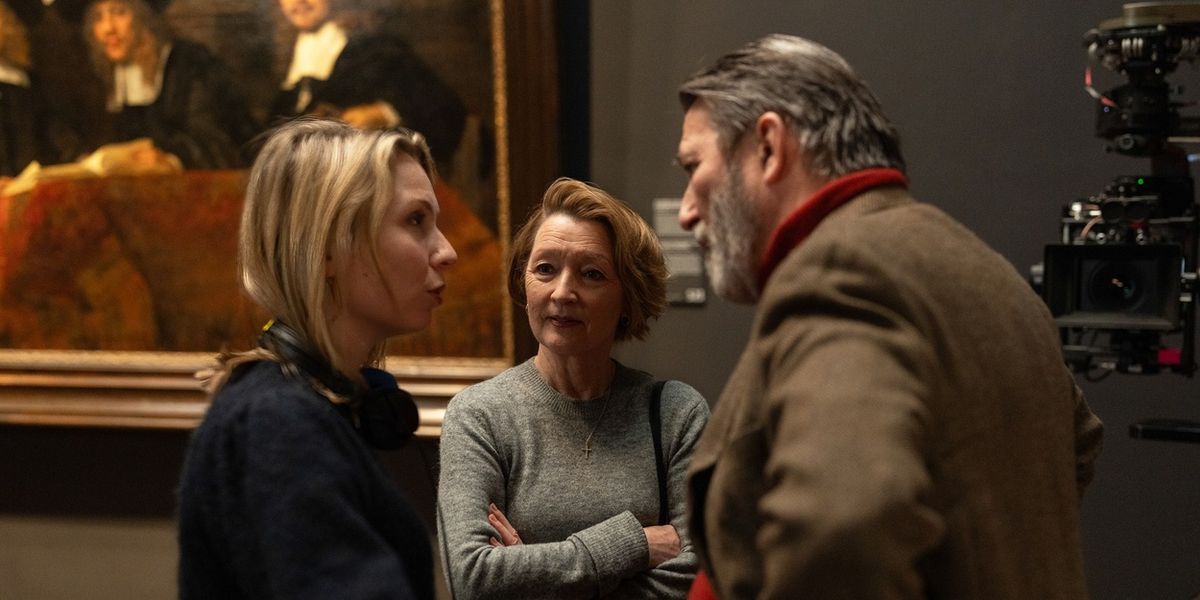
Polly Findlay loves the nuances of human behavior. One only need look at her theatre resume to see that she is drawn to stories full of fascinating and complex characters. But she herself is also acutely aware of this, and credits her vision for this kind of material as the catalyst for landing her first gig as a film director in Midwinter Break.
“By the time I came on board, there was already a script in existence,” Findlay recalls during a recent video call with BroadwayWorld. “Guy [Healey, producer] had come to see a couple of shows that I had done at The National Theatre here in London. [They] were also two-handers, very beautiful, brilliant plays by David Eldridge… and I think that he sort of was able to draw a very straight line between that kind of work... and what this film might need in terms of an approach to acting.”
Like the Eldridge plays, Midwinter Break relies heavily on the relationship between its two leads, Stella and Gerry. There are other characters in the film, but the story is propelled by the drama of their struggling marriage as well as their idiosyncrasies, both together and apart. Some of this is explicit, but much of it is not. Allowing for that subtext, Findlay says, is key.
“There's the top line, which is the thing that you say, and there's the thing underneath that, which is the thing that I know I'm not saying, which is what we call subtext. And everybody knows about that,” she explains. “But there's a whole layer underneath that, which is around what the character doesn't even know that they want or that they're doing. And that's where behavior lives, and that's where we are like animals… [This film] sort of lives in level three.”
Thematically, the film tackles some weighty topics, which include both the specificity of marital circumstance and the universality of time passing. Stella and Gerry have been married for a long time, and the cracks are starting to show amid the mundanity of their existence together. Stella, in particular, wants to find closure from a traumatic event she experienced many years ago, and attempts to do so during a midwinter getaway to Amsterdam. What follows is an exploration of religion, memory, and how time changes us all.
“Everybody has a sense of what could have been and how they could have used their time better. And I think that that becomes more acute as you get older, that sort of sense that I've got a small ever-decreasing window in which to be the person that I was meant to be," says Findlay.
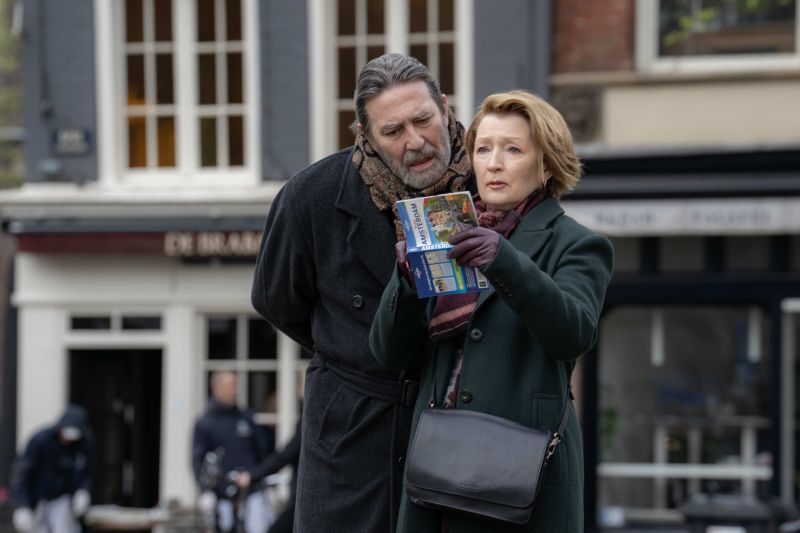
The two leads are played by acting powerhouses Lesley Manville and Ciarán Hinds, who, like Findlay, come from a strong stage tradition. This commonality proved to be an asset while working to find the ins and outs of the characters.
"We were really lucky in that we had three days rehearsal and we all come from a theater background... We definitely had a very sort of shared sense of vocabulary," Findlay shares. “They're iceberg actors, so we wanted to make sure they had a sense of the sort of shared iceberg. We started off by asking each other a lot of questions and opening up little doors in each other's imaginations, really just so that stuff could start bubbling away in the back of their minds as we were working.”
Building a believability between these characters was foundational to the success of the film. This meant highlighting their ups and downs in an authentic way, even when they might change from moment to moment. "The truth is that our real-life relationships are built up of contradictions and things that feel that they shouldn't easily sit together," notes Findlay. "What felt important to me was to be bold about going, '[In this scene], she's red here, and in the next scene she's blue, and you don't have to go through purple to get there.' We can read it. We understand that you have contradictory impulses towards each other... It's a renewed commitment to keeping going that, in a weird way, ends up being the most romantic thing of all."
Findlay is an Olivier Award-winning director for the stage, but she admits that working on a film set marked a striking departure from her previous projects. "It was the biggest sort of machine I'd ever had to run," she says, noting the numerous decisions she had to make in a limited period. Upon reflection, she predicts it may shift her approach to directing theatre down the line.
"I think [the experience] has changed my attitude towards prep... As we went on, I did more of my thinking down the line... trying to work deeper into the scene and come in with a more robust sense of what I thought it ought to be. And I think probably that will impact how I do theatre work."
Midwinter Break is now playing in theaters. Watch the trailer below:
Photo Credit: Mark de Blok/Focus Features