

BWW Q&A: Ian Barford of AMADEUS at Steppenwolf Theatre Company
Due to popular demand, Amadeus has added one additional weeks of performances, extending through Sunday, January 11, 2026.
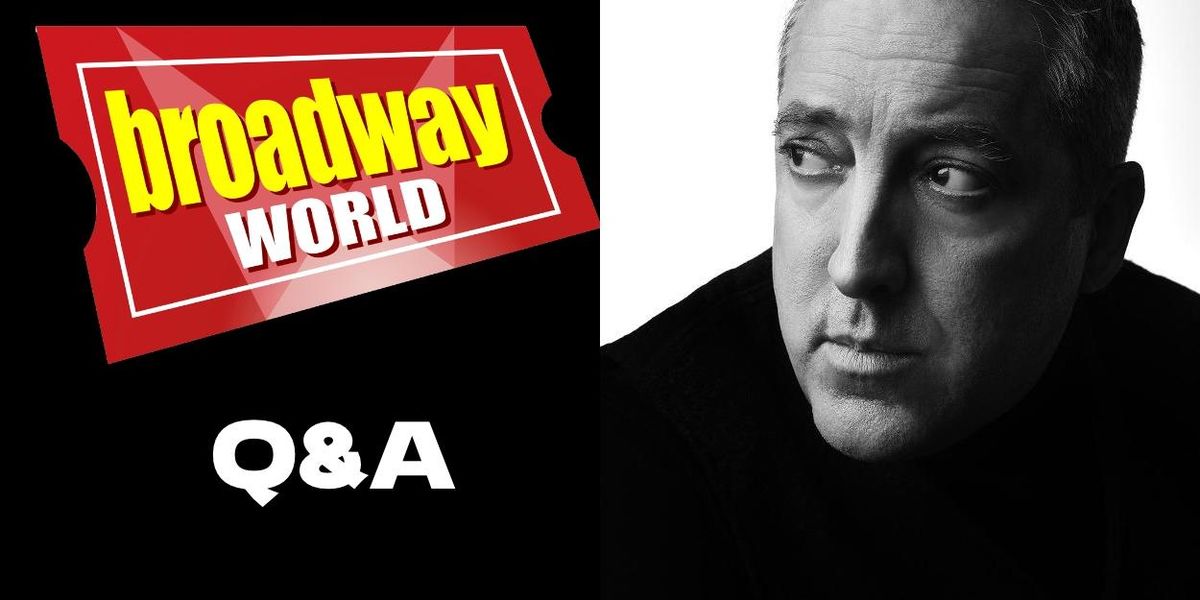

Steppenwolf Theatre Company, the nation’s premier ensemble theater company, is pleased to continue its 50th Anniversary Season with Peter Shaffer’s Oscar and Tony Award-winning masterpiece Amadeus, directed by Tony Award winner Robert Falls in his Steppenwolf debut. Due to popular demand, Amadeus has added one additional weeks of performances, extending through Sunday, January 11, 2026 in Steppenwolf’s Ensemble Theater, 1646 N. Halsted St. in Chicago. Low-priced previews begin Thursday, November 6, 2025. Single tickets starting at $20 are now on sale at steppenwolf.org or the Box Office at (312) 335-1650.
Vienna: a cacophony of music and intrigue. The emperor's composer, Antonio Salieri, holds court until the flamboyant entrance of Wolfgang Amadeus Mozart: prodigy and wild child. The two artists begin a vicious and thrilling duet, a rivalry that will define their lives and legacies for years to come. Winner of 5 Tonys and 8 Academy Awards, Amadeus is the ultimate ode to ambition and musical genius, a brilliant requiem for a villain in history – but a hero in his own story. Vi saluto!
Ian Barford is a Steppenwolf ensemble member. He first appeared at Steppenwolf in 1988 in A Midsummer Night's Dream directed by Rondi Reed. Since then, he has originated 11 roles in plays that premiered at Steppenwolf including the Pulitzer Prize and Tony winning play August: Osage County by Tracy Letts. On Broadway: Linda Vista (Tony nomination and Outer Critics Award for Best Lead Actor in a play), The Curious Incident of the Dog in the Nighttime (Tony for Best Play), August: Osage County (also at London's National Theater), The Minutes and The Rise and Fall of Little Voice (Outer Critics nomination for supporting Actor). Other Chicago credits include: Betrayal, All the Rage and Design for Living at the Goodman. The Little Prince at Lookingglass. In Los Angeles, he appeared at The Geffen Playhouse in: The Weir, God's Man in Texas and Take Me Out – all directed by ensemble member Randall Arney – and in Dead End at the Ahmanson. Favorite Steppenwolf productions include: The Libertine, Three Days of Rain, As I Lay Dying, Berlin Circle, Love Song, Art, The March and Linda Vista.
For those who aren't familiar with the play – how does it differ from the Oscar-winning movie?
Milos Forman's extraordinary film was adapted from the play but differs in significant ways. For one, the role of the priest (who hears Salieri's 'confession' in the film) does not exist in the play. Instead, the live audience functions as Salieri's confessors in the play. That relationship between Salieri and the audience is substantial. Another, more obvious difference, is that films function primarily from visual story-telling, and Forman's work on the film was truly special, but Shaffer is a playwright first and fully embraces the elements of live theater which include his love of language and poetry. As written, the play (by contemporary standards) needed some judicious trimming which our esteemed director, Bob Falls, did with great skill making our version as muscular as it can be.
What type of research did you do for the role of Antonio Salieri?
I read some books, including an amazing work by John A. Rice entitled: Antonio Salieri and Viennese Opera. Read a great book on Mozart as well entitled: Mozart - The Reign of Love by Jan Swafford. Bob and I also traveled to Vienna and Salzburg, heard some wonderful concerts, visited museums, the Schoenbrunn Palace and many other locations relevant to the play. Quite a fascinating world the Hapsburg court. However, folks should know, though based on many compelling historical events, the play is fiction. The birth of this fiction was originally a short play called 'Mozart and Salieri' written by Alexander Pushkin in 1830 shortly after Salieri died.
Do you enjoy playing the so-called “villain?"
It's not useful for me to think of Salieri as a 'villain.' He's a deeply sensitive man with an oceanic love of music and an unwavering faith in the divine omnipotence of God. I have to do justice to both and thinking about him as a 'villain' is not helpful to either. The play has an almost operatic feeling with these huge themes of God and Art crashing together in a stormy sea. Mozart's transcendent genius threatens something at the very core of Salieri's identity.
Amadeus is performed in-the-round with a cast of 18. What are the benefits and challenges of this staging?
Amadeus is a memory play. At the play's outset, Salieri is an older man near the end of his life in 1823 and that is also where the play ends. He takes the audience back to 1781 and the bulk of the action proceeds through the next decade until 1791. There is something about 'being in his head', or 'in his memory' that suits the round extremely well. We all remarked on how flat and two dimensional a proscenium theater would be. We get so many dynamics from the round and Mozart's music is otherwordly in our theater.
Talk a bit about working with Tony Award-winning director Robert Falls, who is making his Steppenwolf directorial debut.
Bob and I traveled to Austria together in September and it was a fantastic opportunity to geek out on all things Amadeus. He came into this process late in the game, under unusual circumstances and has, quite simply, saved the day. His towering passion and intellect fit this play perfectly. The enormous challenges of orchestrating so many actors, transitions, heightened operatic moments etc. have all been met with a very rare acumen. He has certainly more than lived up to his status as the legendary American theater director that he is.
Are you personally a classical music lover?
Very much so. Both of my parents were classical musicians and my late brother was a highly trained classical guitarist. I loved so much of the music I heard in our household and now, as an almost 60 year old man, classical music remains a huge part of my life. I listen to it every day.
Why must audiences come and see the show?
Theater is a collaborative artistic medium. One can never be sure when the creative chemistry is going to catch fire. The stars aligned on this one. The company of actors is top tier, Bob is at the top of his game and Peter Shaffer's play is filled with so much humor, pathos and most importantly (for me) a deeply and powerfully expressed reverence for the Art of music.

|
Catch as Catch Can Steppenwolf Theatre Company (6/04-7/12) |

|
EWP presents Robbie Fulks & Griffin William Sherry Showcase Raue Center For The Arts (8/07-8/07) |

|
Hedwig and the Angry Inch Catalyst Ranch (7/09-7/26) |

|
Native Gardens by Karen Zacarías Theatre EVOLVE (6/26-7/18) |

|
SIX (Boleyn Tour) Peoria Civic Center (11/17-11/19) |

|
Blond Ambition: A Tribute to Madonna Raue Center For The Arts (11/07-11/07) |

|
Rock of Ages Theatre 121 (6/19-6/28) |
|
Operation Mincemeat: A New Musical CIBC Theatre (9/29-10/11) |

|
Musical SINGO Raue Center For The Arts (6/26-6/26) |
|
Adriana Lecouvreur Opera Festival of Chicago (6/28-7/03) |