


Review: YENTL, Marylebone Theatre
The tale of young Jewish woman who passes as a man in early 20th century Poland, has real relevance today
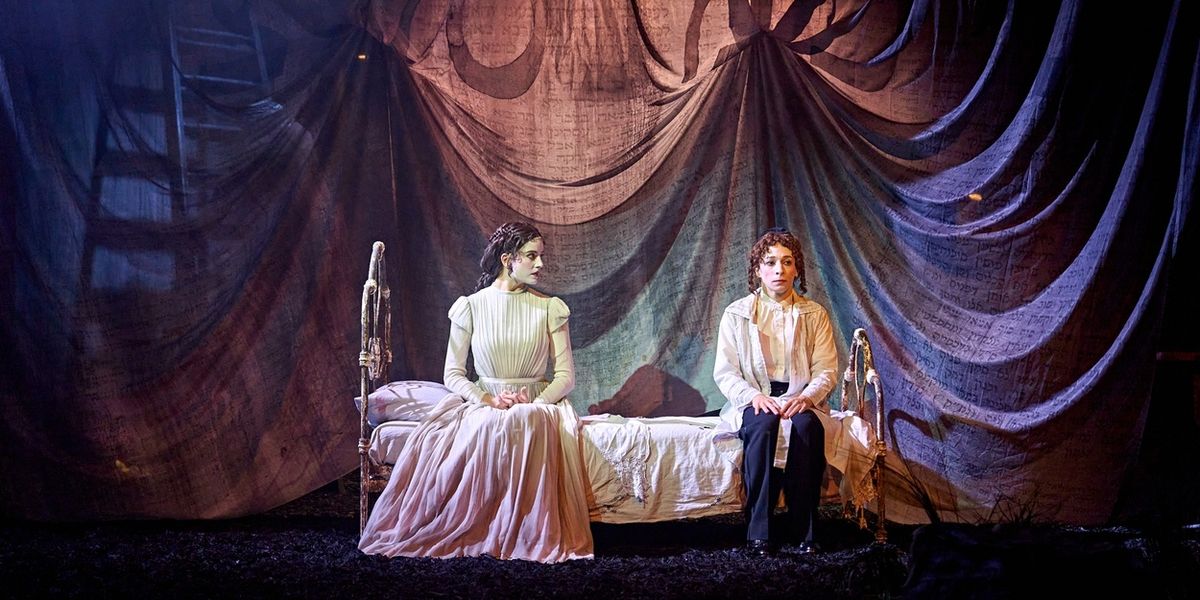
 When Barbra Streisand picked up a Golden Globe for directing the movie, Yentl (incredibly, the first woman to win in the category), the author of the short story on which it is based, Isaac Bashevis Singer, was unimpressed. Dissing La Streisand is a bold move in anyone’s book, but I guess having a Nobel Prize for Literature on the mantlepiece does grant some licence.
This Australian production is at pains to point out that it is an adaptation (by director Gary Abrahams, Elise Esther Hearst and Galit Klas) of the story and not the film, a fact underlined by the extensive use of Yiddish, the language in which Singer wrote. Surtitles are projected directly on to the set and the cast, whose diction is exemplary throughout, do a fine job moving between tongues. It’s hardly a gimmick used purely for show, as the almost but not quite German speech lends an otherness that embeds the play in Jewish history and culture but, as all art does, delivers a much broader message to its audience.
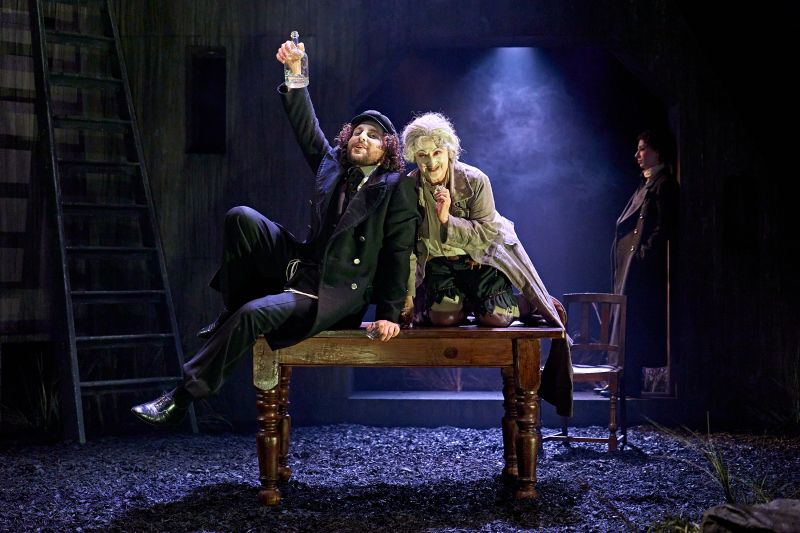
Yentl is a girl thirsting, almost lusting (and this is a play not short of lust) for knowledge of the Jewish scriptures. Her father starts teaching her, clandestinely, as Ashkenazi women were not allowed to study the sacred texts in early 20th century Poland. When he dies, Yentl decides to pass as a young man in order to enter a yeshiva, a school, in order to take her studies further - an heretical act.
There she buddies up with Avigdor, another scholar, still madly in love with the beautiful Hodes, who has broken off the engagement without explanation, but with secrets of his own. The three form a love triangle, each attracted to each other, the relationships built on deception, the overarching cultural laws and behavioural norms forbidding such feelings, the trio set on an ever accelerating spiral towards a reckoning.
The three actors create wholly believable and, perhaps more surprisingly, very 21st century characters. Amy Hack may cut her hair, deepen her voice and wear baggy clothes as female Yentl transforms into male Anshel, but “he” is still highly feminine, something Avigdor senses but cannot see, something, on first thought, that is hard to credit.
There’s a bit of talk about how the Jewish version of the Garden of Eden begins with a person who is both male and female, but that dual nature of homo sapiens is challenged by Avigdor’s faith as practised in his shetl, in which men and women are very much binary beings. Avigdor believes Anshel must be male because he is a dedicated and talented student (and only a man can be so), no matter what his eyes and his libido are telling him.
Ashley Margolis draws on plenty of charm as the permanently horny Avigdor and many men in the audience will recall what it was like to be 15 years old and wince a little, not least at the thought of paying a full price for where our lust would have taken us. That’s a theme in which the costumes, language and reference points prove crucial, as, were Margolis’s part delivered in modern dress in, say, a high school comedy, the ick would overwhelm the story. As it is, you feel how cruel, perhaps fatal, it is to be separated, as all three lovers are, from their true selves by external imposed limitations on emotions and behaviours.
Genevieve Kingsford floats in and out of their lives as Hodes, a virginal dreamgirl, who turns both on and is, reciprocally, turned on by both of them. But Hodes is no unattainable blonde Shiksa goddess of Potnoy’s imagination, but a good Jewish girl, the object of many a marriage inquiry, bright and very much knowing her own mind, deceived as it may be. It’s a part that would be easy to get wrong - too vampish, too overtly sexy, too demure - and the (already a bit shaky) belief that these three could sustain their conceit would drain away. Kingsford gets it just right.
Completing the quartet, Evelyn Krape is in showstealing form in a range of roles, but mostly as a kind of reverse Jiminy Cricket, sitting on the left shoulder of the lovers whispering imprecations urging them to give in to their primal desires. She’s never quite evil though, as she cares too much for the young people, but she is the agent of transgression, the counterweight to a society that values conformity (Tevye’s “Tradition”) above both honesty and joy.
And that’s where the play punches 2026 in the solar plexus. If the philosophical and religious discussions erode some of the pace from the drama, particularly in the final 30 minutes or so, the play demands that its audience confront what are today called culture wars. What is the damage wrought by insisting, with the full force of law backed a howling media discourse, that individuals deny their specific manifestation of humanity in order to conform to another’s version of what they should be?
We know where that kind of thinking led for the residents of the Polish shetls and for other minority communities 90 years ago and only a fool would fail to see such momentum building all over the world today.
Yentl at Marylebone Theatre until 12 April
Photo images: Manuel Harlan

Weekly top stories - unsubscribe anytime.
|
Powered by

|
.jpg?format=auto&width=300)





Reader Reviews
To post a comment, you must register and login.